

Ancient Stories Cast in Stone
Every fossil tells a tale. It could be a story about an adventurous life in the ocean, before becoming buried beneath layers of sediment. Or it could just raise lots of questions, starting with: how did that get here?

Mary Anning and Paleontology for Kids: Her Life and Discoveries, with 21 Activities by Stephanie Bearce
Readers get to know Mary Anning as a child and, later, as she discovers her first skeleton. Mary did more than dig up bones, though. She cleaned them, figured out how to put them together in a complete skeleton, and drew detailed scientific illustrations about her finds. Scattered throughout the book are sidebars that dive into details about aspects of life in the 1800s as well as the hands-on activities.

Gutsy Girls Go for Science: Paleontologists: With Stem Projects for Kids by Karen Bush Gibson, illustrated by Hui Li
Paleontologists are the scientists who study fossils, from ferns to trilobites, dinosaurs to ancient humans. In this book, we meet five women in paleontology, beginning with twelve-year-old Mary Anning who, in 1811, found a dinosaur in the cliffs near her home. We meet Mignon Talbot who studied crinoids and is the first American woman to discover and name a dinosaur. There’s a field kit checklist, lots of hands on “field assignments” and plenty of text-boxes, along with short bios of other paleontologists not featured.

The Monster’s Bones : The Discovery of T. Rex and How It Shook Our World (young reader’s edition) by David K Randall
The life of a paleontologist is filled with grit and heat, stone and hammers, and the occasional train robbery. After a nod to 19th century paleontologists, this book takes us into the fossil beds of Wyoming and Montana with Barnum Brown and the American Museum of Natural History. Wealthy capitalists fund fossil-hunters hoping to feature the largest, fiercest monsters in their museum halls.

Tales of the Prehistoric World: Adventures from the Land of the Dinosaurs by Kallie Moore, illustrated by Becky Thorns
How do stromatolites in Australia connect to Mars? Starting with the answer provided by these oldest known fossils (3.5 billion years old), we are led on an engaging journey forward through time. Detailed discussions of the life found in each period are sandwiched between captivating accounts of the intrigues, adventures, and conflicts of scientists, kids, farmers, and miners who discovered some unique and surprising fossils.

Kid Paleontologist: Explore the Remarkable Dinosaurs, Fossils Finds, and Discoveries of the Prehistoric Era by Thomas Nelson, illustrated by Julius Csotonyi
A great discussion of the field of paleontology is followed by an introduction to “10 Famous Paleontologists,” a list of “10 Famous Fossil Sites” in the world, and an engaging dinosaur classification chart. Stunning “true-life” illustrations and a conversational narrative first explore ten dinosaurs which defy classification (including one that was a burrower) and then examine many other familiar and lesser-known dinosaurs from the perspective of what their fossils, imprints, CT scans, and stomach contents have taught paleontologists about each species and what is still unknown. Highlighting where initial guesses or information has been corrected by subsequent fossil discoveries. A great book to inspire future fossil hunters.

Rhinos in Nebraska : the Amazing Discovery of the Ashfall Fossil Beds by Alison Pearce Stevens
Twelve million years ago rhinos lived in Nebraska – alongside horses and other grassland creatures. It was peaceful until… a supervolcano exploded, spewing tons of ash into the air and burying the rhinos. This book takes readers to the Ashfall Fossil Beds where they’ll look over the shoulders of scientists digging up the bones of more than 50 rhinos and uncover a few mysteries along the way.

The Illustrated Guide to Fossils & Fossil Collecting by Steve Kelly
Amazing photographs of fossils combine with reconstruction illustrations to give the reader a sense of what each animal or plant might have looked like. Following a discussion of fossils, geologic timeline, and reconstruction challenges, the detailed directory of 375 plant and animals fossils includes an additional fact file, and the relationship of the fossil to its current relatives and their role in the environment.

Fossils for Kids: An Introduction to Paleontology by Dan R Lynch
This photo-illustrated book dives into rocks, minerals, and fossilization. A vertical color-coded geologic timeline accompanies a lively, question and answer discussion of seventeen kinds of animal fossils, six plant and amber fossils, and an examination of microfossils, trace fossils, and pseudofossils. Advice on safely collecting fossils and avoiding fakes is followed by a list of fossil sites around the U.S.

Fossils for Kids: a Junior Scientist’s Guide to Dinosaur Bones, Ancient Animals, and Prehistoric Life on Earth by Ashley Hall
Written by a paleontologist with the goal of exciting future scientists, the book employs a conversational and lightly tongue-in-cheek narrative and great illustrations to explore fossil formation, classification, and identification and then dives into an examination of the fossils, stats, and discovery locations of dinosaurs, vertebrates, invertebrates, and plants. Wonderful side bars expand upon the science, explore famous scientists, and offer a “make your own fossil” activity.

My Book of Fossils: A Fact-filled Guide to Prehistoric Life by Dr. Dean Lomax
This photo-illustrated, browsable hi-low book explores the creation and collection, excavation and discoveries of fossils. Interspersed with fascinating features and scientific discoveries about bacteria, plants, and animals, are gemstone fossils, famous paleontologists, reconstructing the past, and an awesome visual glossary/index.

Outdoor School: Rock, Fossil, and Shell Hunting: The Definitive Interactive Nature Guide by Jennifer Swanson
Divided into sections on fossils, rocks, and shells this book is designed to be used, not just as a guide, but as a detailed scientific log. Informative sections begin with very visual and easily accessible scientific descriptions, history, and classifications. They invite interactivity with graphs, charts, and “badge-like” places to record fun hands-on exercises, experiments, and discoveries. It also includes guides for storing and displaying collections and a check list of 101 possible achievements.
You can find more books about fossils over at the Geology book list: (https://fromthemixedupfiles.com/stem-tuesday-geology-book-list/).
This month’s STEM Tuesday book list was prepared by:

Sue Heavenrich is an award-winning author, blogger, and bug-watcher. A long line of ants marching across the kitchen counter inspired her first article for kids. When not writing, she’s either in the garden or tromping through the woods. Her books for middle-grade readers include Funky Fungi: 30 Activities for Exploring Molds, Mushrooms, Lichens, and More and Diet for a Changing Climate. Visit her at www.sueheavenrich.com

Maria is a children’s author, blogger, and poet who is passionate about making nature and reading fun for children. She was a round 2 judge for the Cybils Awards (2017 – present), and a judge for the #50PreciousWords competition since its inception. Two of her poems are published in The Best of Today’s Little Ditty 2016 and 2014-2015 anthologies. When not writing, critiquing, or reading, she bird watches, travels the world, bakes, and hikes. Visit her at www.mariacmarshall.com.


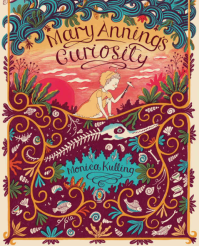 Kulling’s Mary Anning’s Curiosity (Groundwood Books, 2017), a fictionalized account of the childhood of the 19th century shell-collector who revolutionized paleontology
