Posts Tagged diversity

Looking for Luck in All the Write Places

Hope you’re feeling lucky this St. Patrick’s Day week. In case you’re looking for good fortune, check out some of these middle-grade books with the work “luck” in the title.

Hard Luck

Written and illustrated by Jeff Kinney
Book #8 in the Diary of a Wimpy Kid Series
Greg Heffley’s on a losing streak. His best friend, Rowley Jefferson, has ditched him, and finding new friends in middle school is proving to be a tough task. To change his fortunes, Greg decides to take a leap of faith and turn his decisions over to chance. Will a roll of the dice turn things around, or is Greg’s life destined to be just another hard-luck story?

Mary Anne’s Bad Luck Mystery

Written by Ann M. Martin
Book #17 in the The Baby-Sitters Club Series
Mary Anne should never have thrown away that chain letter she got in the mail. Ever since she did, bad things have been happening-to everybody in the Baby-sitters Club. With Halloween coming up, Mary Anne’s even more worried-what kind of spooky thing will happen next? Then Mary Anne finds a new note in her mailbox: Wear this bad-luck charm, it says. OR ELSE. Mary Anne’s got to do what the note says. But who sent the charm? And why did this person send it to Mary Anne? If the Baby-sitters don’t solve this mystery soon, their bad luck might never stop!

Lucky Strike

Written by Bobbie Pyron
A rich, southern voice tells the unforgettable story of two vulnerable outsiders, the lightning strike that turns their world upside down and the true meaning of lucky. Nate Harlow would love to be lucky, just once! He’d like to win a prize, get picked first, call a coin toss right, even! But his best friend, Genesis Beam (aka Gen), believes in science and logic, and she doesn’t think for one second that there’s such a thing as luck, good or bad. She doesn’t care what names the other kids call them. She cares about being right, about saving the turtles of Paradise Beach, and she cares about Nate. Then, on his birthday, at the Goofy Golf mini-golf course, Nate is struck by lightning – and survives! Suddenly baseballs are drawn to his bat – popular kids want HIM on their side. It seems the whole town of Paradise Beach thinks Nate has the magic touch.But is there room for Gen in Nate’s lucky new world? Lucky Strike tells the unforgettable story of two vulnerable outsiders and what luck is really all about.

The Thing about Luck

Written by Cynthia Kadohata & illustrated by Julia Kuo
The winner of the National Book Award for Young People’s Literature, from Newbery Medalist Cynthia Kadohata. There is bad luck, good luck, and making your own luck–which is exactly what Summer must do to save her family. Summer knows that kouun means “good luck” in Japanese, and this year her family has none of it. Just when she thinks nothing else can possibly go wrong, an emergency whisks her parents away to Japan–right before harvest season. Summer and her little brother, Jaz, are left in the care of their grandparents, who come out of retirement in order to harvest wheat and help pay the bills. Having thoroughly disappointed her grandmother, Summer figures the bad luck must be finished–but then it gets worse. And when that happens, Summer has to figure out how to change it herself — because it might be the only way to save her family. Cynthia Kadohata’s ode to the breadbasket of America has received six starred reviews and was selected as a National Book Award Finalist.

Lost in Ireland

Written by Cindy Callaghan
Book #2 in the Lost In Series
A superstitious girl must try to turn her horrible luck around during a family trip to Ireland. Meghan McGlinchey is the most superstitious girl in her family–and probably in the entire state of Delaware. When she receives a chain letter from a stranger in Ireland, Meghan immediately passes it on, taking only a tiny shortcut in the directions. But after a disastrous day, made complete by losing the election for class president and embarrassing herself in front of the entire school, Meghan realizes that tiny shortcut was a big mistake. Thankfully, her family was already headed to Ireland on spring break, and Meghan makes it her mission to find the original sender and break her extremely unlucky streak. With the help of an eccentric cast of characters–and one very cute Irish boy–can Meghan figure out a way to stop her bad luck? Or is she cursed forever?

Bookroo.com contributed to these summaries.

STEM Tuesday — Animal Perceptions– Writing Tips & Resources


Choose Your Own Writing Adventure

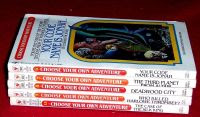
Did you ever read a Choose Your Own Adventure® book? As a kid I devoured those. You would read a few paragraphs and then when there’s a plot point—when a normal book would have the main character make the decision (and learn the consequences)—in these books, you, the reader get to choose.

Choose Your Own Adventure stack of books

It might look like this:

  • If you charge down the tunnel, straight into the dragon’s lair, turn to page 23.
  • If you sneak around the mountain, hoping to slip in through a backdoor, turn to page 42.

What if we could see writing like that? What if we could help students see writing like that? What if we could apply this to the challenge of writing to convey information?

One of my greatest struggles is structure. Finding just the right approach to convey information. I know I’m not the only writer (young or old) who suffers from that kind of paralysis. A great way for me to break into writing is to toy with different approaches, but it can be hard to get started, so I’ve started to play the “Choose My Own Writing Adventure” sort of game.

Play the Game

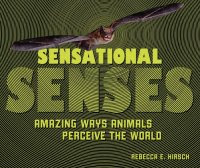
Let’s take chapter 2 of Rebecca Hirsch’s Sensational Senses: Amazing Ways Animals Perceive the World.

The first section begins:

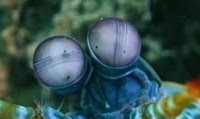
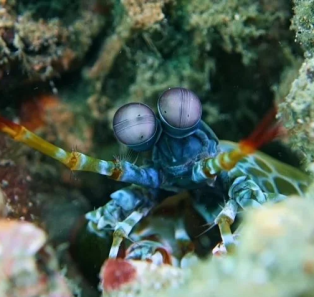
Two eyeballs swivel on stalks atop the head of a mantis shrimp. Zip! Zoop! The eyes move up, down, left, and right as the critter scuttles across the coral reef. He is keeping watch for enemies and looking for a place to hide.”

Upon reading the first sentence, I am immediately connecting to this writing. That “Zip! Zoop!” provides a sensory experience that brings me into a scene. The action of the eyes and the verb “scuttles” has me picturing this as a movie playing in my mind. The “He is keeping watch” has me connecting with and feeling for a character. This is narrative writing!

But, in the next section, entitled “Eye Spy,” the writing shifts.

“Mantis shrimps, or stomatopods (stoh-MA-tah-pawds) are relative of crabs, lobsters, and shrimp. These tiny superheroes have the most advanced eyeballs on the planet.”

Wait. That’s all expository—information intended to explain. It’s still drawing me in. The fact about mantis shrimp relatives connects them to animals I am more familiar with, thus making the subject relatable. Even if the spread had not included intriguing photographs, I’d be developing a crabby kind of image in my mind—a hard shell, beady eyes and lots of legs. The superheroes analogy has my mind imaging all kinds of fun. The “most advanced eyeballs on the planet” has me experiencing a sense of awe for these creatures.

But it is the juxtaposition of these two kinds of writing, so drastically different, that has me re-reading to learn more about writing craft. Why did the author decide to set up the chapter this way? What advantages do each of these approaches have? If I were the writer and playing the “Choose My Own Writing Adventure” game, what could my other options for these passages be?

Let’s play that game. What if the book began with the same information but that first section was written as expository text? Could I do that? Could you do that? Pull out a piece of paper (or a fresh file) and try it before you read on.

Adventurous Options

When facing this challenge myself, the first thing that occurs to me is that I’d switch the point of view to third person. But, after pondering a moment, I realize that’s not the only option:

  • If you choose to write in third person, you’ve picked a classic approach. Keep writing!
  • If you choose to write in first person—that can be done in expository, right—you’re doing something fresh and exciting!

But also, because I am now writing it as  expository, I feel the urge to begin that first paragraph by naming the animal, i.e.  “A mantis shrimp…” But there are other options, right?

  • If you start with “A mantis shrimp…” plow forward and see where it takes you.
  • If you start with “The enemies of…” be confident because you started with a hook.
  • If you start with “The eyeballs…” consider how that sets up the content.

Isn’t this fun? After you’ve played with the first section for a while, flip this idea and try going the opposite direction. Take the expository “Eye Spy” section and use that content to craft a narrative. At every junction, make yourself aware of the options you are choosing by listing out one or more other options.

Writing is an adventure! Let’s stop pretending it must be boring. Let’s use other people’s writing as examples, but not as a rule book. Let’s be writing rebels!


Heather L. Montgomery likes to take her chances. Adventurous research has led her to publication of 18 books, including: What’s in Your Pocket? Collecting Nature’s Treasures, Something Rotten: A Fresh Look at Roadkill, and Sick! The Twists and Turns behind Animal Germs. When she is not teaching a library full of students or interviewing a scientist, you might find her writing in an outlandish spot. Where will  you join her:

  • If you’re up for a stream stroll, pull on your water shoes and catch some critters with her.
  • If you’re into tree climbing, whip out your journal and scribble from the canopy.
  • If you’re brave enough for dissection, grab your gloves and goggles.

Learn more at www.HeatherLMontgomer.com .

Related

256-426-5871
Sick!: The Twists and Turns 
Behind Animal Germs
Order HERE 

STEM Tuesday — Animal Perceptions– In the Classroom

This month’s books delve into the mysterious senses and minds of different creatures. How do they communicate and use tools? What kinds of sounds do they make and what do they mean? Can we ever know what they think? Endlessly fascinating, these ideas are sure to spark wonder and inspire more questions in the classroom. Here are a few ways to explore animal perceptions with your students.

Beastly Brains: How Animals Think, Talk, and Feel
by Nancy Castaldo

Castaldo delves into the minds of animals like dolphins, dogs, and elephants to explore animal empathy, communication, tool use, and lifestyle through interviews and historical anecdotes. The book also mentions research from some great minds, such as Charles Darwin and Jane Goodall, regarding the behavior of animals and revolutionizes old theories through the lens of modern science.


Worm Jar Activity: In this book, Castaldo describes Darwin’s study of worms to determine if worm’s have intelligence. His observations about how worms moved leaves led him to conclude that they are thinking creatures with intelligence. With this activity, students can make their own observations about worm behavior by making a worm jar and observing the worms inside, recording their data, and coming to a conclusion. To make the worm jar, they will need:

  • mason jar
  • jar lid with holes
  • soil, sand, grass, mulch, or other organic materials from the ground
  • garden trowel and worms
  • very small pieces of vegetables or fruit (such as lettuce, apple, celery leaves)
  • dark construction paper and tape
  • observation notebook

Have students layer different ground materials in the jar until it is around 3/4 full. Dig in wet soil to find earthworms and put a few in the jar. Add the small pieces of vegetables or fruit at the top and then cover with the lid. Then wrap the black paper around the jar and tape so that the worms will be in darkness, just like being underground.

Tell students to think of something they wonder about the worms in their jar and write it down inter observation notebook. Then have them check not heir worms each day by untaping the paper and seeing what is happening inside the jar. Tell students to write their observations each day in their notebook. After a few weeks, ask students to look through their observations to see if they have been able to answer their question at the beginning of the experiment. Do they have a conclusion they can share with others about their worms?


Sensational Senses: Amazing Ways Animals Perceive the World
by Rebecca E. Hirsch

From star-nosed moles to Japanese sea catfish, each of the eight chapters in this book dives deep into the amazing sensory abilities of a different animal. Hirsch’s clear text combines with eye-popping photographs to show readers how these extraordinary animals can sense things in the world that are hidden to humans.


Super Senses Comics Activity: The creatures in Hirsch’s book have some incredible powers, almost like comic book characters. For examples, the star-nosed mole uses its incredible sense of touch to hunt food in the darkness of its underground world. After reading through the book, provide students with a blank comic book storyboard (like this or this) or direct them to free storyboarding software. Here are a few to try:

Tell students to choose an animal and its super power from the book, and to think of a story that involves that creature using that super power. They can then create a comic that tells their story, adding images and dialogue to the panels of their comic strip. What problem does their creature solve? How does it use its special sense? Practice providing feedback and revising to help students develop and share their stories. Then create a gallery on the wall to display students’ comics!


Karen Latchana Kenney loves to write books about animals, and looks for them wherever she goes—from leafcutter ants trailing through the Amazon rain forest in Guyana, where she was born, to puffins in cliff-side burrows on the Irish island of Skellig Michael. She especially enjoys creating books about nature, biodiversity, conservation, and groundbreaking scientific discoveries—but also writes about civil rights, astronomy, historical moments, and many other topics. Visit her at https://latchanakenney.wordpress.com