


Animals chat, build, migrate, and do all sorts of things. Their antics are the subject of so many STEM titles that we just had to make a list this month of the latest and the greatest. Please suggest your favorites if we’ve missed any. Like our other lists, these books are great classroom and library additions.
 The Superpower Field Guide: Beavers by Rachel Poliquin and John Firth
Through meeting Elmer, an ordinary beaver, readers discover the many attributes all beavers have that make them crucial to wetland habitats. This new series turns traditional field guides upside down, creating a fun, informative look at each species. Cartoony illustrations liven it up further.
 Penguins vs. Puffins by Julie Beer
We love the mock contest setting of this title. Which bird is better? Penguins or puffins? Beer does a wonderful job of pointing out similarities and differences of the many species of these birds. And of course, the beautiful National Geographic photos are a hit!
Death Eaters by Kelly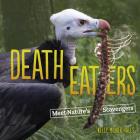 Milner Halls
Vultures are one of the most misunderstood and least appreciated wild species. Readers will discover just how important and amazing they are in Kelly Milner Halls latest book. Readers will love the nod to the Harry Potter series, too!
Animal Zomb ies by Chana Stiefel
Zombies really do exist in the animal kingdom! This book features zombying parasites, bloodsucking vampires, sea beasts, ghosts, and others that will excite and inform fans of animals and horror.
 Where the Animals Go: Tracking Wildlife with Technology in 50 Maps and Graphics by James Cheshire and Oliver Uberti
This cross-over title will appeal to any reader who is fascinated by animal migrations. It’s filled with topographical maps that provide a rich look at wildlife and geography. Readers can follow the record flight patterns of Arctic terns to pythons in Florida.
 Eavesdropping on Elephants: How Listening Helps Conservation by Patricia Newman
Most elephant books feature Asian elephants or the African elephants that live on the plains. This NSTA Outstanding Science Trade Book title follows a group of scientists who listen to forest elephants–a relatively unknown species. A great addition to a science unit on sound, this book also includes QR codes that take readers inside the forest to hear elephants the way the scientists heard them.
 Little Monsters of the Ocean: Metamorphosis Under the Waves by Heather Montgomery
You might think that butterflies and frogs are the only creatures that undergo metamorphosis, but you would be wrong. Leave it to STEM author Heather Montgomery to show us that there are many ocean animals that also experience this life-changing cycle.
 Smart About Sharks by Owen Davey
Owen Davey has compiled so much information about sharks into this richly illustrated book that even the most knowledgeable shark enthusiasts will find something they didn’t know. A shark book that should be on every ocean book shelf.
 Absolute Expert: Dolphins by Jennifer Swanson and Justine Jackson-Ricketts
Aspiring marine biologists will enjoy learning about dolphins with National Geographic explorer and dolphin expert, Justine Jackson-Ricketts in this ultimate dolphin resource book.
 Unstoppable: True Stories of Amazing Bionic Animals by Nancy Furstinger
Inspiring tales of animals using prosthetics, braces, orthotics, and wheelchairs to live out their lives fill the pages of this STEM title. Readers will get a glimpse into how cutting-edge technologies are improving the lives of animals and humans.
 Snowy Owl Invasion: Tracking An Unusual Migration by Sandra Markle
This book goes hand-in-hand with Where The Animals Go. Readers will dive into the unusual migration of snowy owls in this beautifully illustrated book by Sandra Markle.
 Backyard Bears: Conservation, Habitat Changes, and the Rise of Urban Wildlife by Amy Cherrix
Have you ever seen a bear in your backyard? More and more people are experiencing these extraordinary visitors each year. Readers will take a look into why this is happening and how conservation can play a role going forward in this recent Scientists In the Field title.
STEM Tuesday book lists prepared by:
 Nancy Castaldo has written books about our planet for over 20 years including, THE STORY OF SEEDS: From Mendel’s Garden to Your Plate, and How There’s More of Less To Eat Around The World, which earned the Green Earth Book Award, Junior Library Guild Selection, and other honors. Nancy’s research has taken her all over the world from the Galapagos to Russia. She strives to inform, inspire, and educate her readers. Nancy also serves as the Regional Advisor of the Eastern NY SCBWI region. Her 2018 multi-starred title is BACK FROM THE BRINK: Saving Animals from Extinction. Visit her at www.nancycastaldo.com
 Patricia Newman writes middle-grade nonfiction that inspires kids to seek connections between science, literacy, and the environment. The recipient of a Sibert Honor for Sea Otter Heroes and the Green Earth Book Award for Plastic, Ahoy!, her books have received starred reviews, been honored as Junior Library Guild Selections, and included on Bank Street College’s Best Books lists. New in 2018: Eavesdropping on Elephants: How Listening Helps Conservation. During author visits, she demonstrates how her writing skills give a voice to our beleaguered environment. Visit her at www.patriciamnewman.com.


 Who’s do they like best?


 Jodi Wheeler-Toppen is a former science teacher and the author of the