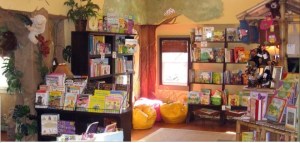
Posts Tagged children’s bookstores

Filling the Well: on growing as a writer

About eight months ago I finished the author note and copy edits for Written in Stone which will be out in June of this year. I had worked on that book off and on for 15 years. In many ways it’s the book that made me a writer. So it was a real career milestone to put the final touches on it for publication. Once it was gone and I faced the prospect of starting something new I felt like I needed to grow as a writer and push my work to a higher level and explore things I hadn’t tried yet. The authors I admire the most are the ones that are always trying something new. Ursula LeGuin, for example, decided that if anyone was going to tell the story of Lavinia from The Aeneid, it was probably going to be her, and since she was already in her eighties she might as well begin at once. She began by re-reading The Aeneid. In Latin. Her award winning novel Lavinia resulted. Wow! This is the woman I want to be when I’m in my 80s!

Lavinia
So how do I get there? I’ve spent a lot of afternoons and evenings in bookstores listening to authors over the years and here are a few things I’ve learned about, not just enjoying longevity in a fickle profession, but continuing to grow and thrive as a writer and a person.

1. Everybody says read, and everybody is right about that. But I’ve come to see that it’s not volume of text swallowed that matters. Real growth comes from reading thoughtfully. For example, this year’s Newbery winner got quite a lot of buzz online before the announcement in January. I was curious, particularly since The One and Only Ivan’s biggest fans seemed to be teachers. So I read it slowly and reflected on why it was working so well for many people. I am going to confess here that it was not my favorite book of the year. But I could see from a slow and careful examination of Applegate’s craft that she’d created a genuinely appealing voice in the gorilla Ivan. It was spare and wry and consistent. Three things that are very hard to do. Also the layout of each page was roomy and inviting, and Casteleo’s illustrations were lovely in their simplicity. I could have read this quickly, decided it’s not my thing, and dismissed it, but I’m glad I took a closer look. It’s still not my favorite, but I’ve learned something about creating an appealing voice, and I’m certainly going to give page layout some thought in future projects.
If you are looking for good commentary on reading I highly recommend the Heavy Medal Blog over at the School Library Journal which is moderated by the very thoughtful and articulate duo Nina Lindsey and Jonathan Hunt. I seldom comment but I’m always learning from the discussions there.

SLJblog_HeavyMedal_920x104

2. I have always found the company of my fellow writers both a comfort and an inspiration. I recently got together for lunch with five women who have inspired me for decades. We talked about ordinary things–the care of aging parents, our dreams for a perfect garden. We talked about decidedly writerly things–the difficulty in finding reliable research about the Danish resistance in WWII, how corporate fundraising is it’s own kind of storytelling. We toasted Deborah Hopkinson’s recent Sibert Honor and commiserated over the bumpy spot someone else was going through. It was great to know I’m not alone in the vicissitudes of the business, and even greater to hear from writers I really respect that they never regretted pushing their work to a higher level.

Unknown-2
So if you’ve got a writer or two in your town or an upcoming SCBWI schmooze or an author event at a local bookstore, reach out! Make some connections for yourself. It’s a long lonely road without companions and a grand adventure with friends.

3. I think its also important to do things outside of strictly literary pursuits. One of the great pleasures of working on my book Second Fiddle was playing the violin again after many years away from my instrument and discovering how many people in the book world are also musicians. Don’t neglect other hobbies. Paint. Hike. Dance. Travel. Meet people. Engage your own family as deeply as you can. Your writing will be richer for it.

I will be responding to comments sporadically on this post because I’m out of town with my family is doing stuff that may some day work its way into books. My son is competing in the World Championships of Irish Dance in Boston on Saturday. I’m sure I’ll never write about competitive contemporary Irish dance but I’d love to write about an immigrant Irish kid who loves to dance. I’ll be taking mental notes all week and meeting musicians and talking to dancers from all over the world. I might not write that book for a decade but I’m storing up ideas now.

4. Much of what I’ve learned about the craft of writing has come from listening to authors in bookstores. If you are fortunate enough to live near a bookstore with a visiting author program, take advantage of it. You’ll meet fellow book lovers, make a connection with local book sellers and get excellent mentoring all for the price of a signed book. The woman at the microphone below is the amazing Ursula LeGuin from whom I’ve learned volumes. Her Steering the Craft is one of the most practical and useful writing books I’ve ever worked with. I never  quite understood the subtle distinction between close third person narration and first person narration until I listened to her discuss it in a Q & A at Powells.
Unknown

There are many great writing conferences around the country. SCBWI hosts many. The ABLA Big Sur Conference has an outstanding reputation. In Portland the Willamette Writers hold a very good conference every August. I’d love to have people recommend a favorite conference or writing class in the comments. Don’t overlook your local community college. Some of the best teaching is done at community colleges. Sometimes when you are ready to take your work to the next level the investment in a regular class with good instructor feedback is what it takes to get you there.

5. And I’ve found one of the best ways to really master an aspect of the craft of writing is to teach a class on that topic. Teaching forces you to think through problems in a way you tend to resist when you are just having a conversation with yourself in your own writing space. When I was really stuck on differentiating the three characters in Second Fiddle who are all the same age, same gender, and play classical music, I decided to teach a class on deeper character development and came up with a workshop I call Character and the Seven Deadly Sins. I don’t think I could have finished that book without developing the workshop. Whether or not you actually teach the workshop, thinking through a story problem in terms of teaching it to others is often helpful. Local SCBWI conferences are always in need of new presenters with fresh material, so don’t be shy about applying to be a presenter . If the exercise helped you finish a book, odds are it will help other people too.

And speaking of teaching, we’ve come to the shameless self-promotion portion of this blog post.

I’ll be teaching a course for beginning writers of MG and YA fiction called Vampire Free Fiction: writing real world novels for young readers. It is an online class sponsored by The Loft Literary Center and it’s running from June 17th to August 11th. I chose this time slot specifically so that it will be easier for a full time teacher or librarian to take the class over summer break and there is a scholarship available to one lucky teacher who applies, so if you are looking for a way to get started on the novel of your dreams or finally finish a project you’ve been nibbling at for years, I hope you’ll give this class or another like it a try. More information about that at the Loft Literary Center

How about you? What do you do to fill the well of your creative life? Do you have a favorite class, workshop or conference to recommend? How about a good book about the craft of writing? Shout outs in the comments please!

Indie Post: Creating Children’s Bookstore Memories

This month, with the holidays and the New Year coming on, Mixed-Up Files is saluting all children’s bookstores everywhere, and remembering a few individual gems we’ve featured in 2012.

www.takeyourchildtoabookstore.org

Kids can get overwhelmed with gifts of things, especially at this time of year. Yet we know that the most lasting childhood memories are not of things but of experiences, especially shared experiences.   A good book is both a thing and an experience, shared in a sense with the author and with everyone else who reads it. So isn’t a book the ideal gift?

And it’s so easy! Go online any time of day or night and in less than five minutes you can order your child a book tax-free at a big discount, and it will magically appear a few days later, even gift-wrapped, if you so choose.  Or, if you need the book sooner, you can wait until open hours at the nearest chain store where you’re bound to find something appropriate from their large selection.

Whoa.  What if, instead, you invite the child to come with you to real children’s bookstore to choose his or her own books,  even make a day trip to another town if there’s no such store where you live?  What will reward your extra effort?

A unique atmosphere

All online and chain bookstores are alike in predictable ways, on purpose. Chains are concerned with “brand” and want all their stores everywhere in the country to have a familiar look and feel.  And there are not many places to sit down (unless you buy something at the café), because they don’t want you to browse and read.  They want you to get to the checkout counter.

Each child’s bookstore is different in its own way, a unique world, created by owners who delight in children and children’s books.  It’s their dream come true of what a children’s bookstore should be. Can you stay all night and read at Barnes and Noble?  You can at Velveteen Rabbit Book Shop and Guest House in Fort Atkinson, Wisconsin. Can you get a moustache out of a vending machine there?  You can at Green Bean Books in Portland, Oregon.  Are the walls bursting with colorful art and the signatures of visiting authors?Are there live animals roaming the store—cats and chickens and chinchillas?   Encounter  them at Wild Rumpus in Minneapolis.

Browsing at Wild Rumpus

There’s a welcoming magic in children’s bookstores that children young and old (and the child in us) respond to immediately.

Real people

All physical bookstores have people in them.  But in a children’s bookstore, you can be sure these will be people who know children and books. Their main job is to help find just the right ones for a child, and they aren’t required to spend part of their time at a table up front, demonstrating and promoting their company’s latest e-reading device.    (Note to children’s authors:  these independent booksellers are also the ones who actually read, know, and hand-sell your books).

Real choice

At first it might seem that a big chain store could offer you a better choice of books than a small independent. But it matters who chooses the books and why.  Independent booksellers can and do choose to carry—or not carry— any books they like, and they can display and promote them however they want to.  Of course, you say.   But most of the titles in a chain store have been selected, not by the people who work there, but by remote company experts who have made a guess about what you will be likely to buy and who need you to fulfill their predictions. Independent booksellers are on-the-spot curators who can sort out quality from hype, and can lead you to their favorites and yours, often less-publicized great finds you might not otherwise have discovered.

Higher prices

Though independent bookstores may offer some modest sales and membership discounts, most have to charge the cover price for a book.  You may feel foolish, even guilty, paying full price plus tax for something you know is available at a deep discount and tax-free elsewhere, but in this case you  get what you  pay for.

A great time with the child

When you make a trip with a child to a children’s bookstore, inviting him or her to enter the atmosphere and browse and choose to his or her heart’s content, you create an experience neither of you will soon forget.  Priceless.

The chance to support a community

That cover price and tax you pay at an independent bookstore– where does it go? Some to the publisher, of course, but, unlike the money we spend online or at a chain, the rest goes to the local community.  Children’s bookstores stay alive by responding to the needs of their neighbors—listening to their preferences, developing personal relationships with customers young and old,  creating unique events and programs for them, and championing local authors as well as nationally known ones.  Aren’t such stores, and the communities that have the wisdom to sustain them, worthy of our support?

Hunger Games training camp, Little Shop of Storiesand championing local authors as well as nationally known ones.  Aren’t such a store, and a community that has the wisdom to sustain it, worthy of our support?

A chance to vote

Every time we spend money one way rather than another, we are casting a vote for what we value and want to see thrive.  So what’ll it be? Amazon and Barnes & Noble* or places like Blue Manatee, Eight Cousins, and The Little Shop of Stories?


Ask a child who’s been there!


*If online is really the only way you can buy children’s books this season, you can still order them through independent stores.  Many children’s bookstores fill online orders, including a number of the following that we have featured so far this year:

The Green Bean, Portland OR: www.greenbeanbookspdx.com
Blue Manatee, Cincinnati OH: www.bluemanateebooks.com

The Eight Cousins, Falmouth MA:  www.eightcousins.com

The Wild Rumpus, Minneapolis MN: www.wildrumpusbooks.com

The Little Shop of Stories, Decatur GA: www.littleshopofstories.com

Bbgb (Bring Back Great Books), Richmond VA: www.bbgbbooks.com

The Velveteen Rabbit, Book Shop and Guest House, Fort Atkinson WI: www.velveteenrabbitcookshop

Monkey See, Monkey Do, Clarence NY: www.monkeysread.com

Or you can go to the largest independent bookstore in the country at www.powells.com or to www.indybound.org and order from them.

If you and the children you love have fine memories of visiting a children’s bookstore, please tell us the story in a comment below.  Do you have a favorite shop you think we should feature in 2013?   Next month we’ll be talking to the folks at Reading Reptile in Kansas City.

Sue Cowing lives in Honolulu HI, 2,000 miles from the nearest children’s bookstore.  She is the author of a middle-grade puppet-and-boy novel, You Will Call Me Drog (Carolrhoda Books 2011, Usborne UK 2013)

Indie Spotlight: Monkey See, Monkey Do

Anyone who thinks children’s bookstores are becoming a thing of the past probably needs to get out in the country more!  True, some wonderful old favorites are no longer with us, but others are doing just fine and wonderful new ones keep springing up, even in these recent hard times.  Today we’re talking to owner Kim Krug of Monkey See, Monkey Do in Clarence,  New York, whose small-town shop is just over three years old  and  has already become an asset  to the community and  earned the 2012 Pannel Prize for Children’s Specialty Bookstore from The Women’s National Book Association.
Sue Cowing for Mixed-Up Files: It’s always a pleasure to discover a new—and thriving—children’s bookstore. What led you to start one up in Clarence, New York?
Kim: Our three children inspired me to open a children’s business.  I had the wonderful opportunity to stay at home with them for the first five years and then wanted to share with them a passion I had to give back to our community, teach them the importance of following a dream and work to inspire other families with a love of reading and lifetime learning.
MUF:Describe the atmosphere in Monkey See, Monkey Do.
Kim: It’s a very warm, charming and creative space.  Both children and adults alike love to look at the books and enjoy the building.  Our bookstore is housed in a historic 1840’s building with timber beams in the young adult/adult book room.  There are six cozy rooms in which books are shelved, tables are set up and classes are held.  People are very curious about the history of the building, it is said to have ties to the Underground Railroad.
MUF: How do you select the books to carry at Monkey See, Monkey Do? What are some favorite titles, fiction or nonfiction, that you recommend to middle-graders?
Kim: I spend a lot of time reviewing advanced titles provided by independent authors and publishers.  I follow our regional book groups and the American Booksellers Association for reviews.  I love finding unique, indie titles that I can bring into the store and tie a program around.  One of my favorite titles is Wonder by RJ Palacio, I absolutely love this book and highly recommend children in grades 5 and up along with parents/adults to read it!  It’s an inspiring story about a 5th grade boy who has a facial deformity  and is homeschooled up until the 5th grade.  The story switches narrative throughout the book as we journey along with Auggie, the main character through his first year of transition in public school.  Some newly released picture books that I am a huge fan of are:  Big by Coleen Paratore, Because Amelia Smiled by David Ezra Stein, What Does it Mean to be Present by Rana DiOrio  and Say Helloby Jack & Michael Foreman. Our Gorilla Girls Book Club (Gr. 5 and up) has been reading Out of My Mind by Sharon Draper, and the Bright Monkeys Literacy Club (Grades 3-6) is reading The Lion, the Witch, and the Wardrobe.  

Gorilla Girls Book Club

MUF: The Pannel Prize folks cited your “innovative approaches to getting kids engaged with reading.” That seems like an understatement. Monkey See, Monkey Do has a strong commitment to promoting literacy and acts on it by holding a number of literacy classes and activities, even individual tutoring sessions. Tell us about some of those efforts and the community response.
Kim:We truly believe we “bring our books to life” through the variety of creative, literacy-based classes we offer each month.  This past summer we held over 40+ to inspire children to creatively engage in literature.  This Fall we began a new venture in partnering with schools in our After-School Literacy Clubs in which we offer a 6-week literacy club led by a

Reading to each other on National Star Wars Reads Day

NYS certified teacher where children practice reading aloud, work on cadence, pace, vocabulary-building and comprehension.  Children discuss the reading each week, practice journal writing and reflective questions.  In this current session we are running in the schools, the last class will end with a very special author Skype in which children can engage directly with the author to learn about what inspired them to write their book and question the author directly.

MUF:Your book camps sound fun and popular, and you hold them not only in the summer but also during school breaks throughout the year. What have been a couple of your most memorable ones?
Kim: That is a tough question, I have so many fantastic memories from many of our camps but here’s a few that really stick out:
  • Art Safari – children spend a full week reading about a new artist each day and then working on an art project inspired by that particular artisan’s work.

    Art Safari

  • Cupcake Diaries – a full week camp in which children formed reading circles each day to complete reading, creating cupcake journals and writing entries that tied in with their reading and discussions and ended each day with a cupcake decorations lesson by a pastry artist.  The children learned a new cupcake recipe each day, worked on frosting/decorating skills and then enjoyed their work!
  • Let’s Go To Spain – a full day camp reading about Spanish culture, learning new vocabulary, enjoying Spanish treat and engaging in a role-playing skit.
MUF: All this community involvement and teaching and operating a bookstore, too! You must have some good help and/or very little sleep!
Kim: Yes, that is true!  We have an absolutely amazing staff of devoted teachers, employees, artisans and interns from local colleges that offer their time, talent and energy!  And yes….little sleep these days in juggling our family and the business.
MUF: Many towns have no bookstore at all, much less a children’s bookstore. If an out-of-town family decided to make an excursion to Monkey See, Monkey Do, would there be any places for them to have a snack or a bite to eat after browsing?
Kim: Yes, right in the back of our bookstore is a charming restaurant called The Carriage House.  It’s steps away from our bookstore and offers a wonderful lunch menu.
MUF: Are any special events planned at Monkey See, Monkey Do (or in Clarence) for Halloween or November?
Kim: Yes!  Next week we are hosting our 4th Annual Storybook Halloween Party in which we encourage families and children to dress up as their favorite storybook character and come to our free event that features free crafts, sweet treats and two local authors that will be reading their book and signing copies!
In November,  we will be hosting our 4th annual Black Friday camps (Friday, November 23rd) for children to enjoy and parents to have a place to drop off their children for creative programing while they shop.  On Saturday, November 24th we will have our SHOP LOCAL Holiday Event where we invite several authors, artisans and small business owners to come into our bookstore and sell their wares and promote a local shopping spirit.
MUF: Thanks, Kim, for talking with us and for creating not just a children’s book store but a center for learning to love to read  Here’s wishing you success and many anniversaries and honors in the future!
Readers, if you would like to know more about this place, go to http://www.monkeysread.com.  If reading about Monkey See, Monkey Do makes you want to visit the shop, and/or if you think Kim’s approach to running a bookstore is intriguing, please leave her a comment here.
Sue Cowing is the author of the middle-grade puppet-and-boy novel, You Will Call Me Drog, (Carolrhoda, 2011; Usborne UK, 2012)