Posts Tagged children’s books

STEM Tuesday– Coding– In the Classroom


Although I studied Electrical Engineering in college, I ended up spending most of my time as an engineer working with code. I love coding, and I’m happy to see so many great books about coding for young readers. Here are the books I read.

Coding Games in Scratch: A Step-by-Step Visual Guide to Building Your Own Computer Games
by Jon Woodcock

I love Scratch. It’s a block code, meaning you put the commands together rather like Legos. The code blocks are designed to help keep you from putting the code pieces together wrong. This book does a great job of walking you through the building of computer games in Scratch. If you want to learn basic coding concepts while making fun games, check out this book.

cover image of the book "Get Coding!" featuring two cartoon people, a computer, and a dog

Get Coding! Learn HTML, CSS & JavaScript and Build a Website, App, and Game
by Young Rewired State

This book is packed with information and activities for learning about coding and the web. It even has a related web site – https://getcodingkids.com – to help you through the missions.


Bonus Book: Hunting the Cyber Trail: Be a Computer Forensic Scientist
by Alix Wood

Follow a fictional computer forensic scientist as he searches computers for clues to the whereabouts of two missing kids. I love that this book gets into how information is formatted within computers, something I dealt with a lot when I was programming. This book also has lots of activities that are computer-related, but don’t require a computer to complete.

Now for some other activities you can try to get you into a programming frame of mind.

How-To

A computer program is basically a how-to for a computer. Programmers put together instructions that tell computers what they need to do.

A great activity as you start programming is to write a how-to. This could be a recipe, instructions for completing a craft, or instructions for something you do every day, like washing your hands. Once you’ve created your how-to, have someone try to follow your instructions. That’s when you find out if you forgot any instructions or if anything was unclear.

Flow-Charts

Flow-charts are really useful tools for programmers. They’re a graphical representation of a process or algorithm. Learn about flow-chart symbols and create a flow-chart for a process or algorithm. Here are some resources to help:
https://www.bbc.co.uk/bitesize/guides/z3bq7ty/revision/3
https://www.digitaltechnologieshub.edu.au/teach-and-assess/classroom-resources/lesson-ideas/have-fun-with-flowcharts
https://technovationchallenge.org/curriculum/coding-15-flowcharts

Explore ASCII

Remember me mentioning the formatting of information in computers? Well, one of those things is called ASCII – American Standard Code for Information Interexchange. It is a way to represent text characters using numbers. This is generally written in hexadecimal (base 16) numbers.

To learn about hexadecimal, read the beginning of this article: https://learn.sparkfun.com/tutorials/hexadecimal or this: https://www.codeproject.com/Articles/4069/Learning-Binary-and-Hexadecimal. You don’t have to get too deep into hexadecimal to work with ASCII.

Use an ASCII table (either from p. 24 of “Hunting the Cyber Trail” or here: https://www.sciencebuddies.org/science-fair-projects/references/ascii-table. (There are lots more versions out there if you want to find something different.)

Get the hang of ASCII by converting your name into hexadecimal ASCII code. Then, write a full message and give it to a friend. See if they can decode your message.

Explore More

There are lots of great resources out there that support programming. One of the biggest is Code.org. They have fabulous activities there, including a bunch that don’t require a computer: https://code.org/files/Hour-of-Code-Unplugged-Activities.pdf

—-

Janet Slingerland is the author of more than 20 books for young readers, including 3 books about coding. To find out more about Janet and her books, check out http://janetsbooks.com.

Banned Children’s Book Classics

Some of the most beloved, beautifully written, and highly awarded middle grade novels have ended up as banned children’s book classics, often for surprising reasons.

A FEW OF THE  BANNED CLASSICS

Newbery honor book Charlotte’s Web by E. B. White is about an unusual friendship between Charlotte, a spider, and Wilbur, a runt farm pig who is scheduled for slaughter. Charlotte spells out Wilbur’s redeeming qualities by weaving words into her web, then enlists the help of the farmer’s daughter, Fern, to save him. This beloved story of friendship and the power of language has been a classic for seven decades. Its opening line is one of the most powerful in literature.  ‘Where’s Papa going with that axe? ‘ said Fern to her mother as they were setting the table for breakfast.”

But a parent group in Kansas wanted the book banned from school libraries. Why?  Because it has death as a theme, and because talking animals are “unnatural “and blasphemous. Only humans can talk and write, they said. Imagine the world of children’s literature without talking animals.

When Harriet The Spy by Louis Fitzhugh was published, there had never before been a character quite like Harriet.  She really stirred things up! Harriet wants to be a writer and keeps a notebook on everyone around her, what she knows and exactly what she thinks about them. Then she loses the notebook. Her nemesis finds it, and soon everyone knows everything she said. Her task then is to take responsibility for her words and to find ways to mend friendships. The book’s challengers overlooked that part. Harriet the Spy was banned through most of the South for encouraging children to “talk back, spy on others, lie, and disrespect their parents.” It also modeled “improper behavior for a girl.” School Library Journal said, ”Harriet the Spy bursts with life.” It has sold over five million copies.

In Newbery Award winner Bridge to Terabithia, Jesse becomes best friends with Leslie, the new girl in school. Leslie drowns trying to reach Terabithia, the hideaway they have created, and Jesse struggles to deal with her loss. School Library Journal ranks this novel number ten of the all-time best books for children. But the book also ranks high on the American Library Association’s list of the most commonly challenged books in the United States.

Challengers have objected to death being part of the plot and to offensive language, including Jesse’s frequent use of the world “lord.” They’ve claimed that it promotes “secular humanism, New Age religion, occultism, and Satanism.” A Pennsylvania township removed it from 5th grade classrooms because of profanity, disrespect for adults, and an elaborate fantasy world that “might lead to confusion.”

The all-time favorite target for challenges, bans—even book-burnings—has to be Harry Potter, a series immensely popular and successful among adults and children worldwide. The New York Times  had to create a separate list for children’s books, because the Harry Potter volumes coming out were taking up a third of the spaces on the Times best-seller list.

The series has also landed on the American Library Association’s list of top 10 banned books as recently as 2019. It has been attacked for promoting Satanism and witchcraft, for including actual spells and curses, for violence, and for disrespecting family. (Should Harry have been more respectful and obedient to the abusive Dursleys?).

POETRY, TOO

Shel Silverstein’s  clever A Light in the Attic, was the first children’s book to make the NYT bestseller list. It stayed there for 182 weeks. But it was banned in a Florida school and later some other schools in Wisconsin and Texas because  some  adults thought it encouraged “disobedience, violence, suicide, Satanism and cannibalism.”

One poem that parents objected to was “How Not To Have To Dry The Dishes.” They thought it would give kids the idea of breaking the dishes to get out of assigned chores. Silverstein’s Where the Sidewalk Ends and his more serious story The Giving Tree faced similar challenges.

EVEN PICTURE BOOKS

In picture books for younger readers, the objections can be even more mystifying. Hop On Pop by Dr. Seuss has been challenged for encouraging violence against fathers! The Texas State

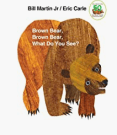
Board of Education banned Brown Bear, Brown Bear, What Do You See? for promotion of Marxism. When someone pointed out to them that they had confused the Brown Bear author, Bill Martin Jr.,with another Bill Martin, author of Ethical Marxism: The Categorical Imperative of Liberalism,  they withdrew the ban and said Brown Bear, Brown Bear was okay for kids.

REASON TO WORRY?

Should a father fear that a child to whom he reads Hop on Pop will attack him? No known cases. Will readers of the Harry Potter series lose their faith? Probably no more likely than that they will drop out of soccer to train for broomstick sports.  Or abandon their cell phones in favor of a personal messenger owl. Teachers, librarians, and most parents believe that reading stories encourages and expands the most positive natural qualities of children—imagination, curiosity and empathy.

ASK LIBRARIANS: THEY HAVE READ THE BOOKS

Librarians know their collections well. They are happy to help parents select books for their children that will not conflict with their particular family values and beliefs.

But book-banning groups want to decide which titles other people’s children in their communities will not be allowed to read. The number  of banned  children’s books has increased dramatically just in this last year. The main targets currently are books that focus on—or mention— such topics as slavery, racial  discrimination, gender identity, or climate change. Challengers claim that reading, knowing, and talking about these things will harm, even “traumatize” children. In some places the bans have become law, requiring libraries and librarians to comply by removing the books.

For librarians, a core principle is that free access to books and information is inseparable from freedom of speech. That means for all of us and all our kids, not just a few. Arrest librarians? Better to cherish and defend them.

Banned Books Week isn’t until the first week of October. The list will be especially long this year, though. Let’s  get an early start exercising ours and our kids’. . .


STEM Tuesday– Coding– Book List


Coding is an essential skill in our fast-paced digital world. With activity books, reference guides, historical narratives, and fiction, this month’s book list is sure to inspire readers to take the next steps in their coding journey.


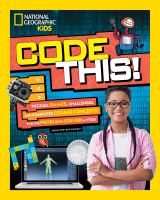
cover image of "Code This" featuring a teenage girl

Code This!: Puzzles, Games, Challenges, and Computer Coding Concepts for the Problem Solver in You 

by Jennifer Szymanski

Code This! contains many puzzles, games, and quirky characters that highlight programming concepts in kid friendly ways. Readers will be engaged as they find hidden treasures, decode ciphers to read secret messages, and more. All in all, a great introduction to coding.


cover image of "The History of the Computer" with icons on black background

The History of the Computer: People, Inventions, and Technology that Changed Our World

by Rachel Ignotofsky


This book provides a comprehensive overview of the computing machines that have changed our world, from the abacus to the smartphone. Everyone knows how much computers have impacted our lives, but this book goes on to answer questions like who created them, why, and how they have transformed the way we interact with our surroundings and each other. It’s also packed with fun facts and engaging illustrations.


book cover featuring a portrait of Ada Lovelace on purple

DK Life Stories: Ada Lovelace 

by Nancy Castaldo


In 1843, Ada Byron Lovelace wrote the first computer program… long before technology was advanced enough to try it out! Part of DK’s “Life Stories” series, this engaging biography brings to life the curiosity, imagination, and scientific contributions of this coding pioneer. Sidebars, quotes, definitions, maps, and photos give readers more historical context about the world where she grew up.


three books. The top one is purple and is titled "Kids Get Coding"Kids Get Coding 

by Heather Lyons and Elizabeth Twedale

This Lerner series includes eight short, illustrated books that bridge the gap between unplugged activities and computer-based skill development. Some of the titles in the series include “Learn to Program,” “Coding, Bugs, and Fixes,”  “Online Safety and More,” and “Coding in the Real World.” A character named Data Duck walks kids through basic concepts within each book, and a companion site gives readers the chance to try out their new skills with book-specific projects.


cover image of "Book Cover" with nine women on red backgroundGamer Girls: 25 Women Who Built the Video Game Industry 

by Mary Kenney, illustrated by Salini Perera


Gamer Girls introduces readers to the dynamic women who created iconic video games and changed the industry forever. From Roberta Williams to Mabel Addis Mergardt, this book highlights the history of how women got started in this industry, and then profiles 25 of them. The text is easy to read and engaging, and it’s accompanied by eye catching illustrations.


book cover of "My Life as a Coder" featuring a cartoon boy typing at a computerMy Life as a Coder 

by Janet Tashjian, illustrated by Jake Tashjian


My Life as a Coder is the ninth book in Janet Tashjian’s fictional My Life series. It stars reluctant reader Derek Fallon. In this particular book Derek receives a new laptop. However, it has no Wi-Fi so he can’t use it for gaming. If he wants to play computer games, he’ll have to learn how to code them himself. This premise will inspire readers as they watch Derek struggle but eventually get the hang of the world of tech and coding.


cover image of the book "Girls Who Code"Girls Who Code: Learn to Code and Change the World 

by Reshma Saujani


Girls who Code champions females and girl-empowerment. The book includes easy to grasp explanations of various coding principles as well as real life stories of girls and women who work for such companies as Pixar and NASA. It goes on to detail what a huge role computer science plays in our lives and how much fun it can be. It also features bold illustrations on every page.


yellow book cover with text, "Coding Games in Scratch"Coding Games in Scratch: A Step-by-Step Visual Guide to Building Your Own Computer Games 

by Jon Woodcock 


For students who are just getting started with coding, Scratch is a great block-based program to use. This practical guide provides illustrated tutorials that show readers not just what to do but also why!  It introduces strategies for problem solving, collaborating, and thinking creatively.


cover image of the book "Get Coding!" featuring two cartoon people, a computer, and a dogGet Coding! Learn HTML, CSS & JavaScript and Build a Website, App, and Game

by Young Rewired State


The beginning of this book contains a plea for help from the fictional Professor Harry Bairstone, who has just found a precious gem called the Monk Diamond. As readers progress through the chapters, they will embark on a quest to help him keep the Monk Diamond safe from nefarious jewel thieves. Along the way, they will complete short coding projects and learn how to use three of the most important programming languages used in web development and design: HTML, CSS, and JavaScript.


cover image of "Python for Kids"Python for Kids, 2nd Edition: A Playful Introduction to Programming 

by Jason R. Briggs


This kid-friendly guide aims to make Python fun to learn and use! Python is one of the most widely used text-based computer programming languages in the world, and this book walks students through the basics of text-based programming in a comprehensive but digestible way. The sample code problems feature everything from gorillas to secret agents, and the main text is accompanied by colorful illustrations, puzzles, definitions, and a section on troubleshooting.

________________________________________________

This month’s STEM Tuesday book list was prepared by:

Author Lydia Lukidis

Lydia Lukidis is the author of 50+ trade and educational books for children. Her titles include DANCING THROUGH SPACE: Dr. Mae Jemison Soars to New Heights (Albert Whitman, 2024), DEEP, DEEP, DOWN: The Secret Underwater Poetry of the Mariana Trench (Capstone, 2023) and THE BROKEN BEES’ NEST (Kane Press, 2019) which was nominated for a Cybils Award. A science enthusiast from a young age, she now incorporates her studies in science and her everlasting curiosity into her books. Another passion of hers is fostering a love for children’s literacy through the writing workshops she regularly offers in elementary schools across Quebec with the Culture in the Schools program. For more information, please visit www.lydialukidis.com.


author Callie DeanCallie Dean is a researcher, writer, and musician living in Shreveport, LA. She writes stories that spark curiosity and encourage kids to explore their world. For more information, please visit https://www.calliebdean.com.