Posts Tagged children’s books

Author Spotlight: Rosanne Parry + a GIVEAWAY

Author Spotlight: Rosanne Parry + a GIVEAWAY                                                            

Today, I’m excited to shine the Author Spotlight on children’s author and fellow MUF member Rosanne Parry! Rosanne’s latest MG novel, A Wolf Called Fire, praised by Kirkus as “an exciting and thoughtful portrait inspired by a real animal who succeeded by being different,” was out February 4 from Greenwillow Books and is a 2025 Junior Library Guild Gold Standard Selection and a #1 Indie Best Seller.

Interview with Rosanne

Welcome, Rosanne! Congratulations on the release of your beautiful new novel! It’s a pleasure to highlight the work of a fellow MUF member. A Wolf Called Fire is such a wonderful addition to the Voice of the Wilderness Series. Can you tell us a little background about what inspired these books?

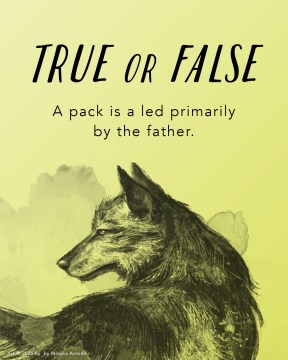
Over the years I’ve gotten many letters from young readers who loved A Wolf Called Wander and were very worried about what happened to the brother he loved so much. So I was happy to return to the world of my wolf pack in the Wallowa Mountains. And there is much more research now about the dynamics of how wolf packs are lead and what kind of wolf grows up to be the alpha. So I wanted to explore how a wolf pup who starts out his life as the omega pup goes on to become a leader.

Point of View

It is so interesting that this story was inspired by a real wolf who became such an extraordinary pack leader, and I was amazed at how you were able to truly capture the point of view of an animal. I’d love to hear about your process and how you manage to write from this perspective so effectively. 

The work of reading fiction is to step outside of the self for a time and live as the fictional character does. So the work of the writer of fiction is to describe that fictional life and world with accuracy and detail that is not just vivid but accessible to the reader.

I have to reach out toward the wolf and ask myself what does this environment feel like. What color is the dirt and how does it feel under my feet and what does it smell like and what does the smell of this particular patch of dirt I’m standing on tell me about the world I need to survive in.

And then I also have to reach toward that child reader and ask myself what words will make this particular wilderness come to life. Because my reader has almost certainly never been to the backcountry of the Eagle Cap Wilderness and probably has not spent any time at all in the wilderness. So how can I choose words that will make them feel a part of that wilderness experience. It takes a lot of research and a lot of time spent in the actual settings of the story.

Voice

You describe the natural world so vividly through all the senses. Your writing is beautiful and lyrical. What advice do you have to new writers as they strive to find their voices?

I would encourage new writers to think of their voice as not so much something external to quest after, as though you might, at last, arrive at the Tree of Symbolism and pluck your own voice from among its fruits. Your voice has always resided within. So it’s more an enterprise of listening deeply to yourself and asking yourself what you hope to communicate in a particular story. And then thinking what a story needs in terms of tone and structure. Your own voice is already there. It’s more a matter of being humble enough to recognize it and proud enough not to let the editing process knock off all the interesting edges.
Characters

Along with Warm, the book includes many other memorable characters. Do you have a favorite secondary character? Who and why?

I really enjoyed writing Snow and Pounce in this story. Both are female wolves with plenty of leadership qualities who find themselves is a pack they don’t like. The one gathers her courage and leaves her pack. But the other quietly forms alliances within the pack she hates and in the end forms a new pack with them.

Back Matter

With its wonderful educational content, this book is sure to be a huge hit with teachers, and the exciting, fast-paced story and beautiful illustrations throughout will be so appealing to kids. Your back matter is very interesting and an excellent supplement. Young readers are going to absolutely adore learning about the real wolf behind the story, as well as the map of Warm’s journey and the pictures of the animal tracks. I love all you say about how kids can make a difference. How did you decide what to include in the back matter? 

When the first Voice of the Wilderness book was written I could not find an American publisher for it, so it was the British publisher Andersen Press who took it on. I had a meeting with them in London when we were at the beginning of the editing process. A British audience knows so little about the American wilderness that we talked at length about how to make the text accessible to them. Illustrations were my editor’s idea. I asked for the back matter to make the book work for teachers who also have to teach map reading and ecosystems and natural history and human history. They agreed that teachers need every bit of support we can offer, and so they set the standard for the books that followed. I’m grateful that Greenwillow has stuck with the format because the price of paper is rising and absolutely every page counts.

What was your biggest challenge in writing this story?

Greenwillow was very keen to have FIRE come out in 2025–their 50th anniversary year. And my approach to writing is not a speedy one. Honestly, the biggest challenge was getting the story researched and written in time to have it so beautifully illustrated and designed. It was a huge team effort. Much gratitude to the illustrator, Mónica Armiño, art director Sylvie Le Floc’h, and editor Virginia Duncan.

Writing Process

Will you tell us a little about your writing process? Where/when do you prefer to write?

I love to write outside when it’s warm enough for that. My treehouse is a favorite spot, but the truth is I can write almost anywhere and I often have to make due perching in whatever space is available. Research is probably the most defining aspect of my writing. I do a lot of it and it requires a fair amount of camping at the moment. Fortunately I love that!

Takeaways

What do you hope readers take away from this story?

Literacy is my primary objective. Because it’s a relatively short book, it’s often a 7 or 8 or 9 year olds first middle grade novel that they have read on their own, and they are a better reader by the time they get to the end of it. I want my reader to feel empowered to read ever more complex and challenging books and newspapers. I want them to care about the wilderness and believe that they have something to say in the defense of land and creatures who cannot speak for themselves.

Influences

What are some current books that have influenced you as a kidlit writer?

I really enjoy books that test the limits and try something new. Virginia Euwer Wolff is a long time friend and mentor. She’s also one of the first YA authors to write in verse. Her Make Lemonade was a game changing read for me.

I have heaps of admiration for Brian Selznick who pioneered an alternating text and sequential illustration story that stands apart from all the rest and makes me think about story in new ways every single time. If you haven’t read The Invention of Hugo Cabret, you are in for a treat.

I’m also a big fan of the graphic novel Little Monarchs by Jonathan Case. It’s a climate future story about a middle school girl and her scientist guardian who are traveling a west coast almost devoid of humans. The story alone is fabulous but the author included non-fiction touches large and small that I very much appreciated. There are pages of the main character’s homework which provide useful back story and fun facts. There are directions on how to tie knots or get into a backpacker’s hammock or navigate by stars. Every new setting has the GPS coordinates in case you wanted to find the place for yourself. A real innovation — blending traditional graphic novel panels with the finest in illustrated nonfiction.

Can you give us some insights into what you’ll be working on next?

My next Voice of the Wilderness novel will be about ravens.

And for the lightning round:

Coffee or tea? Cocoa

Sunrise or sunset? Sunset

Favorite place to travel: The homeward journey has always been my favorite.

Favorite dessert: Ice cream

Superpower: Moral Courage and Compassion are the superpowers we most need.

Favorite music: When I was writing A Wolf Called Fire I listened to a lot of classical pieces by Vivaldi and Respighi. They made me think of the forest.

Favorite book from childhood:  A Wizard of Earthsea by Ursula LeGuin

Thanks again, Rosanne! It was so much fun to learn about you and get a behind the scenes look at your amazing novel! Learn more about Rosanne on her website and follow her on Instagram.

Bio

Rosanne grew up in Oregon loving its wild places and fabulous libraries.  She’s the author of the bestselling Voice of the Wilderness novels and nonfiction picture books. Her newest is A Wolf Called Fire. Rosanne sells books at Annie Blooms, and writes in a treehouse in her backyard.

For a chance to win a signed copy of A Wolf Called Fire, comment on the blog!  (Giveaway ends March 17, 2025 MIDNIGHT EST.) U.S. only, please. 

STEM Tuesday– Periodic Table — Book List

The periodic table is an ordered arrangement of the chemical elements and it explains so much about the world around us. It’s never too early to introduce this concept to children, and these engaging books below do a great job of summarizing the information in kid-friendly ways as well as showing their relevance in everyday life.


A Kids’ Guide to the Periodic Table: Everything You Need to Know about the Elements written by Edward P. Zovinka and Rose A. Clark
This book provides a comprehensive dive into the Periodic Table, from aluminum to zinc. It features the history and science behind each element, and gives an overview for each one. The great thing is that it also shows children how these elements are relevant and make their way into pretty much everything around us.


Illustrated Encyclopedia of the Elements written and illustrated by Lisa Congdon
This visual encyclopedia includes an entry for each element, detailing its history, special traits, and uses in the world. With gorgeous illustrations and accessible text, Congdon showcases both her background as a science educator and her signature style as an artist.


Science Comics: The Periodic Table of Elements: Understanding the Building Blocks of Everything written and illustrated by Jon Chad
Graphic novels are a fantastic way to engage children and teach them scientific concepts. SCIENCE COMICS does a great job by creating a fictional narrative that pertains to STEM concepts. A book of fun chemistry experiments has fallen into the wrong hands and the protagonist must use her knowledge of the Periodic Table to save the day.


The Element in the Room: Investigating the Atomic Ingredients that Make Up Your Home written by Mike Barfield & illustrated by Lauren Humphrey
Join super-sleuth Sherlock Ohms on a series of scientific investigations about the atomic foundations of the world. Amid introductions to each of the elements, readers will unlock answers to the case of the smelly feather, the case of the burning Brazil nut, and more. Interspersed throughout the book are a series of comics that introduce famous chemists from history.


Quiz Yourself Clever! Elements by DK
What better way to learn a STEM concept than by quick and fun quizzes? This book includes interesting facts and relevant applications for all the elements in the periodic table, not to mention eye catching images. It also includes hundreds of quick-fire questions for children to test their knowledge.


Animated Science: Periodic Table written by John Farndon & illustrated by Shiho Pate
This comic book aims to demystify the Periodic Table in a way that makes science fun. It rebrands the eight groups of elements with memorable names, like the Fizzies and the Gassies, and personifies each of the elements with eye-catching illustrations. Along the way, readers will learn how the Periodic Table came to be, how it is organized, and how elements combine to form every substance in the universe!


Everything You Need to Ace Chemistry in One Big Fat Notebook (Big Fat Notebooks) written by Jennifer Swanson
This series developed by Workman Publishing provides comprehensive guides for high school students. This one in particular focuses on chemistry, starting with atoms, elements, compounds, and of course, the periodic table. It also features other chemistry concepts from quantum theory to the pH scale to chemical reactions.


cover of Sam Keen's book "The Disappearing Spoon" featuring chemistry beakers on a black background


The Disappearing Spoon written by Sam Kean
This book retells the surprising and fascinating history of the Periodic Table and the many scientists whose “elemental” discoveries changed the world of science. Kean connects chemistry concepts to world history (for example, by tracing the development of chemical warfare all the way from ancient Greece to World War I) and captures the personalities, politics, and rivalries of pioneering scientists, from Dmitri Mendeleev and Robert Bunsen to Marie Curie and Linus Pauling.


Women in Chemistry written by Mary Wissinger and illustrated by Danielle Pioli
This book was designed to motivate young girls to learn more about the world of STEM. It provides accessible information about scientific concepts but is structured in an engaging way. The narrative follows a curious young girl who asks questions which are then answered by a narrator. The book also features mini biographies of notable female scientists from Rosalind Franklin to Ada Yonath.


Kate the Chemist: The Big Book of Experiments written by Kate Biberdorf
Dr. Kate Biberdorf, aka “Kate the Chemist,” is on a mission to make science fun. Her engaging, hands-on approach shines through each of the 25 experiments featured in this book. Perfect for kids to try at home or for teachers to demonstrate in class, this book includes step-by-step instructions for making slime, writing secret messages, and more – complete with accessible explanations about the chemistry behind each project. Don’t miss the sequel, The Awesome Big Book of Edible Experiments for Kids.


Our World in Pictures The Periodic Table Flash Cards Cards written by DK
Instead of a book, children can read and look through a beautiful deck of flash cards about the periodic table. Each card describes a different element, from its basic information to more in depth details. The deck also includes a glossary and visual aids. It turns learning about the elements into a fun game!


This month’s STEM Tuesday book list was prepared by:

Author Lydia Lukidis

Lydia Lukidis is an award-winning author of 50+ trade and educational books for children. Her titles include DANCING THROUGH SPACE: Dr. Mae Jemison Soars to New Heights (Albert Whitman, 2024), DEEP, DEEP, DOWN: The Secret Underwater Poetry of the Mariana Trench (Capstone, 2023), which is a Crystal Kite winner, Forest of Reading Silver Birch Express Honor, and Cybils Award nominee. A science enthusiast from a young age, she now incorporates her studies in science and her everlasting curiosity into her books. Another passion of hers is fostering a love for children’s literacy through the writing workshops she regularly offers in elementary schools across Quebec with the Culture in the Schools program. For more information, please visit www.lydialukidis.com.


author Callie Dean


Callie Dean is a researcher, writer, and musician living in Shreveport, LA. Her first picture book, Marvelous Mistakes: Accidents That Made History, will be published in 2026. For more information, please visit https://calliebdean.com.

STEM Tuesday– Radio/UV Waves and Applied Physics — Author Interview

Welcome to STEM Tuesday: Author Interview, a repeating feature for the last Tuesday of every month. Go Science-Tech-Engineering-Math!

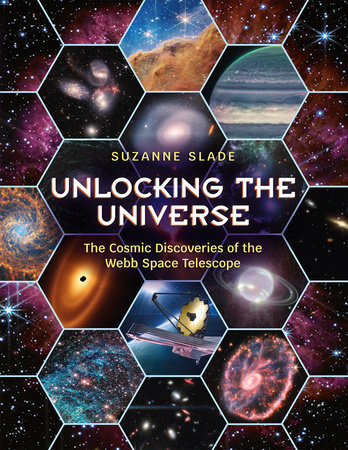
Today we’re interviewing Suzanne Slade, author of Unlocking the Universe: The Cosmic Discoveries of the Webb Space Telescope. Unlocking the Universe transports readers to NASA for an up close look at how the James Webb Space Telescope was designed, built, tested, and deployed. The behind the scenes photographs and wonderous space images will leave you agape in wonder!

Unlocking the Universe has been named:

  • Junior Library Guild Selection
  • NSTA 2025 Best STEM Book
  • New York Public Library Best Books for Kids

Plus, you can watch a goose-bump inducing book trailer here.

And now, let’s launch into the interview!

Emily Starr: I’ll start with the obvious. The Webb images are breathtaking! What was your involvement in choosing which images to include?

Ring Nebula

Ring Nebula

Suzanne Slade: I started writing this book before Webb had released any space images, so it was super exciting when its first image, a gorgeous galaxy cluster, was unveiled on July 11, 2022. After that, I waited with bated breath for each new spectacular image.

I wanted the book to share a variety of Webb space images, such as nebulas, galaxies, dying stars, nurseries where stars were being born, and more. For example, this image of the Ring Nebula (left) revealed new details of a dying star at the center that gives us a glimpse of what could happen to our Sun. (But nobody panic. The Sun has billions of years left!)

To be honest, there were so many gorgeous images that it was excruciating to decide which ones would make the cut. Near the end of the project, we did manage to squeak in some extra ones on the cover montage, in the back matter pages, and in the end sheets.

Emily Starr: This month, the blog is helping readers explore radio/UV waves and applied physics. Physics concepts can sometimes seem difficult and complicated to children (and some adults!) – like the electromagnetic spectrum. What are your considerations when thinking about how to make advanced science easy for kids to understand?

Suzanne Slade: There are many things to consider when writing about complex science topics for children. Here are a few I implemented in this book.

James Webb Space Telescope

James Webb Space Telescope

Near the beginning of the book some basic science/space terms are defined within the text, such as “nebula” and “exoplanet,” to help readers ramp up on the topic.

Sidebars with colorful infographics helped explain more complicated topics (like the electromagnetic spectrum.)

As we know, a picture is worth a thousand words. So we made the decision to use photos, instead of illustrations, for the entire book. As I poured through hundreds of potential photos to show readers how the Webb telescope was designed and built, I carefully selected interesting ones that would draw the reader in.

Two page spread showing the Webb Space Telescope's primary mirror

Two page spread showing the Webb Space Telescope’s primary mirror

I also looked for photos which shared bits of information not covered in the text. For example, the book explains how Webb’s large primary mirror, which collects distant light in space, is made up of 18 hexagonal shaped gold panels. The photos in the spread at the left show how the panels are assembled into the primary mirror plus more, such as the size of the mirror relative to the workers, the precise way the panels fit together, how the workers and many components were protected from dust contamination, etc.

Emily Starr: Small blocks of layered text also make the book very accessible to younger readers. How did that format come about?

Suzanne Slade: The design layout, which includes the layered text you mention, was a collaborative effort between myself, the editor, and the spectacularly creative book designer. We tried a few different ideas before arriving at the book’s final design. One fun aspect about creating this book, which is not common in most book projects, was that I was able to meet with the editor and book designer in person can discuss the layout. Fortunately, I live north of Boston part-time, and the publisher, Charlesbridge, is located in Watertown near Boston.

Emily Starr: What was your process for contacting experts and conducting interviews at NASA? Was the agency receptive and helpful?

Suzanne Slade: It can be challenging to know who to contact at NASA or other agencies when working on science books, and these smart experts are very busy people. As luck would have it, one of my high school acquaintances, Dr. Jonathan Gardner, is the Deputy Senior Project Scientist for the JWST. I reached out to him, and he kindly agreed to answer questions and vet the manuscript, which was extremely helpful. I had worked with a NASA engineer, Sandra Irish, on a previous project. She was enthused about this book topic and happy to share her expertise. There are also great online interviews which were helpful as well.

Emily Starr:  The JWST was such a long and complicated project that I’m sure you sifted through piles of research. How did you decide what details to include in the book?

Suzanne Slade: I could write volumes about research and the difficult process of deciding which information to include in a book and what seems best to leave out. The short answer is: I try to include some content that readers can easily understand or may already be familiar with, along with new information that will expand their understanding of the topic and hopefully inspire them to want to learn even more. I prioritize facts and random information nuggets I feel young readers will find fascinating.

Orion Bar

Orion Bar

Emily Starr: As an educator who teaches students to expect and even celebrate failures, I appreciated the section about testing and setbacks. Why was it important to you to include those details?

Suzanne Slade: I’m a mechanical engineer who used to work on rockets and car braking systems, so I understand a big part of engineering and science is trial and error, or mistakes and re-designing. I think it’s important for readers to understand that progress in science is built on failures. As a storyteller, I also know that a happy ending is more satisfying when the journey to get there was filled with challenges that needed to be overcome.

Emily Starr: Many of your books delve into interesting space-related topics. What do you hope readers understand about space by reading your work?

Suzanne Slade: Basically I hope they catch a glimpse of the enormity of space, and the many mysteries and unanswered questions about our cosmos we have yet to understand. I’d also be pleased if my books inspire readers to pursue their dreams of a career in a space related field, such as a researcher, teacher, engineer, explorer, or citizen scientist.

Emily Starr:  Are you working on other space-related projects in the near future? (Actually, we would be happy to learn about any of your upcoming projects!)

Suzanne Slade: In celebration of the 50th anniversary of the first moon landing, I wrote Countdown: 2979 Days to the Moon and Daring Dozen. Since then, I’ve been thinking about the many talented women who made the Apollo missions possible. So I wrote a book about the sharp, dedicated women who helped engineer, stitch, design, plan, and execute the Apollo moon missions. Of course, thousands of women worked on those missions, so it was difficult to decide how many women to feature. In the end, I decided to share the stories of twelve women to mirror the twelve men who’ve walked on the moon so far. This exciting book, titled Women on a Mission, releases in October 2025. I can’t wait!


Sibert Honor author Suzanne Slade has written more than 150 children’s books. As a mechanical engineer who worked on rockets, many of her titles are about space and women in STEM. Some recent titles include The Universe and You, Mars Is: Stark Slopes, Silvery Snow, and Startling Surprises, June Almeida, Virus Detective!, The Woman Who Discovered the First Human Coronavirus, and A Computer Called Katherine: How Katherine Johnson Helped Put America on the Moon (NSTA Best STEM Book). Her title, Astronaut Annie, soared to the ISS and was read by astronaut Anne McClain for Story Time From Space.


Emily Starr

As a former fourth grade teacher and founder of StarrMatica, a STEM publishing company, Emily Starr has developed award-winning K-5 science curriculum and professional learning materials for 20 years. She is a member of the Iowa State Science Leadership Team, a peer reviewer for the National Science Teaching Association’s journal Science and Children, and a frequent presenter at state and national education conferences. Her debut middle grade nonfiction book will be released in 2025 from the Iowa Ag Literacy Foundation.