Posts Tagged children’s books

We Need Diverse Books!

Miranda Paul has published more than 50 short stories for magazines and digital markets and is the author of several picture books from imprints of Lerner, Macmillan, and Random House. Her debut, One Plastic Bag: Isatou Ceesay and the Recycling Women of the Gambia, and her second book, Water is Water were both named Junior Library Guild selections. She is a Co-Regional Advisor for the Wisconsin Chapter of SCBWI and the administrator of RateYourStory.org, a site for aspiring writers.
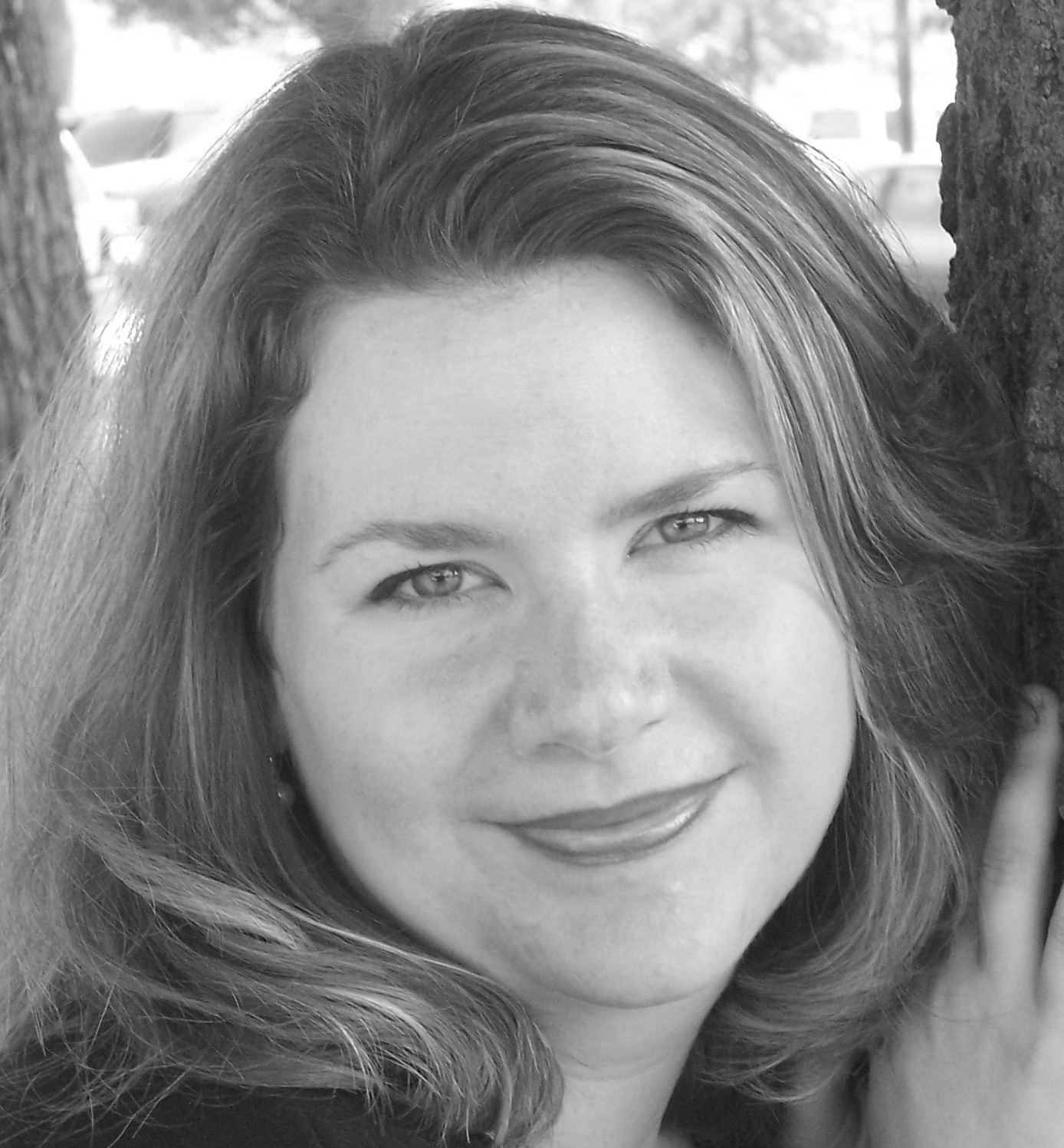
Miranda Paul

I’ve invited Miranda to our blog to talk about her work with We Need Diverse Books™.

What is your role in WNDB, and how did you get involved?

My official title is VP of Outreach. I got involved at first by chatting on Twitter about diversity issues in literature with several of the individuals who became the force behind WNDB. The conversation moved off of Twitter and collectively, the grassroots team decided to launch a three-day awareness and action campaign. That’s how WNDB got started, really. We were trending days before the official campaign start date, and after the hashtag (#WeNeedDiverseBooks) took the world by storm, BookCon invited us to present in New York. From there, we launched our own website, filed for non-profit status, raised over $300,000 and began implementing several initiatives ranging from awards and grants to internship program and booktalking kits.

What does WNDB hope to accomplish and how?

Our official mission is to advocate essential changes in the publishing industry to produce and promote literature that reflects and honors the lives of all young people. To accomplish this, we recognize all diverse experiences, including (but not limited to) LGBTQIA, people of color, gender diversity, people with disabilities*, and ethnic, cultural, and religious minorities. We have continued a strong social media presence, and in 2015 we’ve expanded our presence on the ground and in communities through attending literary events, distributing kits, and bringing on more team members who live in different geographic areas.

Some of our upcoming goals include a mentorship program, a diversity festival, and more ways in which we can serve readers through helping them discover great diverse books that are already out there. The Walter Dean Myers Awards will recognize some of those books, and the Walter Grants will help new voices emerge.

*We subscribe to a broad definition of disability, which includes but is not limited to physical, sensory, cognitive, intellectual, or developmental disabilities, chronic conditions, and mental illnesses (this may also include addiction). Furthermore, we subscribe to a social model of disability, which presents disability as created by barriers in the social environment, due to lack of equal access, stereotyping, and other forms of marginalization.

What resources does WNDB offer to teachers and librarians?

Our “Where to Find Diverse Books” links page, our Summer Reading Series and our Booktalking Kits come to mind. Our links page is a quick go-to guide when looking for recommendations in particular diverse categories. The Summer Reading Series includes Picture Book, Middle-Grade, and Young Adult titles using a comparative graphic model. Some of the Chapter book & Middle-Grade novels included so far summer are:

The Jumbies by Tracey Baptiste

Gaby, Lost and Found by Angela Cervantes

The Lulu Series by Hilary McKay

The Truth About Twinkie Pie by Kat Yeh

The Undertaking of Lily Chen by Danica Novgorodoff

Unusual Chickens for the Exceptional Poultry Farmer by Kelly Jones

More titles will be posted throughout the summer at: http://weneeddiversebooks.org/summer-reading-series/

WNDB_Booktalking_Kit_Logo (2)

Our Booktalking Kits are wonderfully visual, and are being utilized by school and public librarians in addition to booksellers. The #WeNeedDiverseBooks Booktalking Kit is a project that was developed with the American Booksellers Association and School Library Journal. This kit helps teachers, librarians, and booksellers promote non-majority narratives in children’s literature and includes:

PB, MG and YA diverse booklists designed to help shed light on lesser known books that are about diverse characters and/or written by diverse authors

Comparative title suggestions and corresponding comp title shelftalking mini-posters

Summer_Reading_Series_Sample_WNDB (2)

A We Need Diverse Books sign to create your own WNDB display

The great thing about these Booktalking Kits is that we plan to come out with new ones every year, so it’s a resource that will grow over time. Currently, there are ten Middle Grade titles including (just to name a few) Tim Tingle’s How I Became a Ghost, Zeina Abirached’s A Game for Swallows and Alex Gino’s George. Teachers, librarians, booksellers, and bloggers can request the full kit download at: http://weneeddiversebooks.org/edkit/

Booktalking_Kit_Sample_WNDB (2)

How can people get involved?

  • First of all, sign up for our newsletter, because that’s where we periodically send out calls for help/volunteers.
  • I also urge people to download our Booktalking Kits, which are now available online and share them with their local bookstore owners, librarians, and teachers.
  • If you’re part of an organization or business that wants to sponsor or support WNDB in a more significant way, we have a partnership request form and we review those quarterly.
  • Consider inviting WNDB to your literature festival, conference, or event as well.
  • Our success hinges on the keeping the diversity discussion alive and productive, so keeping WNDB news in the spotlight serves all of us. We’re grateful for the re-tweets, shares, and shout-outs.
  • We’re also extremely grateful for continued financial support as we implement our programming. (The “Donate” button is right on our navigation bar at diversebooks.org!)

Jacqueline Houtman is the author of The Reinvention of Edison Thomas (Front Street/Boyds Mills Press 2010) and coauthor, with Walter Naegle and Michael G. Long, of Bayard Rustin: The Invisible Activist (Quaker Press of FGC 2014).

Oh, the Drama! Novel Writing from a Playwright’s Perspective

PP1

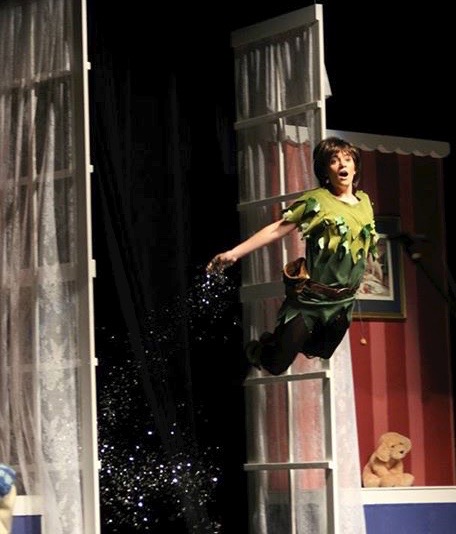
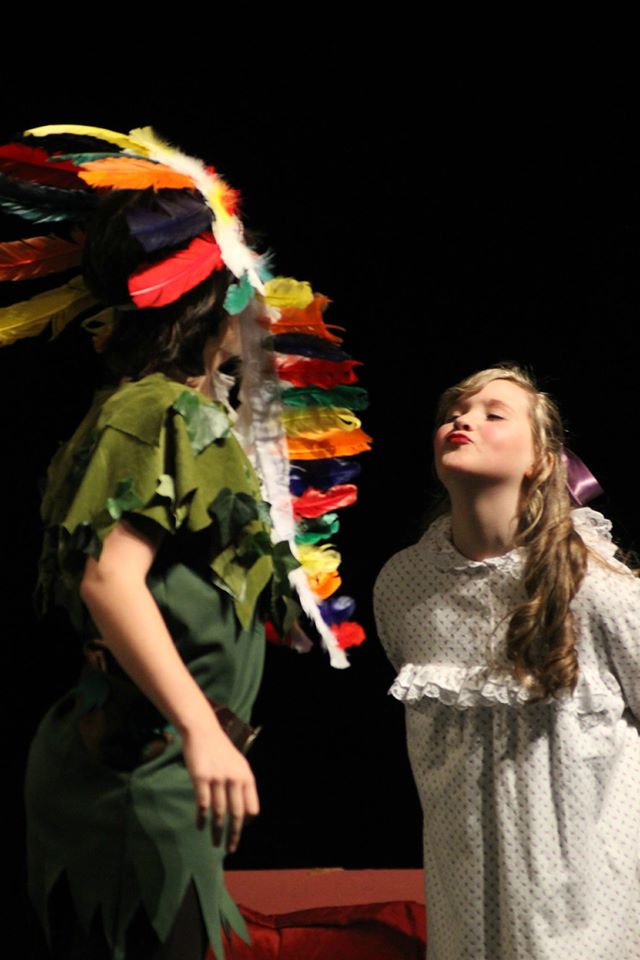
Images are from a recent production of Peter Pan which I directed, but unfortunately, did not write.

As a director and resident playwright at my local children’s theater, I came into novel writing from a script writer’s background. There are drawbacks of coming from the stage to the page. But there are benefits, too. I think the lessons I’ve learned and am still learning apply to writers from all backgrounds, and I look forward to reading how you deal with these areas when writing.

Pitfalls: 

Seeing the Scene: “Could we have a little more description of this location?” My editor wrote this several *cough* times in my first novel manuscript. I call it the plague of the playwright: I “see” all my scenes as if they’re on stage or in a movie, often forgetting the reader can’t see them as well. I’ve had to make conscience decisions to describe “the set” of each scene, realizing that setting is what grounds the reader in the character’s world. This usually happens during the second draft.

Disoriented: “Orientation.” That’s another comment that occasionally still pops up in edits. Related to the first pitfall, in a script, I’d put the character’s position and movement on the set in parenthetical stage notes. I see it in my head when I write, but have to remember to help the reader see it by describing it for them.

Lost in Transition: As a director, I’m used to beginning and ending scenes via light cues and curtains. But that won’t work in fiction. It doesn’t always take much, just showing the passage of time or giving a character some internal dialogue (another thing it’s easy for this playwright to forget to include), but it’s the difference between a confused reader and one who can suspend disbelief.

Pluses:

PP2 (1)What’s That You Say? Dialogue is probably the playwright’s number one vehicle, and most of my first drafts consist of the characters talking. If I’m writing a script, I will often hand a copy to my husband so I can hear how a scene sounds aloud in comparison to how it sounded in my head. A strong internal ear is valuable for a novelist, but when in doubt, read it out!

Hands Free: I recently saw a contest for a short story written entirely in dialogue-no tags allowed. If I weren’t working on other projects, I’d probably enter for the fun of it. Body and dialogue tags aren’t a bad thing, and I use them often, but they can clunk up an otherwise snappy conversation. Playwrights have to rely solely on words in a script and let the actors fill in the rest. I think a stretch of dialogue without any tags gives the reader a chance to connect with the characters in a deeper way, utilizing the imagination to fill in the blanks. Jane Austen was a master of this. A conversation between Mr. and Mrs. Bennet in Pride and Prejudice:

“Of what are you talking?”

“Of Mr. Collins and Lizzy. Lizzy declares she will not have Mr. Collins, and Mr. Collins begins to say he will not have Lizzy.”

“And what am I to do on the occasion? It seems a hopeless business.”

“Speak to Lizzy about it yourself. Tell her you insist upon her marrying him.”

“Let her be called down. She shall hear my opinion.”

Now, I would have been tempted to at least used one physical description of Mrs. Bennet flailing about or pulling at her cap, but Jane trusts that she’s painted the characters well enough for us to see it all in the theater of our minds. Also noteworthy is that she doesn’t use a single exclamation point.

I’m Hearing Voices: Nobody wants to see a play with characters who sound like echoes of each other, and the same holds true in fiction. I like to give characters varying sentence construction and one or two key words or phrases that they say without thinking, especially in conversations.

PP3It’s All About the Timing: There’s no time for lags in action or dialogue in theater. If you’ve ever been to a play with a seemingly eternal scene change or worse, where an actor forgets lines, you know how it pulls you out of the show. Pacing is priority in fiction, too. Varying sentence structure, giving readers time to “breathe” after intense scenes, and knowing how to end a chapter with a page turner will all keep your audience fully invested in your characters’ journeys.

I’d love to hear from other script writers on how you make the transition from script or screenplay to story, and from anyone else who has insight on how to improve a novel’s setting, orientation, and transitions.

LGBioPicture copyIn addition to writing, directing, and occasionally acting in plays and musicals, Louise Galveston is the author of BY THE GRACE OF TODD and IN TODD WE TRUST (Penguin/Razorbill). She resides in Kansas with her large family and a noisy parrot, who supply plenty of comedy and drama. 


You’re Invited: A Giveaway and Interview with Jen Malone and Gail Nall

The Mixed-Up Files is very excited to introduce Jen Malone and Gail Nall and their new series about four girls who run an event planning business. The first book in the series, You’re Invited, was released just last month.

Unknown

The authors recently stopped by to answer some questions about themselves and their books.

MUF: I see that the two of you live pretty far from each other. How did you meet? And what made you decide to collaborate on a book?

Gail: In summer 2012, we were both querying and doing blog writing contests. We “met” on one of those blogs where we each had an entry (spoiler alert: my entry was my upcoming YA debut, Exit Stage Left, which was MG back then!). We each read the other’s entry, and then I think we left simultaneous comments to the effect of, “Hi! You write like me. Let’s exchange manuscripts!” So we did, and quickly became critique partners. Not long after that, Jen snagged an agent, and then about four months later, I also got an agent. Then Jen’s book, At Your Service, sold to Aladdin, and a few months later, my book, Breaking the Ice, also sold to the same editor at Aladdin. So, collaborating on a story was almost meant to be the next step! We write MG with comparable voices, were already with the same editor at the same house, and we knew we could get along! It was a nice surprise to find out that we both drafted chronologically, and that neither of us was particularly skilled in plotting before writing. (We had to fix that last one, quick!)

MUF: What sparked your idea of a group of friends becoming event planners?

Jen: I love to write wish-fulfillment books (At Your Service is about a girl who lives in a fancy hotel) and I also love books about girl entrepreneurs, so I basically just asked myself, “What business would I have loved to do with my friends when I was twelve?” Party planning was something tween girls could kick butt and allowed for lots of creativity on their part, but also offered plenty of potential for drama and hilarious mishaps, which Gail is a master at devising! I was rereading Sisterhood of the Traveling Pants around the same time and loved the four best friends each writing from her own perspective. We always knew the tight-knit friendship would be the real story in You’re Invited, and we pitched the book as a cross between Babysitter’s Club and Sisterhood, which became a touch point for us as we wrote.

MUF: Have either of you had any of your own event planning disasters?

Gail: Okay, so back in high school, my BFF and I decided to throw a party at her house. It was very last-minute, and it was really more of a way to invite the guy she liked over without specifically inviting him, if that makes any sense. So it’s 7:00, and no one’s there. 8:00, no one. About 9, the guy’s friend calls and says they’re coming over. So rather than look like the girls who threw a party no one came to, we raced around filling up plastic cups with various levels of Coke, crumbling food onto paper plates, and generally making the place look like there’d just been some amazing party these guys had missed out on. The funny thing is, I think they bought it.

Jen: I used to work as a Hollywood publicist and a big part of my job was planning premieres and special screenings, so I’ve had my share. One of the most memorable was when I had to spend a weekend hiding the boyfriend of an A-list movie star from the press… and from his wife (it actually forms the basis for my YA out this summer, called Map to the Stars). And then there was the time a movie star ground her stiletto heel into the foot of a fan who just wouldn’t give her space on the red carpet at a film festival, and I had to distract the press so they wouldn’t notice the commotion that caused. Good times! I will say, that job taught me to be a little too hyper-organized in order to avoid any potential for disaster- when it was time to plan my own wedding everyone in the bridal party got three-inch thick binders of instructions. I cringe every time I think about those, and I’m sincerely lucky to still have them as friends today!

MUF: What was your process when you wrote? Did each of you take two characters? Or did you each have a hand in writing from the point of view of all the girls?

Gail: The book is a rotating, four-person POV, so each chapter is narrated by one of the girls. We each claimed two characters and wrote “our” girls’ chapters, but there was a lot of input and revision based on the other person’s comments. The other person also had carte blanche to go through and fix her characters’ dialogue and quirks in the chapters she didn’t write. There was a lot of “blah blah [insert Becca-speak here] blah blah”-type notes throughout the first draft. If it was something more than that, we usually wrote long margin comments to each other, suggesting changes to the scene that would better fit the characters and their motivations. Co-writing is sort of like working with a built-in critique partner!

We actually wrote a three-part blog series about the whole process (from idea to publication), which you can find the first installment of here: https://chasingthecrazies.wordpress.com/2015/05/06/behind-the-curtain-what-happens-when-you-co-write-a-book/

MUF: I love how each girl’s chapter starts with something that relates to her, e.g., Sadie’s chapters always start with To-Do Lists; Lauren’s start with definitions; Vi’s start with recipes; and Becca’s start with horoscopes. If you were characters in your own book, how would your chapters start?

Gail: A list of the books in my to-be-read stack. Wait, that would take about fifty pages to list . . . So maybe I’d be a Sadie and have my endless to-do list that lives on my phone. I have reminders to “buy groceries” and “clean cat litter boxes,” because seriously, who has time to remember stuff like that? 😉

Jen: This is a great question! Mine would probably start with a quirky or inspiring quote because I’m a total sucker for them (even if I never remember them later!) 365 Days of Wonder: Mr. Brown’s Book of Precepts by R.J. Palacio is basically my nirvana. It would definitely not be a recipe, like Vi’s chapters have, because I can only cook pizza bagels and oatmeal.

MUF: I see that You’re Invited Too is already in the works. When will that be out? And do you expect to do more books together?

Gail  and Jen: You’re Invited Too will be out on February 2nd, 2016! It was so much fun to write about the girls’ continuing adventures as they take on their first huge event (a wedding with a Bridezilla). We’d love to write more books for the RSVP girls, so fingers crossed!

Thanks for such great answers! Congratulations to both of you and thanks for stopping by!

Gail and Jen are giving away a signed copy of You’re Invited. To be eligible, just leave a comment below. A winner will be announced on Tuesday, June 9. (You must live in the United States or Canada to enter the giveaway.)

Read more about the authors here:

official%20author%20photoJen Malone writes books for tweens and teens. Her debut At Your Service published with Simon & Schuster/Aladdin MIX in 2014, and her new series, You’re Invited (Simon & Schuster), co-written with Gail Nall, launched with Book #1 in 2015. She has three young adult titles forthcoming with HarperCollins, beginning with Map to the Stars in Summer 2015. Jen lives outside Boston with her husband and three children, teaches at Boston University, loves school visits, and has a “thing” for cute hedgehog pictures. You can learn more about her and her books at www.jenmalonewrites.com.

Gail%20NallGail Nall lives in Louisville, Kentucky with her family and more cats than necessary. She once drove a Zamboni, has camped in the snow in June, and almost got trampled in Paris. Gail is the author of the middle grade novel Breaking the Ice, and is the co-author of You’re Invited (both Aladdin/S&S, 2015). Her upcoming young adult debut is Exit Stage Left (EpicReads Impulse/HarperCollins, 9/8/15), and two more middle grade novels, You’re Invited Too and Out of Tune, will follow from S&S in 2016. You can find her online at www.gailnall.com and on Twitter as @gailecn.


Dorian Cirrone has written several books for children and teens. Her middle-grade novel, The First Last Day, which takes place on the Jersey Shore, will be out in May 2016 from (Aladdin/S&S). You can find her on Facebook and on Twitter as @DorianCirrone. She gives writing tips and does occasional giveaways on her blog at: http://doriancirrone.com/welcome/blog/