
Posts Tagged books

STEM Tuesday — Oceans — Book List


Oceans are a world of wonder for many. From the animals that live in them to the ecosystems they provide, they fuel the imagination and encourage the adventurous. Students who want to know more about marine biology, research, and conservation are invited to take a look at the list below. They won’t be disappointed!


The Fascinating Ocean Book for Kids: 500 Incredible Facts!

by Bethanie Hestermann and Josh Hestermann

This book is packed with facts about the ocean and the life within it. Filled with pages of full-color pictures, it depicts what the underwater world is like for fish, dolphins and loads of other sea creatures. If you know someone interested in an ocean of cool trivia, this is the book for them.


Ocean Animals and Their Ecosystems: A Nature Reference Book for Kids

by Dr. Erica Colón

The oceans of Earth are swimming with fabulous marine animals. This book introduces you to them and their habitats. From coral reefs to polar regions readers will explore each ecosystem and discover who lives there. Filled with stunning photos and interesting information, this is a great way to explore the ocean with kids.


Marine Science for Kids: Exploring and Protecting Our Watery World, Includes Cool Careers and 21 Activities (66) (For Kids series)


Marine Science for Kids: Exploring and Protecting Our Watery World

by Bethanie Hestermann and Josh Hestermann

A fun guide to the underwater world – to the living things, and to the geology, chemistry and biology of all things marine. Includes insights from marine scientists and lots of hands-on activities.


Deep, Deep Down: The Secret Underwater Poetry of the Mariana Trench


Deep, Deep Down: The Secret Underwater Poetry of the Mariana Trench

by Lydia Lukidis and Juan Calle Velez

Lyrical text and stunning illustrations take readers on a journey deep down into the Mariana Trench. Also includes in-depth scientific information on the vibrant life in the deep oceans.


Superpod

SUPERPOD: Saving the Endangered Orcas of the Pacific Northwest

by Nora Nickum

An depth, immersive book about the playful Southern Resident orcas. The book also speaks about the people working to save them from extinction, and all the different ways they’re trying to do that, from medicine, to technology and activism.
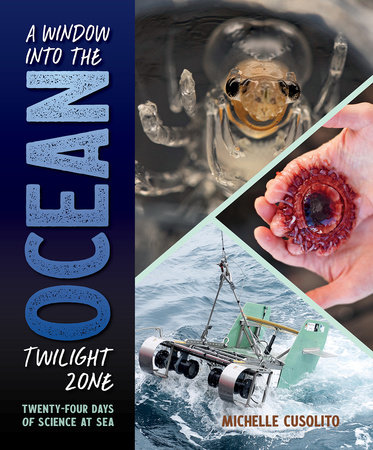


A Window into the Ocean Twilight Zone by Michelle Cusolito


A Window into the Ocean Twilight: Twenty-Four Days of Science at Sea

by Michelle Cusolito

The author goes on a breathtaking real-life adventure with scientists from Woods Hole Oceanographic Institution to study the twilight zone of the ocean using new technologies. Learn details of day-to-day living on a research ship, and all about the animals and the sea.


The Lost Forest: An Unexpected Discovery beneath the Waves


The Lost Forest: An Unexpected Discovery Beneath the Waves

by Jennifer Swanson

An entire cypress forest was found hiding under the ocean in the Gulf of Mexico. This book speaks about the discovery, about how the forest came to be there, and about the scientists trying to uncover the secrets the forest may tell us – from life-saving medicines to climate change.


Life in Hot Water: Wildlife at the Bottom of the Ocean See more


Life in Hot Water: Wildlife at the Bottom of the Ocean

by Mary Batten and Thomas Gonzalez

All about the creatures that live at the bottom of the ocean in permanent darkness and have evolved to thrive in scalding water that gushes from hydrothermal vents.


Marine Biology: Cool Women Who Dive

by Karen Bush Gibson and Lena Chandhok

Marine biology is the study of animal life in saltwater environments. The study includes the tiniest microscopic plankton to the large blue whale! This book takes a look at three women who have this career for a living:  Natalie Arnoldi, Ashanti Johnson, and Lauren Mullineaux. With engaging information and links to primary sources, this book will get readers excited to explore and study the world’s oceans. Dive in and learn more about the ocean!


Eugenie Clark Book for Curious Kids: Diving into the Fascinating Life of the Shark Lady (Great Minds for Curious Kids)

by Eric Lylani

Eugenie Clark is known as the ‘shark lady’; there’s no one better to help readers discover the secrets of the sea! Learn about marine biology, ocean conservation and sharks through the stories of Eugenie’s life and work. Discover her observations and find out how her legacy continues to inspire new marine biologists.


Seashells & Beachcombing for Kids: An Introduction to Beach Life of the Atlantic, Gulf, and Pacific Coasts (Simple Introductions to Science)

by Stephanie Panlasigui and Erika Zambello

Kids young and old are fascinated by the beach and the seashells they find. This book is all they’ll need to learn a bit more about the oceans and their inhabitants. From different beach habitats to beach etiquette, this book is full of great information for aspiring beachcombers as well as fun family activities.


The Forest in the Sea: Seaweed Solutions to Planetary Problems (Books for a Better Earth)

by Anita Sanchez (Author)

Seaweed a climate change hero? You bet, and this book will explain all about it. From a tour of a seaweed forest to activities and recipes, readers will discover how amazing seaweed is. Seaweed can reduce methane emissions, play a role in biofuels as well as medicine, in addition to its role providing a home for marine life. Be prepared to be amazed at what seaweed can do with this fun and inspiring book.


Shruthi Rao is an author. Her home on the web is https://shruthi-rao.com


Susan Summers is a wildlife enthusiast and an author. Contact her at: https://susan-inez-summers.weebly.com/


STEM Tuesday– Deserts — Book List

From the Antarctic to the Sahara, deserts cover about twenty percent of our planet. Despite harsh conditions, plenty of plants and animals – even people – have found a way to live in the desert.

Weird, Wild, Amazing! Desert: Exploring the World’s Incredible Drylands by Tim Flannery; illustrated by Sam Caldwell

Welcome to the weird wildlife you might find in a desert, from ants to lizards, rattlesnakes to scorpions. Each of the seventeen animal profiles is filled with in-depth and sometimes bizarre facts that highlight issues like climate change and conservation or explain more about evolution and habitats.

A Walk in the Desert (Biomes of North America) by Rebecca L. Johnson, illustrated by Phyllis V. Saroff

A lower middle grade text, this book uses photographs, notebook-like illustrated sidebars, and an engaging text to explore various North American deserts and the ways numerous plants and animals have developed strategies to exist in these challenging conditions. It also explores the interconnected food web and provides ideas for further research.

Keystone Species that Live in Deserts by Bonnie Hinmans

After introducing the concept of keystone species, the photo illustrated book explores the role of the desert tortoise, the addax, Indian vulture, Australian dingo, and guanaco within their desert ecosystems. Resources include extensive footnotes and bibliography, as well as a glossary and index.

Desert (Earth’s Biomes) by Tom Warhol

With a conversational tone and fun photos, this text defines the uniting definition and features of deserts. Then it explores the unique landforms, plants, and animals found in deserts around the world, dividing them into hot desert, temperate deserts, and costal deserts. Concluding with a short discussion about the threats they each face, as well as helpful resources and a glossary.

Desert Ecosystems (Earth’s Ecosystems) by Mirella S. Miller

This is a quick introduction to how deserts are formed and where they are found. Sections focus on animals, insects, birds, and plants. The last two chapters discuss desertification and how people can help save the world’s deserts.

Desert Biomes Around the World by M. M. Eboch

Deserts may be hot or cold, but the one thing they all have in common is that they are dry places. This book looks at deserts around the world and the adaptations that allow plants and animals to survive.

Cactus Queen : Minerva Hoyt establishes Joshua Tree National Park by Lori Alexander

What if you knew a place that was filled with thorny, spiny beauty and dainty wildflowers, but all other people saw was a wasteland? In the early 1900s that’s how people thought of the Mohave desert. But Minerva Hoyt saw the desert as a habitat worth saving, and she went all the way to Washington to let the Park Service know.

Death Valley National Park by Nate Frisch

Death Valley is the hottest, driest, lowest place in the U.S. It’s the place to go if you want to see sunbaked earth, salt flats, and sand dunes. It’s also filled with plants, from cacti to pine trees, birds, reptiles and mammals, and a rich history of human habitation.

Deserts (Explorer Travel Guides) by Nick Hunter

Inviting the reader on an exploration, this lower middle grade book uses engaging sidebars to offer packing and survival tips, amazing facts and figures, descriptions of previous explorers, and conservation notes. Stunning photographs highlight the landforms, plants, animals, and people who live in the deserts. The book also contains interviews with an explorer and a conservationist, a world map, fact file, places to visit, and suggestions for further research.

The Great Victoria Desert (Deserts Around the World) by Lynn Peppas

This is part of an engaging six-book series (largely written by Molly Aloian) which includes the Atacama, Gobi, Kalahari, Mojave, and Sahara deserts. Each book opens with a map, description, and fascinating facts about the specific desert. A discussion of the unique geography, features, plants, and animals is followed by a look at human habitation and development throughout the centuries. They all contain photos, “notable quotations” pertaining to the specific desert, fun sidebars, a timeline, and additional resources.


This month’s STEM Tuesday book list was prepared by:

Sue Heavenrich, author

Sue Heavenrich, who writes about science for children and their families on topics ranging from space to backyard ecology. Bees, flies, squirrel behavior—things she observes in her neighborhood and around her home—inspire her writing. Visit her at www.sueheavenrich.com.

Maria Marshall, a children’s author, blogger, and poet who is passionate about making nature and reading fun for children. When not writing, critiquing, or reading, she watches birds, travels the world, bakes, and hikes. Visit her at www.mariacmarshall.com.

STEM Tuesday– Survival Science — Writing Tips & Resources

One often forgets that “Species Survival” can apply to one’s very own environment. My own home is in a thickly populated area – highways, houses and apartments, stores – but nature is still here. Species Survival is more than tigers and whales. It also applies to the species we take for granted because we see them every day, including insects, small animals, native plants, and – the focus of this post – trees.

I find many of my friends have no idea what kind of trees they see and encounter. A project for classroom or life is learning to identify trees. There are lots of resources. I found this fabulous, friendly book, published in 1963, and still available. Tree Finder: A Manual for Identification of Trees by Their Leaves (Eastern US) is currently available at Indiebound. The illustrations are charming and would be very helpful to anyone wanting to learn about trees. It’s a good size to carry around with you.

Tree Finder Book

Another resource is The Sibley Guide to Trees, by David Allen Sibley. There’s a lot of reading but you can find other tree identifiers besides leaves, useful if you are looking in winter.

Sibley Guide to Trees book

The US Forest Service provides lots of technical information about the state of trees and forests. I was able to find a whole section of tree material at https://www.fs.usda.gov/learn/trees. In addition, they have many publications for different localities. I was able to find Southern New England Forests to research trees in my own area.

Southern New England Forest Report

A fun and useful project with leaves is leaf printing. You can make paintings, wall hangings, journal pages, even tee shirts, depending on the ink you use. The basic method is to roll the ink onto a leaf and then with a brayer, spoon, press, or baren transfer the leaf pattern to the surface where you want the image.

There is plenty of information about leaf printing online, and here are some books are linked below.

An activity for both adults and kids is a tree journal or a nature journal. No particular artistic ability is needed because it can be filled with casual sketches, notes, materials pasted in. In the interest of species survival, I suggest a notebook or sketchbook made from recycled materials. Some places are listed below.

A nature notebook would follow in a long line of past documenters of nature. Beatrix Potter, the creator of Peter Rabbit, was a dedicated nature journalist. Her exceptional artwork, along with a dedication to preserving England’s rural history, has contributed to preserving the beautiful countryside in the Lake District.

The Art of Beatrix Potter book

Claire Walker Leslie has many books out on journalling. I attended a workshop with her many years ago and was greatly influenced. I have kept visual journals ever since. I highly recommend Keeping a Nature Journal, 3rd Edition: Deepen Your Connection with the Natural World All Around You. The value of keeping a journal goes beyond documenting your world, it provides a creative outlet that often helps almost as a form of meditation and contributes to mental and emotional well-being.

Keeping a Nature Journal book

Here are links to the resources above.

*Books

Tree Finder: A Manual for Identification of Trees by Their Leaves (Eastern US)

https://bookshop.org/p/books/tree-finder-a-manual-for-identification-of-trees-by-their-leaves-eastern-us-may-theilgaard-watts/9383958?ean=9780912550015

Sibley Guide to Trees

https://bookshop.org/p/books/the-sibley-guide-to-trees-david-allen-sibley/8494373?ean=9780375415197

Sibley Flash Cards

https://bookshop.org/p/books/sibley-tree-identification-flashcards-100-trees-of-north-america-david-allen-sibley/18815381?ean=9780593578551

*Leaf printing.

Nature print paper

https://www.dickblick.com/products/nature-print-paper/

Leaf print set

https://www.dickblick.com/products/leaf-print-set/

*Nature journalling.

The Art of Beatrix Potter: Sketches, Paintings, and Illustrations

https://bookshop.org/p/books/the-art-of-beatrix-potter-sketches-paintings-and-illustrations-emily-zach/7573157?ean=9781452151274

Keeping a Nature Journal, 3rd Edition: Deepen Your Connection with the Natural World All Around You.

https://bookshop.org/p/books/keeping-a-nature-journal-3rd-edition-deepen-your-connection-with-the-natural-world-all-around-you-clare-walker-leslie/14822440?ean=9781635862287

Earth-friendly notebooks.

Best of luck with getting to know your own locality.

Margo Lemieux is retired from teaching art at Lasell University and has been journalling most of her life.