Posts Tagged books

STEM Tuesday– Architecture– Book List

Architecture is the art and science of designing buildings, from skyscrapers to houses, cathedrals to factories, theme parks to museums. Architecture brings together art, math, physics, and engineering, plus an understanding of how people interact with designed spaces.

How Was That Built?: The Stories Behind Awesome Structures by Roma Agrawal

Author Roma Agrawal is a structural engineer. She has designed bridges and skyscrapers, and spent six years working on The Shard (the tallest building in Western Europe). In her book, she shows how engineers and architects approached a variety of challenges, from building a dome to building underground, on ice, even in space.

Buildings that Breathe, Greening the World’s Cities by Nancy Castaldo

Can a skyscraper be a forest? That’s the question architect Stefano Boeri asked when he integrated trees into his design for the Bosco Verticale in Milan, Italy. Readers will learn about the inspiration for his vertical tree towers, engineering the design, creating a team that includes arborists, and thinking about skyscrapers as forest habitat. It ends with how to make a difference in your city.

Discovering Architecture by Eduard Altarriba & Berta Bardí I Milà

An engaging examination of the architecture of buildings around the world, from the pyramids to architecture of the future (green growth, sustainable buildings, & perhaps even life on Mars), famous architects, and the role of architecture in our daily lives. Awesome cut-aways, illustrations, and floor plans combine with history, math, and practical examples to make architecture fun.

Wild Buildings and Bridges: Architecture Inspired by Nature by Etta Kaner, illustrated by Carl Wiens

Many architects look to nature to help solve building challenges and inspire design. Readers will see how cacti and desert canyons inspired cooling features, and water lilies inspired a floating house. Sidebars highlight architects and there are a few activities included.

The Story of Buildings: From the Pyramids to the Sydney Opera House and Beyond by Patrick Dillon, illustrated by Stephen Biesty

This book looks at the diversity of buildings as well as materials used. Visit the Parthenon, examples of Roman architecture, and Notre Dame. Tour the Forbidden City, and compare Renaissance buildings with modern styles. The tour ends with a close look at a straw bale house incorporating environmental design for heating and cooling.

Atlas of Amazing Architecture: The Most Incredible Buildings You’ve (Probably) Never Heard Of by Peter Allen

Buildings have amazing stories, and this book introduces 30 lesser known buildings around the world. They range from neolithic monuments to airports, temples to pyramids, palaces to hideaways. A great way to tour architectural diversity.

Ancient Wonders – Then & Now by Lonely Planet Kids, Stuart Hill, illustrated by Lindsey Spinks

Gatefolds and flaps offer a fun interactive look at architectural marvels throughout the world, including Easter Island, Angkor Wat, and Petra as well as sites in Rome, England, Greece, and Egypt. Explaining the construction, usage, and current condition.

Great Building Designs: 1900 to Today by Ian Graham

Stunning photos of 12 famous buildings around the world and the architects who built them. Side bars define design elements, statistics, history, and the buildings’ interactions with the environment. It includes a challenge to design a building, timeline, glossary, and further ideas for research.

ARCHITECT BIOS:

Maya Lin: Thinking with Her Hands by Susan Goldman Rubin

Maya Lin won the design competition for the Vietnam Veteran’s Memorial when she was a college student. She uses stone and water to design her monuments as well as other buildings: a museum, library, chapel, house. Lin’s designs take into account how people interact with the space.

Immigrant Architect: Rafael Guastavino and the American Dream by Berta de Miguel, Kent Diebolt, and Virginia Lorente, illustrated by Virginia Lorente. (Picture Book)

Historical fiction told in a wonderful conversational voice from the perspective of architect Rafael Gustavino Moreno’s son, Rafael Gustavino Expósito, about their experiences immigrating from Spain, patenting of the “Gustavino tile vaulting system,” hard work, and ultimate creation of over a thousand buildings in the U.S., including Grand Central Station in N.Y, the Boston Public Library, the ceiling at Ellis Island, and a “ghost” subway station (that can still be seen).

ACTIVITY BOOKS:

Architecture for Kids: Skill-Building Activities for Future Architects by Mark Moreno and Siena Moreno

The first part of the book is an introduction to architecture, presenting information about foundations, structure, site plans, elevations – even climate and landscape considerations. There’s an activity on each page, and each chapter ends with a challenge. Part two is all about designing your dreams, with prompts for everything from a tiny house to clothing. Lots of fun and all you need is a pencil.

Adventures in Architecture for Kids: 30 Design Projects for STEAM Discovery and Learning by Vicky Chan

Awesome hands-on activities using cardboard, vegetables, and other common household items guide kids through general construction, historic architecture (using or combatting nature), landscape architecture (tree houses and zoos), sustainable architecture, and city planning. It provides materials lists and notes for adults (outlining physical and mental challenges) for each project, a glossary, and templates.


This month’s STEM Tuesday book list was prepared by:

Sue Heavenrich examines fungi

Sue Heavenrich, who writes about science for children and their families on topics ranging from space to backyard ecology. Bees, flies, squirrel behavior—things she observes in her neighborhood and around her home—inspire her writing. Her most recent book is Funky Fungi (with Alisha Gabriel). Visit her at www.sueheavenrich.com.

Maria Marshall, a children’s author, blogger, and poet who is passionate about making nature and reading fun for children. When not writing, critiquing, or reading, she watches birds, travels the world, bakes, and hikes. Visit her at www.mariacmarshall.com.

STEM Tuesday– Math– Writing Tips and Resources


Paradigm Shift

Did you see it? The National Council of Teachers of English recently issued the “Position Statement on the Role of Nonfiction Literature (K–12).” I’ll be honest and say that when I was growing up, I never thought of nonfiction as literature. To me, nonfiction was an encyclopedia, a text book, or one of those really dry library books that you checked out when you had to do a report on a cheetah. Sure the cheetah was cool, but the book about it? I had to crawl my way through all of the dusty dry to find the fascinating facts.

Look how far we have come… This month we are looking at the literary craft of not just nonfiction, but math nonfiction! And that’s because the world of publishing has opened their arms to cool, crafty, creative presentations of information. And I for one am giddy over it. In fact, NCTE, this group of professional English teachers is proposing “a paradigm shift for teaching and learning with nonfiction literature in K–12 education.”

Drop the mic! Nonfiction is coming into its own!

So, how exactly do we spur on this paradigm shift? We can start by studying the craft of informational books. We can articulate new language to help us describe unique attributes of nonfiction. We can search out the devices used by nonfiction authors. We can compare/contrast, discuss/evaluate, and weigh the pros and cons. In other words, we can have informed opinions.

One Way to Start

Melissa Stewart (author of over 100 nonfiction books for children) and Dr. Marlene Correia (an educator of 30 years) have written a book entitled 5 Kinds of Nonfiction: Enriching Reading and writing Instruction with Children’s Books. Check out this article (https://www.melissa-stewart.com/img2018/pdfs/5_Kinds_of_Nonfiction_SLJ_May_2018.pdf) in the School Library Journal and Melissa’s blog post (http://celebratescience.blogspot.com/2020/02/5-kinds-of-nonfiction-update.html).  They propose that much of today’s nonfiction can be categorized as one of the following:

  • Active – books that get kids doing something, i.e, Klutz Books for Kids
  • Browseable – open to any page and find chunks of facts, i.e., Nat Geo Weird But True World
  • Traditional – provide a broad survey of a topic, i.e. Rattlesnakes
  • Narrative – provide a narrative arc, i.e.  Radiant Child The Story of Young Artists Jean-Michel Basquiat
  • Expository Literature – non-narrative books that present a narrow topic in a creative or unique way, i.e. Summertime Sleepers: Animals that Estivate!

To become more comfortable with this idea, open a math book and check out a spread. Which category might each fit into? Try these:


The Kitchen Pantry Scientist Math for Kids: Fun Math Games and Activities Inspired by Awesome Mathematicians, Past and Present; with 20+ Illustrated, by Rebecca Rapoport and Allanna Chung.


Just a Second, by Steve Jenkins


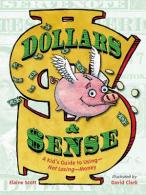
Dollars & Sense: A Kid’s Guide to Using–Not Losing, written by Elaine Scott, illustrated by David Clark.


Sir Cumference and the First Round Table , written by Cindy Neuschwander, illustrated by Wayne Geehan (you’re right, this one is not nonfiction!)


Just as all novels books do not fit neatly into one genre, nonfiction books don’t all fit neatly into these categories, but I bet you know a reader who LOVES one of these categories. What if we recommended books to readers based on this? What if we encouraged all readers to sample books from all of these categories?

This is a powerful new way to understand and nudge forward this paradigm shift for teaching and learning nonfiction!

________________________________________________

Prepared by:


Heather L. Montgomery, author of 17 nonfiction books for kids.

www.HeatherLMontgomery.com

It’s Almost Spring! Bringing Books to Life in the Great Outdoors

Whether the children in your lives are eager lovers of literature or more reluctant readers, finding ways to bring books to life with outdoor activities can be a fun way to encourage thoughtful reading practices and to make books even more engaging. Below are a few ideas for how you might create activities to bring the events of a novel to life for the young readers in your life.


Nest, by Esther Ehrlich, can be adapted into real-life activities in many ways. Set in the 1970’s, this is the story of a family dealing with mental illness. Despite these heavier tones, there’s still a lot of joy in the story from which to pull inspiration. Young readers could go birdwatching just like the main character Chirp and look up the birds they spot in a field guide. Similarly, Chirp creates a dance routine to the song Help! by the Beatles. Young readers can do this too. It doesn’t need to be anything professional or elaborate but getting up and moving to a song (Beatles or not) provides a lot of physical fun and memorizing a dance routine is a good brain exercise, too! And it’s even more fun if it’s performed outdoors.


Book Jacket for Time of the Fireflies

Kimberley Griffiths Little’s novel The Time of the Fireflies also provides more opportunities for readers to engage more fully with the novel.  A picnic dinner to watch fireflies would be ideal for bringing Larissa’s story to life. Other  ideas for bringing her book to life include exploring one’s family history through word of mouth or old pictures and objects or, like Larissa, experience some time travel. Pick a year, help your readers do some research, and then spend an hour or two as though you’ve slipped through time!


Winner of the Newberry medal, The Evolution of Calpurnia Tate, by Jacqueline Kelly, is another novel rich in the natural world and centered around a loveable, strong female protagonist. Readers of Calpurnia’s story can follow in her footsteps by exploring their yards, neighborhoods, or local parks with a notebook and pencil in hand. Walk slowly and observe with all the senses, taking notes and making sketches of what kinds of flora and fauna are found. A field guide could come in handy for this as well, as some young readers  might want to learn the scientific names of plants and animals they observe. This is a great activity to encourage mindfulness, art skills, and offer a foray into being a naturalist.


The First Last Day, by Dorian Cirrone, is also perfect as the weather is warming up. Main character Haleigh finds herself in the midst of a never-ending summer…literally! One activity to bring this novel to life is to encourage young readers to paint memories of their favorite days or to keep a journal of their life through paintings. The passage of time might not freeze as it does for Haleigh, but this is a great way to encourage artistic creativity as well as personal reflection. Other art supplies and mediums can be added or substituted, too.


Finally, in my novel, Smack Dab in the Middle of Maybe, the main character Cricket goes on a wilderness adventure to try to find her mother. A series of clues leads the way. There are several ways Smack Dab could be brought to life, but one idea is to create a clue-based scavenger hunt for your young readers to solve. This could be as simple as leaving hand-written notes with riddles or descriptions that lead from one location to the next. You can also create more complicated clue trails involving cyphers or clues that relate to poetry or history. Even better if the clues incorporate the outdoors or wilderness! A small prize could be added at the end of the clues or simply solving the scavenger hunt can be the victory. Plus, older kids could orchestrate clues for one another. You can find some activities here.


These are a few ideas to get started. Once you start reading with potential outdoor adventures in mind, the sky is the limit. –literally.  Happy reading!