Posts Tagged #authorinterview

Interview with Katie Hafner, author of THE LOST WOMEN OF SCIENCE

From the popular Lost Women of Science podcast, this empowering collection recognizes ten trailblazing female scientists whose lives and works have been lost to history…until now. Here, author Katie Hafner discusses the book’s background, (fantastic!) visuals, and upcoming plans for the series!

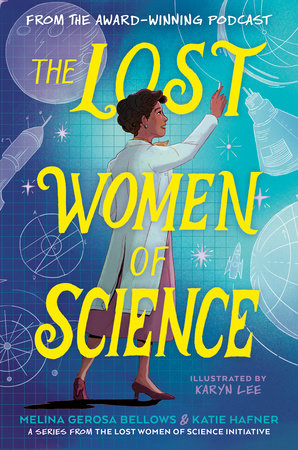
Book cover of THE LOST WOMEN OF SCIENCE

THE LOST WOMEN OF SCIENCE started as a podcast (and an incredible, award-winning one at that). What challenges were there turning the podcast into a book, and how did you solve them?

Our mission is to encourage women and girls to be inspired by what female scientists have achieved and to follow in their footsteps and choose science as a career. Our podcasts are more or less aimed at an adult audience, so producing a book based on the podcast seemed like a great way to fulfill our mission. We had done all the research, so it was a matter of retelling those stories in a way that would inspire younger readers. It also meant adding lots of pictures, diagrams and experiments to keep their attention and show how much fun science is. The challenge was getting the tone of the writing and the illustrations just right. We found a great illustrator, Karyn Lee, to design the book.

I love the inclusion of visual materials in the book, from pictures to historical records to timelines to illustrations. How did you and the Lost Women of Science team decide what to include for each subject?

That was not very difficult because each scientist profiled in the book does a different kind of science, so there were lots of materials to pick from, both archival and contemporary. We wanted to include photographs of our scientists, where possible, as well as illustrations that explained the science. For example, for Eunice Newton Foote, who is known now as the Mother of Climate Science, we include an experiment she did, demonstrating that the more carbon dioxide in the air, the hotter that air gets when exposed to the sun. Remember, Eunice was doing this in the mid-1800s in her home laboratory. So, there’s a neat drawing by our illustrator Karyn Lee showing thermometers in glass jars.

The Lost Women of Science Initiative is an educational nonprofit (The Lost Women of Science Initiative), which aims to “inspire girls and young women to pursue education and careers in STEM,” along with education about these remarkable scientists. Was that part of the vision from the start of the project, and how have you seen it flourish?

Yes, that is our vision and that is where the book fits in. We’ve also gone to schools to do presentations about the Lost Women of Science and we are working on creating a resource center that gathers all the materials that we have collected in our research – diaries, photos, scientific papers, letters – in one digital archive so that everyone can have access to them.

You’ve written a variety of mediums throughout your career: articles, podcasts, memoir, fiction, and nonfiction like THE LOST WOMEN OF SCIENCE. Is there a particular style you prefer working in, and do any of these other genres inform how you approach a book like this one?

I’m a journalist through and through, so no matter what I’m working on, I do quite a bit of research and fact-checking. So that’s my guiding principle.

Then there’s the storytelling part. Children and adults alike need to be hooked on a good story. If you tell that story in words that young people can understand, and explain the science in simple English, you’ll find your audience. So that was in the back of my mind when we were working on the text. I’ve been writing about technology and science for years and what you always have to remember is that your readers are often starting out from a very low knowledge base when it comes to a particular subject, so you cannot assume anything. My experience as a journalist helped with that.

The book is listed as a new series, which is exciting to see! What is next for you and the Lost Women of Science team?

The series will consist of three volumes altogether. We’re already hard at work on the second, which will be out in early 2027. Like the first one, this will include women we’ve profiled on the podcast. The book will present their stories, along with lots of illustrations and experiments for kids in middle school. A quick preview: the second book will include a Victorian astronomer who chased eclipses around the world at the turn of the twentieth century, an intrepid paleontologist from California who founded two museums and has many fossils named after her, and the first Black female doctor in America.

About Katie Hafner:

Photo of Katie Hafner.

Katie Hafner is the host and co-executive producer of Lost Women of Science. Katie was a longtime reporter for The New York Times, where she continues to be a contributor, writing obituaries and advance obituaries. Katie is uniquely positioned to tell the stories of lost women of science. Not only does she bring a skilled hand to complex narratives, but she has been writing about women in STEM formore than 30 years. She is the author of seven books of nonfiction, and her first novel, The Boys, was published in 2022 by Spiegel & Grau. She is at work on her second novel. Katie is also the host and executive producer of Our Mothers Ourselves, an interview podcast that celebrates extraordinary mothers.

WNDMG Interview with Annie McCann, Debut Author of MY HARIMAU KING

Wndmg logo

wndmg logo


DEBUT MG NOVEL for AAPI Heritage Month

I had the pleasure of meeting Annie when she reached out to me after reading an ARC for SKYLIGHT, my own MG debut last summer. Over the past year, I’ve had several opportunities to chat with Annie and learn about the amazing writing community she’s created in Western Sydney. The moment I came across her debut announcement, I knew I had to support my fellow Southeast Asian author.

As if the stars aligned, I jumped at the chance to interview her for WNDMG! Check out the summary for her book:


MY HARIMAU KING

My Harimau King

My Harimau King

An ancient king, a modern-day kid, and a life-changing prophecy that binds them.

13-year-old Sumaiyah Jackson is living her best life in Parramatta until a family drama spirals out of control, mysterious events start happening, and loved ones begin to disappear.

Suddenly, Sumaiyah and her friends find themselves trapped in the ancient kingdom of Pajajaran, Indonesia, where Sumaiyah discovers she is “the chosen one” from descendants of ancient royalty. But this doesn’t mean fun and untold riches. Instead, she needs to break a mystifying curse and prevent a prophecy from destroying her family.

Now Sumaiyah’s in a race against time to discover her true purpose, combat terrifying creatures, and fulfil her destiny, or risk losing her family and friends forever!

I’m so proud to be a part of Annie’s debut tour and am delighted to be a part of this journey with her. So, enough fangirling ~ let’s hear from the author herself!


READER TO WRITER

Patchree: I know you are very involved with the writing community and serve as a moderator and advocate for so many different events and organizations! But, I’d love to hear more about your personal journey as a writer.

Annie: This was a wonderful learning experience in not only the craft of storytelling but the discipline in balancing a full-time job, home responsibilities, friends, emcee events all while meeting deadlines for my passion project. Having embarked on the writing journey, it feels like I finally got to see what’s behind the mystery door after all my years of reading and hearing from amazing authors. It’s not until you experience it yourself, you don’t fully understand an author’s journey – what a ride!

Muslim girl holding books

I founded a network of readers, Read3r’z Re-Vu 16 years ago, over the years it was all about reader friends getting together and enjoying books but, in that time, writers emerged including me and this journey gave me the opportunity to form what I like to call a Read3r’z Writers Subdivision where the writers came together from far and wide to support one another and even enjoy in person writing days.

I have learnt a lot but key takeaways are mastering the art of showing not telling and the responsibility with creative license, to ensure my stories are accessible and respectful.

My Harimau King was 5 years in the making, and in the meantime, I published 6 short stories. Writing is a marathon not a sprint and I didn’t realize I had so many stories inside I needed to get out to the world. This journey is one I hold close to my heart. Publication aside, I am proud of how much I learnt in creative writing and truly consider myself blessed with the wonderful friends I met along the way.

REAL LIFE AS INSPIRATION

Patchree: As a debut MG author, what was your main inspiration for MY HARIMAU KING?

Annie: I am an avid reader of fantasy fiction, particularly of books that infuse or are inspired by cultural legends and mythology from around the world. Having enjoyed a lot of these types of books, I spent years in search of fantasy fiction with representation of my own Indonesian culture. Despite being rich in myth and legend, I found none on the Western bookshelves. I saw this as an opportunity to not wait for someone else to write the story I want told – do it myself and it all started with one question I asked myself “why not me?”

While Indonesia is rich with mythology and legends the world needs to know, I had to start with what I knew – and that is the legend associated with my own West Javanese, Indonesian family. This was my chance to put West Java, Indonesia on the map – to tell the world that West Java is only one of many provinces in Indonesia that is rich with culture and intriguing stories to tell. It was also my opportunity to pay homage to my ancestors and family as well as leave a legacy.

Patchree: Besides sharing a biracial identity, how similar are you to your female lead Sumaiyah Jackson?

Annie McCann

Annie McCann

Annie: This goes back to starting with what you know. Yes, Sumaiyah is loosely based on me. We are both Indonesian-Australian, Muslim from Western Sydney. We are both born to a West Javanese, Indonesian and Australian father and are an only child. However, the key differences between Sumaiyah and I are the family dynamics and how much she does not know about her true heritage.

Growing up, I always knew about my mother’s heritage, identity and I have always been very connected with the West Javanese culture and language.  This was a gap in Sumaiyah’s life as her mother was not open about her true identity and Sumaiyah knew very little of her culture except the language. As for the family, Sumaiyah is very close with her cousin from her mum’s side, Alif. He goes to the same school and lives nearby – this was something I never had growing up with all Mamah’s family in Indonesia and Dad’s family in Central West, NSW or interstate, I never had relatives nearby and being an only child, I guess this was a dynamic I craved growing up.

When writing Sumaiyah and watching her develop and navigate as the chosen one, I felt we shared the same pressures that come with being an only child in a traditional family. Bound by expectation and to be the one to pay it forward for the sake of family. I also feel Sumaiyah and I relate in the ability to act/perform under pressure – when you only have one right choice to make without direction, you need to lead the way and still be the voice of reason in the time of calamity.

POWER OF CULTURE & LANGUAGE

Map of Southeast Asia

Map of Southeast Asia

Patchree: I loved discovering so many commonalities between Thai and Indonesian cultures while reading your book. What are some key cultural elements or traditions from Indonesia you knew you had to include in your story?

Annie: In addition to Indonesian mythology and legend, it was important to me to include strong cultural elements that were not just Indonesian but from the province of West Java. There are variations in culture and traditions across the provinces, so I wanted strong ties to the West Javanese culture. From West Javanese food to the batik designed fabrics found in a box or as worn by some of the characters. One piece that was also very important was the suling; the traditional West Javanese flute made of bamboo. Its sound is so distinct, and normally part of a Gamelan ensemble played at special occasions in West Java, I wanted a connection between the legend of my ancestor and the story itself. Lastly, I want to mention the culture of family. Many books feature early teens embarking on adventures without parents or family. However, traditionally in Indonesia, family is very important and stick together even through adulthood and having Sumaiyah’s parents and Uncles significantly involved in her story is a cultural norm so I wanted to present a story where the parents and Uncles were very much part of Sumaiyah’s adventure.

Patchree: Language is a big draw for me, and I was captivated with infusion of various Indonesian dialects throughout the book. What was your research process like and are you fluent in these dialects?

Annie: Thank you, this was one of my learnings when writing the book, to retain authenticity in language without over translating but also making the story accessible to a non-Indonesian, non-West Javanese reader. I am fluent in Bahasa Indonesian as I speak with my family in Indonesian though my Bahasa Sunda dialect could be better. I owe this to Mamah, my patient translator who I bugged constantly while writing the book with Bahasa Indonesian phrases I needed translated to Bahasa Sunda then reviewed in English to ensure we didn’t lose something in translation when providing context. To help improve my Bahasa Sunda, I also acquired a Bahasa Sunda to English dictionary from Bandung, Indonesia during my last visit! It was an unexpected find as I thought I would only find dialect to national language type dictionaries but after searching high and low with my cousins, we managed to find that gem at I place I refer to as ‘Book Road’ – a road full of book stalls.

SPOILER ALERT FOR READERS

Top Secret

(AVERT YOUR EYES IF YOU DON’T WANT TO KNOW!)


Patchree: After reading your Author’s Note, you mention being a direct descendant of an actual Indonesian King! How did you discover this direct ancestry to Indonesian royalty?

Prabu Raja Siliwangi

Prabu Raja Siliwangi

Annie: Yes, that is true, I am one of the last living descendants of the ancient king: Prabu Raja Siliwangi who was the king of Pajajaran (ancient West Java, Indonesia). The connection is through my mother and her father. This was something I knew since I was a child, as my mum was always very open about her identity and culture and shared stories of Prabu Raja Siliwangi and his affiliation with the harimau: native West Javanese tiger. I was also shown our official family tree that’s certified by the Province Government of West Java which goes all the way back to Prabu Raja Siliwangi himself. It was fascinating to read through. Growing up, my Uncles also shared stories of Prabu Raja Siliwangi and how the golok and kujang once belonging to the king is now safeguarded by a relative in West Java.

My last visit to Indonesia was quite significant as my cousins took me to the very place where Prabu Raja Siliwangi’s palace was in Pura Parahyangan. I also got to touch the remains of his throne in a place now called Batu Tulis which houses a stone tablet chiseled in Sanskrit by Prabu Raja Siliwangi’s son honouring his father who was crowned twice.

WORDS OF ADVICE

Patchree: What advice would you give to aspiring authors of middle grade fantasy?

Annie: I’d like to share the advice I was given when I started writing my book – shout out to my friend, author Jeremy Lachlan, author of the Jane Doe Chronicles who told me to focus on the story you want told, don’t worry who will read it or where it ends up, tell the story you want told and be true to yourself as a writer.

I also want to add that writing is key as you can’t edit a blank page. If you have a story to tell, do not be afraid to share it, the world will always be ready for something new and exciting.

Patchree: Can you tell me about your upcoming projects?

Annie: Next to my book launch this June and subsequent signing events, my newest short story The Moon Shadow Secret will be published in an anthology called Brave New Girls: Tales of Girls who Invent and Imagine. I am honoured to have my story featured in this anthology as the anthology focuses short stories featuring a STEM-savvy teen heroine. My story captures the ancient West Javanese legend of Nyai Anteh, infusing it into an original story of an Indonesian teen who is savvy with Coding. Proceeds from sales for this anthology are donated to the Society of Women Engineers Scholarship Fund which encourage young girls to get into the STEM industry. Keep an eye out for this in July 2025!


WOW! What an amazing journey!

Be sure to preorder MY HARIMAU KING and follow Annie on Instagram @nenganniemenulis!


Annie McCann

Annie McCann

AUTHOR BIO

Annie McCann is an Indonesian-Australian emcee and author, from Western Sydney. She has written multiple short stories and is the founder of several literary networks. Annie is passionate about diversity and representation in books, media and pop culture, and aims to ‘bridge the gap’ in the creative space. On her limited days off, Annie is either jamming to Michael Jackson’s greatest hits or cheering on her NRL Football team, Parramatta Eels.

https://linktr.ee/nenganniemenulis


Interview with James Ponti, bestselling author of City Spies: London Calling!

Cover of CITY SPIES: LONDON CALLING by James Ponti

Fresh off the release of his stellar THE SHERLOCK SOCIETY, James Ponti is back with the highly anticipated next thriller in the CITY SPIES series: LONDON CALLING. As always, the book is filled with action, adventure, humor, and heart. James was kind enough to speak with From the Mixed Up Files of Middle Grade Authors about his new novel, his approach to writing distinct characters, and a favorite book (with an ironic twist!).

This interview has been edited for length and clarity.

London Calling takes a storyline that’s been building in the background of the first five books – with Mother and Clementine and Cairo and Annie – and brings it to the forefront. What was it like to tackle that storyline head-on?

There’s a couple things going into play with that. I know there are going to be at least eight books in the series, and there might be more. I thought – I have these ongoing stories, and I thought about readers – maybe some who’ve been with me the whole time, and they’re aging into different books. Perhaps I need to give them some resolution. But I don’t want to make the series feel like it’s over either. So what was interesting was trying to figure out how to wrap up some things and answer some big questions and at the same time create some new questions. So we have kind of a fresh start in the next book.

Everywhere I went where people were into the books, they would always ask me – is Clementine good or bad? And I told them, you know…I haven’t really fully decided – because what I didn’t want was for it to be an obvious one way or the other kind of thing. But I thought they deserved to have an answer to that question.

So in the last year, when I went out for either MISSSION MANHATTAN or if I was out for THE SHERLOCK SOCIETY, when kids would ask that I’d say, you’re going to find out in February!

I was drawn into the book from the get-go. The first chapter has such a great action sequence with Annie her best friend, but you also did such an incredible job revealing her character. How do you make sure you’re doing both of those things?

That was for me a really big challenge. I knew I wanted the book to start with [Annie] because we haven’t met her, and we don’t know what we think about her – although we have no reason to think she’s bad. Unlike Clementine, she’s never done anything to make you question her goodness or badness or which side she’s on – she’s just a character we don’t know about. And I wanted to get to know her, but also – I like to start the books with a big…I want them to suck you in. Hopefully!

One time I went on Goodreads, which is a mistake [laughs]. And this kid wrote – and I thank this kid a lot – because this kid wrote about the first book: I really like this book, but boy did it take forever to get started. And that gnawed at me for years. So the next book starts with like, hijackers landing on the ship about to take it hostage. I wrote that and I’m like, is that soon enough for you? Like talking to this kid out loud at my computer [laughs]. So you know, I like the book to really start with like something that’s going to grab you, hopefully.

The challenge is: how do we have that and not have it be empty action? How do we get to know this character during the action? …[T]he only way I’m going to get to know her character is if she has a friend to talk to. That became key.

…[T]hose [story] necessities led to me try to think: what’s her personality like? What kind of relationship does she have with her mother? And then – where I can break up the action with dialogue or with her thinking of an internal monologue to try to show her personality?

This is Book Six, and all the main characters have established traits about each of them, but you’re still revealing new things. How do you find that balance?

The first thing about the characters is – I started with five of them, and now there’s six – and what I did is: I took my five biggest problems as a middle schooler, and I gave each kid one of those problems. So that in a way, they would be five variations of me in middle school. And why I wanted to do that was because I wanted to never favor one over the other. I never wanted to be more vested or identify more with one of the other, and so I started with that. Then there’s other thing that is really backward… So I’m going to give you longer answer you want but hopefully it all makes sense. [laughs]

I went to see the DEAD POET’S SOCIETY with my mom back when that movie came out. I don’t know you’re familiar with it, but halfway through the movie, those kids – even though a lot of them now become actors we recognize – were all unknowns. All the kids have basically the same haircut, and they all wore matching uniforms. And halfway through the movie, my mom turned to me and she says: I can’t tell them apart. I don’t know who’s who. And that’s stuck with me forever as a writer thinking – how frustrating for a reader. To get confused with characters.

And I knew – here, I’m going throw five kids at you. And how am I going to make it work so you’re going to be able to keep track of them well? And that’s why I came with the idea, if I named them after the cities from – that gives you a little more tangible hold. It’s not Tom and Bob and Larry. It’s Paris. Oh, he’s the one for France – so I know his backstory instantly every time I see Paris, if I remember [he’s] the one that came from France.

So I made a list of 150 cities that I thought would be good character names. And I just scanned that list, and I said, I want one from each continent. So I had the names of the characters first.

You also have the profiles in the back of the book, so if you’re reading you can always flip back-and-forth. I think that is fantastic. How did those come about?

I’m not smart enough to come up with that. [laughs]. Actually, I got a call from my editor for the first book who said – someone in the sales meeting asked, wouldn’t it be neat if we had [character profiles]? I said, that would be great. You could go back and you could check.

And it was great – we got the artist to do solo shots of them all so they felt a little more real. Because it wasn’t just the ones on the cover. It’s like they each have their own yearbook picture. So I had to spend a lot of time trying come up with those. That’s actually the hardest part of the book to me is writing the dust in the back. Then they wanted to run the same one [for the second book]. I said no, we have to change it.

It forces us to really flesh them out – and also, I want to change how we do it. So one is them by themselves. In one of them they write about each other.

One of my favorite sections of the book is where the villain, Le Fantôme, quotes from The Little Prince that, “all grown-ups were once children, but only a few of them remember it.” He then says that he reads that book every year. To close, do you have a book that you find yourself re-reading like Le Fantôme?

…I was the worst reader growing up. I was terrible at it and was a really slow reader. Very frustrated by it, which is why I first started in television writing. I never thought I could write a book because it was such a struggle for me to get through. Ironically, the one book that got through to me is FROM THE MIXED-UP FILES OF MRS. BASIL E. FRANKWEILER.

It is my North Star, and I love it. There’s a funny story about it – so it’s the book that for whatever reason I got hooked on.

I grew up in a beach town in Florida outside of Jacksonville. We’re talking 30,000 people in four communities side by side. And when my first book came out, I said – I want to send a copy to Elaine Konigsburg and say to her: thank you for writing your book because without your book I know I would not have written this book. And so I tried to track down where she lived, and it turned out my whole life, she lived in my hometown. I had no idea.

I wish I knew that as a kid because I think [writing] would’ve seemed more attainable if I thought someone who lived here did it as opposed to – oh, you have to be in New York in Chicago or Los Angeles you have to have it you know XY&Z kind of things to check off the boxes…so the closest thing would be From the Mixed-Up Files!

James Ponti is the New York Times bestselling author of four middle grade book series: The Sherlock Society following a group of young detectives; City Spies, about an unlikely squad of five kids from around the world who form an elite MI6 Spy Team; the Edgar Award–winning Framed! series, about a pair of tweens who solve mysteries in Washington, DC; and the Dead City trilogy, about a secret society that polices the undead living beneath Manhattan. His books have appeared on more than fifteen different state award lists, and he is the founder of a writers group known as the Renegades of Middle Grade. James is also an Emmy–nominated television writer and producer who has worked for many networks including Nickelodeon, Disney Channel, PBS, History, and Spike TV, as well as NBC Sports. He lives with his family in Orlando, Florida. Find out more at JamesPonti.com.


CITY SPIES: LONDON CALLING releases February 4 and is available at bookstores everywhere.

You can see more purchase options at: Simon & Schuster.