MUF Contributor Books

STEM Tuesday Field Work — Books List

Field work is a hallmark of so many science disciplines. This month we tried to cover a broad range of field work ideas–from geology to  weather to archaeology to marine science.

Please comment below if you have other ideas to add to the list.  We would love for STEM Tuesday to become a collaborative resource.

Support Independent Bookstores - Visit IndieBound.org *Life in Surtsey: Iceland’s Upstart Island  by Loree Griffin Burns
In this Scientists in the Field title, Loree Griffin Burns follows entomologist Erling Olafsson on a five-day trip to this brand-new island to discover how life takes hold in a new land.

Eye of the StSupport Independent Bookstores - Visit IndieBound.orgorm: NASA, Drones, and the Race to Crack the Hurricane Code by Amy Cherrix
This Scientists in the Field title  looks at the science of meteorology. Like all Scientists in the Field titles these two bring STEM subjects, and the people studying them, to life for young readers. Check out the SITF site for a complete listing of all the books in this series.

Support Independent Bookstores - Visit IndieBound.org Sea Otter Heroes: The Predators that Saved An Ecosystem  by Patricia Newman
Discover the fascinating story of how sea otters keep a California seagrass-filled inlet healthy.  Marine biologist Brent Hughes’ field work and detective skills uncovered an amazing new relationship between sea otters and their ecosystem. [Sibert Honor Book]

Support Independent Bookstores - Visit IndieBound.org Untamed: The Wild Life of Jane Goodall by Anita Silvey
Read about one of our most beloved and famous field researchers, Jane Goodall, in this thoughtfully researched biography. A perfect read for budding field scientists.


Hidden FiguSupport Independent Bookstores - Visit IndieBound.orgres: The Untold True Story of Four African-American Women Who Helped Launch Our Nation Into Space by Margot Lee Sheerly
This book is geared for younger readers. It integrates every STEM theme in a highly engaging narrative text.


Support Independent Bookstores - Visit IndieBound.org Hopping Ahead of Climate Change: Snowshoe Hares, Science, and Survival by Sneed Collard III
The is a story of Arctic science that integrates wildlife ecology and climate science. A wonderful addition to a classroom library.


Support Independent Bookstores - Visit IndieBound.org Children of the Past: Archaeology and the Lives of Kids by Lois Huey
An archaeologist herself, Lois Huey, shares stories with her young reader of archaeological field discoveries about children who lived long ago.


Support Independent Bookstores - Visit IndieBound.org Secrets of a Civil War Submarine: Solving the Mysteries of the H. L. Huntley by Sally M. Walker
A terrific story of archaeology, engineering, and marine science, Secrets of a Civil War Submarine is well-researched and engaging.


STEM Tuesday book lists prepared by:

Nancy Castaldo has written books about our planet for over 20 years including her 2016 title, THE STORY OF SEEDS: From Mendel’s Garden to Your Plate, and How There’s More of Less To Eat Around The World, which earned the 2017 Green Earth Book Award and other honors. Nancy’s research has taken her all over the world from the Galapagos to Russia. She enjoys sharing her adventures, research, and writing tips with readers. Nancy also serves as the Regional Advisor of the Eastern NY SCBWI region. Her 2018 title is BACK FROM THE BRINK: Saving Animals from Extinction. www.nancycastaldo.com

Patricia Newman writes middle-grade nonfiction that inspires kids to seek connections between science, literacy, and the environment. The recipient of the Green Earth Book Award and a finalist for the AAAS/Subaru Science Books and Films Award, her books have received starred reviews, been honored as Junior Library Guild Selections, and included on Bank Street College’s Best Books lists. During author visits, she demonstrates how her writing skills give a voice to our beleaguered environment. Visit her at www.patriciamnewman.com.

Check back every Tuesday of every month:

  • Week 1:  STEM Tuesday Themed Book Lists
  • Week 2:  STEM Tuesday in the Classroom
  • Week 3:  STEM Tuesday Crafts and Resources
  • Week 4:  STEM Tuesday Author Interviews and Giveaways

Who Really Wrote Your Favorite Series?

Many books for middle-grade readers are part of a series. Often one author writes all the books in series. Other times, several authors share a series.

Some of these series name the actual author on the cover. For example, the American Girls historical series has various authors, but each one wrote a different character. Connie Porter wrote the Addy books, and Valerie Tripp wrote the Josefina stories.

Other books series are written under one pen name. The series might have many different authors, but only one name appears on each cover. The Nancy Drew books are part of a well-known series written by multiple writers. Yet all the books have only one name on the cover—Carolyn Keene.

Another series like this is Warrior Cats. The name on the cover of each book is Erin Hunter. But that is only a pen name for several different authors, such as Vicky Holmes, Kate Cary, and Cherith Baldry.

(Whitney Sanderson)

If you’re wondering why a publisher would choose to put all the books under one pen name, it’s because they can keep a series going or put out more books by adding new authors. Even if one or more of the authors leaves, the series can continue. In addition, one name is easier for readers to remember when they buy or borrow a book. Also, when the books are shelved by authors’ last names in bookstores or libraries, it means all the books in the series will stay together.

I also worked on a series like this, called Second Chance Ranch, which is written under the pen name, Kelsey Abrams. I got to see how it worked when an author needs to come up with a storyline and characters that connect to a story by other authors. It can be a challenge sharing a series.

(Laurie J. Edwards)

It helps if you get along well with your co-author. For me, it was a nice surprise to learn the name of the author who would be sharing the series with me, Whitney Sanderson. I already knew her, so I could tell we’d work well together.

(Whitney Sanderson)

The publisher had some ideas about what they’d like to see in the series. They chose the series name and the pen name. Then they told us the books would be about a family in Dewberry, Texas, who rescued animals. The Ramirez family had a mom, dad, and two daughters, Abby (10) and Natalie (12). They also had two adopted twin daughters, Grace and Emily (9).

Whitney chose to write about the two oldest girls, and I took the twins. Once we had that information, we had to create personalities for the girls we were writing about and come up with interesting story ideas that involved rescuing animals. We also had to develop the world they lived in – their schools, house, barn, community, and pets.

Because all four sisters appear in every book, their personalities and likes/dislikes and hobbies needed to stay the same in all the books. We also needed to keep track of what animals were on the ranch. We created a shared document, called a “bible,” where we wrote down all the information about our characters and added new animals the family adopted.

(Laurie J. Edwards)

If Whitney wrote that they decorated their house in Southwestern style, I needed to be sure I didn’t change the furniture style in my book. If I wrote Emily liked to paint and Grace played soccer, Whitney made sure to use those details in her books. Because Emily and Abby dislike spicy food, but Natalie adores fiery hot dishes, we kept that consistent in all the books.

Our bible grew as we added information about the parents, the girls’ friends and classmates, their neighbors, and community events. By the time our first four books came out in January 2018, we felt like we knew each other’s characters. Now we’re busy writing four more books (two each, one about each sister) that will come out in Fall 2018. With every book we write, we note new facts, and our bible grows and grows. We learn so many new facts about our characters as we put them in new and difficult situations.

Is your favorite series written by one author or several? Here’s one way you can tell. Look on the copyright page. Often the authors real name can be found there. Sometimes it says, “Special thanks to…” That is the name of the actual author. Once in a while, you’ll find the real author’s name on the title page under the pen name. It might say, “Text by…” That’s another indication of the real writer’s name. Search for clues in your favorite series. What did you find?

STEM Tuesday Wild and Wacky Science — Books List

This month’s theme of Wild and Wacky Science! is pretty broad, so we’ve included a wide variety of books that include humor, gross facts, bones, poop, unusual explorations, and some far-out science. It’s a great list for introducing science to reluctant readers and a wonderful gateway to many STEM topics. As always, we welcome your suggestions in the comments section below.

Support Independent Bookstores - Visit IndieBound.orgHow Rude! Real Bugs Who Won’t Mind Their Manners by Heather Montgomery
Hilarious, informative, and gross, this title features a great mix of science and humor. Where else can you find bugs that throw their poop?

Support Independent Bookstores - Visit IndieBound.orgPoison: Deadly Deeds, Perilous Professions, and Murdreous Medicines by Sarah Albee
The author of Poop Happened has a new title out that combines history and science. Poison brings to light medical mishaps and mysterious deaths.


Support Independent Bookstores - Visit IndieBound.orgSuperman Science: The Real-World Science Behind Superman’s Powers by Agnieszka Biskup and Tammy Enz
Investigate the science of Superman in this Capstone Young Readers series that delves into flight, sight, and strength. A perfect way to combine STEM and super heroes.

Support Independent Bookstores - Visit IndieBound.orgForgotten Bones: Uncovering a Slave Cemetery by Lois Huey
Archeologist/author Lois Huey tells the story of the discovery of a slave cemetery. Readers will uncover the science of archeology and the tools they use to solve mysteries buried beneath the soil.

Support Independent Bookstores - Visit IndieBound.orgTwo Truths and a Lie by Ammi-Joan Maquette and Laurie Ann Thompson
From It’s Alive! to Histories and Mysteries, readers of this series will find unbelievable facts and some fake stories to tease their interest.


Support Independent Bookstores - Visit IndieBound.orgThe Secret of Scorpion-Eating Meerkats…And More!  by Ana Maria Rodriguez
Meerkats, hyenas, capuchin monkeys, and horses come to life in this curious title as readers explore their adaptations for survival.


Support Independent Bookstores - Visit IndieBound.orgUnstoppable: True Stories of Amazing Bionic Animals by Nancy Furstinger
If a human can benefit from having a prosthetic leg or arm, why can’t a dog or another animal? This book introduces readers into the medical marvels that have been created for animals and how the quest for solutions also inspires help for humans.

Support Independent Bookstores - Visit IndieBound.orgTracking Trash:  Flotsam, Jetsam, and the Science of Ocean Motion by Loree Griffin Burns and Plastic, Ahoy! Investigating the Great Pacific Garbage Patch by Patricia Newman.
These books describe how trash moves through the Support Independent Bookstores - Visit IndieBound.orgocean and what happens when it gets there. Two great reads for budding marine biologists.


Support Independent Bookstores - Visit IndieBound.org

The Big Book of GROSS Stuff by Bart King
This book, published in 2010, is one to pull off the shelf of your local library. Readers who love grossology will enjoy practical knowledge about boogers, belches, diseases, sneezes, and demon cheeses. Remember to take the Gross Quiz!


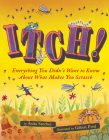
Support Independent Bookstores - Visit IndieBound.orgItch! Everything You Didn’t Want To Know About What Makes You Scratch by Anita Sanchez
This book releases March 13th and describes all the icky, pinchy, and slimy things that make you itch. Watch for it!


And two great fiction pairings this month:

Support Independent Bookstores - Visit IndieBound.orgHow to Outswim a Shark without a Snorkel by Jess Keating
Sharks, crocodiles, and humor are combined in this terrific middle grade zoology-inspired title.


Support Independent Bookstores - Visit IndieBound.orgHow to Avoid Extinction by Paul Acampora
Death, food, and dinosaur fossils help make this book a memorable read.


STEM Tuesday book lists prepared by:

Nancy Castaldo has written books about our planet for over 20 years including her 2016 title, THE STORY OF SEEDS: From Mendel’s Garden to Your Plate, and How There’s More of Less To Eat Around The World, which earned the 2017 Green Earth Book Award and other honors. Nancy’s research has taken her all over the world from the Galapagos to Russia. She enjoys sharing her adventures, research, and writing tips with readers. Nancy also serves as the Regional Advisor of the Eastern NY SCBWI region. Her 2018 title is BACK FROM THE BRINK: Saving Animals from Extinction. www.nancycastaldo.com

Patricia Newman writes middle-grade nonfiction that inspires kids to seek connections between science, literacy, and the environment. The recipient of the Green Earth Book Award and a finalist for the AAAS/Subaru Science Books and Films Award, her books have received starred reviews, been honored as Junior Library Guild Selections, and included on Bank Street College’s Best Books lists. During author visits, she demonstrates how her writing skills give a voice to our beleaguered environment. Visit her at www.patriciamnewman.com.

Check back every Tuesday of every month:

  • Week 1:  STEM Tuesday Themed Book Lists
  • Week 2:  STEM Tuesday in the Classroom
  • Week 3:  STEM Tuesday Crafts and Resources
  • Week 4:  STEM Tuesday Author Interviews and Giveaways