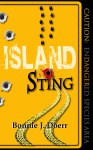
 Tomorrow (March 21) is the original Earth Day. So how did April end up becoming Earth Month? I asked an expert on the environment, middle-grade author Bonnie J. Doerr, to tell us the story. Along the way, she highlights great books about the environment, so you may want to pick up copies now for your April Earth Day celebrations. And don’t forget to add Bonnie’s titles, Island Sting and Stakeout, two eco-mysteries about endangered animals.

Read Green. Bee green.
By Bonnie J. Doerr
The origin of Earth Day is both interesting and surprising. The man who inspired Earth Day’s first official day of recognition built a plastic production factory. Seriously—plastics. But John McConnell (March 22, 1915 – October 20, 2012), was also a man with vision. In 1939, his laboratory work aroused his interest in ecology and conservation. He recognized, to protect the earth, humans would need to find ways to use the waste products from manufacturing. McConnell ultimately inspired the United Nations to proclaim March 21, 1970, the first day of spring in the northern hemisphere, as a day to honor the Earth.
One month after this day, a different day spearheaded by Senator Gaylord Nelson (June 4, 1916 – July 3, 2005), was celebrated. The first Earth Day teach-ins were held on April 22, 1970. Programs were held at schools, universities, and in communities all across the United States. For his work, Senator Nelson was awarded the Presidential Medal of Freedom.
In 1990, Denis Hayes (August 29, 1944–), who helped Senator Nelson establish the Earth Day celebrations in the United States, was tasked with launching a worldwide movement. More than 190 countries now organize Earth Day events to encourage people to help protect the environment.
 Although Earth Day celebrations have expanded around the world, some believe the need to make children aware of environmental problems is greater than ever. With our fast-growing cities and technology, there is a greater separation between children and nature than ever before—a separation Richard Louv in Last Child in the Woods defines as “nature deficit disorder.” Louv argues that “this separation produces adults who don’t personally interact with nature, don’t understand the importance of our connection with it, and therefore are unlikely to care much about it.” It’s up to us as authors, parents, and educators to find ways to encourage that appreciation.
We can initiate this encouragement through books. One of the best things about reading is that it’s not weather dependent! The list of entertaining and/or meaty titles is endless, but let’s look at some I’ve found to be tasty appetizers, beginning with reference titles.
 Even if there’s no time to read the entire book, I highly recommend Last Child in the Woods. This enlightening adult title includes ways to reconnect to nature no matter your age or location. Skim through it and see if you agree.
Two classics by Joseph Cornell that parents and other educators find valuable are Sharing Nature with Children and Sharing Nature with Children II. These titles provide ideas on how to increase enjoyment and appreciation of nature in children and adults.
 To suggest fun and creative ways for youth to live a more green life all year, try The Green Teen: The Eco-Friendly Teen’s Guide to Saving the Planet by Jenn Savedge and Generation Green by Linda and Tosh Sivertsen.
I have a tendency to get wrapped up in shiny book covers. So before that happens to you, here are three terrific links to help you find environmentally focused books, both fiction, and nonfiction.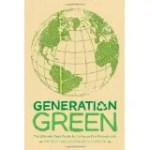
If you’re not yet familiar with the Authors for Earth Day organization, now is the perfect time to get to know this amazing group. Everything you need to know about them can be found at their website.They have a recommended list of middle grade and teen fiction on the environment.
The Children and Nature Network suggests books for adults and children.
Each year, the Green Earth Book Awards are presented to books that best use the power of story to teach children about our natural environment and the responsibility we all have to protect it. (Just a note: Bonnie’s book Stakeout was Green Earth Book Award finalist in 2012.)
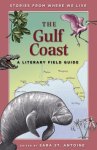 It would be a disservice if I did not mention a series of unique literary field guides published by Milkweed Editions. These books travel the United States by region combining social studies and literature through stories, poetry, and essays that tell what makes each area distinct.
Adventure novels with tweens and young teens as environmental heroes are good reads any time. A virtual experience with nature may initiate interest in a real outdoor encounter.
 The late Jean Craighead George remains a favorite author who provided such experiences. She said it well in her preface to My Side of the Mountain, “Be you writer or reader, it is very pleasant to run away in a book.” A lesser known of her titles about a Seminole girl’s solo journey into the Everglades is The Talking Earth. ALA Booklist says of it, “…the story’s message that the earth is precious and we are all part of it will be well taken.”
 Any young reader novel by Carl Hiaasen is a winner, though his latest, Skink No Surrender, is one of my favorites, perhaps because he’s finally put the ex-governor of Florida— Clinton Tyree (Skink) who is a fierce environmentalist—in one of his children’s titles.
 Sammy Keyes and the Wild Things pits Wendelin Van Draanen’s wonderful Sammy against a poacher of the endangered California Condors. What could go wrong combining a group of lost kids, limited supplies, an injured condor, and a dangerous poacher?
 Readers more interested in plants than animals will enjoy S. Terrell French’s Operation Redwood, “a funny, fast-paced adventure that shows the power of determined individuals, no matter their age, to change the world.”
For those who’d rather be eco-minded without tackling the outdoors (we all know at least one, right?), I recommend Lisa Greenwald’s My Life in Pink & Green. Twelve-year-old Lucy, a whiz with makeup, finds a way to save her family’s business and help the environment, too.
Before I go, I would like to share with you part of a personal message I received from Jean Craighead George when she was 90 years young and still writing: “That you were teaching ecology to youngsters will make all the difference in how we handle this ‘sixth mass extinction’ since the Ordovician Period—which we are causing, not lava flows or meteors. Since we are the cause, we can solve it with the help of people like you raising the awareness of the next generation… Bonnie, may you sell millions of copies.”
Let’s all “sell” reading to children, and let’s work together to raise the ecological awareness of millions of children!
Thank you, Bonnie, for this history of Earth Day and all your wonderful book recommendations. We can head into Earth Month prepared with lots of great reads. Oh, and don’t forget to add Bonnie’s titles to the reading list. They feature thirteen-year-old Kenzie Ryan, who starts Keys Teens Care (KTC) to protect the environment. KTC also serves as her cover as she and her friends track down poachers of endangered animals.

“An exciting adventure, highly recommended.” ~ Midwest Book Review

“Stakeout is a riveting read for younger readers and nature lovers.” ~ Midwest Book Reviews
GIVEAWAY
To help you celebrate Earth Day, we’re giving away an autographed copy of each book. To enter for the drawing, tweet or post a link on social media and post the link in the comments &/or leave a comment. One entry for each social media mention and comment.
**WINNERS will be announced on Friday, April 3, 2015.**
CONGRATULATIONS TO OUR WINNER: BROOKE
About Bonnie J. Doerr
A love of nature, travel, and working with children are the building blocks of Bonnie J. Doerr’s life. These passions inspire her books about teen guardians of the environment. You can find out more about Bonnie and her books at her website and on Facebook.
About Laurie J. Edwards
A former teacher and children’s librarian, Laurie J. Edwards is the author of more than 2200 magazine and educational articles as well as 20 books. Two recent titles include Cyber Self-Defense, which includes tips on combatting cyberbullying, and Grace & the Guiltless, the first in a YA series set in the Wild West. She is also an illustrator whose work appears in Stakeout and Island Sting, and in the picture book The Teeny Tiny Woman. Find out more about her and her books on her website, blog, and Facebook.
Like this:
Like Loading...



