
For Librarians

Welcome Super Librarian and Author Louise Simone!

Nobody knows the books kids love better than someone who’s surrounded by lots and lots of kids and lots and lots of wonderful books, which is exactly how I’d describe elementary and middle school librarian and author Louise P. Simone. What’s more, Louise is on the homestretch of her doctorate, on fantasy literature for children and young adults.

Family Photos_©BoschStudios-31

Today I’m delighted to welcome Louise to From The Mixed-Up Files! Let’s get down to business, Louise. How do your students select great books- cover design, word of mouth, reading the first page or a random interior page, other?

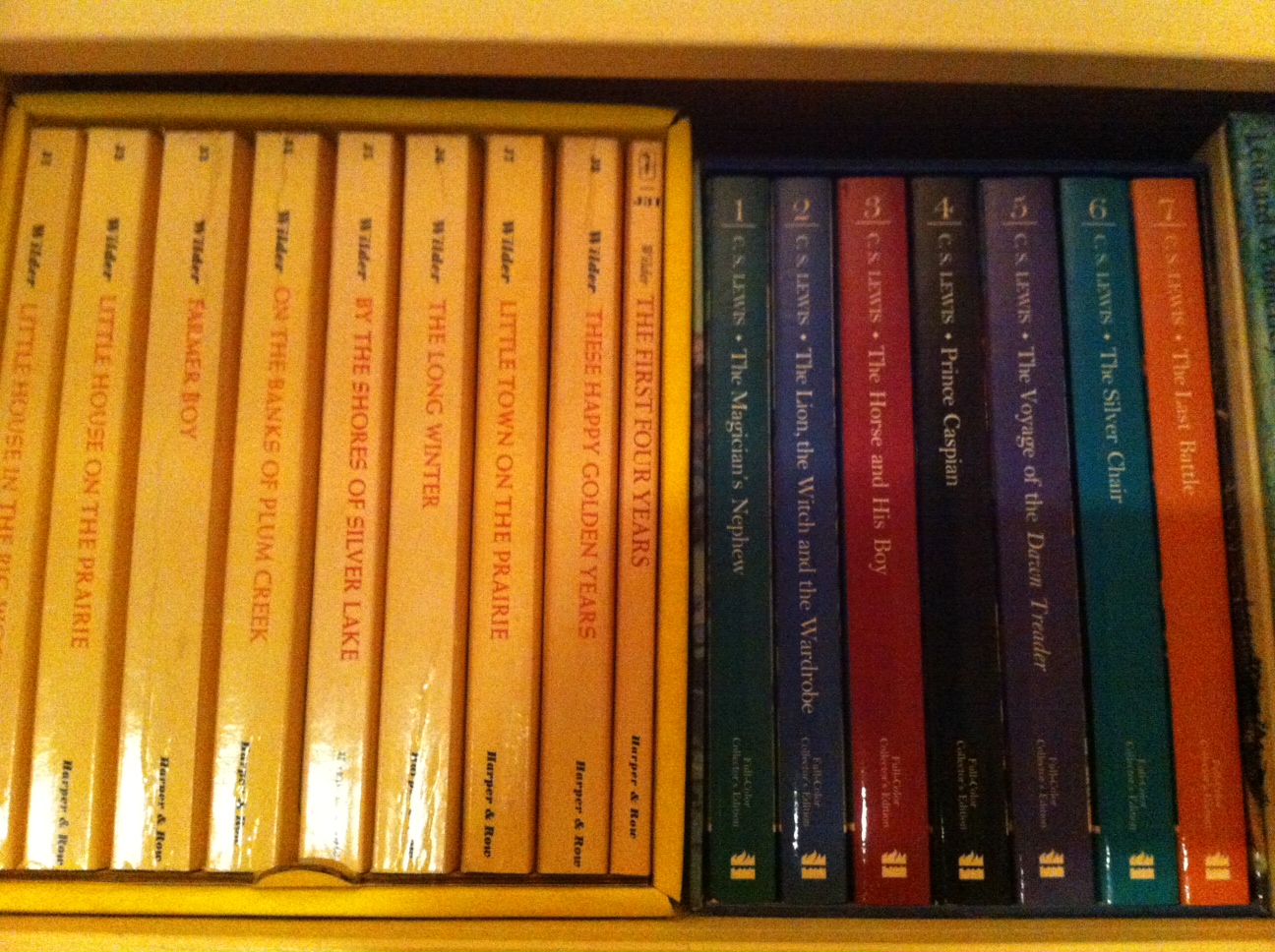
In my experience the cover has a lot to do with which books go out and which don’t. Since I updated our copies of Laura Ingalls Wilder’s Little House Series, which had 1970s era covers (the books were still in great shape, by the way, despite being loved by hundreds of students over the 35 years the library housed them), the books have been in almost constant circulation.  Same thing with the Box Car series. So much for not judging a book by its cover…

But just as important is another child/classmate’s recommendation. I can stand there talking up a book until I’m blue in the face, and get blank stares, until another student who I have managed to entice to read the story steps in to second my recommendation. Many kids are happy to take my word for the story’s worth, but when a friend recommends one, it’s gold.  I suppose the last thing a potential reader looks at is the jacket copy or the back cover’s description.  It has to be intriguing  and come almost to spoiling the story. Of course every publisher and writer knows the importance of a hook…I’m here to tell you they really, really work.

What surprises you about your students’ selections?

I must admit I take a great deal of time finding a book to meet my students tastes. I know who likes to cry, or who likes a fast paced adventure, or a mystery with just the right amount of puzzle to decipher. I don’t carry a lot of the really short, quick read series because they take up a lot of shelf space and kids go through them so fast I can’t keep them in the library long enough for them to check out the next one when they are ready. But because of the school’s demographics, most parents are happy to keep their children in reading material, so I am off the hook about purchasing those. But what surprises me is that even when I think I’ve figured out a kid’s preference, it changes, Which is great because then I have a whole new pile to recommend. I love watching a student venture off the mainstream into a new genre. It makes my job more interesting and keeps me thinking.

How do you go about steering kids to a just right book?

I use all the usual tricks: a five finger rule, grade level, and asking them what books he or she recently read and really loved. I also ask which books they hated and why, so I don’t offer those up, but it also helps me narrow down their tastes. Sometimes, when I get an especially tough reader, I ask what they like to watch on television or what video games they play. That helps me focus on the kind of things that keep them interested and focused over longer periods of time, and it really surprises kids when the Librarian asks about things most teachers don’t. Also, I’ve found, that students who wouldn’t touch a serious piece of fiction with a ten-foot pole, will often read some of the most intense nonfiction or biographies. They might not like to fight through a made-up story, but give them one about real people facing real obstacles and you’ve reeled them in.

 I suppose the only other trick I use is to ask them to tell me if they could write a book, what would it be about. I try very hard to come up with one that matches their interests whether it be pirates and battles or pink hearts and dinosaurs.

What are some of your current favorites?

Anything by Kathi Appelt or Kate DiCamillo. I love The True Blue Scouts of Sugarman Swamp because it combines wit and adventure with an environmental message. Any time a book is both entertaining and makes a kid think, is great. Of course Rick Riordan is a perennial favorite. Recently, the 39 Clues series and The Seven Wonders series have been popular. Although I try to read new things each year, a few I go back to regularly are Lloyd Alexander’s The Book of Three, R. J. Palacio’s Wonder, and Christopher Paul Curtis’s Bud Not Buddy.  I also loved this year’s Newbery Winner, Flora and Ulysses, and Clair Vanderpool’s Navigating Early. Two of my favorite sleepers are Christopher Healy’s The Hero’s Guide to Saving Your Kingdom and The Hero’s Guide to Storming Your Castle.  They are hilarious. Also, Grace Lin’s books are very popular, and Kekla Magoon’s, Walter Dean Myers’s, and Rita William’s Garcia’s books go out all the time.  For older students, John Green. 

Is setting aside time for read aloud important for middle grade readers?

Everybody loves to be read to. I especially love it when after a few minutes of reading, I’ll look up and the squirmy, fidgeting middle schooler who I have had my eye on is suddenly fully engaged, completely still, listening with his or her mouth open. You gotta love a story that can do that. 
9781463567330_p0_v2_s260x420

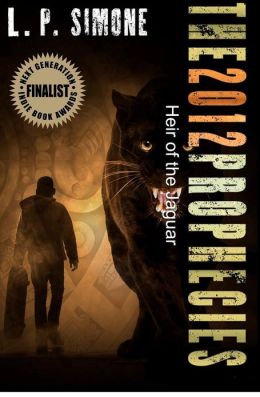
Louise is the author of the action packed upper middle-grade/YA thriller HEIR OF THE JAGUAR. Hailed by Kirkus for “nail-biting suspense” and “tight, sharp and intelligent” prose, it’s great for daring advanced readers who aren’t afraid to be a little bit scared when they read. JAGUAR was a finalist for the Next Generation Indie Book Award and is now available as a graphic novel.

Thanks Louise!

Tami Lewis Brown is all for nail-biting suspense… as long as it stays on the page. She’s now working on a middle-grade murder mystery with a historic twist.

 

When not to recommend a book

A dad I know searched used book stores and sites until he came across the book he thought would be perfect for his nine-year-old son. No matter that it had been out of print since 1985; the dad himself could vouch for its power since it had been his favorite book – in 1979.

That particular book will remain unnamed here. It’s a perfectly fine book. But the scenario of a parent (or other well-intentioned adult) giving a book to a young reader that has nothing to do with that reader’s preferences AND that has all that extra weight of being so important – this rarely ends well.

What do you do when an adult gets between a reader and the right book? Robin Rousu, a children’s librarian and one of my friends/colleagues at Seattle Public Library, says it’s all about giving the child more options. “You don’t want to question the parents’ or teachers’ authority, but you want to be ready with some other options,” she says. Those options might be a better fit, and at the very least they’ll get more of a conversation going. “That gives the reader an out without hurting the teacher’s feelings, or the child worrying about hurting someone’s feelings.”

I tend to gush when I really love a book, and I’m constantly reminding myself in my day job as a librarian to avoid saying things like “This is the BEST book” or “You’re going to love that book.” I still find plenty of w

books

Books I may have pushed a little too hard, and I admit to maybe being a *little* sad that other family members did not love them the same way.

ays to swoon over books and to talk about what it is I loved about them. And I encourage each and every person in the world to keep gushing and swooning and loving and sharing excitement about books. But maybe we can all cut back a bit on pushing our own tastes and favorites on kids.

“It’s usually coming from a very good place, though,” Robin the librarian reminds me, especially in the case of a relative bestowing a child with one of his or her own favorite books. “It’s coming out of love.”

Let’s just try to add a couple of books to that love pile so that there are options — and a better chance for a young reader to connect with a book that will become his own favorite.

Why It’s Okay to Judge


With the ALA Youth Media award announcements just a little under a week away, I can’t help reflect over my own experiences this past year as a part of the Asian-Pacific American Library Association (APALA) Children’s Literary Awards committee, as well as an adjudicator for the Scholastic Art & Writing Awards. Now while I can’t share the exact details, I’d like to talk about what these activities meant for me as a writer. I’m also hoping that for those of you who might find yourself in the position of being on such a committee, to take the plunge! Not only will you learn so much, but you will be a better writer for it. Here are some of the simple but significant reasons I discovered for myself this year.

BUILDING YOUR READING MUSCLE

I’m one of those writers that finds it hard to make time for reading. But I finally decided to do something about it. When I joined APALA, I saw an opportunity to join the 2014 Children’s Literature Awards committee, and I pounced on it. This meant I had read anywhere from 15-20 middle-grade novels with Asian/Pacific-American themes, published in 2013. Not just read, but discuss them with the rest of the committee, to select the award-winning title that held the highest literary merit in depicting the Asian/Pacific-American experience.

Reading that many books in a short time really forced me to get to the end of a book, no matter what. The more often I did it, the easier it became. It was in short, a mental exercise for my brain.

As an adjudicator for the Scholastic Awards, I had to read through much shorter pieces (1000-3000 words) – but several over one weekend. That helped to build my reading muscle in a different way – and teach me to recognize patterns of writing from work to work. In fact, reading several works that share an element in common (i.e. the Asian-Pacific-American experience, or works all written by teenagers) taught me to spot similar motifs as well as unique ones. Which brings me to the next section.

SEEN-THAT-DONE-THAT VERSUS THE TRULY UNIQUE

There is nothing like reading a high volume of material to train you to recognize story ideas that are repeated – the best friend sidekick, the insatiable zombie, the nagging parent. And when you see these ideas repeated in different ways, you learn to recognize them in your own work – and avoid them.

On the flip side, you will come across some a startlingly beautiful piece of writing – a premise you might have never quite seen before, and as you keep reading, the best discovery of all – you are surprised. Not only that, you are happy you are surprised, and suddenly you keep reading with your breath held because it’s the same feeling you have if think you’ve discovered something no one else does, that you’ve been let in on some delicious secret. I think we have all experienced this feeling when we read that special book that moves us outside our own experiences, and stays with us even after we close the covers. As an evaluator, this discovery feels especially sweet.

FALLING IN LOVE WITH SOMEONE ELSE’S WORK

When you come across that rare piece of beautiful writing, when you find yourself not just surprised and happy, but moved, it’s the greatest feeling in the world –like falling in love. It’s a kind of love that’s loyal and fierce, and that prepares you to champion this piece to the end so it receives the recognition it deserves.

This type of love – I don’t know if it serves any writerly purpose from a craft perspective. But it’s a love that fills us in other ways, when we love something beautiful and true and authentic, and suddenly the whole purpose of writing becomes brighter for us. At least it did for me. Reading something that sweeps you off your feet is the greatest affirmation that you are doing exactly the kind of vocation you should be doing.

 DISCOVERING THE WRITER YOU WANT TO BE

At the end of the day, the best part of reading such a wide and varied range of writing – funny or dark, historical or contemporary, high stakes or quiet tension, plot or character – is that you discover or confirm the kind of writing you want to write. You might see yourself aligned with a new group of writers, or you might be nodding quietly to yourself: yes, I really am a fantasy writer after all.

Most of all, reading many titles at a time is a fantastic way to take yourself out of your own writing, and your own comfort zone. The best part is that you don’t even have to be an evaluator to do this, you just have to be a reader. What gives me satisfaction at the end of my experiences is knowing that not only have I grown as a reader and writer, but that my contribution has been a part of a writer’s recognition, and that I am person along the way to light the journey for them.

————————————————————
Sheela Chari is the author of VANISHED, which was awarded the 2012 Children’s Literature Honor Award by APALA. She served on the APALA’s Children’s Literary Awards committee for 2013. Stay tuned for the announcements of this year’s winners at the end of this month, following the ALA awards announcements. Medal winners for the Scholastic Art and Writing Awards will be notified in March, followed by an awards ceremony in June.