Along with May flowers comes the blooming of brand new middle-grade books about friendship, food, and fabulous adventures. Click on the titles to purchase from your local indie bookstore. Happy reading!
 Amelia’s Middle School Graduation Yearbook by Marissa Moss
Written and illustrated in Marissa Moss’s signature diary style, this is the last of the Amelia series and marks the 20th anniversary of its inception. This latest book finds Amelia excited to graduate from middle school but nervous about starting high school, especially when she finds out she won’t have her best friend, Carly, with her. In Amelia’s graduation yearbook, drawings and “photos” nostalgically recap her earlier notebook entires as she figures out how to face the changes ahead.
 You’re Invited by Jen Malone and Gail Nall
Twelve-year-old Sadie loves helping her mom with her wedding planning business, and with Sadie’s mad organizational skills, she’s a natural. That’s why it’s so devastating when her mother “fires” her after a “Little Mermaid”-themed wedding goes awry.
Enter Sadie’s best friends: sporty Vi, ace student Lauren, and boy-crazy Becca. The girls decide that in order to get Sadie’s mom to reconsider, they have to make her see how amazing Sadie is at party planning. Except no one’s gonna hire a twelve-year-old to plan a wedding. A birthday party, though? Definite possibility.
Before long, RSVP–your one-stop shop for the most creative parties in town–is born. But is the girls’ friendship strong enough to survive a business? Or does RSVP spell the end of these BFFs?
 A Handful of Stars by Cynthia Lord
When Lily’s blind dog, Lucky, slips his collar and runs away across the wide-open blueberry barrens of eastern Maine, it’s Salma Santiago who manages to catch him. Salma, the daughter of migrant workers, is in the small town with her family for the blueberry-picking season. After their initial chance meeting, Salma and Lily bond over painting bee boxes for Lily’s grandfather, and Salma’s friendship transforms Lily’s summer. But when Salma decides to run in the upcoming Blueberry Queen pageant, they’ll have to face some tough truths about friendship and belonging. Should an outsider like Salma really participate in the pageant-and possibly win? Set amongst the blueberry barrens and by the sea, this novel by Newbery Honor author Cynthia Lord tackles themes of prejudice and friendship, loss and love.
 The Fog Diver by Joel Ross
Joel Ross debuts a thrilling adventure series in which living in the sky is the new reality and a few determined slum kids just might become heroes. Perfect for fans of Rick Riordan and Brandon Mull, this fantasy is filled with daring and hope and a wonderfully imaginative world. Once the Fog started rising, the earth was covered with a deadly white mist until nothing remained but the mountaintops. Now humanity clings to its highest peaks, called the Rooftop, where the wealthy Five Families rule over the lower slopes and floating junkyards. Thirteen-year-old Chess and his friends Hazel, Bea, and Swedish sail their rickety air raft over the deadly Fog, scavenging the ruins for anything they can sell to survive. But now survival isn’t enough. They must risk everything to get to the miraculous city of Port Oro, the only place where their beloved Mrs. E can be cured of fogsickness. Yet the ruthless Lord Kodoc is hot on their trail. For Chess has a precious secret, one that Kodoc is desperate to use against him. Now Chess will face any danger to protect his friends, even if it means confronting what he fears the most.
 Bayou Magic by Jewell Parker Rhodes
It’s Maddy’s turn to have a bayou summer. At first she misses life back home in the city, but soon she grows to love everything about her new surroundings — the glimmering fireflies, the glorious landscape, and something else, deep within the water, that only Maddy sees. Could it be a mermaid? As her grandmother shares wisdom about sayings and signs, Maddy realizes she may be the only sibling to carry on her family’s magical legacy. And when a disastrous oil leak threatens the bayou, she knows she may also be the only one who can help. Does she have what it takes to be a hero? A coming-of-age tale rich with folk magic, set in the wake of the Gulf oil spill, Bayou Magic celebrates hope, friendship, and family, and captures the wonder of life in the Deep South.
 The Search for Baby Ruby by Susan Shreve
The search for a missing baby drives this heart-pounding page turner, from Edgar Award Winner Susan Shreve. It was just a few minutes. Stuck in a hotel room babysitting while the rest of her family celebrated downstairs in the hotel, Jess thought she’d try on her sister’s wedding dress in the large bathroom while the baby slept. But when Jess opens the door again the baby is gone. Fighting guilt and terror, Jess and her kleptomaniac sister Teddy evade the swirl of police and hotel staff in their own desperate effort to get Baby Ruby back before it’s too late.
 Billy Sure, Kid Entrepreneur by Luke Sharpe; Graham Ross (Illustrator)
Meet Billy Sure, twelve-year-old inventor and CEO of Sure Things, Inc., and discover all of his wild and wacky inventions in this start to a hilarious middle grade series. Everyone is talking about Billy Sure, the twelve-year-old CEO of Sure Things, Inc. and genius inventor of the All Ball, a ball that turns into different sports balls with the push of a button. Now Billy wants to help other kids achieve their inventing dreams just like he has. So Billy is hosting an online contest for other kid-inventors to share their inventions, and the winning submission will be produced by his company. Ideas like the Sibling Silencer, No-Wash Socks, and a pencil that does all your work start pouring in. With so many great ideas, how is Billy supposed to pick a winner? And that’s not all. Billy also has to keep the secret that could take him from hero to zero in a flash if anyone found out. Can Billy Sure find a way to stay on top of the world and help other kids achieve their dreams at the same time?
 Anna, Banana, and the Friendship Split by Anica Mrose Rissi; Meg Park (Illustrator)
Meet Anna and her beloved wiener dog, Banana, in this start to a charming illustrated chapter book series about the joys and challenges of elementary school friendships. Anna has been best friends with Sadie for as long as she can remember. So Anna is utterly perplexed when, on Anna’s birthday, Sadie unceremoniously stakes claim to Anna’s new pony necklace, then suddenly stops speaking to Anna altogether. Did Anna do something wrong? With a little help from her wiener dog, Banana, as well as some sage advice from her family, Anna makes some important discoveries about what it means to stand up for herself, and how to be a true friend.
 Tom Gates: Excellent Excuses (and Other Good Stuff) (Book #2) by Liz Pichon; Liz Pichon (Illustrator)
Middle-school comedian, homework dodger, rock-star wannabe, master doodler—Tom Gates is back with two more episodes full of visual humor and kid appeal. No school for two whole weeks! Now Tom has plenty of time for the good stuff, like finding new ways (so many!) to annoy his big sister, Delia. Or watching TV and eating caramel candy. Or most important, band practice for DOGZOMBIES in his best friend Derek’s garage (while not encouraging Derek’s ’60s-music-crazed dad). All that stands between this band and rock greatness is, well, a song (besides “Delia’s a Weirdo”). And finding a drummer. And landing a gig. Will Tom let a killer toothache and pesky overdue homework get in his way?
 Return to Augie Hobble by Lane Smith
Augie Hobble lives in a fairy tale–or at least Fairy Tale Place, the down-on-its-luck amusement park managed by his father. Yet his life is turning into a nightmare: he’s failed creative arts and has to take summer school, the girl he has a crush on won’t acknowledge him, and Hogg Wills and the school bullies won’t leave him alone. Worse, a succession of mysterious, possibly paranormal, events have him convinced that he’s turning into a werewolf. At least Augie has his notebook and his best friend Britt to confide in–until the unthinkable happens and Augie’s life is turned upside down, and those mysterious, possibly paranormal, events take on a different meaning.
 The Neptune Challenge by Polly Holyoke
Genetically engineered to survive in the ocean, Nere and her friends are recovering from their treacherous journey to Safety Harbor, an undersea refuge founded by the scientists of the Neptune Project. But plenty of enemies prowl just outside the colony’s boundaries, and when two of the children are kidnapped, Nere, her loyal dolphins, and the other Neptune kids must set out on an expedition even more perilous than their first. Tasked with infiltrating the kidnapper’s high-tech undersea base, Nere soon discovers that rescuing the missing Neptune kids isn’t all there is to her mission: the secret to saving the world’s oceans is hidden somewhere deep inside this vast fortress, and she and her friends will have to risk everything to find it.
 From the Notebooks of a Middle School Princess by Meg Cabot
Olivia Grace Clarisse Mignonette Harrison is a completely average twelve-year-old: average height, average weight, average brown hair of average length, average brown skin and average hazel eyes. The only things about her that aren’t average are her name (too long and princess themed), her ability to draw animals (useful for her future career as a wildlife illustrator), and the fact that she is a half-orphan who has never met her father and is forced to live with her aunt and uncle (who treat her almost like their own kids, so she doesn’t want to complain). Then one completely average day, everything goes wrong: the most popular girl in school, Annabelle Jenkins, threatens to beat her up, the principal gives her a demerit, and she’s knocked down at the bus stop . . .Until a limo containing Princess Mia Thermopolis of Genovia pulls up to invite her to New York to finally meet her father, who promptly invites her to come live with him, Mia, Grandmère and her two fabulous poodles . . . .Maybe Olivia Grace Clarisse Mignonette Harrison isn’t so average after all!
 Kate Walden Directs Bride of Slug Man by Julie Mata
After her huge success with her first feature-length movie, seventh-grader Kate Walden is eager to start on her next film, a sci-fi romance called Bride of Slug Man. When a new kid comes to town from New York City, Kate thinks she might have a new found film buddy–someone to share her interest with. And it doesn’t hurt that he’s pretty cute. But it turns out that Tristan is making his own movie, and now the classmates Kate thought were eager to join her cast and crew are divided. With rumors spreading in school and between sets, Kate finds herself juggling more than just call times and rewrites. And judging from the whispers Kate hears about Tristan Kingsley,she suspects that he isn’t interested in having a fellow film-buff friend; he just wants to prove himself as the best filmmaker in school by winning the Big Picture Film Festival. Kate vows to enter too, and tries to focus on just making the best movie she can. But between the cut throat popularity contest, a bully situation that goes from bad to worse, and several on-set mishaps, Kate is going to need all the movie magic she can get to make sure Bride of Slug Man hits the big screen.
 Gabby Duran and the Unsittables by Elise Allen; Daryle Connors
The Association Linking Intergalatics and Earthlings (hereby known as A.L.I.E.N.) has a new member. After months of investigation, Gabby Duran, Associate 4118-25125A, has proven herself to be a babysitter extraordinaire. Her celebrity clients fly her around the country to care for their rambunctious little humans. Our spy, Associate 4118-23432B, otherwise known as Edwina, believes Gabby can be trusted with the truth: aliens are living among humans on Earth. And here at A.L.I.E.N we believe that even extraterrestrials need a babysitter now and then. No one was up to the task until now. After accepting the top-secret position, Edwina has paired our new associate up with her first charge, a little girl from the planet Flarknartia. The timing for associate 4118-25125A is less than ideal. It’s a school day on Planet Earth, Gabby’s audition for the solo part in the band is tonight, and this tiny alien is a bit more than meets the eye. Can Gabby Duran, Associate 4118-25125A, First Sitter to the Unsittables, keep her otherworldly charge safe in the unpredictable halls of middle-school and keep A.L.I.E.N hidden?
 The Worst Class Trip Ever by Dave Barry
In this hilarious novel, written in the voice of eighth-grader Wyatt Palmer, Dave Barry takes us on a class trip to Washington, DC. Wyatt, his best friend, Matt, and a few kids from Culver Middle School find themselves in a heap of trouble-not just with their teachers, who have long lost patience with them-but from several mysterious men they first meet on their flight to the nation’s capital. In a fast-paced adventure with the monuments as a backdrop, the kids try to stay out of danger and out of the doghouse while trying to save the president from attack-or maybe not.
 If I Were You by Leslie Margolis
Twelve-year-old Katie is insanely jealous of her best friend, Melody. Turns out Melody is jealous of Katie, too. When they both wish for the exact same thing at the exact same time, to redo summer as each other, their wishes come true. Katie is Melody and Melody is Katie and neither one has the experience she expected. In this be-careful-what-you-wish-for tale, two best friends learn that the grass is not always greener on the other side.
 Platypus Police Squad: Last Panda Standing by Jarrett J. Krosoczka
From Jarrett J. Krosoczka comes Last Panda Standing, the third installment in the hilarious, high-action illustrated middle grade series featuring two platypus detectives, perfect for fans of Diary of a Wimpy Kid, Big Nate, and Jarrett’s own Lunch Lady series. The Kalamazoo City mayoral race is heating up, and Frank Pandini Jr. has been threatened by a mysterious assailant. He requests a special Platypus Police Squad protection detail: Detective Rick Zengo. This leaves O’Malley to be partnered up with Jo Cooper, the newest detective on the force. Can Zengo get to the bottom of the attacks–without O’Malley backing him up?
 Unusual Chickens for the Exceptional Poultry Farmer by Kelly Jones; Katie Kath (Illustrator)
Twelve-year-old Sophie Brown feels like a fish out of water when she and her parents move from Los Angeles to the farm they’ve inherited from a great-uncle. But farm life gets more interesting when a cranky chicken appears and Sophie discovers the hen can move objects with the power of her little chicken brain: jam jars, the latch to her henhouse, the entire henhouse…And then more of her great-uncle’s unusual chickens come home to roost. Determined, resourceful Sophie learns to care for her flock, earning money for chicken feed, collecting eggs. But when a respected local farmer tries to steal them, Sophie must find a way to keep them (and their superpowers) safe. Told in letters to Sophie’s abuela, quizzes, a chicken-care correspondence course, to-do lists, and more, Unusual Chickens is a quirky, clucky classic in the making.
 Stick Dog Dreams of Ice Cream by Tom Watson
In the follow-up to Stick Dog, Stick Dog Wants a Hot Dog, and Stick Dog Chases a Pizza, Stick Dog and his pals are back, but this time the temperature is rising and they’re all feeling the heat. They need cold, cold ice cream on this hot, hot day. It will take all of Stick Dog’s smarts to guide his friends to a scrumptious ice cream feast. They’ll battle a water-attacking machine, discover rainbow puddles, and chase the strangest, loudest truck they’ve ever seen. But there’s a looming threat to their mission–Stick Dog gets spotted by a human. And the police are on his tail. If he’s captured, Stick Dog may never see his friends again. If he escapes, it’s ice cream for everyone. Perfect for fans of Big Nate, Diary of a Wimpy Kid, and the previous Stick Dog books.
 Best Friend Next Door by Carolyn Mackler
Meet Hannah. Her name is a palindrome. Her birthday is on New Year’s. She wishes she had a cat. She’s medium height and a little awkward. Her life has NOT been fun lately — her dad and stepmom are having a baby and, worst of all, her best friend next door just moved away. Now a new girl is here, taking over her best friend’s bedroom . . . and her own identity. Meet Emme. Her name is a palindrome. Her birthday is on New Year’s. She loves her enormous orange cat. She’s so short that last week she was mistaken for a kindergartner. She’s found moving hard . . . but at least there’s the girl next door, Hannah. Maybe they’ll become friends? While Hannah and Emme are alike in so many ways, they’re also different in some wrong ways, too. Is this the perfect friendship . . . or a recipe for disaster?
 The Disappearance of Emily H. by Barrie Summy
Emily Huvar vanished without a trace. And the clues are right beneath Raine’s fingertips. Literally. Raine isn’t like other eighth graders. One touch of a glittering sparkle that only Raine can see, and she’s swept into a memory from the past. If she touches enough sparkles, she can piece together what happened to Emily. When Raine realizes that the cliquey group of girls making her life miserable know more than they’re letting on about Emily’s disappearance, she has to do something. She’ll use her supernatural gift for good . . . to fight evil. But is it too late to save Emily?
 Time Out of Time Book Two: The Telling Stone by Maureen Doyle McQuerry
In book two, the excitement and mystery continue as Timothy, his sister, Sarah, and their friend Jessica journey from America to Edinburgh, Scotland, where they seek the Four Treasures of Ireland, especially the Telling Stone. They must keep the treasures from falling into the hands of Balor, who can use them to deprive the world of good. The children pass through Time out of Time as they undertake their quest and encounter a number of mythic and folkloric characters, including the Tuatha De Danann, Gwydon, Cerridwyn, and others.
In this book, a code hidden in a map is the key to finding the Stone, and readers work alongside Timothy, Sarah, and Jessica to decode the message. Along with the code, the book includes a glossary of the many historical, literary, and folkloric references mentioned in both volumes.
 Lost in the Sun by Lisa Graff
Everyone says that middle school is awful, but Trent knows nothing could be worse than the year he had in fifth grade, when a freak accident on Cedar Lake left one kid dead, and Trent with a brain full of terrible thoughts he can’t get rid of. Trent’s pretty positive the entire disaster was his fault, so for him middle school feels like a fresh start, a chance to prove to everyone that he’s not the horrible screw-up they seem to think he is. If only Trent could make that fresh start happen. It isn’t until Trent gets caught up in the whirlwind that is Fallon Little—the girl with the mysterious scar across her face—that things begin to change. Because fresh starts aren’t always easy. Even in baseball, when a fly ball gets lost in the sun, you have to remember to shift your position to find it.
 The Secret Cookie Club by Martha Freeman
Friends make everything better–and so do cookies –in this warm-hearted novel in the tradition of “Sisterhood of the Traveling Pants,” with a middle grade dash of sugar and spice. Recipe for friendship: mix four very different girls, one boy, and a camp counselor. Add cookies. When her four campers don’t get along, counselor Hannah has an idea. They gather in the kitchen at the Moonlight Ranch Summer Camp. There, they measure, mix, stir, and bake. As they bite into their warm sugar cookies, they finally seem to be friends. But summer doesn’t last forever. And if the bond is going to survive the long school year, these kids will need a plan, a plan that just might require cookies. Complete with recipes, this book will satisfy every reader’s craving for something sweet–just like a homemade sugar cookie.
 The Friendship Riddle by Megan Frazer Blakemore
Ruth Mudd-O’Flaherty has been a lone wolf at her new middle school ever since her best friend, Charlotte, ditched her for “cooler” friends. Who needs friends when you have fantasy novels? Roaming the stacks of her town’s library is enough for Ruth. Until she finds a note in an old book…and in that note is a riddle, one that Ruth can’t solve alone. With a tantalizing set of clues before her, Ruth must admit she needs help, the kind that usually comes from friends. Lena and Coco, two kids in her class could be an option, but allowing them in will require courage, and Ruth must decide: Is embarking on this quest worth opening herself up again?
 How to Speak Dolphin by Ginny Rorby
Lily loves her half-brother, Adam, but she has always struggled with him, too. He’s definitely on the autism spectrum–though her step-father, Don, can barely bring himself to admit it–and caring for him has forced Lily to become as much mother as sister. All Lily wants is for her step-father to acknowledge that Adam has a real issue, that they need to find some kind of program that can help him. Then maybe she can have a life of her own. Adam’s always loved dolphins, so when Don, an oncologist, hears about a young dolphin with cancer, he offers to help. He brings Lily and Adam along, and Adam and the dolphin–Nori–bond instantly. But though Lily sees how much Adam loves Nori, she also sees that the dolphin shouldn’t spend the rest of her life in captivity, away from her family. Can Adam find real help somewhere else? And can Lily help Nori regain her freedom without betraying her family?
 The Sound of Life and Everything by Krista Van Dolzer
Twelve-year-old Ella Mae Higbee is a sensible girl. She eats her vegetables and wants to be just like Sergeant Friday, her favorite character on Dragnet. So when her auntie Mildred starts spouting nonsense about a scientist who can bring her cousin back to life from blood on his dog tags, Ella Mae is skeptical—until he steps out of a bio-pod right before her eyes. But the boy is not her cousin—he’s Japanese. And in California in the wake of World War II, the Japanese are still feared and despised. When her aunt refuses to take responsibility, Ella Mae and her Mama take him home instead. Determined to do what’s right by her new friend, Ella Mae teaches Takuma English and defends him from the reverend’s talk of H-E-double-toothpicks. But when his memories start to resurface, Ella Mae learns some shocking truths about her own family and more importantly, what it means to love.
 The Stars of Summer by Tara Dairman
In this charming sequel to All Four Stars, eleven-year-old foodie Gladys Gatsby now has her first published review under her belt and is looking forward to a quiet summer of cooking and reviewing. But her plans quickly go awry when her friend Charissa Bentley delivers Gladys’s birthday gift: a free summer at Camp Bentley. As Gladys feared, camp life is not easy: she struggles to pass her swim test and can’t keep the other campers happy while planning lunches. The worst part is she can’t seem to get away from the annoying new “celebrity” camper and sneak away for her latest assignment—finding the best hot dog in New York City. But when it turns out her hot dog assignment was a dirty trick by a jealous reviewer, Gladys’s reviewing career may be over forever.
 The Great Good Summer by Liz Garton Scanlon
Ivy and Paul hatch a secret plan to find Ivy’s missing mom and say good-bye to the space shuttle in this evocative, heartfelt novel reminiscent of Each Little Bird that Sings and Because of Winn-Dixie. Ivy Green’s mama has gone off with a charismatic preacher called Hallelujah Dave to The Great Good Bible Church of Panhandle Florida. At least that’s where Ivy and her dad “think” Mama is. But since the church has no website or phone number, and Mama left no forwarding address, Ivy’s not entirely sure. She does know she’s missing Mama. And she’s starting to get just a little worried about her, too. Paul Dobbs, one of Ivy’s schoolmates, is also having a crummy summer. Paul has always wanted to be an astronaut, and now that NASA’s space shuttle program has been scrapped, it looks like his dream will never get off the ground. Although Ivy and Paul are an unlikely pair, it turns out they are the perfect allies for a runaway road trip to Florida–to look for Mama, to kiss the Space Shuttle good-bye, and maybe, just maybe, regain their faith in the things in life that are most important.
 Theodore Boone: the Fugitive by John Grisham
Theo thought the danger had passed, but he’s about to face off against an old adversary: accused murderer and fugitive Pete Duffy. On a field trip to Washington, DC, Theo spots a familiar face on the Metro: Duffy, who jumped bail and was never seen again. Theo’s quick thinking helps bring Duffy back to Strattenburg to stand trial. But now that Duffy knows who he is, Theo is in greater danger than he’s ever been in before. Even when everything is on the line, Theodore Boone will stop at nothing to make sure a killer is brought to justice.
 Thor’s Serpents by K. L. Armstrong; M. A. Marr
Thirteen-year-olds Matt, Laurie, and Fen have beaten near-impossible odds to assemble their fellow descendants of the Norse Gods and complete epic quests. Their biggest challenge lies ahead: battling the fierce monsters working to bring about the apocalypse. But when they learn that Matt must fight the Midgard Serpent alone and Fen and Laurie are pulled in other directions, the friends realize they can’t take every step of this journey together. Matt, Laurie, and Fen will each have to fight their own battles to survive, to be true to themselves, and to one another – with nothing less than the fate of the world hanging in the balance.
 Lots of Bots by C. J. Richards; Goro Fujita (Illustrator)
Having defeated the rampaging robots in The Junkyard Bot, George is thrilled to score his dream internship at Tinker Tech. But he and his best pal, Jackbot, realize that something does not compute when a dangerous new invention threatens Terabyte Heights. As he and his friends search for answers, they uncover secrets about George’s past that may change his life . . . forever.
Robots, engineering, and buddy stories have never been this cool, or this much fun. Perfect for restless readers who crave gizmos, gadgets, and mystery by the megabyte Visit www.robotsrulebooks.com to learn more.
 Cakes in Space by Philip Reeve; Sarah McIntyre (Illustrator)
Astra’s family is moving—to a whole new planet. And what does any kid need on moving day? Snacks! But when Astra asks her spaceship’s computer to whip up the ultimate treat, it makes cakes so amazing that they come to life. Now these cake-monsters are destroying the ship! Can Astra and her robot friend, Pilbeam, stop them in time? Or are killer cupcakes a recipe for disaster?
 The Lightning Catcher: The Secrets of the Storm Vortex by Anne Cameron; Victoria Jamieson (Illustrator)
Angus McFangus and his two best friends, Indigo Midnight and Dougal Dewsnap, are starting their second year at the Perilous Exploratorium for Violent Weather and Vicious Storms, where they are being trained to study and, eventually, become lightning catchers and manage the world’s most dangerous weather. They have more than lessons on their minds, however–namely, the fate of Angus’s parents, who have been kidnapped by the villain Scabious Dankhart. Angus’s parents are kept prisoner in Castle Dankhart, where a violent weather explosion has created a “storm vortex” so that no one can tell what is going on inside. It’s Angus, Indigo, and Dougal to the rescue. . . . Will they get there in time and all in one piece? Action-packed, lighthearted, and perfect for reluctant readers.
 Cast Off: The Strange Adventures of Petra de Winter and Bram Broen by Eve Yohalem
It is 1662, and twelve-year-old Petra sees only one way to escape her abusive father: She stows away on a merchant ship bound for the East Indies. But she quickly realizes that surviving for months at sea will be impossible without help. So when Bram, the illegitimate, half-Dutch / half-Javanese son of the ship’s carpenter, finds her hiding spot, Petra convinces him to help her stay hidden and help disguise her as a boy. If Petra is discovered and exposed as a girl, she could be tossed overboard, or worse . . . returned to her father. And if Bram is exposed for helping her, he could lose the only home—and family—he has. And so as tensions rise on the ship, with pirate attacks, illness, and even mutiny, both Petra and Bram must make impossible decisions about friendship, loyalty, freedom, and survival. Told in alternating voices and filled with secrets and intrigue, this action-packed, richly researched novel is historical fiction at its best.
 The Runaway’s Gold by Emilie Christie Burack
In 1842, Christopher Robertson’s family lives a difficult life as “crofters,” farmers and fishermen so in debt to the landowner that they have no hope of ever breaking free. To make matters worse, Christopher also lives under the thumb of his morally questionable father and devious brother. When his brother frames him for the theft of their father’s secret bag of coins, Christopher must leave his home and embark on a journey across the island to return the coins and clear his name. It’s a journey that takes twists and turns, including stops in prison, on a smuggler’s ship, and at the house of a beautiful girl–and it ends with him escaping to a new life in America, which has dangers of its own.
Joshua and the Lightning Road by Donna Galanti
 Twelve-year-old Joshua Cooper’s grandpa has always warned him about the dangers of lightning. But Joshua never put much stock in his grandpa’s rumblings as anything more than the ravings of an old man with a vast imagination. Then one night, when Joshua and his best friend are home alone during a frightful storm, Joshua learns his grandpa was right. A bolt of lightning strikes his house and whisks away his best friend—possibly forever. To get him back, Joshua must travel the Lightning Road to a dark place that steals children for energy. But getting back home and saving his friend won’t be easy, as Joshua must face the terrifying Child Collector and fend off ferocious and unnatural beasts intent on destroying him. In this world, Joshua possesses powers he never knew he had, and soon, Joshua’s mission becomes more than a search for his friend. He means to send all the stolen children home—and doing so becomes the battle of his life.
Poems in the Attic by Nikki Grimes; Elizabeth Zunon (illustrator)

During a visit to her grandma’s house, a young girl discovers a box of poems in the attic, poems written by her mother when she was growing up. Her mother’s family often moved around the United States and the world because her father was in the Air Force. Over the years, her mother used poetry to record her experiences in the many places the family lived. Reading the poems and sharing those experiences through her mother’s eyes, the young girl feels closer to her mother than ever before. To let her mother know this, she creates a gift: a book with her own poems and copies of her mother’s. And when she returns her mother’s poems to the box in the attic, she leaves her own poems too, for someone else to find, someday. Using free verse for the young girl’s poems and tanka for her mother’s, master poet Nikki Grimes creates a tender intergenerational story that speaks to every child’s need to hold onto special memories of home, no matter where that place might be.
Nonfiction
 Myths Busted! 3: Just When You Thought You Knew What You Knew by Emily Krieger
This is the book that will put to rest even more rumors, misconceptions, superstitions, and flat out lies that you hear every day—also known as the book your mom never wanted you to see. Think boys are better at math? Don’t bet on it. Think an apple-a-day keeps the doctor away? Better buy some oranges too. Think you evolved from a chimp? You might want to check your sources on that. Be in the know on all kinds of amazing subjects!
 The Boys Who Challenged Hitler: Knud Pedersen and the Churchill Club by Phillip Hoose
At the outset of World War II, Denmark did not resist German occupation. Deeply ashamed of his nation’s leaders, fifteen-year-old Knud Pedersen resolved with his brother and a handful of schoolmates to take action against the Nazis if the adults would not. Naming their secret club after the fiery British leader, the young patriots in the Churchill Club committed countless acts of sabotage, infuriating the Germans, who eventually had the boys tracked down and arrested. But their efforts were not in vain: the boys’ exploits and eventual imprisonment helped spark a full-blown Danish resistance. Interweaving his own narrative with the recollections of Knud himself, here is Phillip Hoose’s inspiring story of these young war heroes.
 A Chicken Followed Me Home! Questions and Answers about a Familiar Fowl by Robin Page
Why did the chicken cross the road? To follow you home Learn all about a not-so-basic bird in this delightful nonfiction picture book. Celebrated author-illustrator Robin Page leads a step-by-step, question-and-answer-style journey through the world of chickens. Along the way you’ll explore different breeds, discover different types of coops, and learn everything there is to know about chicken reproduction and hatching. Gorgeous, playful, and filled with facts, this engaging nonfiction picture book shines new light on a very familiar fowl
 Civic Unrest: Investigate the Struggle for Social Change by Marcia Amidon Lusted; Lena Chandhok (Illustrator)
From the American Revolution to the French Revolution, from the civil rights era in the United States to Arab Spring in the Middle East, the ongoing battle for freedom and democracy is a profound and fascinating study of the power of human will to change the world. This book examines the history behind civic unrest and the methods people use to fight for basic human rights such as freedom of speech and the right to vote. “Civic Unrest” discusses the different reasons for and methods of revolution, while offering young readers the opportunity to learn about the structure of the U.S. government and how the elements within the U.S. Constitution were decided upon by the Founding Fathers.
 Luna & Me: The True Story of a Girl Who Lived in a Tree to Save a Forest by Jenny Sue Kostecki-Shaw; Jenny Sue Kostecki-Shaw (Illustrator)
Once there was a redwood tree–one of the world’s largest and tallest trees, and one of the oldest. And once, born nearly a thousand years after the tree first took root, there was a girl named Julia, who was called Butterfly. When exploring her beloved forest, Butterfly wandered into a grove of ancient trees. One tree had broken branches and a big blue “X” on the side. It was going to be chopped down. Butterfly climbed up into the tree. A tree wouldn’t be cut down if it had a person living in it. This is the story of Julia Butterfly Hill and Luna, the redwood tree she lived in for two years, never once coming down. That is, not until Luna’s future was safe.
 National Geographic Kids Almanac 2016 by National Geographic Kids
This New York Times bestseller is packed with incredible photos, tons of fun facts, crafts, activities, and fascinating articles about animals, science, nature, technology, and more. New features include a special section on animal friends; an updated “Fun and Games” chapter filled with all-new games, jokes, and comics; a new “Dino Myths Busted” feature; all new weird-but-true facts, crafts, and activities; a new special “15 Facts” feature in every chapter; updated reference material, and much more! And, this is the only kids’ almanac with mobile media features that allow kids to access National Geographic videos, photo galleries, and games.
Dorian Cirrone is the author of several books, including the forthcoming middle-grade novel The First Last Day (S&S/Aladdin, May 2016). Subscribe to her blog for writing tips and giveaways at: doriancirrone.com/welcome/blog


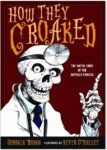
 Lost Years of Merlin by TA Barron, Matilda by Roald Dahl, Inkheart by Cornelia Funke, and lately The League of Seven by Alan Gratz. My fav
 orite nonfiction recommendations are Bomb by Steve Sheinken and How They Croaked by Georgia Bragg.