
Author Interviews

Interview with Gayle Rosengren–and a Giveaway

Fiona & Me

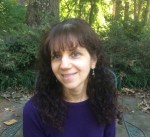
Gayle Rosengren (and Fiona)

About Gayle: Gayle Rosengren grew up in Chicago and majored in creative writing at Knox College.  She never outgrew her passion for children’s books, and she worked in the children’s and young adult services departments of  her local library for several years, enthusiastically sharing her love of books with young people.  After moving to Madison, Wisconsin, she worked first in the reference library and later as a copyeditor at American Girl.  She also published short stories in Cricket, Ladybug, Jack and Jill and Children’s Digest. Now Gayle writes full-time in her home outside of Madison, where she lives with her husband Don and their slightly neurotic rescue dog, Fiona. She is living her dream, she says, writing books she hopes will make the same difference in children’s lives as her favorite books made in hers.   What the Moon Said is her first novel.

WhatTheMoonSaid_presales


From Indiebound: Thanks to her superstitious mother, Esther knows some tricks for avoiding bad luck: toss salt over your left shoulder, never button your shirt crooked, and avoid black cats. But even luck can’t keep her family safe from the Great Depression. When Pa loses his job, Esther’s family leaves their comfy Chicago life behind for a farm in Wisconsin.

Living on a farm comes with lots of hard work, but that means there are plenty of opportunities for Esther to show her mother how helpful she can be. She loves all of the farm animals (except the mean geese) and even better makes a fast friend in lively Bethany. But then Ma sees a sign that Esther just knows is wrong. If believing a superstition makes you miserable, how can that be good luck?  Debut author Gayle Rosengren brings the past to life in this extraordinary, hopeful story.

What the Moon Said is a Junior Library Guild Selection.

Here is what the reviewers had to say:

“Rosengren, in her first novel, offers an intimate account of a family’s adjustment to country life and the hardships of the Great Depression. It’s easy to root for Esther, who makes the most of each day, wants little, and gives much.”  Publishers Weekly

“A coming-of-age tale gets to the heart of family dynamics in the face of drastic life changes in the earliest days of the Depression.”   Booklist

“…the story triumphs in its small vignettes…”  School Library Journal

“… Sensitive and tender.”     Kirkus

What kind of research did you do about depression-era Chicago and Wisconsin? What was the hardest part?  

I had heard a lot of stories about my mother’s  life on the farm while I was growing up, but it was all in very broad strokes. I needed to fill in lots of details, about life on a farm and especially about farm and city life during the Great Depression.  I first reached out to my mother and she was able to provide a few really nice details, but for the most part her memories were cloudy and unreliable.  So I moved on to books for a general sense of the times, and then I went to my computer to research more nitty-gritty details online.  The hardest part was not taking anything for granted. For example, I originally planned to have the two teachers at Esther’s school distribute candy canes on the last day of school before Christmas.  I suddenly wondered if they would have been wrapped in cellophane at the time, or if perhaps the teachers would have wrapped them in waxed paper. Asking my mother led to a vague, “They must have been…it wouldn’t have been sanitary if they weren’t.”  Unconvinced, I went to my laptop to research candy canes only to discover they weren’t even available to the public until the 1950’s!  Who knew?  So a quick change from candy canes to gingerbread men was immediately made to the manuscript.  I was incredibly relieved I’d caught the error before it made it into print.  All my careful research was nearly undermined by a candy cane!  But this taught me a lesson about research that I won’t soon forget:  Never assume!

Esther’s mother seems to have a superstition for every possible situation. Do you have any superstitions of your own? 

My grandmother lived with us from the time I was eight years old, so she instilled in me the same superstitions that “Ma” drummed into Esther.   Even as a child I had my doubts about the connections between my actions and good or bad luck, but there was no getting around the required actions:  you spill salt, you toss it over your shoulder; you never tell a bad dream before breakfast or –eek!–it will come true; you never put a hat on a bed or someone is going to die(!); and, of course, you never EVER bring an open umbrella inside the house.  There were lots more, but you get the idea.  To this day, I won’t bring an umbrella inside the house until it’s closed, even if I get wet in the process of closing it outside.  It’s silly, and intellectually I know this but even though I don’t really believe in them, I “honor” them rather than tempting fate.  (Which I guess sort of undoes my denial of belief!)  In terms of my own superstitions, I do have a few.  The most significant one is that I always wear my mother’s ring when I do an event about What the Moon Said.  Although my mom knew I had written a book inspired by her childhood and had even read an early draft, she passed away before it was accepted for publication. Wearing her ring makes me feel as if she’s with me, seeing how well her story is being received and how many readers have fallen in love with the character of Esther.  She’d be so happy to know that.

If there was one single thing that you wanted readers to get from What the Moon Said, what would it be?

That you should follow your heart–trust it to guide you when you must make difficult decisions, as Esther did in the book.

Why do you write middle-grade?

I write middle grade because I think it’s the most fertile ground for planting and nurturing a love of books.  So much is new to middle grade readers.  They’re wide open to all kinds of stories–fiction, non-fiction, biographies, fairy tales, historical fiction, contemporary, mysteries, suspense, silliness.  This time in their lives is when the vast majority of them will discover the joy and excitement of entering the world of a book and be started down the path to being life-long readers.  I love being a part of that very important adventure and discovery.

What advice do you have for someone who wants to write middle-grade fiction?

As with writing for any genre, but especially writing for children and young adults, the first step is always to read, read, read what has been published in recent years.  Especially read the award winners and the books on recommended reading lists at libraries.  The children’s publishing market is evolving nearly as quickly as everything else. Read to get a sense of what is out there already and to get some sense of the terrain.  Then forget about what you read and write your own story–not with the thought of making a fortune or a getting a movie deal.  Just with the hope that it will resonate with young readers.  Write from your heart with no other goal than to touch theirs.

Gayle is giving away a signed copy of What the Moon Said. Enter here: a Rafflecopter giveaway

Jacqueline Houtman is the author of The Reinvention of Edison Thomas. She is currently working on a biography of Bayard Rustin for young readers.

Books Change Lives – The International Book Project

IBP_n

Way back in 1988 to 1990, I served as a Peace Corps Volunteer on a little island in the West Indies called Dominica. Not to be confused with the Dominican Republic, although a lot of my mail from home mistakenly went there first. I taught organic agriculture in a village called Coulibistrie. The principal of the school, Ms. Louis, became a friend of mine and she one day confessed to me that working at this school was very discouraging. She felt that the students, Kindergarten through eighth grade, were neglected by the government and that the schools in the nearby capital were granted all the best amenities. I asked Ms. Louis if she could have anything she wanted for her school, what would it be. And she said: Books.

There are many non-profit programs that help get books and school materials to third-world countries, but I chose to contact the International Book Project (IBP) in Lexington, Kentucky because my parents lived there. And I am very lucky they did. About six months before my two year Peace Corps commitment was coming to an end, I took a quick trip home and while I was there I spent a day at the IBP’s warehouse, picking out books for the Coulibistrie School. I could not believe what was available! Beautiful, clean, and sturdy text books in every subject for every grade, not to mention novels, National Geographic magazines, as well as maps and other types of educational wall posters. All of these materials had been donated by schools in and around the Lexington area.

An IBP volunteer kept track of all the books I was claiming for my school and she promised they’d be packed into a forty- foot sea container and sent to the port nearest Coulibistrie and all Ms. Louis and I would have to do is sign for them and then deliver them to the school. A grand total of about fifteen thousand books!

And sure enough, about four or five months later, the books arrived. The whole village was so excited that they all pitched in to get wood and build shelves in the school to protect the beloved books.

Coulibistrie School, 1990, proud to show off their new shelves for their school books.

Coulibistrie School, 1990, proud to show off their new shelves for their school books.

Then, every family with a truck drove to the port to collect the boxes wrapped in plastic and carried them to the school. While they were doing all the work, I was in the process of preparing to return home, so I was not able to see the books on their new shelves. But I did receive many letters from kids and parents in Coulibistrie expressing their gratitude. Ms. Louis wrote me and said, “I am so proud to work in one of the finest schools on the island, thanks to all the books.”

That was twenty-four years ago and, sadly, I have lost contact with many of my friends there. But I recently contacted Kristen Svarczkopf,  the Executive Director of the International Book Project, and I was able to ask a few questions about how the project is going.

Jennifer: When Coulibistrie ordered and received the books from the International Book Project, the whole process went so smoothly and easily. Is that always the case?

Kristen: After nearly fifty years of sending books to the developing world, most of our shipments do run pretty smoothly, but the diversity of countries in which we work and the constantly changing nature of the delivery of books (digital as well as paper) means that we are always adapting to changing environments and circumstances. Because the vast majority of the books we send are going to rural communities in the developing world – more than 95% – the biggest obstacles to achieving our mission is simply the cost of shipping over land to reach these communities, and ensuring we have enough volunteer labor to make sure that every shipment is customized to the needs of that particular partner.

How many books get shipped out a year?

International Book Project sends more than 200,000 books annually. We have partnered with book recipients in 140 countries since our founding.

Wow! It must be exciting to see such success with the program. How did you become involved with the project?

Before I joined the International Book Project as Executive Director, I was working in Lusaka, Zambia managing the United States Student Achievers Program. This program, run by the US Department of State, selected exceptional Zambian students and funded their applications to US colleges and universities. Additionally, they paid for the students’ fees for the SAT and ACT exams. The first problem I noticed when I began managing the program was that the ACT and SAT books were very outdated and there weren’t enough of them for the students to take home and study in the evenings.

I called on the International Book Project for help and of course they came through for us immediately. More than 80% of that cohort of students were accepted and fully funded to study at US colleges and universities that year, just the second year of the program. This absolutely would not have happened without access to those college exam prep books.

I’ll give you an example of just one person in that 80% whose life was clearly changed. Anisa was 18 years old when he left Zambia for the first time to study at Fairfield University. He chose to study economics and earned an internship at Price Waterhouse Coopers in Nairobi after just his second year there. Then, he added Chinese to his course of study and went to the Beijing Center for Chinese Studies improve his language fluency. There, he also learned firsthand some of the most cutting edge analysis in what works in developing economies. He will graduate with his bachelor’s in economics this May among the top students in his class. He wishes to return to Zambia and enter government service as an economist to help his fellow Zambians escape the grip of poverty and ease their reliance on Western aid. Before Anisa went to Fairfield University he had never left about 100 mile radius from the village where he was born. Early in his life, his father died from HIV/AIDS and his older brother took the primary responsibility for his family. Working part time at Fairfield, he was able for the first time to financially support his mother and siblings in Zambia. He struggled to use a computer at first, having never had access to one in Zambia, but he knew the effort would pay off. He says that the United States Student Achievers Program gave him the opportunity to continue his education and better his life, his family’s life, and ultimately help his country progress. He also says that without the International Book Project giving him that SAT book in the very beginning that there is no way he would have gotten such a high score and been fully funded to study in the US. Not only did Anisa lift himself out of poverty, he is lifting his entire family out of poverty, and the future will only tell how many Zambians he will impact going forward. This is one person impacted by the International Book Project, and the truth is that there are millions more stories just like this one of people getting access to books that change the course of their lives and the lives around them.

416196_10150891193072023_2126923217_oAnisa’s story is inspiring! Books really do change lives! You must love your job, knowing what positive effects the project is having on people all over the world.

What I love best about my job is the metric by which we measure success. After years in the private sector and government, I wanted a change from measuring success solely by the bottom line. At the International Book Project, success means giving students the tools they need to achieve their dreams – books! When I see a photograph or video of a rural school, or even a school right here in our own backyard in Kentucky that has partnered with us, I am filled with joy and pride knowing that our work contributed to those students’ educations and is helping to foster a love of learning in them. I believe that books change lives, and I get to act every day to carry out a positive change in the world.

What is the best way for our Mixed-Up Files readers to contribute?

You can contribute to International Book Project by funding a shipment or volunteering your time. For more information go to our website . You can also find us on Facebook .

Jennifer Duddy Gill writes children’s books that she hopes will change lives or at least brighten a child’s day.

Everything You Need to Know About Teacher’s Guides-Plus Book & Critique Giveaways!

Natalie LorenziI’m thrilled to welcome Natalie Dias Lorenzi back to the Mixed-Up Files. Natalie’s first novel for children, Flying the Dragon, was published in 2012 and has been honored on best-of-the-year lists from the International Reading Association, the Cooperative Children’s Books Center, the Bank Street College of Education, and the New York Public Library. Her next novel, Someplace Like Home, will be published in 2016. It’s a companion novel to Flying the Dragon and follows the journey of 10-year-old Ravi as he leaves Pakistan with his mother and sister to live in the United States, not knowing if his father will ever be able to join them. Ravi adapts to a new country and a new school and meets his friend Hiroshi, one of the protagonists from Flying the Dragon. While Hiroshi’s story had kite-making and kite-fighting woven through it, Ravi’s will be filled with the love of his favorite sport back home, cricket, and the one that replaces it in the U.S.: baseball. Natalie has taught elementary school and English for Speakers of Other Languages in Virginia, and in international schools in Italy and Japan. She is currently a librarian at an elementary school in Fairfax, Virginia.

You can visit Natalie Dias Lorenzi’s website, follow her on Twitter, find out more about both books here, and read her book review blog that shows ways to use books in the classroom.


Thanks again for joining us, Natalie. I’d love to know why you think it’s important to have teacher’s guides.

Having a teacher’s guide increases the chances of getting your book into classrooms and into the hands of kids and teachers. With state testing, teachers have loads of paperwork, documentation, data collection and reflection….all of which put a squeeze on their time. Teachers are busy people! But it’s not just teachers who will use your guide—homeschooling parents, book club facilitators, and public librarians use them, too.

As a teacher myself, I use discussion questions and activities that authors and publishers provide on their websites, and it makes my job a lot easier. Especially with novels and longer works of fiction, if I have to choose between two equally-appealing books, I go with the one that has a guide every time.


How detailed should they be?

As detailed as you’d like them to be. Some discussion guides come in the form of bookmarks with a few discussion questions, some are more like a pamphlet, and others can be 50 pages long. It really depends on how much time you have, which leads me to the answer to your next question…


How did you create the teacher’s guide for your middle grade novel, Flying the Dragon?

The mistake I made with the guide for my own book is that I waited too long to put something up on my website for teachers. I’d envisioned a detailed, activity-packed, standards-based resource that I simply didn’t have time to put together. What I should have done was to start small—a bookmark, or pamphlet-style guide at first, and then added a more detailed guide later on. As it was, it took me over a year to post a completed guide for Flying the Dragon on my site! In the meantime, I gathered links that I thought would be helpful for teachers and created this Pinterest page. It’s a quick and easy way to provide resources for your book–background knowledge, other activities, etc.–while you’re working on your own guide.


Wow, I took a peek at your Pinterest page, and I love the videos and the 20 Easy Bento Lunch Boxes article. You put together such interesting sites and guides. Can you share some tips for creating amazing teacher’s guides?

1. Know the curriculum standards for your audience. Keep in mind that while Common Core has swept the country (except for these states), current testing is based on state standards, not Common Core. No matter which standards you use, find the commonalities and stick with those. For example, every grade studies plot and characterization on some level, so find out how deep this standard goes with your target age group, and go from there.

2. While you want to keep standards in mind while writing activities, don’t feel like you have to list every single Common Core standard addressed for each activity. I’ve seen guides with pages and pages of standards. While I appreciate the time and effort that went into compiling such lists, I can tell you that, as a teacher, I don’t even look at those. Teachers know the standards they’re required to teach. When I preview an activity, I automatically know which standards it addresses, and I decide from there if I’m going to use the activity or not.

3. Create a user-friendly layout. It doesn’t have to be fancy, just easy to follow. Have a table of contents for longer guides.

4. Do some research—find guides that you like online and bookmark them. Note the different formats, content, and delivery and then decide what you’re most comfortable with.


What are the biggest pitfalls to avoid when creating a teacher’s guide?

I know I’ve mentioned lay-out already, but I’ll say again here. If your guide is just a long list of questions, it’s fine to have it written in list format. But if you’ve got chapter-by-chapter guides, or if you have distinct sections like pre-reading questions/predictions, a vocabulary section, etc. then make it easy for a teacher to quickly scan your guide to find what she needs. Have clear labels for each section, leave white space and have a table of contents for longer guides.


Can writers create good teacher guides on their own if they don’t have a teaching background?

Yes, they can. I’d have an educator or two look it over and provide feedback if you can. When creating questions, familiarize yourself with Bloom’s Taxonomy, and let Howard Garner’s Theory of Intelligences guide your activities.


Thank you for sharing those links! Do you have any tips for using teacher’s guides?

Every teacher knows what his or her students need. The best way to utilize a guide is to dip in and try out questions or activities that fit the academic, social, and behavioral needs of your students.


That’s great advice. How well do teacher’s guides work for book clubs?

I think guides may work even better for book club facilitators than they do for teachers. Oftentimes, book club leaders aren’t teachers—they’re parent volunteers, or even students themselves at the high school level. Having access to questions and activities makes it easier for them to get a discussion started with readers.


Do you keep a future teacher’s guide or Common Core in mind when writing or revising a middle grade novel?

Never. I write with readers in mind, not standards. If your book has a science or social studies tie-in, then it may seem like it will fit best with curriculum, but language arts standards apply to any book. Don’t worry about standards as you write; write the best book you can, and teachers will figure out how to use it!


What’s the best way to let people know you have a teacher’s guide for your book?

Provide a link to the guide on your website and make that link easy to find. Let your publisher know about your guide and ask that they post it, as well. Send the link to anyone requesting information about author visits. If you have bookmarks or postcards printed, include the fact that there’s a link to a teacher’s guide on your website and make these available at all your author appearances, school visits, and teacher/librarian conferences.


Where can teachers find guides to their favorite books? If there isn’t a guide available, is there some way they can request one? 

The first place I’d check is the author’s website, followed by the publisher’s site. If you don’t have any luck there, places like Teachers Pay Teachers often have activities up either for free or for a reasonable price. If you can’t find a guide for a book, by all means email the author and/or publisher! They may have something in the works. If not, hearing from you is good incentive to get started on a guide for educators.

Tracie Vaughn Zimmer is another author/educator/guide creator, and some of her guides can be found here.


Thank you for visiting the Mixed-Up Files again, Natalie. You shared a wealth of knowledge about teacher’s guides, and I’m sure it will be a huge help to writers, teachers, librarians, and many others.

* If anyone has questions for Natalie, ask in a blog comment and she’ll stop by to answer them!

If you’re searching for teacher’s guides for great middle-grade novels, here’s a list of links to check out:

Flying the Dragon by Natalie Dias Lorenzi

The Map of Me by Tami Lewis Brown

Ellie McDoodle: New Kid in School written and illustrated by Ruth McNally Barshaw

Ellie McDoodle: Friends Fur-Ever written and illustrated by Ruth McNally Barshaw

Fiona Finkelstein, Big-Time Ballerina! by Shawn Stout

Penelope Crumb by Shawn Stout

Fudge series by Judy Blume

Mallory series by Laurie Friedman

Chet Gecko series by Bruce Hale

The Red Umbrella by Christina Diaz Gonzalez

The Ballad of Jessie Pearl by Shannon Hitchcock

This Journal Belongs to Ratchet by Nancy J. Cavanaugh

Beyond Lucky by Sarah Aronson

Trouble in the Trees by Yolanda Ridge

Glory Be by Augusta Scattergood

My Very UnFairy Tale Life by Anna Staniszewski

The End of the Line by Angela Cerrito

The Multiplying Menace by Amanda Marrone

The Trouble with Half a Moon by Danette Vigilante

Ice Dogs by Terry Lynn Johnson

How to Survive Middle School by Donna Gephart

Olivia Bean, Trivia Queen by Donna Gephart

A Hare in the Elephant’s Trunk by Jan L. Coates

The Flame in the Mist by Kit Grindstaff

The Magic Thief by Sarah Prineas (you can find magical translations using the runic translation chart here.)

When Audrey Met Alice by Rebecca Behrens (Woman’s History Month Lesson Plan)

Soar, Elinor! by Tami Lewis Brown (Woman’s History Month Activity Kit included in the link)


In addition to the lists of great teacher’s guides for picture books through young adult novels listed on Natalie Dias Lorenzi’s site, you can also find more at these websites:

* Debbie Gonzales has links to guides for middle grade novels and chapter books. To find guides for other genres, click on Sample Educational Guides toward the top of her website.

* Tracie Vaughn Zimmer

*As Natalie said before, don’t forget to check out the websites of your favorite authors and publishers. You should be able to find great teacher’s guides and activities there…and if you don’t it can’t hurt to request them!


Thanks again for all your amazing responses, Natalie—and for offering TWO generous giveaways!

* Enter using the Rafflecopter widget below, and you’ll have a chance to win a signed paperback copy of Natalie’s novel, Flying the Dragon.

Flying the DragonAmerican-born Skye is a good student and a star soccer player who never really gives any thought to the fact that her father is Japanese. Her cousin, Hiroshi, lives in Japan, and never really gives a thought to his uncle’s family living in the United States. Skye and Hiroshi’s lives are thrown together when Hiroshi’s family, with his grandfather (who is also his best friend), suddenly moves to the U.S. Now Skye doesn’t know who she is anymore: at school she’s suddenly too Japanese, but at home she’s not Japanese enough. Hiroshi has a hard time adjusting to life in a new culture, and resents Skye’s intrusions on his time with Grandfather. Through all of this is woven Hiroshi’s expertise and Skye’s growing interest in kite making and competitive rokkaku kite flying.


* Natalie is also giving away a 10 page critique! It can be up to the first ten pages of an MG/YA or one picture book. Let us know in a comment if you’d like to be entered for the critique giveaway.

The lucky winners will be announced on Thursday, April 24. Good luck!

*You must live in the United States or Canada to enter the Flying the Dragon paperback giveaway, but anyone can enter for a chance to win the critique.

a Rafflecopter giveaway
Mindy Alyse Weiss writes humorous middle-grade novels with heart and quirky picture books. She’s constantly inspired by her two daughters, an adventurous Bullmasador adopted from The Humane Society, and an adorable Beagle/Pointer mix who was rescued from the Everglades. Visit Mindy’s TwitterFacebook, or blog to read more about her writing life, conference experiences, and writing tips.