What do we mean by Middle Grade?
Hi Hannah, thanks for joining us to talk about your editorial work at Disney-Hyperion. To jump right in: My friends and I have an ongoing debate about what makes a book middle grade. It gets complicated when MG books in the US sell as adult in the UK, or books written as adult get slotted as MG (I know two debuts this year that fit that bill), or when very well received MG books don’t really read as typical MG. I think of novels like Wolf Hollow, which breaks the MG “rules” when the grown-up narrator appears to be telling a story about her distant 12-year-old self. Or a book like Quicksand Pond, where a good bit of the story is narrated from the perspective of a very old woman. So what makes middle grade middle grade?
 To me, middle grade is all about that coming of age moment where you’re discovering your own autonomy and independence in complicated ways—those moments when you start taking ownership, making new friendships and exploring new interests, even discovering that your loved ones are flawed and that life isn’t always fair.
Positioning a book a certain way and for a certain audience can be rather subjective, but when I think about my overall list of middle grade titles, I tend to think about hope and humor. Even if it’s not a “funny” book, I think there’s often a sense of levity or lightness in the middle grade space that balances out darker themes kids may be interested in exploring, as well as an ultimate note of hope to buoy the story for younger audiences.
One of my middle grade titles, THE BONE SPARROW by Zana Fraillon, is a novel that sits on the cusp of middle grade and adult because of the heartbreaking topics it explores, but its central thread of hope and friendship feels just right for a middle grade audience.
And related to this, what ever happened to that hot “tween” category we used to hear about? There’s been a lot of convo on social media about the need for “younger YA” that might ride close to the line of “upper MG.” What’s your take on that nebulous readership? Are their needs being addressed?
I’m always, always looking for titles that reach those hinge readers who are moving between categories, because I do think there are gaps where we have greater likelihood of losing readers. We’re publishing more and more into that upper middle grade space with characters who are 13-14, but I think there’s still so much room for younger middle grade that captures readers transitioning out of chapter books (particularly stories with an emphasis on play and imagination), as well as in that younger YA space (especially stories that focus on friendship in those late middle school/early high school years). Those in-between audiences can be hard to capture, but I’m always on the hunt for stories that fill those gaps and meet readers’ needs at all stages.
Hannah’s Middle Grade Wish List
Every genre has trends. Are there any trends now that excite you? Are there any possible trends in MG that you dearly wish will soon have their moment?
I’m really hoping middle grade horror has its moment! There are some incredible new horror selections on shelves—I just finished THE DARKDEEP, by Allie Condie and Brendan Reichs, and I just got my hands on the audiobook of SMALL SPACES, by Katherine Arden. I grew up on a steady diet of R.L. Stine and would love for that type of accessible horror to make a comeback. For me, I think it’s all about that nailing that creepy commercial hook while still delivering a story that’s super voice-driven. I would love to find a horror story that uses a childhood game as a device, like truth or dare—so chilling and creepy and fun!
I also think witches are having a major moment—anyone who knows me knows I’m obsessed with witches. I like to say that I’m acquiring my own literary coven. But I honestly think they’re cropping up in so many different iterations, from seriously dark to sweet and bubbly. I’m absolutely looking for a charming, whimsical witchy chapter book or young middle grade novel!
 I adore this recent crop of voicey, character-driven contemporary middle grade novels with a focus on sports—I loved ROLLER GIRL, by Victoria Jamieson, THE CROSSOVER, by Kwame Alexander, and SO DONE, by Paula Chase, and I can’t wait to get my hands on NIKKI ON THE LINE, by Barbara Carroll Roberts. (Give me a MG cheerleading book that engages with the sport on a similar level as E.K. Johnston’s YA novel, EXIT PURSUED BY A BEAR!) Also on the contemporary MG side, I think aspirational, high concept music stories are having a moment. From country to K-pop, stories about kids breaking into the music industry seem to be—oh no, I’m going to do it, I’m going to make a pun—hitting all the right notes.
Hook + Voice = Love
What’s the biggest factor that decides you to give a thumbs up on a book. Is it voice? Concept? What do you consider “fixable” and what isn’t?
 I look for that perfect marriage of voice and concept—I want a big, fresh, stand-out hook to reel me in, but it’s really the strong voice and complex family relationships and friendships at the heart of a story that make me want to champion it. Sense of place is also something that can tip the scales of a story for me—I adore immersive, specific settings that become their own character (like in THE VANDERBEEKERS OF 141ST STREET, by Karina Yan Glaser). And particularly in middle grade, I want stakes, both emotional and larger-scale, that take the reader seriously.
To me, if a story has an unforgettable voice, anything else is potentially fixable. That doesn’t always mean that it’s ready for our acquisitions process; in fact, most of my R&R requests come from stories with exceptional voices/prose that need structural and pacing work. As an editor, I can help develop and shape so much about a story, but it’s gotta have that intangible, special, authentic voice at its heart.
How intensive is the editorial work you do with authors? Would you sign a book that was a long way away from being “ready to go”?
My authors will tell you I’ve been known to write some ridiculously long editorial letters. J Once I’ve acquired a project, I love taking a deep dive into developmental edits; I usually send an initial 10-15 page letter, followed by a shorter round focusing on pacing and any final character development notes, and then line edits. My style is super conversational, though, and I love the collaborative nature of revisions; I often come up with a lot of specific ideas to get our conversations going, but to me it’s all about finding the solutions that feel right for the story together.
Our acquisitions process is pretty rigorous; both the editorial team and the larger acquisitions group, including sales, marketing, and publicity, have to be excited about a project in order to move forward with it. (This is great in the long run, because our titles have a built in fan base when we bring them to our launch and sales conferences!) Because of that process, though, it’s hard for me to sign up something that’s a long way from being ready.
That said, I’m a huge fan of R&Rs—I have two that I ended up acquiring and are now on my upcoming 2020 slate! Especially because I’m a young editor who’s still building my list, I’m always looking for those exciting seeds of potential that I can help shape, and it’s thrilling to find an author who’s a skilled reviser and eager to partner with me on our shared vision for the manuscript.
What’s the toughest thing you have to do as an editor?
Honestly, R&Rs that ultimately don’t work out are heartbreaking for everyone, including me. It’s tough to fall in love with something that still needs more time to bake before it’s ready, so to speak, or just isn’t right for my overall list, even though I see its potential. But I cheer for them extra-loud when they do find their perfect homes!
Hannah’s 2019+ Middle Grade List
Can you introduce some of the MG titles you’re publishing this year, including my terrific 2019 debut mate Shauna Barnes Holyoak? What drew you to these titles?
I have such an amazing group of MG titles this year! Here are my highlights (but be warned, I could talk about these books for ages):
 The Secrets of Topsea series, by Kir Fox and M. Shelley Coats: In January, we published the second book in the Secrets of Topsea series (THE EXTREMELY HIGH TIDE!), which follows a zany group of fifth graders in a fictional, topsy-turvy coastal town. These books are SO weird (think Wayside School meets the Nightvale podcast) and so full of heart, and I adore their original formats, including narrative/character-driven chapters, newspaper articles, journal entries, and more.
The Click’d series, by Tamara Ireland Stone: We also published the second book in the Click’d series (SWAP’D) in February. Crushes and coding—what more could you want in a MG novel?! Most of all, I love the complex, authentic friendships at the heart of these stories. And the covers, illustrated by Jameela Wahlgren, are seriously the CUTEST.
KAZU JONES AND THE DENVER DOGNAPPERS, by Shauna Holyoak: Okay, you already know this MG mystery stole my heart! Not only are there tons of cute pups (I cannot get enough of Genki and his doggy nests!), but there’s also an amazing mother-daughter relationship, seriously high stakes that had me on the edge of my seat, and an incredible ensemble cast of fifth graders who have all the spunk and persistence of the Scooby Gang.
 MIDNIGHT ON STRANGE STREET, by K. E. Ormsbee: I’m cheating a little bit, because this one comes out January 2020, but I love it so much that I have to talk about it. J Imagine if all the kids in STRANGER THINGS had Eleven’s powers—that’s MIDNIGHT ON STRANGE STREET. I love the way the author uses these strange new powers to encapsulate both the extraordinary and extraordinarily tough aspects of being a middle schooler. Also, the kids are on a glowboarding team, which is the coolest sport that doesn’t (yet) exist—think sci-fi roller derby!
How long have you been tap dancing and what got you into it? I just met another MG editor who’s a tap dancer, and one of the characters in my WIP is too. Is something in the air?
Ooh, I hope so! I’ve been tap dancing since I was two. My mom put me in a combination class in hopes that I’d become a ballerina, but it didn’t take. I did competition tap in elementary/middle school and was obsessed with being on stage. One of my favorite tap solos was “I’m Getting Good at Being Bad” from the 102 Dalmatians soundtrack (the one with Glenn Close). My mom made my costume, which was held together with black & white sequins and hot glue.
I mostly stopped tapping in high school but picked it back up in college, in that way you sort of rediscover things you did as a kid that were actually really cool when you’re in college. I ended up taking classes with Margaret Morrison (including tap history courses, which were the absolute coolest for a tap nerd like me) and joining an on-campus tap group. Now I still occasionally take classes at the American Tap Dance Foundation!
 All of which is to say, I’m desperate to find a book with a character who tap dances! (Honestly, dance of any kind, but bring on the tap!) We actually published an adorable tap picture book by Tim Federle called TOMMY CAN’T STOP! in 2015, which I highly recommend, but I’m hungry for a MG tap novel.
Many thanks for sharing your thoughts with us Hannah! Best of luck to you and all your middle grade books this year!
Follow Hannah on Twitter @hallaman13, and look for her on Manuscript Wish List @ManuscriptWList and Manuscriptwishlist.com.
Like this:
Like Loading...

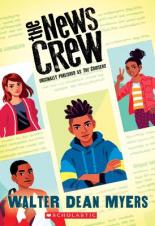 The News Crew, (Book 1: Originally The Cruisers) by Walter Dean Myers
 Isabel Feeney, Star Reporter by Beth Fantaskey
 The Tragically True Adventures of Kit Donovan by Patricia Bailey
 Adam Canfield of the Slash by Michael Winerip
 The Truth About the Truman School by Dori Hillestad Butler
 Clara Voyant by Rachelle Delaney
 Ida B. Wells: Let the Truth Be Told by Walter Dean Myers, illus. Bonnie Christensen
 Nellie Bly and Investigative Journalism for Kids by Ellen Mahoney
 Welcome to STEM Tuesday: Author Interview & Book Giveaway, a repeating feature for the fourth Tuesday of every month. Go Science-Tech-Engineering-Math!

 Your host is
