As school comes to an end, kids start talking about their wonderful plans for summer. Some will head out to their summer homes. Others may travel the world. What about those kids who don’t? You can help them go anywhere in the world (or even out of this world!) just by turning the pages of a book. Here are some fun middle grade reads that will transport readers around the world.

Click here for a list of all the books below. And click here for a worksheet for kids to track on a map what they read.
Africa
 Auma’s Long Run by Eucabeth Odhiambo
In her small Kenyan village, she’s a track star with big dreams. A track scholarship could allow her to attend high school and maybe even become a doctor someday. But a strange new sickness called AIDS is ravaging the village, and when her father becomes ill, Auma’s family needs her help at home.
Soon more people are getting sick — even dying — and no one seems to know why. Now Auma faces a choice. She can either quit school and go to work to support her struggling family…or leave her loved ones behind to pursue her own future.
Auma knows her family is depending on her. But leaving might be the only way to find the answers to her questions about this new disease.
A Long Walk to Water: Based on a True Story by Linda Sue Park
A Long Walk to Water begins as two stories, told in alternating sections, about a girl in Sudan in 2008 and a boy in Sudan in 1985. The girl, Nya, is fetching water from a pond that is two hours’ walk from her home: she makes two trips to the pond every day. The boy, Salva, becomes one of the “lost boys” of Sudan, refugees who cover the African continent on foot as they search for their families and for a safe place to stay. Enduring every hardship from loneliness to attack by armed rebels to contact with killer lions and crocodiles, Salva is a survivor, and his story goes on to intersect with Nya’s in an astonishing and moving way.
The Red Pencil by Andrea Davis Pickney
Finally, Amira is twelve. Old enough to wear a toob, old enough for new responsibilities. And maybe old enough to go to school in Nyala–Amira’s one true dream.
But life in her peaceful Sudanese village is shattered when the Janjaweed arrive. The terrifying attackers ravage the town and unleash unspeakable horrors. After she loses nearly everything, Amira needs to dig deep within herself to find the strength to make the long journey–on foot–to safety at a refugee camp. Her days are tough at the camp, until the gift of a simple red pencil opens her mind–and all kinds of possibilities.
Antarctica
 The Adventures of a South Pole Pig by Chris Kurtz
Flora the pig was born for adventure: “If it’s unexplored and needs to get dug up, call me. I’m your pig,” she says. The day Flora spots a team of sled dogs is the day she sets her heart on becoming a sled pig. Before she knows it, she’s on board a ship to Antarctica for the most exhilarating—and dangerous—adventure of her life. This poignant novel of a purposeful pig is sure to become a favorite with any young readers who have ever dreamed of exploring the great beyond.
Race to the South Pole (Ranger in Time series) by Kate Messner
Ranger, the time-traveling golden retriever with search-and-rescue training, joins an early twentieth-century expedition journeying from New Zealand to Antarctica. He befriends Jack Nin, the stowaway turned cabin boy of Captain Robert Falcon Scott’s ship. They’re racing against a rival explorer to reach the South Pole, but with unstable ice, killer whales, and raging blizzards, the journey turns into a race against time… and a struggle to stay alive.
At The Bottom of the World (Jack and the Geniuses series) by Bill Nye
In the series opener, Jack and the Geniuses: At The Bottom of The World, readers meet Jack and his foster siblings, Ava and Matt, who are orphans. But they’re not your typical kind of orphans—they’re geniuses. Well, Ava and Matt are, which sometimes makes life difficult for 1twelve-year-old Jack. Ava speaks multiple languages and builds robots for fun, and Matt is into astronomy and a whiz at math. As for Jack, it’s hard to stand out when he’s surrounded by geniuses all the time.
When the kids try to spy on Dr. Hank Witherspoon, one of the world’s leading scientists, they end up working for him in his incredible laboratory. Soon, Hank and the kids travel to Antarctica for a prestigious science competition, but they find that all is not as it seems: A fellow scientist has gone missing, and so has any trace of her research. Could someone be trying to use her findings to win the contest? It’s up to Jack, Ava, and Matt to find the missing scientist and discover who’s behind it all—before it’s too late.
Asia
 Snow in Jerusalem by Deborah da Costa
Avi and Hamudi are two boys who live in Jerusalem’s Old City — Avi in the Jewish Quarter and Hamudi in the Muslim Quarter. To each boy, the other’s neighborhood is an alien land. And although neither boy knows it, both are caring for the same beautiful white stray cat. One day the boys follow the cat as she travels the winding streets and crosses the boundaries between the city’s quarters. And on this journey something wonderful happens, as unexpected as a snowfall in Jerusalem.
Somewhere Among by Annie Donwerth-Chickamatsu
Eleven-year-old Ema has always been of two worlds—her father’s Japanese heritage and her mother’s life in America. She’s spent summers in California for as long as she can remember, but this year she and her mother are staying with her grandparents in Japan as they await the arrival of Ema’s baby sibling. Her mother’s pregnancy has been tricky, putting everyone on edge, but Ema’s heart is singing—finally, there will be someone else who will understand what it’s like to belong and not belong at the same time.
But Ema’s good spirits are muffled by her grandmother who is cold, tightfisted, and quick to reprimand her for the slightest infraction. Then, when their stay is extended and Ema must go to a new school, her worries of not belonging grow. And when the tragedy of 9/11 strikes, Ema, her parents, and the world watch as the twin towers fall…
Listen Slowly by Thanhha Lai
A California girl born and raised, Mai can’t wait to spend her vacation at the beach. Instead, though, she has to travel to Vietnam with her grandmother, who is going back to find out what really happened to her husband during the Vietnam War. Mai’s parents think this trip will be a great opportunity for their out-of-touch daughter to learn more about her culture. But to Mai, those are their roots, not her own. Vietnam is hot, smelly, and the last place she wants to be. Besides barely speaking the language, she doesn’t know the geography, the local customs, or even her distant relatives. To survive her trip, Mai must find a balance between her two completely different worlds.
Oranges in No Man’s Land by Elizabeth Laird
Since her father left Lebanon to find work and her mother tragically died in a shell attack, ten-year-old Ayesha has been living in the bomb-ravaged city of Beirut with her granny and her two younger brothers. The city has been torn in half by civil war and a desolate, dangerous no man’s land divides the two sides. Only militiamen and tanks dare enter this deadly zone, but when Granny falls desperately ill, Ayesha sets off on a terrifying journey to reach a doctor living in enemy territory.
Dumpling Days (Pacy series) by Grace Lin
Pacy is back! The beloved heroine of The Year of the Dog and The Year of the Rat has returned in a brand new story. This summer, Pacy’s family is going to Taiwan for an entire month to visit family and prepare for their grandmother’s 60th birthday celebration. Pacy’s parents have signed her up for a Chinese painting class, and at first she’s excited. This is a new way to explore her art talent! But everything about the trip is harder than she thought it would be–she looks like everyone else but can’t speak the language, she has trouble following the art teacher’s instructions, and it’s difficult to make friends in her class. At least the dumplings are delicious…
As the month passes by, Pacy eats chicken feet (by accident!), gets blessed by a fortune teller, searches for her true identity, and grows closer to those who matter most.
Sherlock Sam and the Ghostly Moans in Fort Canning (Sherlock Sam series) by A.J. Low
In Sherlock Sam and the Ghostly Moans in Fort Canning, mysterious sounds fill the air at one of Singapore‘s most-loved historical attractions. Ghosts don’t exist, or do they? Will this mystery prove too difficult for Sherlock Sam to solve?
Australia
 Bob Wendy Mass and Rebecca Stead
It’s been five years since Livy and her family have visited Livy’s grandmother in Australia. Now that she’s back, Livy has the feeling she’s forgotten something really, really important about Gran’s house.
It turns out she’s right.
Bob, a short, greenish creature dressed in a chicken suit, didn’t forget Livy, or her promise. He’s been waiting five years for her to come back, hiding in a closet like she told him to. He can’t remember who—or what—he is, where he came from, or if he even has a family. But five years ago Livy promised she would help him find his way back home. Now it’s time to keep that promise.
Middle School: Escape to Australia (Middle School series) by James Patterson
Rafe isn’t exactly considered a winner in Hills Village Middle School to say the least, but everything‘s about to change: he’s won a school-wide art competition, and the fabulous prize is getting to jet off to Australia for a whirlwind adventure!
But Rafe soon finds that living in the Land Down Under is harder than he could’ve ever imagined: his host-siblings are anything but welcoming, the burning temperatures are torturous, and poisonous critters are ready to sting or eat him at every step. So with the help of some new misfit friends, Rafe sets out to show everyone what he does best: create utter mayhem!
Europe
 The War That Saved My Life by Kimberly Brubaker Bradley
Ten-year-old Ada has never left her one-room apartment. Her mother is too humiliated by Ada’s twisted foot to let her outside. So when her little brother Jamie is shipped out of London to escape the war, Ada doesn’t waste a minute—she sneaks out to join him.
So begins a new adventure of Ada, and for Susan Smith, the woman who is forced to take the two kids in. As Ada teaches herself to ride a pony, learns to read, and watches for German spies, she begins to trust Susan—and Susan begins to love Ada and Jamie. But in the end, will their bond be enough to hold them together through wartime? Or will Ada and her brother fall back into the cruel hands of their mother?
Lost in Europe series by Cindy Callaghan
Twelve-year-old Jordan isn’t unhappy, but she’s definitely bored. So when she gets the chance to take part in a London exchange program, she’s thrilled to ditch her small town in Delaware and see the world across the pond.
Unfortunately, Jordan’s host sister in London, Caroline, isn’t exactly enthusiastic about entertaining an American girl. Despite the chilly welcome, Jordan finds herself loving the city and Caroline’s group of friends, who are much nicer than Caroline herself.
And then a major misstep leaves Jordan and Caroline trapped together overnight—inside Daphne’s, the world’s largest department store. Given they have complete access to all the fancy shoes, designer dresses, and coolest makeup around, there are worse places to be stuck. But when the girls’ fun has not-so-fun consequences, Jordan’s wish for excitement abroad turns into a lot more than she ever bargained for…
American Girl: Grace by Mary Casanova
Nine-year-old Grace is always thinking up big ideas, like starting a business with her friends over the summer! When Mom announces a trip to Paris instead, Grace gets on board, but it quickly seems as if none of her plans are working out the way she’d hoped. She and her French cousin aren’t getting along, and Grace’s friends back home have started a business without her. Can she find the courage to stay open to new ideas and turn the summer around?
Danger in Ancient Rome (Ranger in Time series) by Kate Messner
Ranger is a golden retriever who has been trained as a search-and-rescue dog. In this adventure, Ranger travels to the Colosseum in ancient Rome, where there are gladiator fights and wild animal hunts! Ranger befriends Marcus, a young boy Ranger saves from a runaway lion, and Quintus, a new volunteer gladiator who must prove himself in the arena. Can Ranger help Marcus and Quintus escape the brutal world of the Colosseum?
When Mischief Came to Town by Katrina Nannestad
In the tradition of Anne of Green Gables and Pippi Longstocking comes a heart-warming novel about love, family, grief, joy and the power of laughter and imagination.
When Inge Maria arrives on the tiny island of Bornholm in Denmark to live with her grandmother, she’s not sure what to expect. Her grandmother is stern, the people on the island are strange, and children are supposed to be seen and not heard. But no matter how hard Inge tries to be good, mischief has a way of finding her. Could it be that a bit of mischief is exactly what Grandmother and the people of Bornholm need?
North America
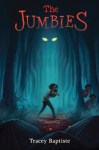
The Jumbies series by Tracey Baptiste
Corinne La Mer isn’t afraid of anything. Not scorpions, not the boys who tease her, and certainly not jumbies. They’re just tricksters parents make up to frighten their children. Then one night Corinne chases an agouti all the way into the forbidden forest. Those shining yellow eyes that followed her to the edge of the trees, they couldn’t belong to a jumbie. Or could they?
When Corinne spots a beautiful stranger speaking to the town witch at the market the next day, she knows something unexpected is about to happen. And when this same beauty, called Severine, turns up at Corinne’s house, cooking dinner for Corinne’s father, Corinne is sure that danger is in the air. She soon finds out that bewitching her father, Pierre, is only the first step in Severine’s plan to claim the entire island for the jumbies. Corinne must call on her courage and her friends and learn to use ancient magic she didn’t know she possessed to stop Severine and save her island home.
With its able and gutsy heroine, lyrical narration, and inventive twist on the classic Haitian folktale “The Magic Orange Tree,” The Jumbies will be a favorite of fans of Breadcrumbs, A Tale Dark and Grimm, and Where the Mountain Meets the Moon.
Everything on a Waffle by Polly Horvath
In the small Canadian town of Coal Harbour, in a quaint restaurant called The Girl on the Red Swing, everything comes on a waffle–lasagna, fish, you name it. Even waffles! Eleven-year-old Primrose Squarp loves this homey place, especially its owner, Kate Bowzer, who takes her under her wing, teaches her how to cook, and doesn’t patronize or chastise her, even when she puts her guinea pig too close to the oven and it catches fire. Primrose can use a little extra attention. Her parents were lost at sea, and everyone but her thinks they are dead. Her Uncle Jack, who kindly takes her in, is perfectly nice, but doesn’t have much time on his hands. Miss Perfidy, her paid babysitter-guardian, smells like mothballs and really doesn’t like children, and her school guidance counselor, Miss Honeycut, an uppity British woman of the world, is too caught up in her own long-winded stories to be any kind of confidante. Nobody knows what exactly to think of young Primrose, and Primrose doesn’t quite know what to make of her small community, either.
The Night Garden by Polly Horvath
It is World War II, and Franny and her parents, Sina and Old Tom, enjoy a quiet life on a farm on Vancouver Island. Franny writes, Sina sculpts, and Old Tom tends to their many gardens–including the ancient, mysterious night garden. Their peaceful life is interrupted when their neighbor, Crying Alice, begs Sina to watch her children while she goes to visit her husband at the military base because she suspects he’s up to no good. Soon after the children move in, letters arrive from their father that suggest he’s about to do something to change their lives; and appearances from a stubborn young cook, UFOs, hermits, and ghosts only make life stranger. Can the forbidden night garden that supposedly grants everyone one wish help them all out of trouble? And if so, at what cost?
The Lightning Queen by Laura Resau
Nothing exciting happens on the Hill of Dust, in the remote mountains of Mexico in the 1950s. There’s no electricity, no plumbing, no cars, just day after day of pasturing goats. And now, without his sister and mother, eleven-year-old Teo’s life feels even more barren.
And then one day, the mysterious young Esma, who calls herself the Gypsy Queen of Lightning, rolls into town like a fresh burst of color. Against all odds, her caravan’s Mistress of Destiny predicts that Teo and Esma will be longtime friends. Suddenly, life brims with possibility. With the help of a rescued duck, a three-legged skunk, a blind goat, and other allies, Teo and Esma must overcome obstacles-even death-to fulfill their impossible destiny.
Inspired by true stories derived from rural Mexico, The Lightning Queen offers a glimpse of the encounter between two fascinating but marginalized cultures—the Rom and the Mixtec Indians—while telling the heart-warming story of an unlikely friendship that spans generations.
Echo by Pam Muñoz Ryan
Lost and alone in a forbidden forest, Otto meets three mysterious sisters and suddenly finds himself entwined in a puzzling quest involving a prophecy, a promise, and a harmonica.
Decades later, Friedrich in Germany, Mike in Pennsylvania, and Ivy in California each, in turn, become interwoven when the very same harmonica lands in their lives. All the children face daunting challenges: rescuing a father, protecting a brother, holding a family together. And ultimately, pulled by the invisible thread of destiny, their solo stories converge in an orchestral crescendo.
Ocean
 Lifeboat 12 by Susan Hood
With Nazis bombing London every night, it’s time for thirteen-year-old Ken to escape. He suspects his stepmother is glad to see him go, but his dad says he’s one of the lucky ones—one of ninety boys and girls to ship out aboard the SS City of Benares to safety in Canada.
Life aboard the luxury ship is grand—nine-course meals, new friends, and a life far from the bombs, rations, and his stepmum’s glare. And after five days at sea, the ship’s officers announce that they’re out of danger.
They’re wrong.
Sink or Swim by Steve Watkins
It’s been a month since the bombing of Pearl Harbor. America is officially at war with Germany and Japan, and everyone wants to do their part. In twelve-year-old Colton’s case, that means stepping up at home once his older brother, Danny, ships out with the navy. But before Danny leaves for boot camp, the brothers are fishing on the Atlantic Ocean when Danny’s boat is capsized by a Nazi U-boat, nearly killing him.
When more U-boats start attacking the next day, Colton realizes just how close the enemy is to American shores. With Danny’s life in the balance, Colton does the only thing he can think of to help his family and his country: He steals his brother’s enlisting papers and joins up instead.
Colton’s bold decision leads to a deadly journey. Even if he can keep his age a secret and survive boot camp, he’ll have to face Hitler’s ruthless submarines. But the longer he’s on the seas, the less sure Colton is that he and his shipmates can stop such a relentless enemy. . .
South America

Secret of the Andes by Ann Nolan Clark
An Indian boy who tends llamas in a hidden valley in Peru learns the traditions and secrets of his Inca ancestors.
Journey to the River Sea by Eva Ibbotson
Sent in 1910 to live with distant relatives who own a rubber plantation along the Amazon River, English orphan Maia is excited. She believes she is in for brightly colored macaws, enormous butterflies, and “curtains of sweetly scented orchids trailing from the trees.” Her British classmates warn her of man-eating alligators and wild, murderous Indians. Unfortunately, no one cautions Maia about her nasty, xenophobic cousins, who douse the house in bug spray and forbid her from venturing beyond their coiffed compound. Maia, however, is resourceful enough to find herself smack in the middle of more excitement than she ever imagined, from a mysterious “Indian” with an inheritance, to an itinerant actor dreading his impending adolescence, to a remarkable journey down the Amazon in search of the legendary giant sloth.
The Color of My Words by Lynn Joseph
This powerful and resonant Américas Award-winning novel tells the story of a young girl’s struggle to find her place in the world and to become a writer in a country where words are feared.
Seamlessly interweaving both poetry and prose, Lynn Joseph’s acclaimed debut is a lush and lyrical journey into a landscape and culture of the Dominican Republic.
The Color of My Words explores the pain and poetry of discovering what it means to be part of a family, what it takes to find your voice and the means for it to be heard, and how it feels to write it all down.
Outer Space
 Last Day on Mars (Chronicle of the Dark Star series) by Kevin Emerson
It is Earth year 2213—but, of course, there is no Earth anymore. Not since it was burned to a cinder by the sun, which has mysteriously begun the process of going supernova. The human race has fled to Mars, but this was only a temporary solution while we prepare for a second trip: a one-hundred-fifty-year journey to a distant star, our best guess at where we might find a new home.
Liam Saunders-Chang is one of the last humans left on Mars. The son of two scientists who have been racing against time to create technology vital to humanity’s survival, Liam, along with his friend Phoebe, will be on the very last starliner to depart before Mars, like Earth before it, is destroyed.
Or so he thinks. Because before this day is over, Liam and Phoebe will make a series of profound discoveries about the nature of time and space, and find out that the human race is just one of many in our universe locked in a desperate struggle for survival.
Moon Base Alpha series by Stuart Gibbs
Like his fellow lunarnauts—otherwise known as Moonies—living on Moon Base Alpha, twelve-year-old Dashiell Gibson is famous the world over for being one of the first humans to live on the moon.
And he’s bored out of his mind. Kids aren’t allowed on the lunar surface, meaning they’re trapped inside the tiny moon base with next to nothing to occupy their time—and the only other kid Dash’s age spends all his time hooked into virtual reality games.
Then Moon Base Alpha’s top scientist turns up dead. Dash senses there’s foul play afoot, but no one believes him. Everyone agrees Dr. Holtz went onto the lunar surface without his helmet properly affixed, simple as that. But Dr. Holtz was on the verge of an important new discovery, Dash finds out, and it’s a secret that could change everything for the Moonies—a secret someone just might kill to keep…
Holly Farb and the Princess of the Galaxy by Gareth Wronski
Holly Farb is not the Princess of the Galaxy. She may be top of the class in every subject, but she can’t even win a school election, never mind rule the Milky Way. The aliens who kidnapped her have gotten it all wrong.
Unfortunately Holly’s alien pirate kidnappers believe that she’s the princess they’ve been looking for, and so she finds herself hurtling through space on an alien pirate ship together with her teacher, Mr. Mendez, and Chester, the most annoying boy in her class. Now all she has to do is escape the pirates, find the missing princess, and get back to Earth in time for her big test on Friday.

Where do you like to travel to through a good book?
Like this:
Like Loading...

 MUF: What was the inspiration behind your stories?
 Remy Lai writes and draws stories for kids.She lives in Brisbane, Australia, where she can often be found exploring the woods near her home with her two dogs, Poop-Roller
 Rajani LaRocca was born in India, raised in Kentucky, and now lives in the Boston area with her wonderful family and impossibly cute dog. After graduating from Harvard College and Harvard Medical School, she spends her time writing novels and picture books, practicing medicine, and baking too many sweet treats. Her debut middle grade novel, MIDSUMMER’S MAYHEM, is an Indian-American mashup of A Midsummer Night’s Dream and competitive baking. She is also the author of several forthcoming picture books. More information about Rajani and her books can be found here.


