Hello Mixed-Up Filers!
Recently, I was thrilled to get a chance to speak to the author and illustrator of The Amulet series from Scholastic Graphix, Kazu Kibuishi! Hope you enjoy!
Hi, Kazu and thanks for joining us today!

JR: First off, I want to say that my daughter absolutely loves the Amulet books. I just started reading the Box Set, which I’ve been enjoying a lot. For those who don’t know, can you tell us a little bit about the series and where the idea for it came from?
KK: The series is an all-ages middle grade fantasy adventure, featuring a couple of kids who go on a rescue mission to save their mom after she’s kidnapped and brought into this fantasy world. During the course of the story, the kids turn into some pretty powerful leaders in this fantasy world. And we’re about to actually end the series, we have one more book coming up, so there’s nine books in the series. The ninth book’s not out yet, and I’ve been on this journey since 1997. I know since I think that’s the year that Titanic came out, and that’s when I started working on this, but it wasn’t polished until 2008. So, it’s been a long journey, and I’m just coming around on the final stretch here, and it’s pretty exciting.

JR: Well, that leads me into the next question. What made you decide to end it there?
KK: Well, I didn’t intend for it to go for so long. Also, I think the easy decision would be to keep making Amulet books because they sell really well, but I wanted the story to be remembered, and not just the characters to be remembered, but the story itself. In the same way as Star Wars, Lord of the Rings, and The Chronicles of Narnia. I think a lot of our big stories, if they’re not finite, they’re hard to remember. You just remember the characters, and the ideas they expressed, but it’s hard to really keep it alive for a long time afterwards. I didn’t try to expand it, but it expanded itself. I was trying to end it back in book five. Actually, I tried to end it at book two, but couldn’t do it. Tried to end it at five and couldn’t do it, and once again at seven, and couldn’t. And when we talked about the contract extension for the book, I said, “Look, I’m just going to end it at nine. Make it a point to do that.” That’s one of the reasons why this last book has taken longer than the others, because I have a lot of things to wrap up. I want it to feel like a proper conclusion, while at the same time, wanting everyone to feel like they’re not burdened with too much information. It should feel fun as well. Striking that balance is very difficult.
JR: It’s really a whole part of your life that you have to wrap up. I’ll say that my daughter is certainly glad that you didn’t end it at book five.
KK: The longer I go on Amulet, the less time I have on the next series. She’ll really like the next one, and I really want to get to it.
JR: Based on Amulet, your other works, and your influences, you like to incorporate a lot of magical elements in your books. What is it about those types of stories that attracts you, and also makes for good reading?
KK: I think it’s just the result of all the stuff that I enjoy watching and reading. I grew up with all the same stuff that everyone else grew up with. You know, a lot of 80s movies. It’s going to be Spielberg, James Cameron, John Carpenter, and also the movies that were unheralded when they first came out, like Tron.

JR: I can see that, since to me, the series has a Spielbergian feel to it, so I get what you’re going for.
KK: It also has a lot of other cinematic influences. Like two filmmakers who I feel like have influenced me the most. Krzysztof Kieślowski, director of Dekalog, and the Coen Brothers.
JR: I’m with you totally.
KK: I love the Coen Brothers. They’re like cartoonists in film.
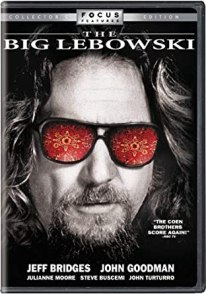
JR: The Big Lebowski is probably in my top three movies.
KK: I just watched it again.
JR: Me too, recently.
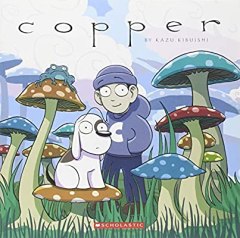
JR: You also created the Webcomic, Copper. What are some of the pros and cons of working in that format as opposed to the more traditional ways?
KK: I don’t know. I think it’s just another format. I originally thought I shouldn’t put comics on the web. It didn’t seem like the right thing to do. I wasn’t trying to make a living doing comics. I thought about doing this when I was in high school. I was really serious about it in middle school and high school. Really worked at it, and I got offered a bunch of gigs to do professional work, pretty early. And I looked at what I was producing, and what they were publishing, and I just didn’t think it was at the level of content that I wanted to make my career. So, I ended up going to film school instead. I actually told a lot of my friends that I would quit drawing comics. I said I would quit in high school and went to college for film, to study live-action filmmaking, writing, and directing. But during that time, I needed a job. So, I started doing illustrations for the school newspaper, and I wound up cartooning all the way though college. And I kept getting better and better as the years went on. Now, when I got done with college, I didn’t apply for anything cartooning either. I just didn’t see jobs doing things that I wanted to do with cartoons, and I valued cartoons and comics so much, to the point that I just wouldn’t do it for a job. Like, if someone said, “Can you draw this thing for me, I’ve got this story?”, I’d be like, “No.”, if I’m going to spend that much time doing something like that, then it’s going to be for something for me, it’s not going to be a contract gig.
JR: You preempted my next question, which was, you graduated with a degree in Film studies. What made you decide to transition into comics and graphic novels instead?
KK: What was happening was, I just disrespected my own comics. I liked it because it was punk rock, and my old comics were really funny, but they were really crass. And they were really violent. I was a huge Evan Dorkin fan. I did a comic, Clive and Cabbage, which was a total Milk and Cheese rip-off. I turned them into my own thing, where they ended up being in all these movie parodies, where ridiculous stuff happened. Like Charlton Heston was always showing up for some reason or another.
JR: I think I need to read that! I’m invested already.
KK: A lot of people who would love these comics. I don’t release them anywhere, but they’re really funny. I was even offered a TV show. Before I published anything, there was interest in making these comics into a television show.
JR: That’s amazing!
KK: But there’s only so much time in your life. And I also felt that comics were very important, in a very big, big way. And I felt that it wasn’t processing it in the United States. Not in the way it has in Japan, and the way it has in Europe, and South America, even. Here, comics were kind of pushed back into a corner. A lot of the creators were given less power, in terms of control over the content they were creating. They lost ownership over everything they were doing. Even in the superhero comic world, the mainstream comic world.
So, I was always looking at people like Charles Schultz, and Jim Davis, as kind of the guides, but the kind of content they did wasn’t much in the way of long form stories. I wanted to do something like what Charles Schultz was doing here in the United States, but I wanted to do stories the way that movie creators and writers and directors told their stories. But I didn’t see anyone doing that, until I saw Jeff Smith’s work, and I saw Bone, and I saw Nausicaä of the Valley of the Wind by Hayao Miyazaki, who was directing all these classic movies.

So, I thought, that’s what I’ll do, and I went into film, as a day job. And I did work as a director. Last job I had, I was working on a feature film for Walt Disney Feature Animation, so I got a directing and writing gig, but they didn’t let me do anything. Most of the job of making a film is internal politics. It’s how do you organize things to get everyone on the same page? And that’s really hard to do when you’re as young as I was, in my early twenties, and you looked like me. I just looked like a young kid, Asian-American kid, looked like he just graduated from college. And everyone treated me like I was just there to bring them coffee. It was hard to get anyone to take me seriously. So I thought if nobody is going to take me seriously in this town, I might as well continue to work on being a better storyteller. At that time, I wrote Daisy Kutter. I knew I had the skills and the talent to do the top jobs, but nobody would give me the opportunity. So, I thought why not find a way to get to an audience for them to decide if it should be something or not. And that’s when I decided to do Amulet.
JR: You’ve lived in a few different places, and gotten to experience different cultures. How have those experiences helped influence your writing?
KK: My story is a little different than other people who might be considered Asian-American. A lot of my friends are first or second generation. They had just come over from China or Japan. I’m actually fourth generation. My great grandfather opened a store that’s still open. It’s the oldest Japanese grocery store in the United States, and they opened it in 1907. So, my family goes way back. They’re old school workers. My grandpa, I have picture of him, where he looks like a newsie. That was my household. It was super-American. It’s interesting. Before people hear me talk, they’ll think I’m part of a recent diaspora, but it’s not the case. My background is a little different, and it took me a long time to accept that I am an American. Internally, I just feel so American, and in fact, I’m even going to help people learn English. Because besides comics, my job is just that, I’m a teacher’s assistant, helping kids in English classes have a fun time with reading. I think that can lead to really good things. There’s more to it, but then I’ll have to write a book.

JR: Interesting, because I moved around a lot too, and as a matter of fact, I learned Spanish by reading Spider-Man comics in Mexico. Expanding upon that, you currently live in the Pacific Northwest, which has a distinct flavor of its own. Is there anything about that area translates into your writing?
KK: I think so. Where do you live now?
JR: I’m in South Florida, and I know you can’t tell from the accent, but I originally come from New York. A Brooklyn boy.
KK: It did sound like you’re from New York. That’s why I felt like I’m at home here. My family used to live in Brooklyn. The Pacific Northwest is interesting. There were multiple things which drew me here. I’m not from this area. I grew up in Southern California. I’m one of the people that Seattle folks are annoyed by. It was kind of a forward thinking place and you’re at the forefront of technology, and sustainability, and all sorts of stuff. And they all get outside. Nobody’s in the city really. Everyone’s out in the mountains. They’re on their bicycles there or climbing rocks there. There’s just so much to do outside, and that’s where everyone wants to be. Even when it’s raining all the time, everyone just gets out anyway. Even in the rain. I haven’t used an umbrella in a long, long time. I just put on a poncho. It doesn’t rain really hard.
As far as how it affects my work, I don’t know. It’s very inward. People here, there’s a lot of thought going on. Kind of like in Tokyo, it’s very similar to that, in that people just kind of stay within their minds, like in other places, it’s outward. Like in California, I was a California kid, just get out and go to the beach, talk to people, be everywhere. Whereas here, people are quieter. You’ll see that people are dressed in gray and blue. But it’s nice, I really like it. I’ve been here since 2013, and it’s really wonderful. Hard to make that early transition, but it’s great.
JR: Do you still get back to Tokyo a lot?
KK: I hardly ever go. I used to travel more there when I was younger, but I haven’t been back there in a long, long time. It’s been over ten years.
JR: I read that several companies have tried to adapt Amulet into movies, but now the rights are back in your hands. Any update on that status?
KK: No updates really. That’s exactly what happened. They just came back to me. Everyone who’s been a part of it, I liked and they’ve been really kind. They made big attempts to try and make that happen. It’s interesting. It’s weird when you’re adapting something like Amulet. I think back to one of the first screenwriters who was approached to help. Will Smith approached Ed Solomon, the writer of Men in Black and Bill & Ted. Ed said that he didn’t think he’d be able to take on the project, but he thought the book was already great. And I think that in that, if I was a writer, and was approached to write Amulet, and wasn’t the one who wrote it, I wouldn’t want to adapt it, because I know how much work I already put into this to get everything to work. There’s really not a lot of work to do. You can just shoot it. That means you don’t have a job. What happens is, you put screenwriters in a difficult spot. They become middle managers for something that they don’t need to manage. It’s an unfortunate position to be in. So, what ends up happening is, because these screenwriters are paid really well, they wind up redoing things.
JR: To put their own stamp on it.
KK: Right. And it’s not Amulet anymore. When Disney of Fox or Warner Brothers, when they decided that they wanted to do it, they have kids, and the producers are generally my age, and their kids love Amulet, and when they look at the scripts they think that’s not Amulet. And of course it’s not, because someone had gone in and changed it. And of course they would do that, because why wouldn’t you if you’re getting paid. So, we’re constantly in this weird place, where everyone is trying to do too much, and we ended up with no movie. So, I have the rights back, and I like that fact so I can do the film the way that I want to do it. If I want to make it, I can, since I still have a foot in that world. I’ve already talked to some folks about preparing something.
JR: Would you go ahead and write a screenplay and go for it?
KK: Possibly. What the project has been telling me is that I have to be involved in it. The project kind of guides me, and every great writer I know says the same thing. You’re kind of like a sailor trying to catch the wind. You can calculate where to be, and be prepared for the moment when it comes. It’s all I can do to prepare for the moment when the wind hits.
JR: That’s a great philosophy, and I really hope it does come out. In your mind, who’s in the dream cast for Amulet?
KK: It’s likely that they might not even be speaking yet.
JR: Let’s hope sooner rather than later.
KK: Interest for the Amulet movie didn’t actually come about from the book. It actually came about from a screenplay I wrote for Daisy Kutter. The producer of Amulet at Temple Hill Entertainment, Pete Harris, was an assistant working at Mosaic, and he had a copy of the Daisy Kutter screenplay. I had drafted the screenplay based on my graphic novel. I basically took the graphic novel and put it into screenplay form, and added about fifteen minutes of stuff. So, we sent that out, and he had read it many, many years ago and said that it was one of the best things he had read. But at the time, he was just an assistant, and wasn’t there to pick up content. So, when he talked to David Saylor at Scholastic, he asked, “Whatever happened to Amulet, the film?”. Like he had heard it was taken by Warner Brothers. And David Saylor said, “Oh, I think Kazu just got the rights back.” And that’s when the discussions began to work together.
And when I started working with Pete, that was fantastic, and he was a good friend. We worked on it from 2015, to up around this year. Maybe we’ll work on it again later, but for now, I just wanted to take a pause. I didn’t want any distractions from the main thing, which is the series. The movie can come out ten years from now, twenty, it’s not like Tolkien was at the premiere of Lord of the Rings. And that worked out okay.
JR: Like I said, I hope it’s sooner rather than later. Now, this question is just something for me, because I really loved this aspect. I also read that you were a fan of MAD Magazine. I grew up on MAD. Who were your favorites?
KK: Mort Drucker, of course! Jack Davis, as well. And it was really cool to see, I was at the Atlanta airport, and Jack Davis’s drawings are all over the place. All about safety, and please cover your mouth when you cough. He’s a local hero there. Also like Sergio Aragones, of course. Everybody on there was so good. Angelo Torres was great as well. Al Jaffee.

JR: What’s your writing process like?
KK: It’s interesting. A lot of it is mostly research. Timewise. I’d say that research is the big thing. And what is research when you’re making graphic novels? I almost never read other graphic novels. And not because I don’t like them, I do. But I look at them and I start editing. Oh, what could I have done here? So, I wouldn’t read it like a reader, I’d read it like an editor. I don’t really enjoy it, because I don’t look at it as a free time activity. And I feel like I’m a chef in the kitchen. I’d rather go look for ingredients, than other prepared meals.
I look at nonfiction books, and go and live my life. I don’t stay at my desk very often. People are usually surprised that I’m out and about so much. Like yesterday, I spent the day talking to one of my friends who owns a bike shop, and now he’s starting to sell skis and snowboards and stuff, which I’ve had a passion about for a long, long time. I’ll also go over to my friend’s bookstore and sign books while I’m there. It’s funny, every time I’m there at the bookstore, it seems like someone recognizes me, which is pretty interesting, and I end up signing stuff and talking to them for a little while. And it’s a really nice place to be.
But Dave and I, we go mountain biking together all the time, and we talk about business, and life in general. And I think that’s healthy, since a lot of comic creators only hang out with other creators and it becomes super insular, and their sphere of influence becomes tighter and tighter and tighter. They’re looking for comfort. So, if you’re a comics creator like me, I hope you’re getting out and doing other things. Like Amy, my wife, has a series with Scholastic coming out, and it’s really good. Trust me. They know what they got, and I know what it is, so after Amulet, I can just focus on being a dad. Maybe get a dog and go hang out for a while. And then people will remember Kibuishi as Amy Kibuishi, not Kazu.
JR: Speaking of fans recognizing you, pandemic aside, do you do a lot of conferences and meet the fans?
KK: Now, it’s all like this. But the fortunate thing is, I get to hang out with my family, and my kids really appreciate this. Normally, I was just flying everywhere, living at hotels and airports for around one-third of the year. And I haven’t done that now, in like a year. And I have to say, it’s pretty nice. I really like it, and I think Amy is going to make it that she doesn’t travel as much as I used to. It takes a toll on the family.
JR: What’s your favorite book from childhood?
KK: Well, my favorite book of all time is Cannery Row by John Steinbeck. I read that when I was in high school, so I guess that’s childhood?
JR: I’ll allow it.
KK: If I go really, really far back, I’d say the first one that I got attached to was, The Caboose Who Got Loose by Bill Peet. I fell in love with Bill Peet’s artwork, and learned a lot about Bill Peet. I actually had a lot in common with him. He was also a director and directed 101 Dalmatians, Jungle Book, and also did like fifty to sixty children’s books. Now I have his whole collection. But that one book got me drawing.

JR: What’s your favorite childhood movie?
KK: It might be Big Trouble in Little China.
JR: Great movie.
KK: There are a lot. I love The Last Starfighter. Die Hard is up there too. Okay, there is one, and I don’t know why I didn’t immediately put it out there. Aliens.

JR: Okay, I’m going to put you on the record. Is Die Hard a Christmas movie?
KK: It is. It’s an everything movie.
JR: Very true. Something people would be surprised to learn about you?
KK: I’m a super competitive online gamer. I play Destiny 2 right now. I play competitive pretty much almost every night. I just hang out. I’m Mythic3Legend. I like it because it feels like a sport and I get to quietly compete away from the world. And Amy does the same thing. We both play video games before we go to sleep. Just to keep our brains moving and unwind and kind of erase ideas. And she plays her games, and she’s the highest X-rank.
JR: Do you compete against each other?
KK: She doesn’t play Destiny 2. We sit at the couch together, and she plays the Switch, and I have a little monitor.
JR: What’s the best piece of writing and illustrating advice you’ve received and is there any advice you can give to others looking to break in?
KK:I don’t know if it’s advice, but it’s information I got from my friend, Jang Lee, I think he’s a modern master painter, he worked on Monster House. I didn’t go to art school. I was self-taught, but really learned from friends such as Jang, so I had the best art school, since I was taught by masters. I told him, “I don’t know how to color.”
He looked at my black and white drawings and said, “You know how to color. You already get it. You already know. You’re already working with values which are very balanced. You know how you balance black and white? Think of the color wheel and balance that.”
I was like, “Ooooh!”
JR: What advice can you give to others?
KK: Simplify your tools. That’s the moral of that story. And that goes into temperature. Hot, cold. You want to balance the hot and the cold. Or imbalance it because you want to tell a story. You don’t need a tablet, use as much paper as you can. Get outside and get some exercise. You have to live life before you can draw about it.
JR: Great advice. Once Amulet is completed, what are you working on next?
KK: I have that other series. Amulet started in 1997, and I also started another project in 1999, which was a bigger project. Amulet was my little project. It was easy to understand, and I thought it was only going to be one book. This other project is so big that I couldn’t really wrap my head around it at the time. I just thought it was too ambitious to take on, but now I’m totally ready to do it. Hopefully, when Amulet 9 comes out, people will wonder how that book is as short as the others, because it feels so much bigger. And I found that in a comic book, there’s places you can put stuff to make things look in a big way. A good example of that would be to look at old Jack Kirby comics, where in a short amount of space, he’s able to give you the universe. They were so much more economical with their use of space. Instead of blathering on and on, they got to the big idea really fast, and allowed the readers to carry it. They’re just saying, here’s the idea, run with it. And I think you can do that, while also telling a very involved story. So, with Amulet 9, I feel like that’s happening. It’s only halfway through, and already feels like the biggest book in the series. We, my assistant and I, started the new one, and need to pace ourselves, because on Amulet 8, we both went to the hospital, literally.
JR: Oh, wow.
KK: From exhaustion. We needed to recover for a year and wonder if we really wanted to do this.
JR: Is everything okay now?
KK: We’re fine. We got it figured out, and just tell Scholastic, you have to have a reasonable expectation of what you’re asking us to do. I was trying to be a good soldier and working until two or three in the morning, seven days a week, and not see my family. It’s not worth it. I want to be vocal about that, and tell other artists to take care of yourself. It’s not worth it.
JR: I think you’re right, and I need to take that to heart. How can people follow you on social media?
KK: Twitter, Instagram @Boltcity
Website: Boltcityproductions.com
JR: I’d like to once again thank Kazu for for joining us today, and everyone should go out and pick up the Amulet Box Set!
Like this:
Like Loading...



 CL: And the story is set in Boston – any particular reason you chose that city?
 plotting a story is a bit like a puzzle. Could you explain that?


