

We are so excited to welcome new members to the STEM Tuesday team!! Please take a look at these amazing authors/writers and check out their websites. They are going to be providing us some amazing posts!
Week 1
 Shruthi Rao
Shruthi was that kid who actually enjoyed writing essays in school! She wrote her first novel when she was eleven. It was an Enid Blyton rip-off. It was terrible (so she says). She didn’t write stories for a long time after that. Instead, Shruthi got a Master’s degree in Energy Engineering from one of the top schools of India, and worked in the IT industry for four years.
And then, in the 2000s, she rediscovered my love for writing. Shruthi blogged at Hallucinations! and wrote short stories, and essays for a number of publications. She now writes books for children of all ages, both fiction and non-fiction. www.shruthi-rao.com


 Susan Summers
Susan started her career as a zookeeper and enjoyed working with polar bears, wolves, and owls – to name just a few of her favorite animals. Interest in science and nature firmly took hold and she followed that career by becoming a wildlife biologist. In this engaging field, she was able to participate in research on a variety of wildlife, including bears, bats, and fabulous birds! She wanted to share her interest in nature with children, so she got a Master’s in Education, and went on to teach ecology as a museum educator. She had this rewarding career for over 20 years. Currently, she is focused on becoming an author, writing about science and nature among other things. In the meantime, she lives happily with her husband of 30 years and with two fur children that she’d love to tell you about. She’s thrilled to be part of STEM Tuesday [and looks forward to sharing her enjoyment of this topic with you].


 Callie Dean
Callie Dean is a musician, writer, educator, and program evaluator. She teaches applied research at Eastern University and is passionate about the role of the arts in effecting community transformation. She lives in Shreveport, La., with her husband and two sons. She is the director of CYBER.ORG, a STEM education organization with a national network of more than 25,000 K-12 teachers. Callie has written a wide variety of K-12 STEM curriculum materials, including nine cybersecurity badges for the Girl Scouts of the USA. She’s an aspiring PB/MG author, a member of SCBWI, and a 2022 PBParty finalist. Her areas of interest include technology, cybersecurity, citizen science, and the intersection of science with art. www.sojo.net/biography/callie-dean
 Lydia Lukidis
Lydia Lukidis is the author of 48 trade and educational books, as well as 31 e-Books. Her latest STEM book, THE BROKEN BEES’ NEST (Kane Press, 2019), was nominated for a CYBILS Award, and her forthcoming STEM book, DEEP, DEEP, DOWN: The Secret Underwater Poetry of the Mariana Trench will be published by Capstone in 2023. Lydia writes for children aged 3-12, and her artistic mandate is to inspire and enlighten. A science enthusiast from a young age, she now incorporates her studies in science and everlasting curiosity into her books. For more information, please visit www.lydialukidis.com.


Week 2
 Jenna Grodinski
Jenna Grodzicki is the author of more than twenty fiction and nonfiction children’s books. Her books include Wild Style: Amazing Animal Adornments (Millbrook Press 2020) and I See Sea Food: Sea Creatures That Look Like Food (Millbrook Press 2019), the winner of the 2020 Connecticut Book Award in the Young Readers Nonfiction Category. Jenna lives near the beach with her husband and two children. In addition to being a writer, she is also a library media specialist at a K-4 school. To learn more, visit her website at www.jennagrodzicki.com.


Week 3
 Margo Lemieux
A recently retired professor of art, Margo is devoted to seeing that the A stays in STEAM. Science & technology need the heart that comes with art. It was lack of heart that led to the ecological crisis we have today. The process of creativity is closely related to that of scientific inquiry.
She is a published picture book writer and illustrator, editor, poet, and amateur ukulele player. In her art projects, she often included science concepts as a way of connecting learning.
Week 4
 Andi Diehn
Andi Diehn grew up near the ocean chatting with horseshoe crabs and now lives in the mountains surrounded by dogs, cats, lizards, chickens, ducks, moose, deer, and bobcats, some of which help themselves to whatever she manages to grow in the garden. You are most likely to find her reading a book, talking about books, writing a book, or discussing politics with her sons. She has 18 children’s nonfiction books published or forthcoming. www.andidiehn.com


We know you are looking forward to their amazing posts as much as we are! #STEMTuesday #sciencerocks


 So what are some common traits that make scientists and artists, including writers, successful? Another book on this month’s list, NO BOUNDARIES: 25 Women Explorers and Scientists Share Adventures, Inspiration, and Advice by Clare Fieseler and Gabby Salazar, is rich with examples. Here are a few.
 Kirsten W. Larson used to work with rocket scientists at NASA and now writes about women in science and much more. Her books include the WOOD, WIRE, WINGS: Emma Lilian Todd Invents an Airplane, illus. Tracy Subisak and A TRUE WONDER: The Comic Book Hero Who Changed Everything, illus. Katy Wu. Learn more at


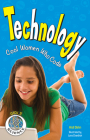
 Carla Mooney loves to explore the world around us and discover the details about how it works. An award-winning author of numerous nonfiction science books for kids and teens, she hopes to spark a healthy curiosity and love of science in today’s young people. She lives in Pennsylvania with her husband, three kids, and dog. When not writing, she can often be spotted at a hockey rink for one of her kids’ games. Find her at