Posts Tagged teachers

Motifs in Middle Grade

Motifs are the workhorses of the literary device world. Unlike a one-line simile or a bit of hyperbole that might briefly spark the reader’s imagination before they turn the page, a motif—by definition—is woven throughout a story. To recognize a motif, a reader must comprehend the book as a whole and be savvy enough to catch individual repeated details throughout chapters and scenes. When the reader connects those dots, motifs support the book’s deeper meaning. They complement and enrich plot and characterization. Motifs can also serve as story glue, giving the reader grab-loops to grasp (the way a preschooler takes hold of a rope line). They provide continuity and recognizability—especially if the text is on the longer side.

Well-constructed motifs are perfect for MG! While it’s true that motif as a device is traditionally explored via lit class classics (like the color red in The Scarlet Letter or instances of watchfulness in The Great Gatsby), motifs certainly play a role in many middle grade novels. Let’s take a look at motif by the (literary) dictionary definition; then, we’ll find examples in some modern-day MG stories.

Motif is easy to understand if you’ve ever decorated a room or planned a party around some thematic idea. Imagine you plan to redecorate a kitchen; inspired by some wall hooks in the shape of lighthouses, you also pick out lighthouse border, lighthouse wall prints, a lighthouse soap dispenser… Your lighthouse motif guides the overall project and ties the space together.

In storytelling, motifs are the same kind of repeated, same-yet-different idea. You can bring out a motif in imagery, events, actions, objects, and figurative language. Generally, motifs satisfy readers (whether consciously or unconsciously) who enjoy patterns, structure, sense, and logic in their stories.

Well-structured motifs carry significance and contribute to theme, as well. If a story has a lighthouse motif, what do all those lighthouses mean? Is a character trying to find his or her way, but struggling? Now the motif satisfies the reader who loves connections, deeper meanings, and rich symbolism.

In the very popular Escape from Mr. Lemoncello’s Library, the crime motif appears in both apparent and subtle ways. Once the kids learn about the crime that inspired Mr. Lemoncello’s construction of the library, they solve the final puzzles and escape. So the motif certainly supports the plot (the only way to escape follows the path of long-ago bank criminals). Along the way, scenes and subplots highlight writers of crime fiction, historical criminals, and the students’ own “crimes”: lying, theft, unkindness. Because those who commit the crimes lose the game, this crime motif supports the book’s overall messages about fair play, teamwork, and kindness.

In Inside Out and Back Again, Ha shares her experiences as a refugee to America over the course of a calendar year, so holidays are a natural motif. As she begins and ends the year with Tet, the Vietnamese New Year, and tries to learn about American holidays in between, the holiday motif supports a theme of growth, change, and accepting new traditions while maintaining those Ha knows and loves.

The more recent Lucky Broken Girl by Ruth Behar includes a motif of cultural experiences that represent the different backgrounds of immigrants in the book. The food shared by Ramu, the altar in Chicho’s apartment, and Mami’s Cuban coffee all serve to provide  main character Ruthie with opportunities to consider how immigrants from many different places now live side by side in America, supporting a theme of acceptance.

If you are a writer, consider how these skillfully-executed motifs serve the overall story. Adding effective motifs can help to support or clarify a tricky theme. If you are a teacher or librarian, try having student readers work in small groups to brainstorm instances of a motif in their current novel. Provide the first motif, but encourage the discovery and exploration of other motifs along the way; many middle grade language arts students will love a search-and-find assignment looking for instances of a motif.

STEM Tuesday — Serendipity Science — Writing Tips and Resources

“The most exciting phrase to hear in science, the one that heralds new discoveries, is not ‘Eureka!’ but, ‘That’s funny … ‘ “ – Isaac Asimov

Serendipity science. In the high-brow world of “real” science, we often poo-poo the very idea of serendipity being even remotely involved in science done “the real way”. We like to think we are in complete control. We like to think we have all the answers or the best possible answers already tucked away in our magnificent brains. 

But we don’t.

Science is not about how much we know; it’s about how much we don’t know. We often get this backward. Science and STEM, in general, are about using what we know to find out what we don’t know in order to improve our understanding.

It’s about paying attention!

ESA/XMM-Newton/N. Webb (XMM-Newton Survey Science Centre), CC BY-SA IGO 3.0, CC BY-SA 3.0 IGO via Wikimedia Commons (See note below the O.O.L.F Files for the image description.)

The scientific method we all memorized repeatedly throughout our academic experience is just a guidebook. It’s like a vacation guide. The important things, the memorable parts of a vacation, are often what happens between and around the listed vacation spots. In the scientific method, like with the vacation guidebook, the true magic lies between the listings. The observations we make along the way and the way we incorporate them into the big picture are what matters. 

We not only have to do the work; we have to pay attention along the way. Something may be out there we didn’t expect. We have to be smart enough, open-minded enough, and prepared enough to recognize the unexpected and use it to our advantage. Ah, in short, this is what serendipity science truly is. It’s not pure or blind luck. It’s not magic. It’s not even Divine Intervention. It’s paying attention when things don’t go as expected or predicted. 

What does this science rant from a scientist/author have to do with a STEM Tuesday Writing Tips & Resources post about serendipity?

Well, almost all the things I ranted on about STEM and science above can be applied to STEM writing. We’ve all seen this writing advice. Write what you know.

Write what you know? Maybe? Maybe not?

How about “write what you want to know”? 

Serendipity can be a writer’s best friend. Use the power of serendipity to unlock the potential in our storytelling. Nonfiction, informative fiction, and fiction can all benefit from paying attention to the things that happen during the writing process.

Think about mind mapping or outlining or free writing, or the classic crappy first drafting. We use all these to not only come up with ways to effectively express our ideas but as an organizational tool. Where does serendipity fit in here? Serendipity often results in a new idea or direction we never knew existed. New ideas and directions that allow the pieces to click into place or clear a blocked path in the writing process. Serendipity might just be the “muse” creative people often allude to. 

However, we can never forget two very important things. First, in order to mine the power of serendipity, work has to be done. In science or creative work, heck, in just about anything, nothing can happen if you’re not working. Fleming had to design and set up the staphylococcus experiments before discovering the unwanted mold on the agar plates killed the bacteria in close proximity. Hard work is the magic! 

The second thing is maybe even more important. We have to pay attention! We have to observe and think! What if Fleming would have just tossed those Petri plates out the window in a fit of rage over poor technique in making the agar? So long antibiotics! But he didn’t throw a fit when things apparently went south, he paid attention. Bingo!

Do the work, pay attention, and unlock the power of serendipity! 


Mike Hays has worked hard from a young age to be a well-rounded individual. A well-rounded, equal opportunity sports enthusiast, that is. If they keep a score, he’ll either watch it, play it, or coach it. A molecular microbiologist by day, middle-grade author, sports coach, and general good citizen by night, he blogs about sports/training-related topics at  www.coachhays.com and writer stuff at www.mikehaysbooks.comTwo of his science essays, The Science of Jurassic Park and Zombie Microbiology 101,  are included in the Putting the Science in Fiction collection from Writer’s Digest Books. He can be found roaming around the Twitter-sphere under the guise of @coachhays64.


The O.O.L.F Files

This month’s Out Of Left Field (O.O.L.F.) Files searches the vast expanses of the digital universe to stumble upon information that can further explain the oft-maligned and ill-defined process of serendipitous science.

File:Slinky.jpg


(Note: Besides being absolutely beautiful to look at, the image above has such a cool backstory, I felt it proper to add the Wikimedia description below. I hope you think it’s as cool as I do even though I only understand about 10% of it. You know what this means, right? Time for a visit down the Google rabbit hole of research!

“Description: The purple lines and blotches scattered across this image show something incredible: all of the X-ray sources that were serendipitously detected – that is, not intentionally targeted – by ESA’s XMM-Newton X-ray space observatory from 2000 to 2017.
This image is based on a catalogue named 3XMM-DR8, the latest publicly released catalogue of serendipitous XMM-Newton X-ray sources, created on behalf of ESA by the XMM-Newton Survey Science Centre.
The catalogue, released in May 2018, features sources in the 0.2 to 12 keV energy range drawn from 10 242 observations made by XMM-Newton’s European Photon Imaging Camera (EPIC), an instrument capable of detecting very faint sources and rapid changes in intensity, between 3 February 2000 and 30 November 2017. It contains 532 more observations and 47 363 more detections than the preceding 3XMM-DR7 catalogue, which was made public in June 2017.
While the pattern of sources across the sky may appear random, some structure can be seen here. The oval represents the celestial sphere, an abstract perspective upon which our observations of the Universe are projected. The data are plotted in galactic coordinates, such that the centre of the plot corresponds to the centre of our Milky Way galaxy – and this can be seen in the image. Through the centre of the oval is a horizontal line, where patches of purple appear to draw together. This line is the plane of the Milky Way galaxy, with the large splotch of colour in the centre corresponding to our galaxy’s core, where XMM-Newton made a higher number of serendipitous detections.
XMM-Newton has been orbiting the Earth since 1999, observing the cosmos around us while on the hunt for X-rays coming from high-energy phenomena such as black holes, stellar winds, pulsars, and neutron stars. With every patch of sky that XMM-Newton observes, the telescope detects between 50 and 100 serendipitous sources, such as those shown here, besides the objects that were the original target of the observations. This is due to the large collecting area of the telescope’s mirrors and its wide field of view.
All-sky images and large-scale cosmic data are immensely valuable in our study of the cosmos. Upcoming missions – such as the eROSITA space telescope, a German-led satellite scheduled for launch on 12 July to complete the first all-sky survey in the medium-energy X-ray band, up to 10keV – will add to this wealth of knowledge, and help further our understanding of the X-ray Universe.”)


STEM Tuesday — Serendipity Science — Book List

Do all discoveries, inventions, and innovations require plans and procedures? Nope. Serendipity, a blend of chance and wisdom, play a huge part in many instances. Tales of accidental brilliance are fun to read and show us the part in plays in all of our lives. Here’s a list of books that tell tales of serendipity.

Accidental Archeologists: True Stories of Unexpected Discoveries by Sarah Albee

Sarah Albee tells tales of the secret treasures that are found all around us in Accidental Archeologists. Readers will discover many incredible tales in this book of accessible archeology.

Building Blunders: Learning from Bad Ideas by Amie Jane Leavitt 

As a part of the series Fantastic Fails, this book shares building failures that led to learning.

Gadget Disasters: Learning from Bad Ideas by Elizabeth Pagel-Hogan

Another in the Fantastic Fails series, Gadget Disasters introduces readers to gadgets gone wrong and what designers learn from those missteps.

How to Become an Accidental Genius by Freida Wishinsky and Elizabeth MacLeod, Illustrated by Jenn Playford

Yes, you can become an accidental genius too, according to these two authors, who share a series of inspiring tales of global inventors.

Mistakes That Worked: 40 Familiar Inventions and How They Came to Be by Charlotte Foltz Jones, Illustrated by John O’Brien

Readers will find the stories of common things, like potato chips, and their chance invention. Mistakes can lead to success.

Rhinos in Nebraska: The Amazing Discovery of the Ashfall Fossil Beds by Allison Pearce Stevens, illustrated by Matt Huynh

It’s difficult to believe that rhinos, elephants, and camels once roamed North America. Readers will learn about a startling archeological discovery right in the heart of Nebraska in this book that proved their existence.

All In a Drop: How Antony van Leeuwenhoek Discovered an Invisible World by Lori Alexander, illustrated by Vivien Mildenberger

Lori Alexander tells the fascinating story of self-taught scientist, Antony van Leeuwenhoek’s great discovery.

Accidental Inventions: The Chance Discoveries That Changed Our Lives by Birgit Krols

Here is another book that features the backstories of some of our most important, fun, and useful inventions.

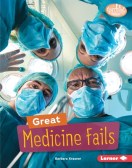
Great Medicine Fails by Barbara Krasner

Can bloodletting with leeches actually lead to a medical success? Read about some of the biggest failures in medicine that led to important success.

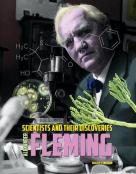
Alexander Fleming: Scientists and their Discoveries by Bradley Sneddon

Penicillin is one of the world’s greatest discoveries and has one of the most fascinating stories. Discover how a chance mold contamination led to saving countless lives across the planet.


This image has an empty alt attribute; its file name is thumbnail-150x113.jpg

Nancy Castaldo has written books about our planet for over 20 years including, THE STORY OF SEEDS, which earned the Green Earth Book Award, Junior Library Guild Selection, and other honors. Nancy’s research has taken her all over the world from the Galapagos to Russia.  She strives to inform, inspire, and empower her readers. Nancy also served as Regional Advisor Emeritus of the Eastern NY SCBWI region. Her 2020 international title about farm and food is THE FARM THAT FEEDS US: A Year In The Life Of An Organic Farm. Visit her at www.nancycastaldo.com. 

This image has an empty alt attribute; its file name is Patricia-Newman-150x150.jpg

Patricia Newman writes middle-grade nonfiction that empowers young readers to act on behalf of the environment and their communities. Academy Award winner and environmentalist Jeff Bridges calls Planet Ocean a “must read.” Newman, a Sibert Honor author of Sea Otter Heroes, has also received an NSTA Outstanding Science Trade Book Award for Eavesdropping on Elephants, a Green Earth Book Award for Plastic, Ahoy!, and a Eureka! Gold Medal from the California Reading Association for Zoo Scientists to the Rescue. Her books have received starred reviews, been honored as Junior Library Guild Selections, and included on Bank Street College’s Best Books lists. During author visits, she demonstrates how young readers can use writing to be the voice of change. Visit her at www.patriciamnewman.com.