Posts Tagged summer activities for kids

A Summer of Creativity: Writing Exercises to Bring Back the Fun, Break Out of a Rut, and Inspire Young Writers

Summer is here, and school is out. Why not use some of your extra free time to work on a writing project? By writing a little each day, you could end the summer with an entire collection of poems, short stories, essays, journal entries, or even the first draft of a novel. Writing regularly is one of the best ways to improve as a writer. Doing the same thing over and over, however, can be a sure path to boredom.

Whether you are drafting a middle-grade novel, helping a young writer find their voice, or simply trying to make writing feel joyful again, flexibility and exploration are key. With that in mind, below are five creative writing exercises to bring some play into your own writing and into the work of the young writers in your life.


1. Switch up the genre or form

We all tend to have genres and forms that feel most comfortable. That does not mean, however, that we always need to write in that vein.

Do you typically write prose? Try a poem, a verse novel scene, a list poem, or a haiku. I regularly participate in #HaikuSaturday on X and Bluesky and love the supportive community. You may want to give it a try. Do you typically write fiction? Spend 20 minutes writing creative non-fiction, a personal essay, or a journal entry. If you usually write serious scenes, try humor. If you usually write realistic fiction, try a fantasy premise.

Writing outside your comfort zone can freshen up your practice. It can also help you acquire and strengthen skills that you can use in your main work. For example, even though I write primarily in prose, I spent years studying and practicing poetry. As a result, I use poetic techniques in everything I write.

Try this with young writers: Ask them to retell a favorite summer memory three ways—as a poem, a journal entry, and a one-page story.


2. Try out a new craft element

Take a look at your current read, or a book that inspires your writing project, and pick one or two writing techniques used by authors you admire. Study how the author uses the technique in the work. Then try it out in your draft or current project—perhaps in just one scene or on just one page.

You might study how an author begins a chapter, builds suspense, reveals character through dialogue, uses setting, or ends a scene on a question. Emulation is a great way to break through a writing rut and grow in your craft.

Try this with young writers: Read the opening paragraph of a favorite middle-grade novel. Then invite them to write a new opening using the same kind of feeling, whether mysterious, funny, fast-paced, quiet, or surprising.


3. Re-read your favorites

Whether they are your favorites in the genre in which you are writing or just your overall favorite books, revisiting books that have shaped you as a writer and reader is important. This time, read with two sets of eyes: reader eyes and writer eyes.

What techniques do you find especially effective in connecting with you as a reader? How does the author make you care about the main character? Where do you laugh, worry, wonder, or turn the page faster? How can you borrow from those techniques in your own work?

This is an especially useful practice if you are feeling lost or stuck. Favorite books can remind us why we wanted to write in the first place.

Try this with young writers: Ask them to choose one favorite scene and explain why it works. Then challenge them to write a scene that creates a similar feeling without copying the plot.


4. Go on some observation adventures

Pulling from lived experiences, overheard conversations, and other observations is a classic writing tip, but it is easy to forget how much material is waiting just outside our doors.

Go outside to a park, a mall, a restaurant, a library, a farmer’s market, a ball field, or wherever your curiosity leads you, and take a notebook with you. Write down as many observations as possible, no matter how obvious or random. Notice sounds, smells, gestures, snippets of conversation, clothing, weather, signs, and small conflicts. Even ten minutes in your neighborhood is enough to fuel an abundance of ideas.

This is a great way to jumpstart your creativity on days when you are feeling restless or uninspired.

Try this with young writers: Challenge them to write down ten things they notice, then choose three and turn them into the beginning of a story.


5. Change point of view

No matter what genre you are writing, perspective is key. Try rewriting your current project, or a part of it, from a different perspective—or even more than one.

If you feel as though you need to get to know a character more, rewriting a scene from that character’s point of view can reveal new things about them. If you feel as though a scene isn’t working, this exercise can send it in a new direction. If you feel as though the tone of your piece is flat or ineffective, a new perspective can drastically change that.

For middle-grade writers, this can be especially helpful. How is the scene viewed from the point of view of the protagonist? What about the point of view of the best friend? What about the point of view of the younger sibling? What about the point of view of the adult who misunderstands everything? Don’t be afraid to play with this core element.

Try this with young writers: Challenge them to rewrite a familiar fairy tale or family story from the point of view of a side character, pet, villain, or object.


Wherever your writing is taking you right now, I hope these ideas can bring some exploration and fun into your process. By the end of the summer, you and the young writers in your life may have a notebook full of poems, stories, scenes, characters, questions, story sparks, and maybe even the start of a novel. Even better, you may have rediscovered the joy of writing for the fun of it.

Summer Camp Capers: 10 Middle Grade Books About Camps

Cover of "Be Prepared" by Vera Brosgol features anxious looking child camper in the woods.

Who could forget their summer camp experience?

For many children, sleep-away camps or day-camps can be both exciting and anxiety-producing. I remember going to a sleep-away camp when I was in middle school. It lasted a week. It felt like two months. Also, someone very close to me once received a disconcerting drawing from an eleven-year-old at a week-long camp:

Child's self portrait and text "Oh! How I want to go home!"

It should be noted, the child ultimately decided it was “good to get out of my comfort zone.”

How can you help your child or student anticipate or reflect on camp experiences?

1. Journaling

2. Writing stories about camp (whether it be real or imagined)

3. Talking about their feelings

4. Reading books about camps! Whether or not a child plans to attend a summer camp, middle grade books about young protagonists triumphing in challenging, scary or even hilariously over-the-top camp situations can be both inspiring and entertaining.

Listed below are ten wonderful middle grade books that feature summer camps:

Be Prepared by Vera Brosgol

In Be Prepared, all Vera wants to do is fit in—but that’s not easy for a Russian girl in the suburbs. Her friends live in fancy houses and their parents can afford to send them to the best summer camps. Vera’s single mother can’t afford that sort of luxury, but there’s one summer camp in her price range—Russian summer camp.
Vera is sure she’s found the one place she can fit in, but camp is far from what she imagined. And nothing could prepare her for all the “cool girl” drama, endless Russian history lessons, and outhouses straight out of nightmares!


Here in the Real World by Sara Pennypacker

Ware can’t wait to spend summer “off in his own world”—dreaming of knights in the Middle Ages and generally being left alone. But then his parents sign him up for dreaded Rec camp, where he must endure Meaningful Social Interaction and whatever activities so-called “normal” kids do.

On his first day Ware meets Jolene, a tough, secretive girl planting a garden in the rubble of an abandoned church next to the camp. Soon he starts skipping Rec, creating a castle-like space of his own in the church lot.

Jolene scoffs, calling him a dreamer—he doesn’t live in the “real world” like she does. As different as Ware and Jolene are, though, they have one thing in common: for them, the lot is a refuge.

But when their sanctuary is threatened, Ware looks to the knights’ Code of Chivalry: Thou shalt do battle against unfairness wherever faced with it. Thou shalt be always the champion of the Right and Good—and vows to save the lot.

But what does a hero look like in real life? And what can two misfit kids do?


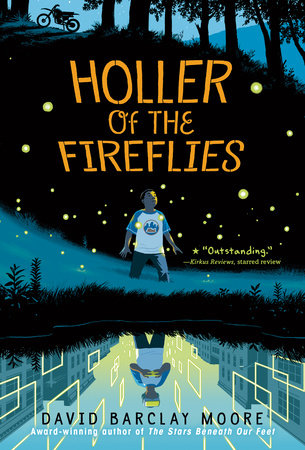
Holler of the Fireflies by David Barclay Moore

Javari knew that West Virginia would be different from his home in Bushwick, Brooklyn. But his first day at STEM Camp in a little Appalachian town is still a shock. Though run-ins with the police are just the same here. Not good.

Javari will learn a lot about science, tech, engineering, and math at camp. And also about rich people, racism, and hidden agendas. But it’s Cricket, a local boy, budding activist, and occasional thief, who will show him a different side of the holler—and blow his mind wide open.

Javari is about to have that summer. Where everything gets messy and complicated and confusing . . . and you wouldn’t want it any other way.

J + C + summer = ∞


Lions and Liars by Kate Beasley

Frederick Frederickson has a food-chain theory about life. There are lions, like the school bully. Gazelles, like the bullied kids. There are meerkats, and the fleas that live on the butts of meerkats. Frederick’s a flea.

Fifth grade is off to a terrible start when Frederick is sent to a disciplinary camp for troublesome boys. His fellow troop mates—Nosebleed, Specs, The Professor, and little-yet-lethal Ant Bite—are terrifying. But in between trust-building exercises and midnight escape attempts, a tenuous friendship grows between them. Which is lucky, because a Category 5 hurricane is coming and everyone will have to work together—lions and fleas alike—to survive!


Mirror to Mirror by Rajani LaRocca

Maya is the pragmatic twin, but her secret anxiety threatens to overwhelm her.

Chaya is the outgoing twin. When she sees her beloved sister suffering, she wants to tell their parents—which makes Maya feel completely betrayed. With Maya shutting her out, Chaya makes a dramatic change to give her twin the space she seems to need. But that’s the last thing Maya wants, and the girls just drift further apart.

The once-close sisters can’t seem to find their rhythm, so they make a bet: they’ll switch places at their summer camp, and whoever can keep the ruse going longer will get to decide where they both attend high school—the source of frequent arguments. But stepping into each other’s shoes comes with its own difficulties, and the girls don’t know how they’re going to make it.


Stella Díaz Never Gives Up by Angela Dominguez


Stella gets a big surprise when her mom plans a trip to visit their family in Mexico! Stella loves marine animals, and she can’t wait to see the ocean for the first time . . . until she arrives and learns that the sea and its life forms are in danger due to pollution.

Stella wants to save the ocean, but she knows she can’t do it alone. It’s going to take a lot of work and help from old and new friends to make a difference, but Stella Díaz never gives up!


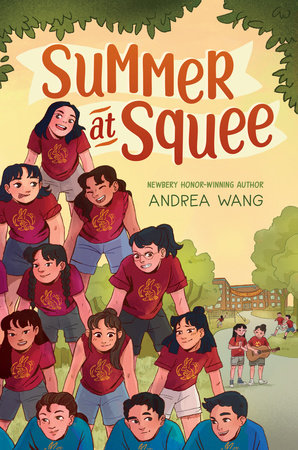
Summer at Squee by Andrea Wang

Phoenny Fang plans to have the best summer ever. She’s returning to Summertime Chinese Culture, Wellness, and Enrichment Experience (SCCWEE for short and “Squee” to campers in the know), and this year she’s a senior camper. That means she; her best friend, Lyrica Chu; and her whole Squad will have the most influence. It almost doesn’t matter that her brother is a CIT (counselor-in-training) and that her mom and auntie are the camp directors. Time spent at Squee is sacred, glorious, and free.

On the day Phoenny arrives, though, she learns that the Squad has been split up, and there’s an influx of new campers this year. Phoenny is determined to be welcoming and to share all the things she loves about camp—who doesn’t love spending hours talking about and engaging in cultural activities? But she quickly learns how out of touch she is with others’ experiences, particularly of the campers who are adoptees. The same things that make her feel connected to her culture and community make some of the other campers feel excluded.

Summer at Squee turns out to be even more transformative than Phoenny could’ve imagined, with new friendships, her first crush, an epic show, and a bigger love for and understanding of her community.


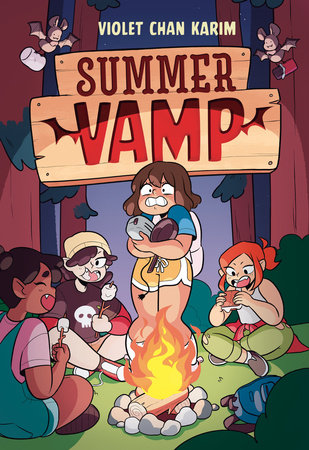
Summer Vamp by Violet Chan Karim

After a lackluster school year, Maya anticipates an even more disappointing summer. The only thing she’s looking forward to is cooking and mixing ingredients in the kitchen, which these days brings her more joy than mingling with her peers . . . that is until her dad’s girlfriend registers her for culinary summer camp! Maya’s summer is saved! . . . or not.

What was meant to be a summer filled with baking pastries and cooking pasta is suddenly looking a lot . . . paler?! Why do all of the kids have pointy fangs? And hate garlic? Turns out that Maya isn’t at culinary camp—she’s at a camp for VAMPIRES! Maya has a lot to learn if she’s going to survive this summer . . . and if she’s lucky, she might even make some friends along the way.


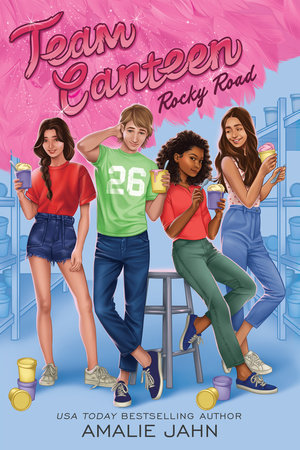
Teen Canteen: Rocky Road by Amalie Jahn

On the final night of summer camp, Tasha, Raelynn, Claire, and Billie get busted stuffing themselves with ice cream in the mess hall’s walk-in freezer. But when they slip away without being punished, they’re convinced the pink feather boa Billie put on to stay warm is magic.

Back at home, each member of Team Canteen tests the boa’s powers as they face their own challenges. When her little cousin moves in with her destructive dog, Tasha struggles to find her place inside her adoptive family. Claire’s scared the kids at school will find out how hard life’s gotten since her dad lost his job. Raelynn longs to be someone other than her sister’s twin. And with a hockey-obsessed family charting his every move, Billie’s worried he’ll never be able share his dream of becoming a figure skater.

It’s going to be a rocky road from the start of the school year back to Camp Happy Hollow. Will the boa continue to protect Team Canteen, or will their friendship end up being the most magical find of all?

Alternating among the friends, Rocky Road is a smart, soaring celebration of the highs and lows of middle school, and the unbreakable friendships that see you through, no matter what comes next.


Twelfth by Janet Key

Twelve-year-old Maren is sure theater camp isn’t for her. Theater camp is for loud, confident, artsy people: people like her older sister, Hadley–the last person Maren wants to think about–and her cinema-obsessed, nonbinary bunkmate, Theo. But when a prank goes wrong, Maren gets drawn into the hunt for a diamond ring that, legend has it, is linked to the camp’s namesake, Charlotte “Charlie” Goodman, a promising director in Blacklist Era Hollywood.

When Maren connects the clues to Shakespeare’s Twelfth Night, she and her new friends are off searching through lighting booths, orchestra pits and costume storages, discovering the trail and dodging camp counselors. But they’re not the only ones searching for the ring, and with the growing threat of camp closing forever, they’re almost out of time.


Let me know below other great middle grade reads that feature summer camp!