Posts Tagged STEM

BOOK LIST FOR A BLACK HOLE

Black Hole Photo History

It’s been an exciting week for space enthusiasts, space fiction fans, rocket scientists, and computer scientists. For the first time ever, we have an idea of what the elusive, oft-written-about black hole looks like.

Beautiful, right? Incredible even. What’s amazing to me is that we took pictures of light in a place where light gets sucked in but never spit out again. I always imagined that we could never see anything once that big vacuum cleaner in the cosmos had swallowed it, not even if we built the world’s strongest computer with the most sophisticated brain.

Fortunately for all of us, I’m not an astrophysicist or a computer scientist. Even more fortunately for all of us, Dr. Katie Bouman is. Bouman is a computer scientist who was part of a team that created a set of algorithms that took the “sparse and noisy data” collected from telescopes and turned them into an image. According to TIME magazine, Bouman says what really makes her tick is “coming up with ways to see or measure things that are invisible.”

The MIT postdoctoral fellow shared this photo of herself “watching in disbelief as the first image I ever made of a black hole was in the process of being reconstructed.”

Encouraging More Women in Space and Science

What’s great about Dr. Bouman’s story is that in addition to raising the profile of all the brilliant women researchers in #STEM, we get a chance to talk again about books that focus on women in STEM, computer science, black holes, and the study of space. (And we get to say Event Horizon Telescope a lot, which is just plain fun.)

Unfortunately, the numbers on women researchers in STEM fields are still dismal, hovering somewhere around 30% by many estimates. Clearly, we’ve got a lot of work to do encouraging and supporting women in these fields–and it begins with our middle-grade readers.

Book List for a Black Hole Moment

Here’s a handful of books to help stir our girls’ imaginations and spur them to become the next Dr. Katie Bouman.

NON FICTION

A Black Hole is not a Hole, by Carolyn Cinami DeCristofano

If a black hole is not a hole, then what is it? Find out what black holes are, what causes them, and how scientists first discovered them. Learn how astronomers find black holes, get to know our nearest black-hole neighbor, and take a journey that will literally s-t-r-e-t-c-h the mind.


Exoplanets, by Karen Latchana Kenney (Twenty-First Century Books TM)

Until the mid-1990s, scientists only guessed that the universe held exoplanets, or planets beyond our solar system. But using advanced physics and powerful telescopes, scientists have since identified more than three thousand exoplanets. This work has revealed fascinating worlds, including a planet that oozes lavalike fluids and a planet that glows bright pink.

Even more fascinating, scientists think that some exoplanets might contain life. Many orbit in the Goldilocks zone, the region around a star that’s not too hot or too cold for liquid water, a key ingredient for life. This book examines exoplanets, the possibilities for life beyond Earth, and the cutting-edge technologies scientists use to learn about distant worlds.

This book features astrophysicist Sara Seager.


Astronaut/Aquanaut, by Jennifer Swanson (National Geographic)

Margaret on the Moon, by Dean Robbins and Illustrated by Lucy Knisely (Knopf)A true story from one of the Women of NASA!

Margaret Hamilton loved numbers as a young girl. She knew how many miles it was to the moon (and how many back). She loved studying algebra and geometry and calculus and using math to solve problems in the outside world.

Soon math led her to MIT and then to helping NASA put a man on the moon! She handwrote code that would allow the spacecraft’s computer to solve any problems it might encounter. Apollo 8. Apollo 9. Apollo 10. Apollo 11. Without her code, none of those missions could have been completed.

Dean Robbins and Lucy Knisley deliver a lovely portrayal of a pioneer in her field who never stopped reaching for the stars.

FICTION:


A Wrinkle in Time, by Madeleine L’Engle (Farrar, Straus, and Giroux/Square FIsh)

Not a new entry, not even from this century, but I couldn’t resist reminding everyone that an early and definitive female character in a book about space was Meg Murray.

A Wrinkle in Time, winner of the Newbery Medal in 1963, is the story of the adventures in space and time of Meg, Charles Wallace, and Calvin O’Keefe. They are in search of Meg’s father, a scientist who disappeared while engaged in secret work for the government on the tesseract problem — a wrinkle in time.

A Wrinkle in Time is the winner of the 1963 Newbery Medal.


Beep and Bob, by Jonathan Roth (Simon and Schuster)
In this adorable chapter book series that School Library Journal said is for “kids who love funny stories but may be too young for books like Diary of a Wimpy Kid,” space-school attendee Bob and his alien bestie Beep star in hilarious intergalactic adventures.
Does anyone have any other books that should make this list? Let us know in the comments. And in the meantime, let’s keep reading and encouraging our girls to reach for the stars.

STEM Tuesday– Mixing Science and Poetry/Verse — Book List

April is a time to celebrate poetry so we’ve gathered a list of wonderful STEM titles in verse for you to explore. Enjoy a poem each day. You might find many of these will spark you to write your own STEM poetry this month. From birds to biographies, these titles are sure to please.

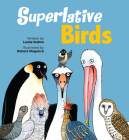
Support Independent Bookstores - Visit IndieBound.org Support Independent Bookstores - Visit IndieBound.org Leaf Litter Critters and Superlative Birds by Leslie Bulion

Leslie Bulion’s titles featuring familiar birds and bugs will spark joy this spring.


Support Independent Bookstores - Visit IndieBound.org National Geographic Book of Nature Poetry: More than 200 Poems With Photographs That Float, Zoom, and Bloom! by J. Patrick Lewis

With over 200 poems about nature by many well-known authors, you are sure to find a favorite.


Support Independent Bookstores - Visit IndieBound.org Carver, A Life in Poems by Marilyn Nelson – A biography of George Washington Carver

Explore the life of agricultural scientist George Washington Carver in these biographical poems by poet, Marilyn Nelson.


Support Independent Bookstores - Visit IndieBound.org The Universe Verse by James Lu Dunbar

Explore this fun comic book in verse about the origin of the universe.


Support Independent Bookstores - Visit IndieBound.org Joyful Noise: Poems for Two Voices by Paul Fleischman and Eric Beddows

This classic book by Paul Fleischman celebrates the insect world. It’s even more fun if you read it with a friend.


The Poetry of Science: The Poetry Friday Anthology for Science compiled by Sylvia Vardell and Janet Wong

This great classroom resource has over 200 STEM poems from 78 authors, including Joyce Sidman, Mary Ann Hoberman, Laura Purdas Salas, Jane Yolen, and Greg Pincus.


Support Independent Bookstores - Visit IndieBound.org Finding Wonders: The Girls Who Changed Science by Jeannine Atkins

Explore the lives of Maria Merian, Mary Anning, and Maria Mitchell is this beautiful text by poet Jeannine Atkins.


FICTION
Support Independent Bookstores - Visit IndieBound.org Forest World by Margarita Engle

Margarita Engle brings this rainforest to life in this book in verse that is a perfect accompaniment to habitat lessons.


Support Independent Bookstores - Visit IndieBound.org Ringside: 1925 – Views from the Scopes Trial by Jen Bryant

This title is a bit older but is worth searching out to open up a discussion of the Scopes Trial with a middle school class. Perhaps pair it with Charles and Emma by Deborah Heiligman.


Lastly, we don’t usually include picture books on STEM Tuesday lists, but this classic title by one of our contributors is worth breaking the rules:

Support Independent Bookstores - Visit IndieBound.org Big Bang! The Tongue-Tickling Tale of a Speck That Became Spectacular by Carolyn Cinami DeCristofano

Pair DeCristofano’s alliterative verse with The Universe Verse listed above. Both titles deal with the creation of the birth of our cosmos. How are they the same or different?


STEM Tuesday book lists prepared by:

Nancy Castaldo has written books about our planet for over 20 years including, THE STORY OF SEEDS: From Mendel’s Garden to Your Plate, and How There’s More of Less To Eat Around The World, which earned the Green Earth Book Award, Junior Library Guild Selection, and other honors. Nancy’s research has taken her all over the world from the Galapagos to Russia.  She strives to inform, inspire, and educate her readers. Nancy also serves as the Regional Advisor of the Eastern NY SCBWI region. Her 2018 multi-starred title is BACK FROM THE BRINK: Saving Animals from Extinction. Visit her at www.nancycastaldo.com

Patricia Newman writes middle-grade nonfiction that inspires kids to seek connections between science, literacy, and the environment. The recipient of a Sibert Honor for Sea Otter Heroes and the Green Earth Book Award for Plastic, Ahoy!, her books have received starred reviews, been honored as Junior Library Guild Selections, and included on Bank Street College’s Best Books lists. New:  Eavesdropping on Elephants: How Listening Helps Conservation, an NSTA Outstanding Science Trade Book. During author visits, she demonstrates how her writing skills give a voice to our beleaguered environment. Visit her at www.patriciamnewman.com.


Shop your local indie bookstore

STEM Tuesday — NSTA Linking Literacy Special Edition & Contest Winners


Hello STEM Tuesday Readers! I am delighted to welcome Carrie Launius to the STEM Tuesday blog. Carrie is one of the teachers that is spearheading the brand new Linking Literacy Event at the National NSTA event this year in St. Louis, MO. This is a brand new event offered at the National Science Teacher Association conference that allows teachers and trade authors to mix, mingle, and learn from each other.


I thought it might be fun to ask Carrie a few questions about how the Linking Literacy event was designed.


Hi Carrie. Thanks for joining us. What gave you the idea to create the Linking Literacy event at NSTA?

I have been in education for a long time as a classroom teacher, science coordinator, and an assistant superintendent of curriculum and instruction. I have been in districts that are very successful and other districts that struggle. Having this background and having the opportunity to work closely with E. Wendy Saul, Ph.D., truly to “guru” of literacy and science, I believe the integration of literacy is valuable in all content areas. We often hear teachers say math and science go together while ELA and social studies go together. I think all contents support each other. We do not live our lives in silos nor do students live in them. I have had enormous success, especially with lower socio-economic students enriching science using high-quality trade books. With Dr. Christine Royce president of NSTA (Christine is a huge proponent of literacy integration and writes a monthly column “Teaching with Tradebooks” for NSTA), I approached her and asked if I could try to bring authors to the conference to talk about their books and how science trade books enhance science instruction. She 100 % supported the idea. She not only supported me, she worked closely with me to make the event happen.


Why is using trade children’s books about STEAM/STEM a great way to do this?

Margaret Anastas says, ” A good picture book tells a compelling story.” Using high-quality trade books opens the world of possibilities. Today, we are teaching students for careers that have not even been thought of, so why not allow them the opportunity to use both convergent and divergent thinking and the opportunity to wonder, hope and dream? Where else besides a book can one really understand the thinking stance of a character? Television and movies don’t do this. Students use so many skills while reading nonfiction books way beyond learning to read. Good nonfiction trade books push readers to think in a new way, to imagine what they have never been able to before and helps them make sense of the crazy world around them.


You are also the one who helped to create the NSTA’s Best STEM book award. What was the drive to do that? How is it different from the Outstanding Trade Science Book Award that NSTA gives?

At one time I was working with Dr. Saul and writing for a non-profit, Springboard to Learning. My task was to create a STEM-based curriculum. As I always do with any writing, I look for books to enhance the curriculum. I tried to find books that were STEM-like. What I quickly found was that people called books “STEM Books” but I could see no rhyme or reason to why. Descriptions of books would say, “Great STEM Book!” So I decided to do research to find out just what that meant, I quickly found out it meant nothing. So I called the editor of NSTA, at that time, David Beacom and said, “You really need to have a Best STEM book Award. What you are calling STEM is not STEM!” He took me up on the idea and told me to start researching. I reached out to three colleagues – all amazing educator and fellow book enthusiasts, Wendy Saul, Christine Royce, and Juliana Texley. We spent many hours thinking about what exactly was a STEM book. Christine came up with the idea to look at what is NOT a STEM book. Wendy coined the phrase, “Inviting readers to examine someone’s thinking stance.” Juliana was NSTA president at that time. She pulled together other groups to look at what I wrote, then shared with my “posse” then with the group. We came up with clear criteria and we started the award.
OSTB and BSB are very different. Content, content, content, is what makes an OSTB book great. Thinking is what makes a BSB great. Identifying a STEM book is much more subtle. While the criteria for OSTB is very black and white, BSB is truly gray. BSB does not have to be nonfiction, it does not have to have perfect pictures but it does need to show innovation, inventing, creating or change.


Do you see Linking Literacy events at future NSTA Events?

It is my hope that Linking Literacy will become a part of NSTA Conferences. I hope every author takes a Sharpie and saves the dates April 2 -5, 2020, Boston. Linking Literacy is to support teachers, but more importantly to support kids. I have already asked (begged) Wendy, Christine, and Juliana to consider staying on this journey with me and working to create more experiences by growing the event in Boston and beyond.


Anything else you want to add?

I would be remiss if I did not tell you how amazing and supportive NSTA staff has been in making this happen. They have allowed us to bend the rules just to make a difference for teachers. Delores, Dayna, Jason, Kim and Kim- thanks for all you do!

If you haven’t considered going to the NSTA event, you should! It’s going to be EPIC.  Click Here for  information about the National Science Teacher Association conference and how to register for it. 

Besides, if you decide to go, you will be able to meet a few of the STEM Tuesday bloggers who are featured authors there:

Heather Montgomery, Jodi Wheeler-Toppen, Patricia Newman, Carolyn DeCristofano, Mary Kay Carson,  and me (Jennifer Swanson)

********************************************************************

And now, the winners of the STEM Tuesday Search Party Contest…. (drum roll please….)

STEM TUESDAY SEARCH PARTY PRIZE WINNERS!

(A HUGE “Thank You” to all who entered and deep gratitude to the wonderful STEM authors who donated books!)

Amy M. O’Quinn (Winner – Nancy Furstinger)

MARIE CURIE FOR KIDS


Sarah Albee (Winner – Anitha Kuppuswamy)

POISON: DEADLY DEEDS, PERILOUS PROFESSIONS, AND MURDEROUS MEDICINES


Natascha Biebow  (Winner – Summer Tobald)

THE CRAYON MAN: THE TRUE STORY OF THE INVENTION OF THE CRAYOLA CRAYON


Nikole Brooks Bethea (Winner – Eric)

SUPER SCIENCE FEATS (4-book Series from Pogo Books published by Jump!)

THE FIRST FLIGHT, THE MOON LANDING, THE INTERNET, CELL PHONES


Donna Janell Bowman (Winner – Suzanne Larsen)

STEP RIGHT UP: HOW DOC AND JIM KEY TAUGHT THE WORLD ABOUT KINDNESS, illustrated by Daniel Minter (Lee and Low, 2016)

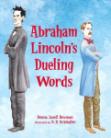
ABRAHAM LINCOLN’S DUELING WORDS, illustrated by S.D. Schindler (Peachtree, 2018)


Susan M Latta (Winner – Beth)

BOLD WOMEN OF MEDICINE: 21 STORIES OF ASTOUNDING DISCOVERIES, DARING SURGERIES, AND HEALING BREAKTHROUGHS.


Janet Slingerland(Winner – Joan Swanson)

EXPLORE ATOMS AND MOLECULES! With 25 Great Projects


Miranda Paul (Winner – Rani)

Donating TWO prize packages:

Book Set #1 (plus a set of water stickers and a set of new baby stickers!)

WATER IS WATER

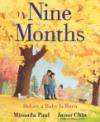
NINE MONTHS (Advance F&G copy only) 


Book set #2 (plus a few bookmarks!)

I AM FARMER: GROWING AN ENVIRONMENTAL MOVEMENT IN CAMEROON

ONE PLASTIC BAG: ISATOU CEESAY AND THE RECYCLING WOMEN OF THE GAMBIA

Kate Narita (Winner – Heather Macchi)

100 BUGS!


Laurie Wallmark (Winner – T Dionne)

(Author of Hedy Lamarr’s Double Life, Grace Hopper: Queen of Computer Code, and Ada Byron Lovelace and the Thinking Machine)

  • A classroom prize pack of:
    * bookmarks
    * stickers
    * STEM-related word searches
    * pencils

Dianne White (Winner – Rebecca Smith)

WHO EATS ORANGE?, illustrated by Robin Page (Beach Lane/S&S, 2018)


(The STEM TUESDAY Mary Kay & Jen Bundle Winner – Mandy Davis)

Mary Kay Carson

MISSION TO PLUTO


Jennifer Swanson

A 3-pack of:

ASTRONAUT-AQUANAUT

ABSOLUTE EXPERT: DOLPHINS

ZOOLOGY: COOL WOMEN WHO WORK WITH ANIMALS