Posts Tagged STEM

More Than a Middle Grade Book Club

For Narnia!

Jonathan Robbins Leon, Osceola Library Youth Specialist, gets into the spirit for book club meetings. Photo by: Osceola Library. Used with permission.

I sat down this week to chat with Jonathan Robbins Leon, a youth specialist at the Osceola Library, about how he incorporates STEM and history into his book club for middle graders, and he passed along some great ideas for parents, teachers, and librarians who want to add a little something extra to their middle-grade book discussions.

MP: Tell us a little bit about how you started the book club?

JRL: We started this last August. The sessions run from August to May. It started out as a home-school book club to tie books into home-school lesson plans. Last session, I chose 8 random books, but this year, I decided to do a series.

MP: Why did you decide to do a series, and which series are you focusing on this year?

JRL: This year, I did the Chronicles of Narnia. It has worked out well. It gives the kids a goal to work toward, finishing the series, and we’ve had a lot more regular participation than just choosing different books for each session.

MP: So, the kids read along with each session. What if they haven’t finished a book yet?

JRL: The activities that I chose go along chronologically with the events of the books, but the kids don’t necessarily have to have read the book in order to enjoy the activity or participate.

MP: That sounds interesting. Can you give us an example?

JRL: In The Magician’s Nephew, there’s discussion about the dying sun on Charn. So, we talked about the life cycle of a star and built solar K’nex machines. Also, we talked about World War II, which is the setting for The Lion, the Witch, and the Wardrobe. We talked about what it was like during World War II. The kids planted mini victory gardens and learned how to sew a button. We also handed out recipes for war cakes that would have been made with what was given on a ration card.

MP: Have any interesting observations come out of these sessions?

JRL: During our World War II session, we talked about the roles of women during war time and how some women fought during the war, and one girl raised her hand and asked “Then, why does Lucy get told that she needs to wait during the battle?” It led to an interesting discussion about gender roles.

MP: Any tips for teachers, parents or librarians thinking about coming up with their own extension activities?

JRL: This first one is obvious but read the books. The first session of the book club, I’d read the books, but a long time ago. So, the meetings weren’t as detailed as they were for this session because I read the Narnia series knowing that I was going to be planning the book club around them. I made pages of notes as I was reading. Also, break it down into how many meetings you’re planning to hold. Make sure the final meeting of the book club has all the fun stuff so that it’s a reward for finishing the whole session.

MP: Were there any other lessons that you learned from planning this session that you’d like to pass on?

3-D Printed Narnia Charms

3-D Printed Charms that correspond with each Narnia book were incentives given to kids who finished a book. Photo by: Osceola Library. Used with permission.

JRL: This session we added an incentive, a little 3-D printed charm, for each book read. This has helped to keep the kids reading along with the activities.

MP: Are there any resources that you can recommend to help planning a program like this?

JRL: Think outside just what goes on in the book, and find ways to connect the time period of the book, the culture, and the author’s background. Teacher’s guides are incredibly helpful for this because they’ll often have extension ideas. Also, consider inviting guest presenters to add depth to the meetings. We’ve Skyped with Big Cat Rescue about lions, and had a magician come in and teach some beginning magic tricks.

MP: Any other suggestions?

JRL: Make sure that you have enough copies of the books for everyone to read. Also, if you can, find young reader copies for younger siblings that may want to participate. Finally, at least in a library, if you are having guest presenters, advertise them separately from the book club as well to get more interest. For example, our meeting with the magician was bigger because some people only came to see the magician, but we had several people join the book club afterward and stick with it.

MP: This sounds awesome! Do you plan on repeating the program with other series?

JRL: We’re definitely going to continue this next year. I’m thinking about doing either A Series of Unfortunate Events or Harry Potter.

For more information about Osceola Library’s home-school book club, visit their page here. Or for more ideas to pump up your own middle grade book club, check out our list of Author Websites with Discussion/Activity Guides as well as our reference page For Teachers and Librarians.

STEM Tuesday– Getting Your Comic-on with Great Science Graphic Novels– Interview with Author Illustrator Don Brown

Welcome to STEM Tuesday: Author Interview & Book Giveaway, a repeating feature for the fourth Tuesday of every month. Go Science-Tech-Engineering-Math!

Today we’re interviewing Don Brown, the author and illustrator of OLDER THAN DIRT: A Wild but True History of Earth. This fun, graphics illustrated whirlwind tour of the origin and workings of our home planet is guided by a geology-savvy groundhog. School Library Journal has called Brown “a current pacesetter who has put the finishing touches on the standards for storyographies.”


Mary Kay Carson: Do the words or illustrated characters come first in a book like this? 

Don Brown: The words always come first…otherwise it’s like the tail wagging the dog!

We wanted the book to accessible and funny while still offering solid information. I can’t remember exactly how we hit upon the ground hog and earthworm dynamic…perhaps it’s an exaggerated reflection of my and Perf’s relationship in which I ask (clueless) questions and he (patiently) answers them. (Also: the Groundhog was originally an Aardvark until we realized Ground-hog had the more appropriate name.)

We had a lot of fun with the characters and came to see them as Abbot and Costello meets the Socratic Method.

MKC: How did you end up collaborating with Dr. Mike Perfit?

Don: Dr. Perfit – “Perf” – and I have been friends since the world was young. We met in college where he dragged me over the finish line in freshman calculus. (Of which, I remember nearly nothing.) His passion for geology is infectious and I had for a long time noodled around with collaborative ideas. Finally, we struck on Older Than Dirt and went to work. Partnering with Perf is a joy; he is generous, smart, and funny. I’m trying to figure out how we might collaborate again.

Don Brown is the award-winning author and illustrator of many picture book biographies. He has been widely praised for his resonant storytelling and his delicate watercolor paintings that evoke the excitement, humor, pain, and joy of lives lived with passion. He lives in New York with his family. www.booksbybrown.com Instagram: @donsart

MKC: Do you have a STEM background? Are STEM subjects difficult to illustrate?

Don: Illustrating a book about geology was not difficult. Many geologic processes are wildly dramatic: Earthquakes, volcanoes, tsunamis, cosmic collisions, lava floods…they’re great fun to illustrate!

Older Than Dirt is my only STEM book to date. I had a brief connection to STEM in college when I studied engineering. After one semester of physics and calculus, I discovered I had no aptitude for math or science and became a history major.

A scientist I am not, yet I’m still drawn to science history, especially the human stories connected to it. And I’ve learned that if I bear down, I can understand the STEM details within science history. For example, I have finished making a book about the 1918 Spanish Influenza and along the way explored the ins and out of infectious disease, RNA, and microbiology…it was fascinating!

MKC: What’s next for you?

Don: My Spanish Flu book – Fever Year – will be published next Fall. Also publishing next year is my Rocket to the Moon, a history of rockets and the first manned moon-landing in 1969. Both books touch on STEM subjects.

Win a FREE copy of Older Than Dirt!

Enter the giveaway by leaving a comment below. The randomly-chosen winner will be contacted via email and asked to provide a mailing address (within the U.S. only) to receive the book.

Good luck!

Your host this week is woodchuck fan Mary Kay Carson, author of Mission to Pluto and other nonfiction books for kids. @marykaycarson

STEM Tuesday– Getting Your Comic-on with Great Science Graphic Novels– Writing Tips & Resources

STEM Tuesday’s Gone Graphic

Comics? We don’t need any of that nonsense in STEM.

What was that? No, I did not see the STEM Tuesday “Great Science Graphic Novel” book list for this month.

Bah-humbug! We didn’t have STEM books like that when I was a kid. Textbooks were perfectly fine for us.

No, my name is not STEMbeneezer Scrooge. Now, get off my lawn and leave me be. It’s time for my nap.

Who’s there? I thought I told you to skedaddle.

Aye! It’s a spirit.

Leave me be! I’m just an old STEM guy stuck in my ways. I’m going back to sleep before Wheel of Fortune comes on.

“STEMbeneezer, log on and follow me!”

What in the world? Another STEM spirit!

Smooth, Ghost of STEM Present. Real smooth. But I’m not going to get on the internet to scour bookstores.

Haven’t you heard of online identity theft and spyware?

Jeez, leave me be, I’m going back to sleep. And where do you come up with these “original” names, anyway?

What are you? You must be the Spirit of STEM Future.

Aack! Don’t beam me up, Scotty!  I don’t want to go!

NOOOooo!!!

A hint? For what?

Help meeeeeeee!

Holy bad dreams. What happened? How long have I been asleep?

I know that answer!

Come, on! The answer’s easy.

Graphic storytelling is a great format for STEM books.

I’m a changed man. Textbooks have their place but the graphic novel format really does work well with STEM storytelling.

Graphic storytelling + STEM = Natural match

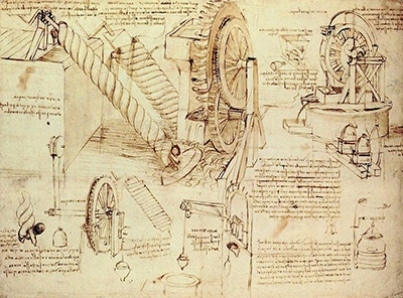
Using graphics to define a STEM concept has been a natural partnership for ages.  I present the evidence.

DaVinci designs are a graphical how-to manual

DaVinci’s water lifting device proposal

A canon design

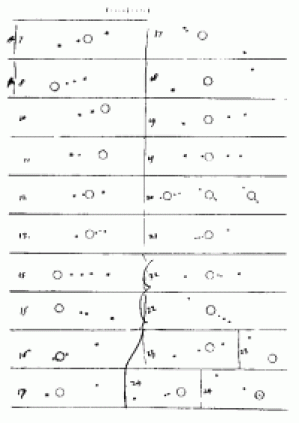
Galileo’s graphic notes on his observations of Jupiter’s moons

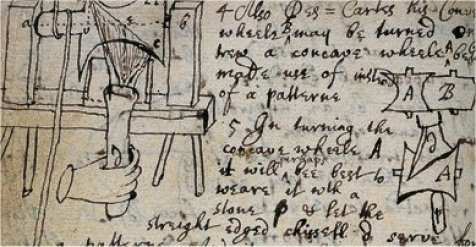
Sir Issac Newton’s Graphic Notes

Illustrated concept from NEWTON’S PRINCIPIA

From Newton’s Notes on Alchemy

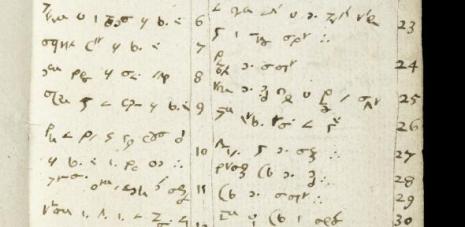
A young Isaac Newton’s graphical code listing his sins committed

Chemistry

If you have the reagents, you could probably make your own Vitamin A from this graphical reaction.

Maps of biological pathways

The Krebs Cycle, aka The “I wish I had a dollar for every time I memorized & forgot this pathway in my school days” Cycle.


TNF pathway from one of our lab’s publications. It tells the visual story of an E. Coli effector subverting the TNF inflammatory pathway.

Let the evidence show using graphics has worked in STEM since the STEM fields were born.

It’s only natural they work in the field of STEM storytelling, right?

Visual Storytelling

A picture is worth a thousand words.


UNDERSTANDiNG COMICS: THE INVISIBLE ART by Scott McCloud

This a book you must read whether you are interested in straight graphic storytelling or storytelling in general. It doesn’t matter if the storytelling is fiction or nonfiction, graphic storytelling can be a powerful option for a writer.

Sketchnotes

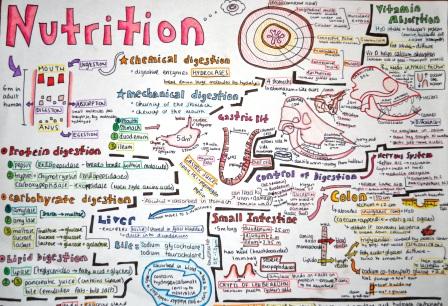
Sketchnoting is a great way to take notes for the visual-minded individuals. I follow Eva-Lotta Lamm and her work with sketchnotes. She offers a free, downloadable Mini Visual Starter Kit at her website to help you get started with sketchnotes.

Conclusion

Hopefully, you are now convinced that images and STEM go together. The graphic novel format for nonfiction and STEM books not only works, but it fits. Just as architects and engineers use a blueprint drawing to relay information to the contractor and specialists, STEM writers can use graphic storytelling to relay information to the reader.

Still not a believer? Go to the STEM Tuesday book list and give those titles a try. It’s a much less harrowing path than visits from a trio of STEM spirits.

Take it from me. STEM graphic novels and comics are the real deal!

Mike Hays has worked hard from a young age to be a well-rounded individual. A well-rounded, equal opportunity sports enthusiasts, that is. If they keep a score, he’ll either watch it, play it, or coach it. A molecular microbiologist by day, middle-grade author, sports coach, and general good citizen by night, he blogs about sports/training related topics at www.coachhays.com and writer stuff at www.mikehaysbooks.comTwo of his science essays, The Science of Jurassic Park and Zombie Microbiology 101,  are included in the Putting the Science in Fiction collection from Writer’s Digest Books. He can be found roaming around the Twitter-sphere under the guise of @coachhays64.


The O.O.L.F Files

The O.O.L.F. Files this month emphasizes the power of visual storytelling in STEM and to celebrate the season, a few links to STEM activities for the holidays. Enjoy!

Superheroes & STEM

Comic Einstein!

More Sketchnoting

Holiday STEM