Posts Tagged STEM

STEM Tuesday– Mixing Science and Poetry/Verse — Special NSTA Conference Edition

Yes. It’s April–National Poetry Month. Yes. It’s STEM Tuesday, and our theme this month is STEM in verse. Yes, our book list for the month includes books with poetry in them that are devoted to STEM themes.

But April is also the time when the National Science Teachers Association holds its annual conference, and the usual STEM Tuesday post in line for this week is all about connecting STEM books to the classroom. This year NSTA did something bold and exciting that is begging for recognition on this particular post, so that’s what this week is all about.

With J. Carrie Launius coordinating, NSTA invited a slew of nonfiction authors who write on STEM themes to participate in a 5-hour Linking Literacy event over two days–including 5 panel discussions, an opportunity for science educators and authors to mingle, and a book signing. Wow! As you can imagine, it was an opportunity to revel in creativity, caring, and collegiality. After a kick-off panel discussion featuring Steve Light, Melissa Stewart, Jennifer Swanson, Tracy Nelson Maurer, Shanda McCloskey and presiders Jacqueline Barber and E. Wendy Saul, four break-out panels delved into various themes.

There was a lot happening, often simultaneously. As I was a panelist and mixing-and-mingling author, I’m quite sure I missed a bunch, but still, I hope to share some of the take-aways from the conversations that took place informally and in some of the panels. I’ve tried to stick to the topics that most directly connect to bringing STEM books into the classroom.

STEM-themed biographies and scientist stories are for everyone. Laurie Wallmark, biographer of women in STEM, reminded us that while it is great to share books about women, people of color, or other underrepresented groups in STEM with girls or kids of color only, it’s even better—and vitally important—that we share these stories with all children (and adults). It’s also key to break out of biographies and include stories for middle grade readers of scientists doing science. Need some examples? How about Patricia Newman’s Eavesdropping on Elephants or Mary Kay Carson’s The Tornado Scientist?

Cross-disciplinary content is a natural part of many STEM books, especially those that feature topics that lure children in. Cheryl Bardoe, who writes picture bookCheryl Bardoe speaking with mic in hand biographies, pointed out that individual STEM thinkers are specific to their place, time, and social contexts. Meanwhile, books about technology, including, for example, my Running on Sunshine or Jennifer Swanson’s Super Gear, root conceptual information in strong, motivating contexts. (It was wonderful to chat with teachers who appreciate the connections between their curriculum about “the sun” and solar energy technologies. This is just the type of connection-making that the NGSS emphasizes.)


The rich visual imagery in STEM books can help readers connect to content and spark their interest and imagination. Of course, this is true of the illustrations in picture books, such as Steve Light’s Swap! But there’s more to look for. Keep your eyes peeled for  primary source materials in picture books, such as photographs related to a remarkable discovery in Darcy Pattison’s Pollen. Keep in mind–as Jen Swanson pointed out–there’s also powerful imagery in books for middle grade readers.


It’s important to consider the whole range of roles that various STEM books can play in education.

E. Wendy Saul and Jacqueline Barber’s thoughtful questions and insightful reflections helped us consider some of these roles. Some books are great at fostering curiosity before a classroom unit on a given topic, while others are perfect resources to bring in after children have had a chance to try to make sense of their first-hand experiences and are looking for factual resources. STEM reading can inspire children to see themselves as competent STEM learners and future STEM professionals. Putting the right book in the  hands of a particular child may be a pivotal moment in that child’s life, honoring and responding to  his or her curiosity, interest, or moment of need.


Books and experience go hand-in-hand.

Educators check out simulated canine vision with Jodi Wheeler-Toppen (center). They hold blue viewmasters to their eyes and peer at slides that are mounted on wheels and inserted into the viewmaster.

Educators check out simulated canine vision with Jodi Wheeler-Toppen (center).

Weaving my way through the tables during Linking Literacy’s informal time, I was struck by the many ways we authors link our books to opportunities for readers to experience the world. Of course, we generally provide teachers’ guides, but we also offer dynamic activities and interesting artifacts. I saw evidence of the added value of visiting with an author. For example, I showed visitors how I simulate stars orbiting mystery objects and how that relates to finding black holes. In addition, to extend the content of Dog Science Unleashed, Jodi Wheeler-Toppen provides customized Viewmasters that offer comparisons of human and canine vision. Meanwhile, Heather Montgomery shows off a fox pelt (among other artifacts) that she prepared as part of her research for Something Rotten. Truly, STEM authors can bring their own brand of multi-dimensional learning experiences and inspiration to the NGSS’s emphasis on 3D learning.


The STEM stories we share are a powerful aspect of creating a culture that honors STEM literacy. Do you have a story to share—some way in which you have used a STEM book in a middle grade classroom or out-of school setting? Let us know; leave a comment below. And keep your eyes open for NSTA ’20 (in Boston). Hopefully, Linking Literacy will be a recurring and integral component of future conferences!

Six of the STEM Tuesday crew at NSTA19!


BOOK LIST FOR A BLACK HOLE

Black Hole Photo History

It’s been an exciting week for space enthusiasts, space fiction fans, rocket scientists, and computer scientists. For the first time ever, we have an idea of what the elusive, oft-written-about black hole looks like.

Beautiful, right? Incredible even. What’s amazing to me is that we took pictures of light in a place where light gets sucked in but never spit out again. I always imagined that we could never see anything once that big vacuum cleaner in the cosmos had swallowed it, not even if we built the world’s strongest computer with the most sophisticated brain.

Fortunately for all of us, I’m not an astrophysicist or a computer scientist. Even more fortunately for all of us, Dr. Katie Bouman is. Bouman is a computer scientist who was part of a team that created a set of algorithms that took the “sparse and noisy data” collected from telescopes and turned them into an image. According to TIME magazine, Bouman says what really makes her tick is “coming up with ways to see or measure things that are invisible.”

The MIT postdoctoral fellow shared this photo of herself “watching in disbelief as the first image I ever made of a black hole was in the process of being reconstructed.”

Encouraging More Women in Space and Science

What’s great about Dr. Bouman’s story is that in addition to raising the profile of all the brilliant women researchers in #STEM, we get a chance to talk again about books that focus on women in STEM, computer science, black holes, and the study of space. (And we get to say Event Horizon Telescope a lot, which is just plain fun.)

Unfortunately, the numbers on women researchers in STEM fields are still dismal, hovering somewhere around 30% by many estimates. Clearly, we’ve got a lot of work to do encouraging and supporting women in these fields–and it begins with our middle-grade readers.

Book List for a Black Hole Moment

Here’s a handful of books to help stir our girls’ imaginations and spur them to become the next Dr. Katie Bouman.

NON FICTION

A Black Hole is not a Hole, by Carolyn Cinami DeCristofano

If a black hole is not a hole, then what is it? Find out what black holes are, what causes them, and how scientists first discovered them. Learn how astronomers find black holes, get to know our nearest black-hole neighbor, and take a journey that will literally s-t-r-e-t-c-h the mind.


Exoplanets, by Karen Latchana Kenney (Twenty-First Century Books TM)

Until the mid-1990s, scientists only guessed that the universe held exoplanets, or planets beyond our solar system. But using advanced physics and powerful telescopes, scientists have since identified more than three thousand exoplanets. This work has revealed fascinating worlds, including a planet that oozes lavalike fluids and a planet that glows bright pink.

Even more fascinating, scientists think that some exoplanets might contain life. Many orbit in the Goldilocks zone, the region around a star that’s not too hot or too cold for liquid water, a key ingredient for life. This book examines exoplanets, the possibilities for life beyond Earth, and the cutting-edge technologies scientists use to learn about distant worlds.

This book features astrophysicist Sara Seager.


Astronaut/Aquanaut, by Jennifer Swanson (National Geographic)

Margaret on the Moon, by Dean Robbins and Illustrated by Lucy Knisely (Knopf)A true story from one of the Women of NASA!

Margaret Hamilton loved numbers as a young girl. She knew how many miles it was to the moon (and how many back). She loved studying algebra and geometry and calculus and using math to solve problems in the outside world.

Soon math led her to MIT and then to helping NASA put a man on the moon! She handwrote code that would allow the spacecraft’s computer to solve any problems it might encounter. Apollo 8. Apollo 9. Apollo 10. Apollo 11. Without her code, none of those missions could have been completed.

Dean Robbins and Lucy Knisley deliver a lovely portrayal of a pioneer in her field who never stopped reaching for the stars.

FICTION:


A Wrinkle in Time, by Madeleine L’Engle (Farrar, Straus, and Giroux/Square FIsh)

Not a new entry, not even from this century, but I couldn’t resist reminding everyone that an early and definitive female character in a book about space was Meg Murray.

A Wrinkle in Time, winner of the Newbery Medal in 1963, is the story of the adventures in space and time of Meg, Charles Wallace, and Calvin O’Keefe. They are in search of Meg’s father, a scientist who disappeared while engaged in secret work for the government on the tesseract problem — a wrinkle in time.

A Wrinkle in Time is the winner of the 1963 Newbery Medal.


Beep and Bob, by Jonathan Roth (Simon and Schuster)
In this adorable chapter book series that School Library Journal said is for “kids who love funny stories but may be too young for books like Diary of a Wimpy Kid,” space-school attendee Bob and his alien bestie Beep star in hilarious intergalactic adventures.
Does anyone have any other books that should make this list? Let us know in the comments. And in the meantime, let’s keep reading and encouraging our girls to reach for the stars.

STEM Tuesday– Mixing Science and Poetry/Verse — Book List

April is a time to celebrate poetry so we’ve gathered a list of wonderful STEM titles in verse for you to explore. Enjoy a poem each day. You might find many of these will spark you to write your own STEM poetry this month. From birds to biographies, these titles are sure to please.

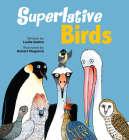
Support Independent Bookstores - Visit IndieBound.org Support Independent Bookstores - Visit IndieBound.org Leaf Litter Critters and Superlative Birds by Leslie Bulion

Leslie Bulion’s titles featuring familiar birds and bugs will spark joy this spring.


Support Independent Bookstores - Visit IndieBound.org National Geographic Book of Nature Poetry: More than 200 Poems With Photographs That Float, Zoom, and Bloom! by J. Patrick Lewis

With over 200 poems about nature by many well-known authors, you are sure to find a favorite.


Support Independent Bookstores - Visit IndieBound.org Carver, A Life in Poems by Marilyn Nelson – A biography of George Washington Carver

Explore the life of agricultural scientist George Washington Carver in these biographical poems by poet, Marilyn Nelson.


Support Independent Bookstores - Visit IndieBound.org The Universe Verse by James Lu Dunbar

Explore this fun comic book in verse about the origin of the universe.


Support Independent Bookstores - Visit IndieBound.org Joyful Noise: Poems for Two Voices by Paul Fleischman and Eric Beddows

This classic book by Paul Fleischman celebrates the insect world. It’s even more fun if you read it with a friend.


The Poetry of Science: The Poetry Friday Anthology for Science compiled by Sylvia Vardell and Janet Wong

This great classroom resource has over 200 STEM poems from 78 authors, including Joyce Sidman, Mary Ann Hoberman, Laura Purdas Salas, Jane Yolen, and Greg Pincus.


Support Independent Bookstores - Visit IndieBound.org Finding Wonders: The Girls Who Changed Science by Jeannine Atkins

Explore the lives of Maria Merian, Mary Anning, and Maria Mitchell is this beautiful text by poet Jeannine Atkins.


FICTION
Support Independent Bookstores - Visit IndieBound.org Forest World by Margarita Engle

Margarita Engle brings this rainforest to life in this book in verse that is a perfect accompaniment to habitat lessons.


Support Independent Bookstores - Visit IndieBound.org Ringside: 1925 – Views from the Scopes Trial by Jen Bryant

This title is a bit older but is worth searching out to open up a discussion of the Scopes Trial with a middle school class. Perhaps pair it with Charles and Emma by Deborah Heiligman.


Lastly, we don’t usually include picture books on STEM Tuesday lists, but this classic title by one of our contributors is worth breaking the rules:

Support Independent Bookstores - Visit IndieBound.org Big Bang! The Tongue-Tickling Tale of a Speck That Became Spectacular by Carolyn Cinami DeCristofano

Pair DeCristofano’s alliterative verse with The Universe Verse listed above. Both titles deal with the creation of the birth of our cosmos. How are they the same or different?


STEM Tuesday book lists prepared by:

Nancy Castaldo has written books about our planet for over 20 years including, THE STORY OF SEEDS: From Mendel’s Garden to Your Plate, and How There’s More of Less To Eat Around The World, which earned the Green Earth Book Award, Junior Library Guild Selection, and other honors. Nancy’s research has taken her all over the world from the Galapagos to Russia.  She strives to inform, inspire, and educate her readers. Nancy also serves as the Regional Advisor of the Eastern NY SCBWI region. Her 2018 multi-starred title is BACK FROM THE BRINK: Saving Animals from Extinction. Visit her at www.nancycastaldo.com

Patricia Newman writes middle-grade nonfiction that inspires kids to seek connections between science, literacy, and the environment. The recipient of a Sibert Honor for Sea Otter Heroes and the Green Earth Book Award for Plastic, Ahoy!, her books have received starred reviews, been honored as Junior Library Guild Selections, and included on Bank Street College’s Best Books lists. New:  Eavesdropping on Elephants: How Listening Helps Conservation, an NSTA Outstanding Science Trade Book. During author visits, she demonstrates how her writing skills give a voice to our beleaguered environment. Visit her at www.patriciamnewman.com.


Shop your local indie bookstore