Posts Tagged resources

STEM Tuesday — Epic Achievements and Fantastic Failures– Book List


Great things can happen even if there are blunders and mishaps along the way. The pathway to great discoveries is always fascinating. This month we are delving into some epic achievements and fantastic failures with some terrific STEM titles that will challenge your thinking.


Support Independent Bookstores - Visit IndieBound.org The Wright Brothers: Nose-Diving into History by Erik Slader and Ben Thompson; illustrated by Tim Foley

How could countless crashes lead to such an important success? Erik Slader and Ben Thompson explore the Wright brother’s hard-earned path to an engineering breakthrough that gave humans wings.


Support Independent Bookstores - Visit IndieBound.org The Wright Brothers for Kids: How They Invented the Airplane, 21 Activities Exploring the Science and History of Flight by Mary Kay Carson

Pair this title with the Wright Brothers Epic Fails title above to compare how the same story can be told in different ways. Carson’s activities give young readers a great introduction to the science of flight with some hands-on investigation.


Support Independent Bookstores - Visit IndieBound.org The Book of Massively Epic Engineering Disasters: 33 Thrilling Experiments Based on History’s Greatest Blunders by Sean Connolly

This title focuses on the E in STEM. Why did the Titanic sink? Why does the Leaning Tower of Pisa lean? What is the fatal design flaw in the Sherman tank? Connolly explains each disaster, and then includes an experiment using household items to reinforce the science and hands-on inquiry.


Support Independent Bookstores - Visit IndieBound.org Google It! A History of Google: How Two Students’ Mission to Organize the Internet Changed the World by Anna Crowley Redding

This book explores how two Stanford college students developed the most influential and innovative ideas for organizing information on the world wide web. Want to know more about it — Google it!


Space is a popular topic for young readers. We’ve included four very different titles that describe the challenges of outer space travel.

Support Independent Bookstores - Visit IndieBound.org Countdown: 2979 Days to the Moon by Suzanne Slade and Thomas Gonzales

Countdown tells the true story of the American effort to land the first man on the moon. Told in free verse, it is a great addition to a classroom library poetry/verse STEM collection. It is also an NSTA Outstanding Science Trade Book.


Support Independent Bookstores - Visit IndieBound.org Rocket to the Moon  by Don Brown

In this first book of the new graphic novel series, Big Ideas that Changed the World, Don Brown brings his signature award-winning style to a big subject, discussing the people and decisions that went into creating the moon landing in 1969. You’ll be sure to want to check out the upcoming titles in this new series.


Support Independent Bookstores - Visit IndieBound.org

The Race to Space: Countdown to Liftoff by Erik Slader and Ben Thompson; illustrated by Tim Foley 

In book two of Slader and Thompson’s noteworthy Epic Fails series, we read about the failures that made up the race to be the first to explore outer space. Readers might enjoy pairing this with the above title.


Support Independent Bookstores - Visit IndieBound.org Moon Mission: The Epic 400-Year Journey to Apollo 11 by Sigmund Brouwer

Readers relive every step of the nearly-disastrous Apollo 11 moon landing through the astronauts’ point of view. Told in 11 different episodes, each episode includes the technological advances that made the mission possible.


STEM Tuesday book lists prepared by:

Nancy Castaldo has written books about our planet for over 20 years including, THE STORY OF SEEDS: From Mendel’s Garden to Your Plate, and How There’s More of Less To Eat Around The World, which earned the Green Earth Book Award, Junior Library Guild Selection, and other honors. Nancy’s research has taken her all over the world from the Galapagos to Russia.  She strives to inform, inspire, and empower her readers. Nancy also serves as the Regional Advisor of the Eastern NY SCBWI region. Her 2018 multi-starred title is BACK FROM THE BRINK: Saving Animals from Extinction. Visit her at www.nancycastaldo.com


Patricia Newman writes middle-grade nonfiction that inspires kids to seek connections between science, literacy, and the environment. The recipient of a Sibert Honor for Sea Otter Heroes, an NSTA Outstanding Science Trade Book for Eavesdropping on Elephants, and the Green Earth Book Award for Plastic, Ahoy!, her books have received starred reviews, been honored as Junior Library Guild Selections, and included on Bank Street College’s Best Books lists. During author visits, she demonstrates how young readers can be the voice of change. Visit her at www.patriciamnewman.com.


STEM Tuesday– Mixing Science and Poetry/Verse — Special NSTA Conference Edition

Yes. It’s April–National Poetry Month. Yes. It’s STEM Tuesday, and our theme this month is STEM in verse. Yes, our book list for the month includes books with poetry in them that are devoted to STEM themes.

But April is also the time when the National Science Teachers Association holds its annual conference, and the usual STEM Tuesday post in line for this week is all about connecting STEM books to the classroom. This year NSTA did something bold and exciting that is begging for recognition on this particular post, so that’s what this week is all about.

With J. Carrie Launius coordinating, NSTA invited a slew of nonfiction authors who write on STEM themes to participate in a 5-hour Linking Literacy event over two days–including 5 panel discussions, an opportunity for science educators and authors to mingle, and a book signing. Wow! As you can imagine, it was an opportunity to revel in creativity, caring, and collegiality. After a kick-off panel discussion featuring Steve Light, Melissa Stewart, Jennifer Swanson, Tracy Nelson Maurer, Shanda McCloskey and presiders Jacqueline Barber and E. Wendy Saul, four break-out panels delved into various themes.

There was a lot happening, often simultaneously. As I was a panelist and mixing-and-mingling author, I’m quite sure I missed a bunch, but still, I hope to share some of the take-aways from the conversations that took place informally and in some of the panels. I’ve tried to stick to the topics that most directly connect to bringing STEM books into the classroom.

STEM-themed biographies and scientist stories are for everyone. Laurie Wallmark, biographer of women in STEM, reminded us that while it is great to share books about women, people of color, or other underrepresented groups in STEM with girls or kids of color only, it’s even better—and vitally important—that we share these stories with all children (and adults). It’s also key to break out of biographies and include stories for middle grade readers of scientists doing science. Need some examples? How about Patricia Newman’s Eavesdropping on Elephants or Mary Kay Carson’s The Tornado Scientist?

Cross-disciplinary content is a natural part of many STEM books, especially those that feature topics that lure children in. Cheryl Bardoe, who writes picture bookCheryl Bardoe speaking with mic in hand biographies, pointed out that individual STEM thinkers are specific to their place, time, and social contexts. Meanwhile, books about technology, including, for example, my Running on Sunshine or Jennifer Swanson’s Super Gear, root conceptual information in strong, motivating contexts. (It was wonderful to chat with teachers who appreciate the connections between their curriculum about “the sun” and solar energy technologies. This is just the type of connection-making that the NGSS emphasizes.)


The rich visual imagery in STEM books can help readers connect to content and spark their interest and imagination. Of course, this is true of the illustrations in picture books, such as Steve Light’s Swap! But there’s more to look for. Keep your eyes peeled for  primary source materials in picture books, such as photographs related to a remarkable discovery in Darcy Pattison’s Pollen. Keep in mind–as Jen Swanson pointed out–there’s also powerful imagery in books for middle grade readers.


It’s important to consider the whole range of roles that various STEM books can play in education.

E. Wendy Saul and Jacqueline Barber’s thoughtful questions and insightful reflections helped us consider some of these roles. Some books are great at fostering curiosity before a classroom unit on a given topic, while others are perfect resources to bring in after children have had a chance to try to make sense of their first-hand experiences and are looking for factual resources. STEM reading can inspire children to see themselves as competent STEM learners and future STEM professionals. Putting the right book in the  hands of a particular child may be a pivotal moment in that child’s life, honoring and responding to  his or her curiosity, interest, or moment of need.


Books and experience go hand-in-hand.

Educators check out simulated canine vision with Jodi Wheeler-Toppen (center). They hold blue viewmasters to their eyes and peer at slides that are mounted on wheels and inserted into the viewmaster.

Educators check out simulated canine vision with Jodi Wheeler-Toppen (center).

Weaving my way through the tables during Linking Literacy’s informal time, I was struck by the many ways we authors link our books to opportunities for readers to experience the world. Of course, we generally provide teachers’ guides, but we also offer dynamic activities and interesting artifacts. I saw evidence of the added value of visiting with an author. For example, I showed visitors how I simulate stars orbiting mystery objects and how that relates to finding black holes. In addition, to extend the content of Dog Science Unleashed, Jodi Wheeler-Toppen provides customized Viewmasters that offer comparisons of human and canine vision. Meanwhile, Heather Montgomery shows off a fox pelt (among other artifacts) that she prepared as part of her research for Something Rotten. Truly, STEM authors can bring their own brand of multi-dimensional learning experiences and inspiration to the NGSS’s emphasis on 3D learning.


The STEM stories we share are a powerful aspect of creating a culture that honors STEM literacy. Do you have a story to share—some way in which you have used a STEM book in a middle grade classroom or out-of school setting? Let us know; leave a comment below. And keep your eyes open for NSTA ’20 (in Boston). Hopefully, Linking Literacy will be a recurring and integral component of future conferences!

Six of the STEM Tuesday crew at NSTA19!


STEM Tuesday — NSTA Linking Literacy Special Edition & Contest Winners


Hello STEM Tuesday Readers! I am delighted to welcome Carrie Launius to the STEM Tuesday blog. Carrie is one of the teachers that is spearheading the brand new Linking Literacy Event at the National NSTA event this year in St. Louis, MO. This is a brand new event offered at the National Science Teacher Association conference that allows teachers and trade authors to mix, mingle, and learn from each other.


I thought it might be fun to ask Carrie a few questions about how the Linking Literacy event was designed.


Hi Carrie. Thanks for joining us. What gave you the idea to create the Linking Literacy event at NSTA?

I have been in education for a long time as a classroom teacher, science coordinator, and an assistant superintendent of curriculum and instruction. I have been in districts that are very successful and other districts that struggle. Having this background and having the opportunity to work closely with E. Wendy Saul, Ph.D., truly to “guru” of literacy and science, I believe the integration of literacy is valuable in all content areas. We often hear teachers say math and science go together while ELA and social studies go together. I think all contents support each other. We do not live our lives in silos nor do students live in them. I have had enormous success, especially with lower socio-economic students enriching science using high-quality trade books. With Dr. Christine Royce president of NSTA (Christine is a huge proponent of literacy integration and writes a monthly column “Teaching with Tradebooks” for NSTA), I approached her and asked if I could try to bring authors to the conference to talk about their books and how science trade books enhance science instruction. She 100 % supported the idea. She not only supported me, she worked closely with me to make the event happen.


Why is using trade children’s books about STEAM/STEM a great way to do this?

Margaret Anastas says, ” A good picture book tells a compelling story.” Using high-quality trade books opens the world of possibilities. Today, we are teaching students for careers that have not even been thought of, so why not allow them the opportunity to use both convergent and divergent thinking and the opportunity to wonder, hope and dream? Where else besides a book can one really understand the thinking stance of a character? Television and movies don’t do this. Students use so many skills while reading nonfiction books way beyond learning to read. Good nonfiction trade books push readers to think in a new way, to imagine what they have never been able to before and helps them make sense of the crazy world around them.


You are also the one who helped to create the NSTA’s Best STEM book award. What was the drive to do that? How is it different from the Outstanding Trade Science Book Award that NSTA gives?

At one time I was working with Dr. Saul and writing for a non-profit, Springboard to Learning. My task was to create a STEM-based curriculum. As I always do with any writing, I look for books to enhance the curriculum. I tried to find books that were STEM-like. What I quickly found was that people called books “STEM Books” but I could see no rhyme or reason to why. Descriptions of books would say, “Great STEM Book!” So I decided to do research to find out just what that meant, I quickly found out it meant nothing. So I called the editor of NSTA, at that time, David Beacom and said, “You really need to have a Best STEM book Award. What you are calling STEM is not STEM!” He took me up on the idea and told me to start researching. I reached out to three colleagues – all amazing educator and fellow book enthusiasts, Wendy Saul, Christine Royce, and Juliana Texley. We spent many hours thinking about what exactly was a STEM book. Christine came up with the idea to look at what is NOT a STEM book. Wendy coined the phrase, “Inviting readers to examine someone’s thinking stance.” Juliana was NSTA president at that time. She pulled together other groups to look at what I wrote, then shared with my “posse” then with the group. We came up with clear criteria and we started the award.
OSTB and BSB are very different. Content, content, content, is what makes an OSTB book great. Thinking is what makes a BSB great. Identifying a STEM book is much more subtle. While the criteria for OSTB is very black and white, BSB is truly gray. BSB does not have to be nonfiction, it does not have to have perfect pictures but it does need to show innovation, inventing, creating or change.


Do you see Linking Literacy events at future NSTA Events?

It is my hope that Linking Literacy will become a part of NSTA Conferences. I hope every author takes a Sharpie and saves the dates April 2 -5, 2020, Boston. Linking Literacy is to support teachers, but more importantly to support kids. I have already asked (begged) Wendy, Christine, and Juliana to consider staying on this journey with me and working to create more experiences by growing the event in Boston and beyond.


Anything else you want to add?

I would be remiss if I did not tell you how amazing and supportive NSTA staff has been in making this happen. They have allowed us to bend the rules just to make a difference for teachers. Delores, Dayna, Jason, Kim and Kim- thanks for all you do!

If you haven’t considered going to the NSTA event, you should! It’s going to be EPIC.  Click Here for  information about the National Science Teacher Association conference and how to register for it. 

Besides, if you decide to go, you will be able to meet a few of the STEM Tuesday bloggers who are featured authors there:

Heather Montgomery, Jodi Wheeler-Toppen, Patricia Newman, Carolyn DeCristofano, Mary Kay Carson,  and me (Jennifer Swanson)

********************************************************************

And now, the winners of the STEM Tuesday Search Party Contest…. (drum roll please….)

STEM TUESDAY SEARCH PARTY PRIZE WINNERS!

(A HUGE “Thank You” to all who entered and deep gratitude to the wonderful STEM authors who donated books!)

Amy M. O’Quinn (Winner – Nancy Furstinger)

MARIE CURIE FOR KIDS


Sarah Albee (Winner – Anitha Kuppuswamy)

POISON: DEADLY DEEDS, PERILOUS PROFESSIONS, AND MURDEROUS MEDICINES


Natascha Biebow  (Winner – Summer Tobald)

THE CRAYON MAN: THE TRUE STORY OF THE INVENTION OF THE CRAYOLA CRAYON


Nikole Brooks Bethea (Winner – Eric)

SUPER SCIENCE FEATS (4-book Series from Pogo Books published by Jump!)

THE FIRST FLIGHT, THE MOON LANDING, THE INTERNET, CELL PHONES


Donna Janell Bowman (Winner – Suzanne Larsen)

STEP RIGHT UP: HOW DOC AND JIM KEY TAUGHT THE WORLD ABOUT KINDNESS, illustrated by Daniel Minter (Lee and Low, 2016)

ABRAHAM LINCOLN’S DUELING WORDS, illustrated by S.D. Schindler (Peachtree, 2018)


Susan M Latta (Winner – Beth)

BOLD WOMEN OF MEDICINE: 21 STORIES OF ASTOUNDING DISCOVERIES, DARING SURGERIES, AND HEALING BREAKTHROUGHS.


Janet Slingerland(Winner – Joan Swanson)

EXPLORE ATOMS AND MOLECULES! With 25 Great Projects


Miranda Paul (Winner – Rani)

Donating TWO prize packages:

Book Set #1 (plus a set of water stickers and a set of new baby stickers!)

WATER IS WATER

NINE MONTHS (Advance F&G copy only) 


Book set #2 (plus a few bookmarks!)

I AM FARMER: GROWING AN ENVIRONMENTAL MOVEMENT IN CAMEROON

ONE PLASTIC BAG: ISATOU CEESAY AND THE RECYCLING WOMEN OF THE GAMBIA

Kate Narita (Winner – Heather Macchi)

100 BUGS!


Laurie Wallmark (Winner – T Dionne)

(Author of Hedy Lamarr’s Double Life, Grace Hopper: Queen of Computer Code, and Ada Byron Lovelace and the Thinking Machine)

  • A classroom prize pack of:
    * bookmarks
    * stickers
    * STEM-related word searches
    * pencils

Dianne White (Winner – Rebecca Smith)

WHO EATS ORANGE?, illustrated by Robin Page (Beach Lane/S&S, 2018)


(The STEM TUESDAY Mary Kay & Jen Bundle Winner – Mandy Davis)

Mary Kay Carson

MISSION TO PLUTO


Jennifer Swanson

A 3-pack of:

ASTRONAUT-AQUANAUT

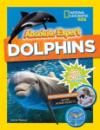
ABSOLUTE EXPERT: DOLPHINS

ZOOLOGY: COOL WOMEN WHO WORK WITH ANIMALS