Posts Tagged parents.

STEM Tuesday– Plants– Book List

Rooted to the ground, plants are pretty much stuck in place. Most of them get their energy from turning sunlight into food – which makes them a target for hungry animals. But some plants fight back, and some turn the food web completely on its head. These books might inspire you to think about plants in a different light.

Rooted to the ground, plants have to find nutrition, fend off predators, and survive whatever conditions the environment throws at them. From water lily leaves that could serve as rafts to a flower that smells like a rotting corpse, meet the plants that thrive by using brilliant and bizarre adaptations.

Beware the killer plants – the leaves that sting, the jaws that trap. This book, not for the faint-of-heart, is the perfect read for kids who want to know about the bird-catching plant, vampire vines, and corpse flowers.

For older readers, Hirsch has an engaging, conversational, almost conspiratorial, text invites the reader on an exploration of the “science, history, and true crime coverage” of fourteen poisonous plants, seeds, and fungus found around the world. Gorgeous taxonomic illustrations, photos, and “Deadly Details” sidebars help highlight some innocent and more sinister encounters with these plants.

Plants gather energy from the sun and turn it into leaves, flowers, fruit. Animals, who can’t produce their own food, eat the plants. But what happens when you turn the food chain upside down? When the plants are the hunters and animals the hunted? In this book you’ll meet sticky traps, trigger traps, and pits of death. There’s also a handy survival manual for carnivorous plants.

Plants don’t have brains, but they can sure fool animals – even humans! They have ways to defend themselves from harsh weather, being stepped on, and from being eaten. Some plants fake leaf damage and one plant plays dead to discourage predators. And some plants turn the tables and hunt insects.

Plants can’t move when conditions get tough, like little to no water, extreme cold, or high levels of ultraviolet radiation. Yet, some of the largest, oldest plants (some 3,000 to 5,000 years old) thrive in these harsh conditions with unique structures and ingenious lures for both pollinators and prey (using sticky, snap, and suction traps). Great photos and graphics, “Fun Fact” sidebars, and a STEAM Challenge to create a model of a “new plant species” help explore these extraordinary plants.

Explore forty-nine of the world’s most incredible plants, from prehistoric species (which have existed for around 300 million years) to giants (both in height and width), from spectacular leaves, flowers, seeds, and roots to some  truly unusual plants. The fascinating illustrations also depict the flora, fauna, and environments interacting with these amazing plants and provide a wonderful, global indexed map.  

What good is a dead plant? Examining dried specimens, farmers can learn about weeds and ecologists can study plant diversity and see how plant populations have changed in the past 200-plus years. Readers will learn how plants are collected and preserved, and be inspired by a kid who discovered a new species in his backyard.

From trees to rice, tea to spice, plants are central to our day-to-day lives. In graphic novel-style, this book explains how plants, from corn to potatoes, shaped human history. First, a grounding in plant essentials: photosynthesis, food web, and a fun graphic table of contents. Chapters focus on wood and wheat, tea and tulips, potatoes, peppers, cotton, corn, and rice.

GENERAL/ OVERVIEW:

An introduction to the Plant kingdom, how plants grow, leaves, and seeds. One section dives into ferns, conifers, and other nonflowering plants. A longer section highlights flowering plants, pollinators, fruits, and grasses. Filled with photos and sidebars that explain concepts such as photosynthesis.

This book begins by comparing your body to that of a plant. Where we have skeletons, plants have stems, trunks, branches. Where we have toes, plants have roots. One chapter focuses on leaves, others on flowers, pollinators, fruits, and seeds. Activities range from making fruit shakes and salad to leaf prints, seed sprouting, and finding fibers.


This month’s STEM Tuesday book list was prepared by:

Sue Heavenrich is an award-winning author, blogger, and bug-watcher. A long line of ants marching across the kitchen counter inspired her first article for kids. When not writing, she’s either in the garden or tromping through the woods. Her books for middle-grade readers include Funky Fungi: 30 Activities for Exploring Molds, Mushrooms, Lichens, and More and Diet for a Changing Climate. Visit her at www.sueheavenrich.com

Maria Marshall is a children’s author, blogger, and poet who is passionate about making nature and reading fun for children. She was a round 2 judge for the 2018 & 2017 Cybils Awards, and a judge for the #50PreciousWords competition since its inception. Two of her poems are published in The Best of Today’s Little Ditty 2016 and 2014-2015 anthologies. When not writing, critiquing, or reading, she bird watches, travels the world, bakes, and hikes. Visit her at www.mariacmarshall.com.

STEM Tuesday– Cephalopods — Writing Tips & Resources

Creativity and Octopuses!

The first of the cephalopods that comes to my mind is an octopus. To me, the metaphor of a multi-limbed being is in the multi-possibilities offered to apply to creative activities. Many arms and many legs and many muscular hydrostats mean that connections can go many ways. As my focus is STE(A)M, I began to run options though my head. I settled on music, research, and visual art (camouflage). Like a cephalopod, these are just three of the connected “arms” in the world of art. I make my case below.

Music and the Octopus.

One of the best known octopus songs is “The Octopus’s Garden,” by Ringo Starr (Richard Starkey) and recorded by the Beatles.

“I’d like to be under the sea
In an octopus’s garden with you”

 The cover of Octopus's Garden

The song is full of fun and joy. It is said that Ringo wrote the song after being told that octopuses collect stones and shells to make a decorative garden around their homes. Studies have shown that while we don’t understand their full capacity, octopuses have great intelligence.

Ringo is crediting them with a sense of artistry. Enough artistry to design and build a garden where …

“Oh, what joy for every girl and boy
Knowing they’re happy, and they’re safe”

Musicologist  Alan W. Pollack says:

The charm of “Octopus’s Garden” lies in its simplicity and complete lack of pretension.

Alan W. Pollack is an American musicologist known for having analyzed every song released by the British band the Beatles. Since this STE(A)M post is about science, I was wondering if a musicologist is considered a scientist. While Wikipedia describes it as “the academic, research-based study of music,” it employs of a number of fields of science, including psychology, sociology, acoustics, neurology, natural sciences, formal sciences and computer science.

The Octopus and Reasearch

Back to the idea of octopus as metaphor -it makes a great visual for research. Sometimes called a map or web for exploring possibilities, finding connections through random ideas is a superb tool for creativity. One can imagine the octopus, sitting in their garden, all arms reaching out to explore different places. There are no boundaries to using the mind this way.

Listening to “The Octopus’s Garden,” you find it is more than about a garden. It tells a story, shows emotion, incites curiosity, invites the imagination. Which is what good research should do. Musicology is sometimes considered to be a social science but many aspects, such as acoustics, musical instruments, and sound waves (and more), involve mathematics, materials science, psychology, and the list goes on. It one of many multi-armed disciplines.

In planning projects for kids, music and octopuses are intriguing ways to frame research and creative thinking. The investigation can be about any topic at all.  

Visual art and Octopuses

Octopuses have been the subject of artists since ancient Greece. Shown here is a lithograph from Jean Baptiste Vérany’s Chromolithographs of Cephalopods (1851). There is curiosity about creatures so unlike humans.

A historic lithograph of an octopus.

Members of the shell-less subclass of cephalopods (squid, cuttlefish, and octopuses) have the magic trick of color changing (yes, I know it’s a complicated process – not magic, but it is like magic to me). Some of their cells are capable of producing rapidly changing color patterns to match the surrounding areas or mimic other creatures. What a fascinating ability!

Doing art activities involving camouflage is a great way to improve eye, hand, and perception skills. And a real challenge. One needs to recognize shape, value, and colors to accurately reproduce them. Teachers Pay Teachers (link below) has a number of activities listed on their website. You don’t have to be an art teacher to use art projects as encouragement for students to do in-depth observational studies. With today’s fast-paced imagery of phones and games, people seem to be losing ability to focus. The value of practicing real observation can be time well spent.

Conclusion

Making connections is a large part of the creative process. It may appear this post strayed off topic, but it is an example of allowing the brain to find solutions that are new. Many inventions (such as the printing press) were the result of someone making an odd or unusual connection that ultimately led to a very useful solution. And, like learning to play music or becoming a good athlete, preliminary training paves the way. Anyone can practice connected thinking skills and use them for practical situations. Sometimes when I am doing research, allowing my mind to wander discovers materials better than what I was looking for.

Happy Connecting!

Margo Lemieux

References and more info

The Octopus’s Garden book https://bookshop.org/p/books/octopus-s-garden-with-cd-audio-ringo-starr/10265712?ean=9781481403627&next=t

The Octopus’s Garden video https://www.youtube.com/watch?v=De1LCQvbqV4

Alan W. Pollack https://www.icce.rug.nl/~soundscapes/DATABASES/AWP/og.shtml

Teachers Pay Teachers Cephalopods

https://www.teacherspayteachers.com/browse?gad_campaignid=20273913093&gad_source=1&gclid=Cj0KCQjwgIXCBhDBARIsAELC9ZiEjEwazcCjEgkVAUxueIxDCn_5mZEzBJuPrZn1OJjIO_wtepaOXSAaAtP5EALw_wcB&search=Cephalopods%20

Teachers Pay Teachers Camouflage

https://www.teacherspayteachers.com/browse?search=camouflage

Historic lithographs of cephalopods

https://publicdomainreview.org/collection/verany-cephalopods

Summer Camp Capers: 10 Middle Grade Books About Camps

Cover of "Be Prepared" by Vera Brosgol features anxious looking child camper in the woods.

Who could forget their summer camp experience?

For many children, sleep-away camps or day-camps can be both exciting and anxiety-producing. I remember going to a sleep-away camp when I was in middle school. It lasted a week. It felt like two months. Also, someone very close to me once received a disconcerting drawing from an eleven-year-old at a week-long camp:

Child's self portrait and text "Oh! How I want to go home!"

It should be noted, the child ultimately decided it was “good to get out of my comfort zone.”

How can you help your child or student anticipate or reflect on camp experiences?

1. Journaling

2. Writing stories about camp (whether it be real or imagined)

3. Talking about their feelings

4. Reading books about camps! Whether or not a child plans to attend a summer camp, middle grade books about young protagonists triumphing in challenging, scary or even hilariously over-the-top camp situations can be both inspiring and entertaining.

Listed below are ten wonderful middle grade books that feature summer camps:

Be Prepared by Vera Brosgol

In Be Prepared, all Vera wants to do is fit in—but that’s not easy for a Russian girl in the suburbs. Her friends live in fancy houses and their parents can afford to send them to the best summer camps. Vera’s single mother can’t afford that sort of luxury, but there’s one summer camp in her price range—Russian summer camp.
Vera is sure she’s found the one place she can fit in, but camp is far from what she imagined. And nothing could prepare her for all the “cool girl” drama, endless Russian history lessons, and outhouses straight out of nightmares!


Here in the Real World by Sara Pennypacker

Ware can’t wait to spend summer “off in his own world”—dreaming of knights in the Middle Ages and generally being left alone. But then his parents sign him up for dreaded Rec camp, where he must endure Meaningful Social Interaction and whatever activities so-called “normal” kids do.

On his first day Ware meets Jolene, a tough, secretive girl planting a garden in the rubble of an abandoned church next to the camp. Soon he starts skipping Rec, creating a castle-like space of his own in the church lot.

Jolene scoffs, calling him a dreamer—he doesn’t live in the “real world” like she does. As different as Ware and Jolene are, though, they have one thing in common: for them, the lot is a refuge.

But when their sanctuary is threatened, Ware looks to the knights’ Code of Chivalry: Thou shalt do battle against unfairness wherever faced with it. Thou shalt be always the champion of the Right and Good—and vows to save the lot.

But what does a hero look like in real life? And what can two misfit kids do?


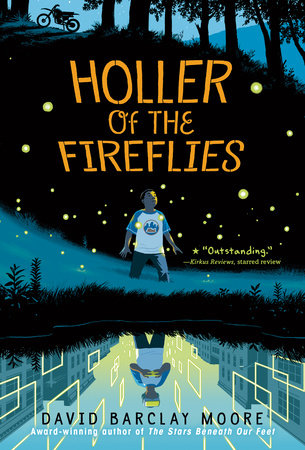
Holler of the Fireflies by David Barclay Moore

Javari knew that West Virginia would be different from his home in Bushwick, Brooklyn. But his first day at STEM Camp in a little Appalachian town is still a shock. Though run-ins with the police are just the same here. Not good.

Javari will learn a lot about science, tech, engineering, and math at camp. And also about rich people, racism, and hidden agendas. But it’s Cricket, a local boy, budding activist, and occasional thief, who will show him a different side of the holler—and blow his mind wide open.

Javari is about to have that summer. Where everything gets messy and complicated and confusing . . . and you wouldn’t want it any other way.

J + C + summer = ∞


Lions and Liars by Kate Beasley

Frederick Frederickson has a food-chain theory about life. There are lions, like the school bully. Gazelles, like the bullied kids. There are meerkats, and the fleas that live on the butts of meerkats. Frederick’s a flea.

Fifth grade is off to a terrible start when Frederick is sent to a disciplinary camp for troublesome boys. His fellow troop mates—Nosebleed, Specs, The Professor, and little-yet-lethal Ant Bite—are terrifying. But in between trust-building exercises and midnight escape attempts, a tenuous friendship grows between them. Which is lucky, because a Category 5 hurricane is coming and everyone will have to work together—lions and fleas alike—to survive!


Mirror to Mirror by Rajani LaRocca

Maya is the pragmatic twin, but her secret anxiety threatens to overwhelm her.

Chaya is the outgoing twin. When she sees her beloved sister suffering, she wants to tell their parents—which makes Maya feel completely betrayed. With Maya shutting her out, Chaya makes a dramatic change to give her twin the space she seems to need. But that’s the last thing Maya wants, and the girls just drift further apart.

The once-close sisters can’t seem to find their rhythm, so they make a bet: they’ll switch places at their summer camp, and whoever can keep the ruse going longer will get to decide where they both attend high school—the source of frequent arguments. But stepping into each other’s shoes comes with its own difficulties, and the girls don’t know how they’re going to make it.


Stella Díaz Never Gives Up by Angela Dominguez


Stella gets a big surprise when her mom plans a trip to visit their family in Mexico! Stella loves marine animals, and she can’t wait to see the ocean for the first time . . . until she arrives and learns that the sea and its life forms are in danger due to pollution.

Stella wants to save the ocean, but she knows she can’t do it alone. It’s going to take a lot of work and help from old and new friends to make a difference, but Stella Díaz never gives up!


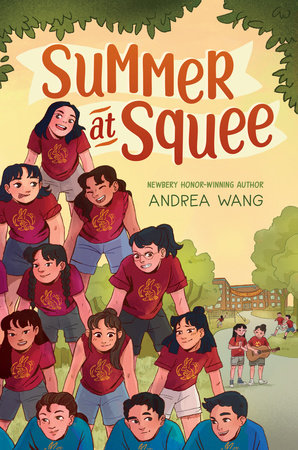
Summer at Squee by Andrea Wang

Phoenny Fang plans to have the best summer ever. She’s returning to Summertime Chinese Culture, Wellness, and Enrichment Experience (SCCWEE for short and “Squee” to campers in the know), and this year she’s a senior camper. That means she; her best friend, Lyrica Chu; and her whole Squad will have the most influence. It almost doesn’t matter that her brother is a CIT (counselor-in-training) and that her mom and auntie are the camp directors. Time spent at Squee is sacred, glorious, and free.

On the day Phoenny arrives, though, she learns that the Squad has been split up, and there’s an influx of new campers this year. Phoenny is determined to be welcoming and to share all the things she loves about camp—who doesn’t love spending hours talking about and engaging in cultural activities? But she quickly learns how out of touch she is with others’ experiences, particularly of the campers who are adoptees. The same things that make her feel connected to her culture and community make some of the other campers feel excluded.

Summer at Squee turns out to be even more transformative than Phoenny could’ve imagined, with new friendships, her first crush, an epic show, and a bigger love for and understanding of her community.


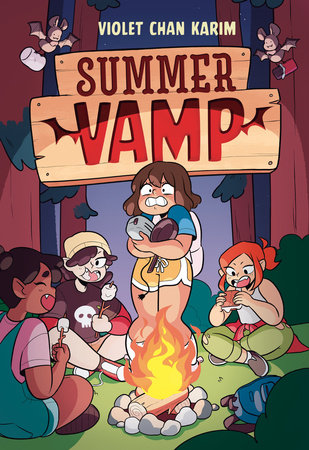
Summer Vamp by Violet Chan Karim

After a lackluster school year, Maya anticipates an even more disappointing summer. The only thing she’s looking forward to is cooking and mixing ingredients in the kitchen, which these days brings her more joy than mingling with her peers . . . that is until her dad’s girlfriend registers her for culinary summer camp! Maya’s summer is saved! . . . or not.

What was meant to be a summer filled with baking pastries and cooking pasta is suddenly looking a lot . . . paler?! Why do all of the kids have pointy fangs? And hate garlic? Turns out that Maya isn’t at culinary camp—she’s at a camp for VAMPIRES! Maya has a lot to learn if she’s going to survive this summer . . . and if she’s lucky, she might even make some friends along the way.


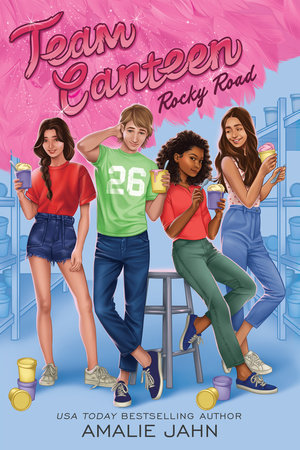
Teen Canteen: Rocky Road by Amalie Jahn

On the final night of summer camp, Tasha, Raelynn, Claire, and Billie get busted stuffing themselves with ice cream in the mess hall’s walk-in freezer. But when they slip away without being punished, they’re convinced the pink feather boa Billie put on to stay warm is magic.

Back at home, each member of Team Canteen tests the boa’s powers as they face their own challenges. When her little cousin moves in with her destructive dog, Tasha struggles to find her place inside her adoptive family. Claire’s scared the kids at school will find out how hard life’s gotten since her dad lost his job. Raelynn longs to be someone other than her sister’s twin. And with a hockey-obsessed family charting his every move, Billie’s worried he’ll never be able share his dream of becoming a figure skater.

It’s going to be a rocky road from the start of the school year back to Camp Happy Hollow. Will the boa continue to protect Team Canteen, or will their friendship end up being the most magical find of all?

Alternating among the friends, Rocky Road is a smart, soaring celebration of the highs and lows of middle school, and the unbreakable friendships that see you through, no matter what comes next.


Twelfth by Janet Key

Twelve-year-old Maren is sure theater camp isn’t for her. Theater camp is for loud, confident, artsy people: people like her older sister, Hadley–the last person Maren wants to think about–and her cinema-obsessed, nonbinary bunkmate, Theo. But when a prank goes wrong, Maren gets drawn into the hunt for a diamond ring that, legend has it, is linked to the camp’s namesake, Charlotte “Charlie” Goodman, a promising director in Blacklist Era Hollywood.

When Maren connects the clues to Shakespeare’s Twelfth Night, she and her new friends are off searching through lighting booths, orchestra pits and costume storages, discovering the trail and dodging camp counselors. But they’re not the only ones searching for the ring, and with the growing threat of camp closing forever, they’re almost out of time.


Let me know below other great middle grade reads that feature summer camp!