Posts Tagged parents

STEM Tuesday– Material Science– In the Classroom


Have you thought about the objects you use every day? Your hairbrush, clothes, dishes, desk, and books? What are they made from? Materials science is the study of the solid materials that make up all objects. This month’s books examine different aspects of materials science and can be used as a starting point for classroom discussions and activities.


Support Independent Bookstores - Visit IndieBound.orgLet’s Investigate Everyday Materials  by Ruth Owen

Readers will discover the properties of materials and how they’re suitable for specific tasks. In addition, they’ll learn how they’re made! Get up close to the worlds of wood, metal, plastic, glass, rock, and wool and discover how these items work for us regularly.


Activity: What materials can you find in your home or classroom? Have students go on a scavenger hunt to find objects made of different materials either at home or in the classroom. Search for objects made of each material: metal, glass, plastic, fabric, concrete, wood, ceramic, and rubber. What did you find? Choose one object. What material was used to make it? What would happen if a different material was used to make this object?


Support Independent Bookstores - Visit IndieBound.orgStuff Matters: Exploring the Marvelous Materials That Shape Our Man-Made World by Mark Miodownik

Why do materials look and behave the way they do? This book speaks about the amazing properties of the materials all around us that we take for granted.


Activity: Many materials scientists have had an important role in history. Johannes Gutenberg changed materials to make the printing press. John Smeaton invented concrete, which is used in many objects today. Other important scientists include William Champion, Benjamin Huntsman, Charles Goodyear, Wallace Carothers, and Harry Brearley. Have students choose an important materials scientist or moment in materials science history. Research this person or moment to find out what contribution was made to materials science. What drove them? Did they face any challenges? How do we use their contributions today?


Support Independent Bookstores - Visit IndieBound.orgDiscover Nanotechnology by Lisa J Amstutz

All about how scientists work with the tiniest objects imaginable to build wonderful things!


Activity: Take students on a tour of the Space Nanotechnology Lab at the Massachusetts Institute of Technology. Here they will learn more about how nanotechnology is being used to help scientists in space.


*************************************

Carla Mooney loves to explore the world around us and discover the details about how it works. An award-winning author of numerous nonfiction science books for kids and teens, she hopes to spark a healthy curiosity and love of science in today’s young people. She lives in Pennsylvania with her husband, three kids, and dog. When not writing, she can often be spotted at a hockey rink for one of her kids’ games. Find her at http://www.carlamooney.com, on Facebook @carlamooneyauthor, or on Twitter @carlawrites.

Horror is for Middle Grade – A Booklist for Thrills and Chills

Anyone who enjoys Stephen King appreciates that deliciously uneasy feeling of a toe sticking out of the covers when who-knows-what is hidden under the bed.

All people deal with fear. Middle Grade Horror allows children to experience thrills and chills, find their brave inner hero, and go on a dangerous journey in a safe space. It’s an important lesson. Plus, it’s fun.

Below, you’ll see why I believe Horror is for Middle Grade and check out the book list for the young horror-reader in your family.

Reluctant Readers

My own family stumbled into horror when one of my children struggled to find stories he liked. He labelled the books he read too predictable, too touchy feely, and too boring. All of that changed when a great librarian suggested he check out Middle Grade Horror. He started with The Vampire Plagues, by Sebastian Rook. This series, about three children who chase a vampire from 1850s London to Paris and on to Mexico, hooked him on reading, and I believe it can help other reluctant readers learn to enjoy books.

Liking this article about scary books? Check out this archived interview with scary book author and MUF contributor Jonathon Rosen

An Emotional Journey

Like all great stories, great Middle Grade Horror takes the reader on an emotional journey. Horror provokes terror, surprise, revulsion, empathy, love, and hatred. With all that excitement, probably everyone of us would enjoy some Horror. However, all of us have limits, and no child should be pushed beyond theirs. We want children who read Horror to be thrilled by it and not to suffer nightmares.

I highly recommend The Vampire Plagues, a fast-paced, action-packed, vampire-filled adventure. Below are more great Horror reads that range from Bunnicula, a story that is hardly scary at all to Katherine Arden’s truly creepy Small Spaces.


Middle Grade Horror Book List

Bunnicula is as silly as it is scary. This much beloved series features a mystery loving dog, an overly dramatic cat, and a vampire rabbit who sucks the life out of carrots.

The Graveyard Book, written by Neil Gaiman, author of the Halloween favorite Coraline, is an action and adventure story. It’s a great read for a child who enjoys action, suspense, and mysteries. It is a great read. It comes with lots of fun, friendly ghosts, and a few who are not-so-friendly.

For the daring, Victoria Schwab’s City of Ghosts leads the reader into increasingly unsettling territory. The ghosts in this book are monsters to be feared, and the heroine takes great risks in her endeavors.

Finally, Small Spaces by Katherine Arden is the ultimate spine-chilling adventure. The main character is a deeply flushed out, sympathetic child with tons of courage. She uses every ounce of her courage to face some truly terrifying creatures.

A lot of people, including children love horror stories. Being scared is fun. Middle grade horror provides a compelling read for some children who might be reluctant to dive into less edgy topics, and it presents an opportunity for kids to learn to deal with fear.

STEM Tuesday– Math– Writing Tips and Resources


Paradigm Shift

Did you see it? The National Council of Teachers of English recently issued the “Position Statement on the Role of Nonfiction Literature (K–12).” I’ll be honest and say that when I was growing up, I never thought of nonfiction as literature. To me, nonfiction was an encyclopedia, a text book, or one of those really dry library books that you checked out when you had to do a report on a cheetah. Sure the cheetah was cool, but the book about it? I had to crawl my way through all of the dusty dry to find the fascinating facts.

Look how far we have come… This month we are looking at the literary craft of not just nonfiction, but math nonfiction! And that’s because the world of publishing has opened their arms to cool, crafty, creative presentations of information. And I for one am giddy over it. In fact, NCTE, this group of professional English teachers is proposing “a paradigm shift for teaching and learning with nonfiction literature in K–12 education.”

Drop the mic! Nonfiction is coming into its own!

So, how exactly do we spur on this paradigm shift? We can start by studying the craft of informational books. We can articulate new language to help us describe unique attributes of nonfiction. We can search out the devices used by nonfiction authors. We can compare/contrast, discuss/evaluate, and weigh the pros and cons. In other words, we can have informed opinions.

One Way to Start

Melissa Stewart (author of over 100 nonfiction books for children) and Dr. Marlene Correia (an educator of 30 years) have written a book entitled 5 Kinds of Nonfiction: Enriching Reading and writing Instruction with Children’s Books. Check out this article (https://www.melissa-stewart.com/img2018/pdfs/5_Kinds_of_Nonfiction_SLJ_May_2018.pdf) in the School Library Journal and Melissa’s blog post (http://celebratescience.blogspot.com/2020/02/5-kinds-of-nonfiction-update.html).  They propose that much of today’s nonfiction can be categorized as one of the following:

  • Active – books that get kids doing something, i.e, Klutz Books for Kids
  • Browseable – open to any page and find chunks of facts, i.e., Nat Geo Weird But True World
  • Traditional – provide a broad survey of a topic, i.e. Rattlesnakes
  • Narrative – provide a narrative arc, i.e.  Radiant Child The Story of Young Artists Jean-Michel Basquiat
  • Expository Literature – non-narrative books that present a narrow topic in a creative or unique way, i.e. Summertime Sleepers: Animals that Estivate!

To become more comfortable with this idea, open a math book and check out a spread. Which category might each fit into? Try these:


The Kitchen Pantry Scientist Math for Kids: Fun Math Games and Activities Inspired by Awesome Mathematicians, Past and Present; with 20+ Illustrated, by Rebecca Rapoport and Allanna Chung.


Just a Second, by Steve Jenkins


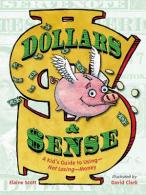
Dollars & Sense: A Kid’s Guide to Using–Not Losing, written by Elaine Scott, illustrated by David Clark.


Sir Cumference and the First Round Table , written by Cindy Neuschwander, illustrated by Wayne Geehan (you’re right, this one is not nonfiction!)


Just as all novels books do not fit neatly into one genre, nonfiction books don’t all fit neatly into these categories, but I bet you know a reader who LOVES one of these categories. What if we recommended books to readers based on this? What if we encouraged all readers to sample books from all of these categories?

This is a powerful new way to understand and nudge forward this paradigm shift for teaching and learning nonfiction!

________________________________________________

Prepared by:


Heather L. Montgomery, author of 17 nonfiction books for kids.

www.HeatherLMontgomery.com