
Posts Tagged parents

STEM Tuesday– Coding– Book List


Coding is an essential skill in our fast-paced digital world. With activity books, reference guides, historical narratives, and fiction, this month’s book list is sure to inspire readers to take the next steps in their coding journey.
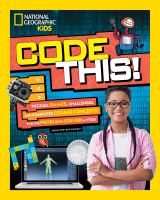
 

cover image of "Code This" featuring a teenage girl

Code This!: Puzzles, Games, Challenges, and Computer Coding Concepts for the Problem Solver in You 

by Jennifer Szymanski

Code This! contains many puzzles, games, and quirky characters that highlight programming concepts in kid friendly ways. Readers will be engaged as they find hidden treasures, decode ciphers to read secret messages, and more. All in all, a great introduction to coding.


cover image of "The History of the Computer" with icons on black background

The History of the Computer: People, Inventions, and Technology that Changed Our World

by Rachel Ignotofsky


This book provides a comprehensive overview of the computing machines that have changed our world, from the abacus to the smartphone. Everyone knows how much computers have impacted our lives, but this book goes on to answer questions like who created them, why, and how they have transformed the way we interact with our surroundings and each other. It’s also packed with fun facts and engaging illustrations.


book cover featuring a portrait of Ada Lovelace on purple

DK Life Stories: Ada Lovelace 

by Nancy Castaldo


In 1843, Ada Byron Lovelace wrote the first computer program… long before technology was advanced enough to try it out! Part of DK’s “Life Stories” series, this engaging biography brings to life the curiosity, imagination, and scientific contributions of this coding pioneer. Sidebars, quotes, definitions, maps, and photos give readers more historical context about the world where she grew up.


three books. The top one is purple and is titled "Kids Get Coding"Kids Get Coding 

by Heather Lyons and Elizabeth Twedale

This Lerner series includes eight short, illustrated books that bridge the gap between unplugged activities and computer-based skill development. Some of the titles in the series include “Learn to Program,” “Coding, Bugs, and Fixes,”  “Online Safety and More,” and “Coding in the Real World.” A character named Data Duck walks kids through basic concepts within each book, and a companion site gives readers the chance to try out their new skills with book-specific projects.


cover image of "Book Cover" with nine women on red backgroundGamer Girls: 25 Women Who Built the Video Game Industry 

by Mary Kenney, illustrated by Salini Perera


Gamer Girls introduces readers to the dynamic women who created iconic video games and changed the industry forever. From Roberta Williams to Mabel Addis Mergardt, this book highlights the history of how women got started in this industry, and then profiles 25 of them. The text is easy to read and engaging, and it’s accompanied by eye catching illustrations.


book cover of "My Life as a Coder" featuring a cartoon boy typing at a computerMy Life as a Coder 

by Janet Tashjian, illustrated by Jake Tashjian


My Life as a Coder is the ninth book in Janet Tashjian’s fictional My Life series. It stars reluctant reader Derek Fallon. In this particular book Derek receives a new laptop. However, it has no Wi-Fi so he can’t use it for gaming. If he wants to play computer games, he’ll have to learn how to code them himself. This premise will inspire readers as they watch Derek struggle but eventually get the hang of the world of tech and coding.


cover image of the book "Girls Who Code"Girls Who Code: Learn to Code and Change the World 

by Reshma Saujani


Girls who Code champions females and girl-empowerment. The book includes easy to grasp explanations of various coding principles as well as real life stories of girls and women who work for such companies as Pixar and NASA. It goes on to detail what a huge role computer science plays in our lives and how much fun it can be. It also features bold illustrations on every page.


yellow book cover with text, "Coding Games in Scratch"Coding Games in Scratch: A Step-by-Step Visual Guide to Building Your Own Computer Games 

by Jon Woodcock 


For students who are just getting started with coding, Scratch is a great block-based program to use. This practical guide provides illustrated tutorials that show readers not just what to do but also why!  It introduces strategies for problem solving, collaborating, and thinking creatively.


cover image of the book "Get Coding!" featuring two cartoon people, a computer, and a dogGet Coding! Learn HTML, CSS & JavaScript and Build a Website, App, and Game

by Young Rewired State


The beginning of this book contains a plea for help from the fictional Professor Harry Bairstone, who has just found a precious gem called the Monk Diamond. As readers progress through the chapters, they will embark on a quest to help him keep the Monk Diamond safe from nefarious jewel thieves. Along the way, they will complete short coding projects and learn how to use three of the most important programming languages used in web development and design: HTML, CSS, and JavaScript.


cover image of "Python for Kids"Python for Kids, 2nd Edition: A Playful Introduction to Programming 

by Jason R. Briggs


This kid-friendly guide aims to make Python fun to learn and use! Python is one of the most widely used text-based computer programming languages in the world, and this book walks students through the basics of text-based programming in a comprehensive but digestible way. The sample code problems feature everything from gorillas to secret agents, and the main text is accompanied by colorful illustrations, puzzles, definitions, and a section on troubleshooting.

________________________________________________

This month’s STEM Tuesday book list was prepared by:

Author Lydia Lukidis

Lydia Lukidis is the author of 50+ trade and educational books for children. Her titles include DANCING THROUGH SPACE: Dr. Mae Jemison Soars to New Heights (Albert Whitman, 2024), DEEP, DEEP, DOWN: The Secret Underwater Poetry of the Mariana Trench (Capstone, 2023) and THE BROKEN BEES’ NEST (Kane Press, 2019) which was nominated for a Cybils Award. A science enthusiast from a young age, she now incorporates her studies in science and her everlasting curiosity into her books. Another passion of hers is fostering a love for children’s literacy through the writing workshops she regularly offers in elementary schools across Quebec with the Culture in the Schools program. For more information, please visit www.lydialukidis.com.


author Callie DeanCallie Dean is a researcher, writer, and musician living in Shreveport, LA. She writes stories that spark curiosity and encourage kids to explore their world. For more information, please visit https://www.calliebdean.com.


Summer Reading: Summer Fun

As the weather is warming up, summer reading season begins. Why not create some summer reading traditions to make reading even more fun? Below are a few ideas.


  • Get outside! Lean into the nice weather and explore outside reading spots. This could be the front porch, the shade of a tree, or a local park. This can make summery books come alive even more, gives readers some fresh air, and can turn reading into a place-based habit. Patricia Bailey’s Take A Hike: An Outdoor Adventure Book List article provides excellent recommendations for books to read in the great outdoors.


  • Have special snacks! Whether it’s popsicles or homemade lemonade, having a refreshing summer treat reserved only for reading time can solidify the joys of reading for young readers. This Easy Homemade Lemonade recipe from Lovely Little Kitchen is something young readers can help make too!


  • Take a weekly trip to your library! Many local libraries host summer reading programs with reading suggestions and prizes included. This turns summer reading into an exciting event, fosters a reading community, and encourages the discovery of new books. For more information about reading challenges (and how to make summer reading fun), check out Stacy Mozer’s post on Encouraging Summer Reading.


  • Plan it out! Make an activity out of selecting a summer reading list. You can cut stiff paper into 3 x 6 inch rectangles and invite each young reader in your life to print the names of the books they want to read this summer on the front of it and decorate the back with drawings of their favorite summer place to read. Now they have a visional representation of books they want to read and a bookmark all in one. For a free printable bookmark with other summer reading ideas, you can check out my No Rules Reading.


Summer reading can define the season and creating traditions that celebrate reading can help create lifelong readers. Plus, summer reading is something the whole family can enjoy!

Middle Grade Writing Opportunities for the End of School

Merry and marvelous, the month of May! Congratulations to teachers, librarians, and parents of middle graders on the completion of another year of school. To everyone involved with education, amid the final projects, end-of-year grading, and graduation to whatever is next, the end of school brings a chance to reflect and draw conclusions about the year’s accomplishments. For middle graders, May might bring the end of a year spent with a beloved teacher or the end of their stint in a particular school building. These kinds of upcoming endings can prime students emotionally for reflection, journaling, and other writing activities in the classroom as the days wind down toward summer. Consider celebrating the end of the school year with some MG writing activities geared toward endings.

The End of the Story

Plenty of creative writing assignments allow students to work up a great first line…but since it’s the end of the year, challenge your MG writers to compose nothing but the last line of a piece of original fiction. They might start by filling in a simple activity sheet that lays out the story’s premise (genre, setting, protagonist, conflict, point of view, major themes, atmosphere). Notes in the form of brief phrases or bullet points might help them to fully envision this story they haven’t actually written. Students then compose the last line(s) in a way that both demonstrates the thematic undertones of the tale and brings a sense of closure.

You might encourage your middle graders by reviewing the great books you’ve covered over the year – read the last line aloud, take guesses the title, and have small groups recall the components of the book’s premise so that they are more confident in creating their own. (What a great opportunity to review the works your class has read and run through associated literary devices they will need the next year!) Once they recall the premise, point out that last lines often encapsulate characterization, theme, tone, and genre elements. Some good examples:

  • I’m Lanesha. Born with a caul. Interpreter of symbols and signs. Future engineer. Shining love. I’m Lanesha. I’m Mama Ya-Ya’s girl.    (Ninth Ward, Jewell Parker Rhodes)
  • That’s what a real Florida boy would do. (Hoot, Carl Hiaasen)
  • …but always,/to know that/the world is not/meant to be feared,/and that water,/beautiful water,/will always mean/play.  (Odder, Katherine Applegate)
  • “Until then,” Annemarie told him, “I will wear it myself.”  (Number the Stars, Lois Lowry)


Great Endings of Long Ago

For the creative nonfiction writers in your group, a short writing project that explores significant historical endings might be of interest. Consider establishing research and investigation time into these and other history topics, then set writers to the task of composing brief paragraphs that sum up individual events leading to the end. Each student might contribute 1 or more paragraphs, each on a separate 5×8 index card; then students can work together to order and display their events timeline-style. Paragraphs could take on the style of a journalistic headliner or a fiction back cover blurb for practice in modeling specific writing approaches.

Some possibilities:

  • The end of the prehistoric period
  • The “Fall” of the Roman Empire
  • The end of the Revolutionary War
  • The surrender of Lee at Appomattox
  • The eradication of smallpox


Endings Mean New Beginnings

With sensitivity in mind for individual circumstances, consider allowing middle grade writers to brainstorm and journal about a local organization, business, or event that met its end in their lifetimes—for example, a favorite town diner that might have closed, or the dissolution of a town gathering during the pandemic—and accompanying fresh starts, such as a new popular restaurant or a reboot of a local festival. Writers also might brainstorm school groups or activities that shifted or changed over the course of their time in the building.

In another interesting angle, students write about the end of particular technologies that have grown obsolete just in their lifetimes and the resulting new tech. Expand this topic to a prediction exercise in which the MG imagination can speculate on current advances that may end within 1-3 years and the consequential new inventions that will take the place of the old.

Some ideas for technologies whose popularity and widespread use came to an end in the last ten years:

  • AOL Instant Messenger
  • Plasma TVs
  • Microsoft Kinect
  • Google Plus
  • Windows phone

No matter how you choose to reflect upon and celebrate the school year’s end, I hope your MG students find fun and fulfillment in their last writing projects, and I hope everyone’s summer is soon off to a safe, happy start!