

Pretty soon we will be entering the “dog days” of summer, so why not let our STEM Tuesday blog reflect our love of dogs and other pets this month?

 Dog Science Unleashed and Cat Science Unleashed by Jodi Wheeler-Toppen
These two titles offer readers fun science-based activities and experiments to do with their pets based on how the animals think, move, drink, and more.
 Mercy: The Incredible Story of Henry Bergh by Nancy Furstinger, illustrated by Vincent Desjardin
This biography about the founder of the ASPCA demonstrates how one person can make a difference in the world. His work led to the acceptance of the protection of animals.

 How to Speak Cat and How to Speak Dog by Aline Newman and Gary Weitzman, DVM
Why do cats purr? Why do dogs wag their tails? These two titles will help readers understand what their cats or dogs are trying to communicate with their body language and behavior.
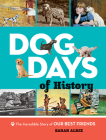 Dog Days of History: The Incredible Story of Our Best Friends by Sarah Albee
Delve into the history of our lives with our beloved canines with this book filled with interesting tidbits of historical pet facts.
 Everything Dogs: All the Canine Facts, Photos, and Fun You Can Get Your Paws On! by Becky Bains
Examine everything about dogs in this great resource book. Readers will explore breeds, history, and more to discover what makes dogs our “best friends.”
 Sniffer Dogs: How Dogs (and Their Noses) Save the World by Nancy Castaldo
Why and how do dogs use their noses to help us in so many ways? Delve into the science and the extraordinary tales of these super sniffing canines.
 Puppy Training for Kids: Teaching Children the Responsibilities and Joys of Puppy Care, Training, and Companionship by Colleen Pelar and Amber Johnson
This is a great book for families with a new puppy. Get training tips, advice, and more in this title for young dog owners.
 Poop Detectives: Sniffer Dogs in the Field by Ginger Wadsworth
Discover dogs helping scientists in the field in this well-researched book about conservation canines.
 National Geographic Kids 125 True Stories of Amazing Pets: Inspiring Tales of Animal Friendship and Four-legged Heroes, Plus Crazy Animal Antics by Nat Geo
A perfect book of heart-warming and hilarious stories for the animal-loving reader who may or may not have their own pet. These stories will inspire and entertain.
 Inside of a Dog, Young Readers Edition: What Dogs See, Smell, and Know by Alexandra Horowitz, illustrated by Sean Vidal Edgerton
This young readers edition of the popular adult nonfiction book gives children a glimpse into understanding a dog’s behavior. A great book for budding animal cognition scientists and dog trainers.
 Finding Gobi: Young Reader’s Edition: The True Story of One Little Dog’s Big Journey by Dion Leonard and Aaron Rosenberg
An inspiring and heartfelt look at one dog’s rescue. This edition brings this fantastic story of friendship to younger readers, who will appreciate the challenges of an 80-mile race and the struggle to give Gobi a real home.
STEM Tuesday book lists prepared by
 Nancy Castaldo has written books about our planet for over 20 years including, THE STORY OF SEEDS: From Mendel’s Garden to Your Plate, and How There’s More of Less To Eat Around The World, which earned the Green Earth Book Award, Junior Library Guild Selection, and other honors. Nancy’s research has taken her all over the world from the Galapagos to Russia. She strives to inform, inspire, and empower her readers. Nancy also serves as the Regional Advisor of the Eastern NY SCBWI region. Her 2018 multi-starred title is BACK FROM THE BRINK: Saving Animals from Extinction. Visit her at www.nancycastaldo.com
And she is the proud mom of a rescued Bichon named Boo Radley.
 Patricia Newman writes middle-grade nonfiction that empowers young readers to act on behalf of the environment and their communities. A Sibert Honoree for Sea Otter Heroes, Newman has also received an NSTA Outstanding Science Trade Book Award for Eavesdropping on Elephants, and a Green Earth Book Award for Plastic, Ahoy! Her books have also received starred reviews, been honored as Junior Library Guild Selections, and included on Bank Street College’s Best Books lists. During author visits, she demonstrates how young readers can use writing to be the voice of change. Visit her at www.patriciamnewman.com.

 Welcome to STEM Tuesday: Author Interview & Book Giveaway, a repeating feature for the fourth Tuesday of every month. Go Science-Tech-Engineering-Math!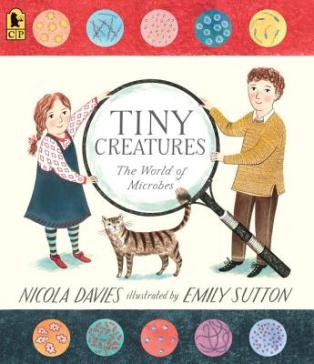

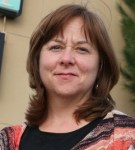 Your host is


 Karen Latchana Kenney loves to write books about animals, and looks for them wherever she goes—from leafcutter ants trailing through the Amazon rain forest in Guyana, where she was born, to puffins in cliff-side burrows on the Irish island of Skellig Michael. She especially enjoys creating books about nature, biodiversity, conservation, and groundbreaking scientific discoveries—but also writes about civil rights, astronomy, historical moments, and many other topics. Her award-winning and star-reviewed books have been named a YALSA Quick Pick for Reluctant Readers, a 2015 Book of Note from the TriState Review Committee, a 2011 Editor’s Choice for School Library Connection, and Junior Library Guild selections. She lives in Minneapolis with her husband and son, and bikes, hikes, and gazes at the night sky in northern Minnesota any moment she can.