Posts Tagged middle-grade fiction

Here Where the Sunbeams are Green with Helen Phillips

Today we welcome Helen Phillips to the Mixed-Up Files! Her novel, HERE WHERE THE SUNBEAMS ARE GREEN, just released on November 13th. Her official bio: Helen Phillips grew up in the foothills west of Denver with her three siblings. When she was eleven, she lost her hair due to the autoimmune condition alopecia, which was pretty hard at the time, but now she thinks there are some major advantages to not having hair (no shampoo in the eyes, for one). Soon after she lost her hair, she (like Mad) made a New Year’s resolution to write a poem a day, a practice she continued for more than eight years. Helen attended Yale University and went on to earn a master of fine arts in fiction from Brooklyn College. She lives in Brooklyn with her husband, artist Adam Douglas Thompson, and their child.

About HERE WHERE THE SUNBEAMS ARE GREEN: Mad’s dad is the Bird Guy. He’ll go anywhere to study birds. So when he’s offered a bird-tracking job in Central America, his bags are packed and he’s jungle bound. But going bird tracking in the jungle and disappearing completely are very different things, and when the Very Strange and Incredibly Creepy Letter arrives, Mad can’t shake the terrible feeling that her father is in trouble. Roo, Mad’s younger sister, is convinced that the letter is a coded message. And their mom is worried, because the letter doesn’t sound like Dad at all. But Mad is sure it’s a sign of something sinister. The only way to get to the bottom of it is to go to Lava Bird Volcano and find their dad themselves. Though they never could have imagined what they’re about to discover. (from IndieBound)

I loved that Madeline and Ruby are a sister team. Ruby, the younger sister, often comes across as the fearless leader. How does Madeline gain the courage to ultimately save her family from the evil corporation La Lava Resort and Spa?

Mad’s journey from scaredy cat to heroine is in a sense the central journey of the book. When push comes to shove, Mad has plenty of inner resources—it’s just that push has never come to shove until now. A lot of the struggle has to do with how she perceives herself; she has to overcome considerable self-doubt. All along she gives herself less credit than she deserves. She’s intelligent and creative and big-hearted. But in comparison to Roo, she feels weak and wimpy and un-magical. At the same time, Roo’s courageousness is what inspires Mad in the climactic scene.

Speaking of La Lava Resort and Spa, it purports to be an eco-friendly resort while it’s actually hunting the Lava-Throated Volcano trogon [a type of bird] to extinction for use in a stay-young cosmetic. What inspired this type of villain?

I thought it would be interesting for a place that seems like paradise to have a very dark underbelly. It was a fun writing challenge to depict the sinister qualities of such a gorgeous, “perfect” location. Moreover, as someone who attempts to tread lightly on the earth and buy green products, I’m fascinated/horrified by the trend of “green-washing,” in which companies falsely claim to be environmentally friendly and market their products as being greener than they actually are, taking advantage of well-intentioned consumers like myself.

Madeline and Ruby’s father, the Bird Guy, is thrilled to discover the Lava-Throated Volcano trogon is a Lazarus species. This was the first time I’d heard of a Lazarus species, where a species thought to be extinct is rediscovered. Is this based on a true story? How frequently are Lazarus species discovered?

I write about this in my Author’s Note: in the early 2000s, my dad showed me a newspaper article about a recent sighting of the Ivory-Billed Woodpecker, otherwise known as the “Lord God Bird” for its spectacular appearance. Declared extinct by the International Union for Conservation of Nature in the 1990s, it had supposedly been sighted in its former territory, causing a flurry of excitement in the ornithological community and inspiring a great search effort. Unfortunately, none of the searches for the Lord God Bird has proven that it still exists. Even so, this tale stuck with me, a tiny bright spot amid the disturbing news about the ever-decreasing biodiversity of our planet. It seemed as magical to me as the sighting of a unicorn or dragon. For years I knew I wanted to write a book about the thrilling possibility that a species believed extinct might have managed to survive. There are some wonderful examples of these so-called “Lazarus species” (Lazarus, in the Bible, was raised from the dead). The Bermuda Petrel, a bird believed extinct for 330 years, was found alive on small, remote islands. The Lord Howe Island stick insect, believed extinct since 1930, was rediscovered beneath a shrub on the world’s most isolated sea stack. The Monito del Monte, a marsupial believed extinct for eleven million years, was revealed in a thicket of Chilean bamboo. These are just a few from the intriguing list of thirteen Lazarus species on the Mother Nature Network site. Wikipedia also maintains a list of Lazarus species.

One thing that stands out in your story right away is how strong the rainforest is as a setting. How much research did you do to make it come alive?

Though I (sadly!) didn’t get the chance to travel to Central America for research purposes while I was writing the book, I lived in Costa Rica for two summers in high school and college, studying Spanish and doing volunteer work. As someone raised in the arid foothills of Colorado, those first encounters with the rain forest made a huge impression on me, and I drew on that stockpile of rich, quasi-magical images in writing Here Where the Sunbeams Are Green. My creation of the jungle setting got a boost when my brother and sister-in-law spent their honeymoon in Costa Rica while I was revising the book; they sent me about 200 pictures of birds, flowers, foliage, bugs, monkeys, etc. Aside from that, the Internet was helpful in terms of jogging my memory and enhancing the details.

In the rainforest, you describe an umbrella flower that blooms just in time to be a shelter for the rain. Does that exist? And can flowers really grow out of your toes, like they do for Ruby?

I wish! As far as I know, there are no umbrella flowers or toe flowers. But they’re both just believable enough …

What’s next for you?

I’m working on a collection of short stories for adults, and I have the idea for my next book for young readers, which will be set in a post-apocalyptic world.

What’s your favorite middle-grade book?

I have to confess that I adored From the Mixed-Up Files of Mrs. Basil E. Frankweiler; now that I live in New York City and actually get to visit the Met, I think of that book every time I step through those doors. Other favorites include Madeleine L’Engle’s A Wrinkle in Time and Laura Ingalls Wilder’s Little House on the Prairie books. And everything by Cynthia Voigt. And Lloyd Alexander. And C.S. Lewis. And J.R.R. Tolkein. And … well, you get the idea …

To learn more about Helen and her books, check out her website and her book trailer. Leave a comment to win a copy of HERE WHERE THE SUNBEAMS ARE GREEN (US only).

Karen B. Schwartz writes humorous middle-grade novels (and tween and YA) and raises humorous middle-grade kids (one is a tween that thinks he’s YA).


Reading to Lighten Up on Election Day

I take Election Day seriously. I study newspaper editorials, check the candidates’ flyers for endorsements, read the League of Women Voters’ guides, talk with friends about ballot initiatives. Even when there isn’t a presidency at stake.

I don’t know about you, but this election has me as nervous as a fourth grader giving an oral book report. I need to lighten up. But I’ve been doing some phone banking, and occasionally I reach an 18-year-old who isn’t planning to vote.

Not vote? Seriously?!

Young adults who have developed that too-cool attitude should be teleported back to middle school, before ennui and cynicism creep in. (Unfortunately, it’s not just young people—only about 61% of the population votes.) Then they can hear again why voting matters.

My instinct is to speak passionately about suffragettes and disenfranchisement. Fortunately, plenty of authors know that humor is a better way to teach children about voting rights.

My favorite is So You Want to be President? Yes, I know it’s a picture book, but long after my daughters had graduated to novels, they would re-read this classic. It’s just funny, with the inevitable Taft in the bathtub, the number of Jameses who have held office, and cool facts about who could dance and who went to college. You find out what’s good about the job (living in the White House) and bad (“the President has to be polite to everyone”).

For the slightly older reader, there’s the ever popular Babymouse, who runs for President in the 16th book in the series. She finds out about making campaign promises (“cupcakes in every locker!”), fighting the opposition’s meangirl coalition, and learning what it takes to win.

And winning the Sid Fleischman Humor award is Donna Gephart’s As If Being 12 3/4 Isn’t Bad Enough, My Mother Is Running For President! Vanessa has to cope with a high-profile mother, the Democratic National Convention, and the pitfalls of crushing on the cute guy. This is just right for the preteen who wants romance mixed in with her introduction to the political process.

I can’t resist suggesting a few nonfiction titles for those kids ready for a serious conversation. There’s a new book about the founding fathers, a biography of Elizabeth Stanton, and a collection by Ellen Levine of children’s voices during the civil rights movement. It includes memories of marching for the right to vote.

By the time you read this column, it could be all over for this election cycle. The outcome of 2012 will mean a big difference for the future of our country. Through story, let’s make sure children value democracy so when it’s their turn, they won’t ever miss the chance to vote.

On the lighter side

  • As If Being 12 3/4 Isn’t Bad Enough, My Mother Is Running For President! by Donna Gephart (Delacorte Books for Young Readers, 2008)
  • Babymouse for President by Jennifer Holm and Matthew Holm (Random House, 2012)
  • The President’s Stuck in the Bathtub: Poems About the Presidents by Susan Katz (Clarion, 2012)
  • So You Want to be President? by Judith St. George and illustrated by David Small (Philomel, 2004)

More serious

  • Those Rebels, John and Tom by Barbara Kerley (Scholastic, 2012)
  • You Want Women to Vote, Lizzie Stanton? by Jean Fritz (Putnam, 1995)
  • Freedom’s Children: Young Civil Rights Activists Tell Their Own Stories  by Ellen S. Levine (Puffin, 2000)

Have your own favorite? Leave a comment!

Jennifer Gennari voted. She is the author of My Mixed-Up Berry Blue Summer (Houghton Mifflin 2012). Learn more at jengennari.com or follow her @JenGenn.

Happy UN Day!

You might not know that today is United Nations Day. I didn’t know it either, until my Mixed-Up Files calendar told me so. Now that you know this, you are probably asking, okay, what is United Nations Day?

According to the UN, this day was established to highlight the aims and achievements of the UN and marks the anniversary of the organization’s 1945 charter. But more specifically, the UN Secretary-General said recently that this is a day for everyone to resolve to do more — more to protect those caught in armed conflict, more to fight climate change, avert nuclear catastrophe, expand opportunities for women and girls, and more to combat injustice.

It seems an insurmountable task to fix all that’s broken in our world. And it’s easy to get caught up in how much is bad, especially since much of the news is overly negative and sensational. But the good stories are out there too, like an article I read about five women in their 70s who have been friends since kindergarten, or the man who had his lost wedding band returned by strangers. Those kinds of stories lift my heart, as do these favorite books with young characters who are determined to make this world a better place. We could all learn something from them!


My Life in Pink & Green
, by Lisa Greenwald

Twelve-year old Lucy Desberg is a natural problem-solver. She’s started doing makeovers at her family’s struggling pharmacy, but all the makeup tips in the world won’t help save the business. Lucy dreams up a solution that can breathe new life into the business and help the environment too. But will her family stop arguing long enough to listen to a seventh-grader?

I love this sweet book, and Lucy is such an inspiring character. I was happy to hear that we’ll find out how Lucy’s story continues when the sequel comes out this spring — My Summer of Pink & Green.

 The Second Life of Abigail Walker, by Frances O’Roark Dowell

Seventeen pounds. That’s the difference between Abigail and Kristen. Between chubby and slim, teased and taunting. Abby is fine with her body and sick of seventeen pounds making her miserable, so she speaks out against Kristen and her groupies — and becomes officially unpopular. Then Abby meets Anders, who is homeschooled and different, plus worried about his dad, an Iraq War vet. Abby unexpectedly discovers that by helping someone else find hope in the world, she’s able to find some too.


Bully
, by Patricia Polacco

Lyla makes the cheerleading squad and is suddenly part of the popular group. But when she sees the popular girls viciously teasing classmates on Facebook, including an old friend, she realizes it’s time to get out. But the popular girls aren’t so happy with Lyla’s decision and they’re out for revenge. This is a powerful story of cliques, online bullying, and the choice to stand up for a friend.


Hoot, by Carl Hiaasen

In this Newbery Honor book, Roy Eberhardt is on a quest to save endangered miniature owls when a pancake house is scheduled to be built over their burrows. Full of funny, interesting, quirky characters, as well as inspiration.


 Wonder, by RJ Palacio

This best-seller follows the story of Auggie Pullman, a boy with a severe facial deformity who is going to school for the first time. The book has prompted an anti-bullying campaign, choosekind.tumblr.com and its own Twitter feed, #thewonderofwonder. Full of heart and hope, the majority of characters realize that Auggie is someone they can be friends with instead of stare at.


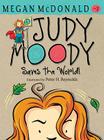
Judy Moody Saves the World, by Megan McDonald
Judy sets out to win a contest for her Band-Aid design but after garnering only an honorable mention, she turns her attention to her family’s crummy recycling habits and an endangered species.


One and Only Ivan, by Katherine Applegate

The story of Ivan, a caged gorilla living inside a circus-themed mall, is based on a true story, and the cool part is that it was heartfelt letters from kids that helped free the real Ivan. Applegate has written a poignant story in Ivan’s voice that has resonated with readers of many ages. The real Ivan was happily moved to the Atlanta Zoo (after 27 years at the mall!) and became a beloved celebrity there, living contentedly with other gorillas until he died at age 50.


Although these characters are fictional, their quests to set things right are very real — saving a small business, helping a war veteran, confronting bullies, rescuing an endangered species, and fighting for freedom. I hope that young readers (and old ones too) are inspired to get out there and change the world!

Talk about this and other issues on the weekly Twitter chat about middle grade fiction and nonfiction — #MGlitchat. This takes place every Thursday night at 9 p.m. EST.

Michele Weber Hurwitz, the author of Calli Be Gold (Wendy Lamb Books/Random House 2011), has way too many inspirational quotes taped up over her desk. Visit her at www.micheleweberhurwitz.com.