Posts Tagged middle-grade fiction

Interview with Gayle Rosengren–and a Giveaway

Fiona & Me

Gayle Rosengren (and Fiona)

About Gayle: Gayle Rosengren grew up in Chicago and majored in creative writing at Knox College.  She never outgrew her passion for children’s books, and she worked in the children’s and young adult services departments of  her local library for several years, enthusiastically sharing her love of books with young people.  After moving to Madison, Wisconsin, she worked first in the reference library and later as a copyeditor at American Girl.  She also published short stories in Cricket, Ladybug, Jack and Jill and Children’s Digest. Now Gayle writes full-time in her home outside of Madison, where she lives with her husband Don and their slightly neurotic rescue dog, Fiona. She is living her dream, she says, writing books she hopes will make the same difference in children’s lives as her favorite books made in hers.   What the Moon Said is her first novel.

WhatTheMoonSaid_presales


From Indiebound: Thanks to her superstitious mother, Esther knows some tricks for avoiding bad luck: toss salt over your left shoulder, never button your shirt crooked, and avoid black cats. But even luck can’t keep her family safe from the Great Depression. When Pa loses his job, Esther’s family leaves their comfy Chicago life behind for a farm in Wisconsin.

Living on a farm comes with lots of hard work, but that means there are plenty of opportunities for Esther to show her mother how helpful she can be. She loves all of the farm animals (except the mean geese) and even better makes a fast friend in lively Bethany. But then Ma sees a sign that Esther just knows is wrong. If believing a superstition makes you miserable, how can that be good luck?  Debut author Gayle Rosengren brings the past to life in this extraordinary, hopeful story.

What the Moon Said is a Junior Library Guild Selection.

Here is what the reviewers had to say:

“Rosengren, in her first novel, offers an intimate account of a family’s adjustment to country life and the hardships of the Great Depression. It’s easy to root for Esther, who makes the most of each day, wants little, and gives much.”  Publishers Weekly

“A coming-of-age tale gets to the heart of family dynamics in the face of drastic life changes in the earliest days of the Depression.”   Booklist

“…the story triumphs in its small vignettes…”  School Library Journal

“… Sensitive and tender.”     Kirkus

What kind of research did you do about depression-era Chicago and Wisconsin? What was the hardest part?  

I had heard a lot of stories about my mother’s  life on the farm while I was growing up, but it was all in very broad strokes. I needed to fill in lots of details, about life on a farm and especially about farm and city life during the Great Depression.  I first reached out to my mother and she was able to provide a few really nice details, but for the most part her memories were cloudy and unreliable.  So I moved on to books for a general sense of the times, and then I went to my computer to research more nitty-gritty details online.  The hardest part was not taking anything for granted. For example, I originally planned to have the two teachers at Esther’s school distribute candy canes on the last day of school before Christmas.  I suddenly wondered if they would have been wrapped in cellophane at the time, or if perhaps the teachers would have wrapped them in waxed paper. Asking my mother led to a vague, “They must have been…it wouldn’t have been sanitary if they weren’t.”  Unconvinced, I went to my laptop to research candy canes only to discover they weren’t even available to the public until the 1950’s!  Who knew?  So a quick change from candy canes to gingerbread men was immediately made to the manuscript.  I was incredibly relieved I’d caught the error before it made it into print.  All my careful research was nearly undermined by a candy cane!  But this taught me a lesson about research that I won’t soon forget:  Never assume!

Esther’s mother seems to have a superstition for every possible situation. Do you have any superstitions of your own? 

My grandmother lived with us from the time I was eight years old, so she instilled in me the same superstitions that “Ma” drummed into Esther.   Even as a child I had my doubts about the connections between my actions and good or bad luck, but there was no getting around the required actions:  you spill salt, you toss it over your shoulder; you never tell a bad dream before breakfast or –eek!–it will come true; you never put a hat on a bed or someone is going to die(!); and, of course, you never EVER bring an open umbrella inside the house.  There were lots more, but you get the idea.  To this day, I won’t bring an umbrella inside the house until it’s closed, even if I get wet in the process of closing it outside.  It’s silly, and intellectually I know this but even though I don’t really believe in them, I “honor” them rather than tempting fate.  (Which I guess sort of undoes my denial of belief!)  In terms of my own superstitions, I do have a few.  The most significant one is that I always wear my mother’s ring when I do an event about What the Moon Said.  Although my mom knew I had written a book inspired by her childhood and had even read an early draft, she passed away before it was accepted for publication. Wearing her ring makes me feel as if she’s with me, seeing how well her story is being received and how many readers have fallen in love with the character of Esther.  She’d be so happy to know that.

If there was one single thing that you wanted readers to get from What the Moon Said, what would it be?

That you should follow your heart–trust it to guide you when you must make difficult decisions, as Esther did in the book.

Why do you write middle-grade?

I write middle grade because I think it’s the most fertile ground for planting and nurturing a love of books.  So much is new to middle grade readers.  They’re wide open to all kinds of stories–fiction, non-fiction, biographies, fairy tales, historical fiction, contemporary, mysteries, suspense, silliness.  This time in their lives is when the vast majority of them will discover the joy and excitement of entering the world of a book and be started down the path to being life-long readers.  I love being a part of that very important adventure and discovery.

What advice do you have for someone who wants to write middle-grade fiction?

As with writing for any genre, but especially writing for children and young adults, the first step is always to read, read, read what has been published in recent years.  Especially read the award winners and the books on recommended reading lists at libraries.  The children’s publishing market is evolving nearly as quickly as everything else. Read to get a sense of what is out there already and to get some sense of the terrain.  Then forget about what you read and write your own story–not with the thought of making a fortune or a getting a movie deal.  Just with the hope that it will resonate with young readers.  Write from your heart with no other goal than to touch theirs.

Gayle is giving away a signed copy of What the Moon Said. Enter here: a Rafflecopter giveaway

Jacqueline Houtman is the author of The Reinvention of Edison Thomas. She is currently working on a biography of Bayard Rustin for young readers.

Indie Spotlight: Birchbark Books , Minneapolis MN

birchbark logoImagine a bookstore founded and owned by a world-renowned poet and author for adults and children. Such a unique store exists. It’s Birchbark Books in Minneapolis, created fourteen years ago by Louise Erdrich as part of her passion to ensure that true stories of the native people are told and known, and their laguages not forgotten. Birchbark Books is a teaching store, infused with a generous and welcoming spirit.  We’re talking today with store manager Susan White, about whom the website says. “If you are lucky enough to visit when Susan White is there, you will feel mysteriously better all day.”birchbark storefront

MUF:  Susan, who comes to Birchbark Books, in person and online? What experiences do you strive to provide for native readers? For non-native readers?
Susan: Ours is a neighborhood store, only 800 square ft., but people visit from all over the world, especially from France, Germany, and Great Britain, and from all over North America.  Last week we had visitors from New Zealand. People make pilgrimages!  Our online catalog serves customer in th U.S. and Canada. What makes us so unique is that we serve many communities.  Our mission is to provide accurate and truthful books about native people of the Midwest and all over the country, but we are also a carefully curated full-range bookstore for children and adults.Birchbark Interior

MUF: Your catalog and staff recommendations include so many interesting titles that we have seen nowhere else, and especially intriguing books written for, or appropriate for, children.  As middle-grade authors, we would love to know some of the titles, you particularly recommend to boys and girls ages eight to twelve?birchbark house
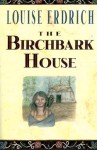
Susan: All our children’s books, whether native or not, are chosen for truth and beauty.   Recommendations?  First of all would be Louise Erdrich’s award-winning Birchbark House Series (The Birchbark House, The Game of Silence, The Porcupine Year).  Louise grew up on Laura Ingalls Wilder’s Little House on the Prairie series and loved it, but she  knew Laura’s mother was wrong when she said “there is nothing here.” Louise set the Birchbark House novels in the same place to show how much was there when seen from the eyes of the native Ojibwe.  How I Became a Ghost is by Tim Tingle , who sets his series in the 1835 Trail of Tears and writes from the character of a boy who didn’t survive it.  Moose Tracks and Wolf Shadows by Mary Cassanova are especially great for reluctant readers.  I would also recommend Summer of the Wolves, by Polly Carlson-Voiles and a native-title picture book, Black Elk’s Vision, A Lakota Story, by S.D. Nelson.Birchbark How I Became a GhostBirchbark Black ElkBirchbark-- summer of the wolves

Birchbark moose tracksMUF: We’re told that one of the most wonderful things one can take away from a visit to Birchbark Books—guaranteed forgiveness— is absolutely free.  Please tell our readers about the forgiveness booth and other features of your shop—reading spaces, native arts— that create its special atmosphere.
Susan: The forgiveness booth is meant to replace the confessional booth.  Everyone is forgiven and you don’t have to confess anything. You can get a glimpse of it in Bill Moyers’ interview of Louise : http://www.pbs.org/moyers/journal/04092010/watch2.html. 

Despite our small size, we carry not only books but native arts, cards, and jewelry in the store, which we buy directly from the artists.  There is a loft where kids can go to read, and the younger ones can hang out in the Hobbit Hole below. 

The Forgiveness Booth

The Forgiveness Booth

Dharma

Dharma’s favorites: DOG SONGS by Mary Oliver and E.B. WHITE ON DOGS

MUF: Everyone who works at Birchbark Books seems to have a dog helping them peruse the books.  Do these four-footed aides spend their days in the shop, or do they mostly work from home?
Susan: We usually have a dog in the store.  Most often it’s my own dog Dharma.  She’s the Queen Bee and has good bookstore manners.

MUF: Do your native language materials include some introductory books for the curious beginner?
Susan: We’re part of the native language revitalization movement, especially of the Dakota, Ojibwe and Lakota languages.  We carry language materials for adults and children, including several children’s books with CDs.  Some of these materials are hard to find, and we have a large and varied selection.  Louise and her sister Heid have formed Wiigwaas (Birchbark) Press that publishes books in Ojibwe only.  So far they have three books of animal stories. We also have many bilingual books.

MUF:Do you have any  events at the store that would be of special interest to middle-graders?  Anything coming up this spring?
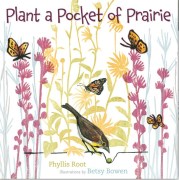
Susan: Of course we don’t have a lot of space for events, but we have had author signings with many young adult and children’s authors, including Phyllis Root.  This spring we’re planning to do feature her new book, Plant a Pocket of Prairie, illustrated by Betsy Bowen.  It’s coming out in May.screenshot_1266

MUF: If a family from out of town made a day visit to Birchbark Books, would there be a family-friendly place nearby where they could get a snack or a meal afterward?  And if they could stay a little longer, are there some other unique activities or places of interest nearby that they shouldn’t miss?Birchbark crafts
Susan:  Right next door is the Kenwood Restaurant, and at the end of the block is Bockley Gallery (www.bockleygallery.com)with works by contemporary native artists.  We’re only two blocks from Lake of the Isles where there are trails for hiking. And of course there are many museums and attractions throughout Minneapolis.

MUF: Thank you so much, Susan, for sharing this wonderful store and its passion with us.  Readers, if you have visited Birchbark Books or are intrigued and think you would like to, please leave a comment.

Sue Cowing is the author of the puppet-and-boy novel You Will Call Me Drog, Carolrhoda 2011, Usborne UK 2012


Crystal Chan Interview and Giveaway


Crystal headshot, color

About Crystal:

Crystal Chan grew up as a mixed-race kid in the middle of the Wisconsin cornfields and has been trying to find her place in the world ever since. Over time, she found that her heart lies in public speaking, performing, and ultimately, writing. She has published articles in several magazines; given talks and workshops across the country; facilitated discussion groups at national conferences; and been a professional storyteller for children and adults alike. In Chicago, where Crystal now lives, you will find her biking along the city streets and talking to her pet turtle. Her debut middle-grade novel, Bird, is published by Atheneum Books for Young Readers. She is represented by Emily van Beek of Folio Literary Management. Bird has also sold in Australia, the UK, Brazil, France, Germany, the Netherlands, Turkey, and Romania. Also, Bird is out in audio book in the US, and the narrator is Amandla Stenberg, who played Rue in The Hunger Games.

Bird cover

About Bird (From IndieBound):

Jewel never knew her brother Bird, but all her life she has lived in his shadow. Her parents blame Grandpa for the tragedy of their family’s past; they say that Grandpa attracted a malevolent spirit–a duppy–into their home. Grandpa hasn’t spoken a word since. Now Jewel is twelve, and she lives in a house full of secrets and impenetrable silence.

Jewel is sure that no one will ever love her like they loved Bird, until the night that she meets a mysterious boy in a tree. Grandpa is convinced that the boy is a duppy, but Jewel knows that he is something more. And that maybe–just maybe–the time has come to break through the stagnant silence of the past.

 Bird is your debut novel. Can you tell us a little about its journey from idea to book?

I had just finished reading Keeper, by Kathi Appelt, and was sick at home from work. I had also finished my first manuscript and was fretting that I might not have another idea for another novel. Ever. I was thinking about this for hours, and finally I got so sick of myself that I said, Crystal, either you get up out of bed and write your next book, or you go to sleep because you’re sick. But you’re not going to lie in bed thinking about not writing your next book.

And then I started thinking more about Keeper, and how I loved that story; it’s about a girl who thought her mother turned into a mermaid and goes out to sea in search of her. And I thought, A girl who thinks her mother was a mermaid – that’s such a great idea – I wish I had thought of that! But what if… instead… there was a girl whose brother thought he was a bird, but then he jumped off a cliff because he thought he could fly … Then the voice of the protagonist, Jewel’s voice, started speaking and I got out of bed and wrote the first chapter.

Jamaican and Mexican cultures and beliefs play a prominent role in Bird, but seem very out of place in Iowa. What made you decide to introduce that culture clash?

There has always been a culture clash for me! (laughing) I’m half Polish, half Chinese, and grew up in a small town in Wisconsin. Navigating multiple cultures is the only thing I know. For example, my father, who is Chinese, demanded that I become a doctor, lawyer, or engineer, and my mother, who is White, said I could be anything I want, which was also echoed by the larger American population. Of course, this was confusing and hard to navigate. Books that address culture clashes are out there but hard to come by, and I wanted to write a book for kids that might be experiencing them.

Do you believe in Duppies?

Possibly! 🙂

What’s your favorite thing about middle-grade fiction (as a reader or a writer)?

The sense of story for middle-grade fiction has to be very, very strong. With adult literature, you can take your time on the page, show off your writing a little bit, and maybe twenty or fifty pages in you can start in the plot. If you give that same methodology to middle-grade kids, they’d chew you up alive. You need to have a strong story, a strong voice, and start it at the first line. I love that.

Why do you write middle-grade?

It’s the voice that came to me! My next WIP is for young adults, so we’ll see where my trajectory goes.

If there was one single thing that you wanted readers to get from Bird, what would it be?

The power of forgiveness can transform you and those around you in startling ways.

What other books do you recommend to readers who enjoyed Bird?

Bud, not Buddy, The Tiger Rising, The Underneath, A Wrinkle in Time. And don’t forget about Bridge to Terabithia!

What advice do you have for someone who wants to write middle-grade fiction?

Accept whatever emotions come up inside you – don’t push them down or ignore them, even if it’s uncomfortable. Because if you don’t allow yourself to feel anger, sadness, grief, or loss, how can you possibly write about these emotions for your characters?

And write from your heart, always. When you write, remember you’re writing from a special space inside, and don’t let anyone tell you otherwise. And practice telling stories – tell stories all the time. When you’re not telling stories, practice listening to others tell their stories. Because that’s all that writing really is: telling a story.

Crystal is giving away a copy of the UK version of Bird (complete with all those weird UK spellings). 

a Rafflecopter giveaway

Jacqueline Houtman  is the author of The Reinvention of Edison Thomas.