
 Today, authors Dylan Thuras and Jen Swanson stop by to chat with Melissa Roske about their forthcoming collaboration, The Atlas Obscura Explorer’s Guide to Inventing the World (Workman Publishing, August 12, 2025), the highly anticipated follow-up to the New York Times bestselling Atlas Obscura Explorer’s Guide for the World’s Most Adventurous Kid.
About the Authors
Dylan Thuras is a New York Times bestselling author and cofounder and creative director of Atlas Obscura, a travel database that gets over 8 million visits a month. Dylan’s Atlas Obscura podcast is the #1 travel podcast in the United States.
Jennifer Swanson is a long-time contributor to the Mixed-Up Files blog and an award-winning author of nonfiction STEM books for children. She’s also a science communicator, podcaster, and lifelong explorer.
Interview with Dylan Thuras and Jen Swanson


MR: Dylan and Jen: Welcome to the Mixed-Up Files! It’s a pleasure to meet you, Dylan—and, of course, to host you on the blog, Jen.
As stated in the into, Atlas Obscura Explorer’s Guide to Inventing the World is a follow-up to the wildly successful Atlas Obscura Explorer’s Guide for the World’s Most Adventurous Kid. What was the inspiration behind the original book, Dylan? I’m guessing you were a curious, STEM-loving kid?
Dylan: I was! Growing up I loved books like The Way Things Work by David Macaulay or the cutaway and exploded diagram series by Stephen Biesty. These books still hold up 30 years later! I still find them fascinating to look at, as do my kids. I also loved a BBC series called Connections, by James L. Burke that was a kind of mad trip through the history of science. This book is a nod to all of those influences, and for any kid (or adult) who wants to understand, how the modern world came to be.
In a similar vein, Jen: You have written and lectured widely on all things STEM. What sparked your interest in science, technology, engineering, and math? Also, what motivates you to share your passion for STEM with middle-grade readers?
Jen: I was a very curious kid! As many people have heard me say before, I’ve loved science my whole life. I started a science club in my garage when I was seven years old. I am interested in everything and want to understand how things work, interact, and fit together. I think pretty much all kinds of technology are just cool. I hope to get kids (of all ages) to understand that science and STEM are all around them, all the time.
Picking and Choosing

MR: Atlas Obscura Explorer’s Guide to Inventing the World offers a thoughtfully curated collection of scientific inventions from the printing press and gun powder to video games and artificial intelligence. With so many exciting inventions to choose from, how did you narrow it down to just 50? What did the selection process look like?
Dylan: Honestly you could do this book a thousand times, ha. (Jen you up for some sequels?) There are so many fun and surprising connections, it was painful not to be able to include them all. (The first pressure cooker was a precursor to the steam engine! Without ceramics you can’t make spark plugs!) Some of the main concerns in laying out the outline of connections was that it not get too obscure or technical and that the inventions be broad enough that people were familiar with them. It was also important that there were opportunities to reset the clock, so when we get to satellites we can go to maps, which effectively lets us jump back a few thousand years. Otherwise we get to the end too quickly! With all that in mind, this was the path that made the most sense and didn’t have any dead ends.
Jen: Ha! A sequel, DEFINITELY. Dylan is so right. There are tons of inventions that didn’t make it into the book. The brilliance of this book is how it is structured to take you down the pathway of some inventions but then backtracks to a different invention“path.” The vast majority of the inventions came from Dylan’s brain. He has a fabulous way of understanding the connections these inventions make with each other.
Making Connections
MR: Of all the inventions featured in the book, which fascinated you the most and why? On the flip side, what in your opinion is the most overrated invention and/or modern convenience you’ve come across?
Dylan: One connection that Jen clued me into was the link between particle physics and neuroscience. PET scans, MRI’s all come out of the hard physics fields, very often out of universities with particle accelerator labs. Even today the radio tracers we use to help diagnose diseases are made in a particle accelerator. I loved learning about that.
Most overrated invention… well, I really want this not to be the case, but fusion has been around the corner for a very long time. I really want it to work out but it seems like one of those things that might elude us for much longer to come. It’s an awfully hard problem!
Jen: That’s a tough question. At the moment, I am totally blown away by particle physics and space telescopes, so for me the invention path that humans took to get to both of these inventions is just amazing.
Most overrated invention in the book? Maybe the Hellbrunn Mechanical Theatre. The Archbishop of Salzburg commissioned an amazing clockwork display and also set up pranks with water to inconvenience his guests and make himself laugh. While the technology created was used for a frivolous purpose, it did allow humans to understand more about how objects can be automated, which eventually contributed to the building of robots farther down the invention path.
That’s Using Your Brain!

MR: There are SO many fascinating tidbits in your book, including the weight of the Da Vinci robot (1200 pounds), the size of the sundial at Jantar Mantah (over 88 feet), and the speed of the space shuttle Endeavour (17,400 mph or five times the speed of a bullet). I was particularly interested to learn about the Cushing Brain Center, in New Haven, Connecticut, where 2,200 human brains were donated to Dr. Harvey Cushing for his research. Can a person just walk in and check out the brains?
Dylan: You most certainly can! It’s not even the only brain collection in the U.S. Cornell has one, too! There really are brains in jars, but both collections and especially Dr. Cushing have been important to understanding the physical structures of the brain. We don’t get into this in the book, but that collection was mostly forgotten about and degrading in a hard to access part of the Yale basement. For years it was something the med students would dare each other to sneak into and look at. It’s much nicer now.
Jen: I wish! Learning about brains is soooo cool. I did a book about ten years ago called Brain Games by National Geographic Kids. That book is still around and going strong. Neurologists often give it to their adult patients to learn about how their brain works. I would love to visit the Cushing Brain Center one day.
MR: Also: As a person who’s afraid of heights, you couldn’t pay me enough to walk across the Zhangjiajie Glass Bridge, in Zhangjiajie, China (it’s 1400 feet long, suspended above a 1300-foot chasm). Have either of you crossed the bridge or want to?
Dylan: I haven’t been to that particular bridge but have crossed some other glass bridges. I dunno, I kind of like the thrill 🙂 I did get a chance to cross the Keshwa Chaca, or the last Incan bridge (and earliest suspension bridge we know of), which is a 100-foot-long bridge woven from grass that only lasts a year, at which point it is rewoven. That one is in the first book!
Jen: While I appreciate the amazing engineering and technology that it took to create this bridge, I, too, am afraid of heights, Melissa. There is NO way I would walk across it, or even put a toe on it. However, it might be fun to just see it in person. You know, safely, from one side.
Let’s Work Together
MR: Collaborating on a book of this magnitude must have been incredibly challenging, particularly with so many moving parts in play (see what I did there? ☺). Can you tell MUF readers how the two of you worked together to pull it off so beautifully? What was the research process like? Also, was travel involved?
Dylan: Not a ton of travel, sadly. I have been to some of the places, and Jen has been to a few, but mostly it was all done via email and Zoom. I had gotten the outline mostly together when Jen came on, and Jen was very game to try this very challenging exercise. It’s tough to explain internal combustion engines, much less quantum computing, in 150 words but we did our dang best. I am so grateful to have been able to make this book with Jen as my co-creator!
Jen: Oh, I wish there had been more travel! Now THAT would be an amazing task—to visit all of the places in the book. But as Dylan said, we did this mostly over Zoom. He had already created a fabulous outline and I helped with the research of filling in the spaces. We worked really well together and had a lot of fun. I’m honored to have been chosen to collaborate with Dylan on this. It’s a wonderful book and I hope one that will inspire many kids (again, of ALL ages).
Traveling the Globe

MR: Speaking of travel, Dylan, you are the personification of the word “globetrotter,” having traveled to more than 30 countries all over the world. When did you first get bitten by the travel bug? Also, of all the places you’ve visited, which ones stood out the most and why?
Dylan: Honestly, as a kid growing up in Minnesota it was all road trips around the Midwest. A trip up to Canada was very exotic! But those road trips made me fall in love with all the amazing and unusual roadside attractions. As I got older, I started saving my money and taking my own trips.
I did a big one all across Europe with a friend when I was 17 and then moved to Budapest when I was in my mid-twenties to teach English. Each trip made me realize how much more there was to see! It’s impossible to choose one favorite place, but I will say that on one of those road trips as a kid, we stopped by the House on the Rock, in Spring Green, Wisconsin. I was about 12 years old, and was the weirdest, most amazing place I had ever seen. 🙂
AI: Help or Hindrance?

MR: Changing gears, in the introduction to the book, you state that technology is “capable of harm.” Can you speak more to this? Similarly, what about A1? Should people be worried?
Dylan: Without question, technology is capable of harm. This has always been the case. Often technology is dual use, which is to say a spear can get you dinner or kill your neighbor. It has also been the primary driving force bringing people into better living standards, driving down childhood mortality, reducing disease, spreading information, and making room for creative pursuit. I do think if you look at the industrial revolution you see both the start of rising prosperity and a lot of environmental and human degradation as well. People have to fight and demand change to mitigate the ill effects.
I think we are somewhere similar in our own computing and information revolution. I think we like aspects of it and very rightly hate other aspects. I think AI, like the spear, is very much dual use. Possibly incredibly useful, especially in materials and biology research, and also potentially dangerous. But I am also a believer that these things are bit overhyped and diffuse a bit slower than people expect. It will change the world, but I don’t think things are going to change overnight. We are still undergoing the transition from a primary combustion world to a primary electrical world, and that will still be happening for our entire lifetimes. I also think the more you are worried about technology, the more having a deep understating of it helps you articulate what a positive vision of the future might look like!
Jen: Excellent answer, Dylan. I look at it in a similar but slightly different way. To me, technology is all about perspective. If you are the first to, say, create a satellite that can move anywhere in space, on the one hand that’s awesome! But the question is, how will you use that technology? Will it be for good in that you can move dead satellites to a “graveyard“ to get rid of the debris? That is a positive. Or will you move your satellite next to another country’s satellite so that you can push that one out of its orbit or destroy it. That perspective is not as positive. Technology is a dual-edged sword and to me, it’s the way it’s used that makes the difference. But as Dylan said, we could debate this for a long time.
MR: What are you guys working on now? Do you have another Atlas Obscura project on the horizon?
Dylan: Atlas Obscura has an adult book coming out in summer of 2026 called America Obscura, which is a journey through the places, people, and incredible road trips that make this country both beautiful, strange, and at times heartbreaking. Depending on how Inventing the World does, I am sure Jen and I would love to make a sequel, and Jen always has tons of exciting stuff in the works!
Jen: I’m totally game for a sequel, Dylan! My next book, Three Weeks in the Rainforest: A Rapid Inventory in the Amazon comes out this October. It follows the women-led team of scientists from the Field Museum in Chicago who work with Indigenous Peoples, local scientists, and non- governmental organizations to conduct a physical and social survey of certain areas of the Amazon rainforest. Readers get a firsthand account of real-life fieldwork in action and follow the scientists on their goal is to protect the Amazon rainforest from destruction.
Getting Inventive
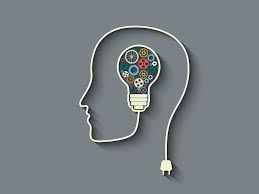
MR: One last question: If you were to invent something in the future, what would it be?
Dylan: There are so many things we know how to do but fail to make happen for disappointing political- and resource-allocation reasons. So, I would invent better ways to get people the vitamins they are deficient in! A huge number of people remain deficient in iodine, for instance, so getting iodine into salt worldwide has been a huge effort. Getting people malaria nets! Stopping the advance of the screwworm fly! Vaccine access! All solved problems, except in actual application. It’s one thing to discover something and another to apply the good effects on the widest scale possible.
Jen: Great suggestions, Dylan; I agree with them all. This is a tough one because as I see it, we will keep inventing new and amazing things because we are innovative and curious to solve problems. But what we really need is perspective to make sure inventions are used in the best and most helpful ways. So, I would ask that we just keep creating more STEM-focused people that are curious, inventive, and also are great critical thinkers and problem solvers so that they can really think about how their invention can help people positively.
Lightning Round!

MR: And finally, no MUF interview is complete without a lightning round, so…
Preferred writing snack?
Dylan: Tortilla chips!
Jen: A cup of tea and an oatmeal raisin cookie
Coffee or tea?
Dylan: COFFEEEEEE
Jen: TEA!!!
Best invention of all time?
Dylan: Electricity generation. Insane.
Jen: Fire. Without it, we wouldn’t have survived to this point.
Robot takeover: Yea or nay?
Dylan: Robots everywhere, yea. Take over as in terminator? Nay.
Jen: Robots are COOL! But no takeover.
Superpower?
Dylan: General enthusiasm?
Jen: Flying! (which is funny, because I don’t like heights)
Favorite place on earth?
Dylan: In the heat of summer its my local swimming hole!
Jen: Edinburgh, Scotland. The view from the castle is one of the most beautiful sights in the world.
If you were stranded on a desert island with only three things, what would they be?
Dylan: A sailboat, a satellite phone, and a year’s supply of MRE (Meals Ready to Eat) haha. Be off that island in no time!
Jen: MRE’s? Ugh. I’ve had them. I’ll pass. But yes, a way to get off: a boat, a satellite phone, and a telescope. Seeing the night sky from an island would be incredible!
MR: Thank you for chatting with me today, Dylan and Jen. And congrats again on the forthcoming publication of Atlas Obscura Explorer’s Guide to Inventing the World!
 Melissa Roske is a writer of middle-grade fiction. Before spending her days with imaginary people, she interviewed real ones as a journalist in Europe. In London she landed a job as an advice columnist for Just Seventeen magazine. Upon returning to her native New York, Melissa contributed to several books and magazines, selected jokes for Reader’s Digest (just the funny ones), and received certification as a life coach. In addition to her debut novel Kat Greene Comes Clean (Charlesbridge), Melissa’s short story “Grandma Merle’s Last Wish” appears in the Jewish middle-grade anthology, Coming of Age: 13 B’Nai Mitzvah Stories (Albert Whitman). Learn more about Melissa on her Website and follow her on Facebook and Instagram.


 Book Summary:


