Posts Tagged librarians

Editor / Agent Spotlight — Meet Courtney Stevenson, Editor, Quill Tree Books/HarperCollins

Editor Courtney Stevenson in black and white polkadot dress

We are thrilled to welcome Courtney Stevenson to the Editor/Agent Spotlight on The Mixed-up Files of Middle Grade Authors today.

Editor Courtney Stevenson in black and white polkadot dress Courtney is an Editor with Quill Tree Books, an imprint of HarperCollins.

She has been with HarperCollins since 2016, when she joined as an assistant to Rosemay Brosnan and dove right in working with Rosmary’s incredible list of authors, such as National Book Award-winning Elizabeth Acevedo (The Poet X), Newberry honor author Gail Carson Levine (Ogre Enchanted), and American Indian Youth Literature Award-winning author Christine Day (I Can Make This Promise).

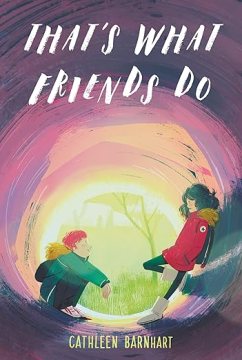
In building her own list,  Courtney is focused mainly on MG and YA, including That’s What Friends Do by Cathleen Barnhart,Freinds in a tunnel with sunshine at the end
Dinner at the Brake Fast by Renee Beauregard Lute, and Money Out  Loud by Berna Anat. She has “a particular interest in clever humor, family dynamics, historical stories and settings not seen enough”, as well as “the occasional pop nonfiction, and writing that pulls me along to the next page.” Check out her wish list and submission guidelines here.

Speaking of historical stories, Pura Belpré Medalist (Efrén Divided) Ernesto Cisneros’ Queso, Just in Time, will release with Quill Tree on March 10, 2026.

Welcome to the blog, Courtney. We’re excited to learn about your editorial journey. Congratulations on your work with Rosemary Brosnan and cheers to your own projects! How did you initially discover these authors?

CS: Thanks! It was such a dream to work with Rosemary on her amazing list of titles—she really is the GOAT, and has been an invaluable mentor for me. (Also, I wish I could go back in time and tell little Courtney that she’d one day be regularly emailing the author of Ella Enchanted!)

My own list has grown mostly through submissions from agents—they are the real discoverers, and I’m so, so glad to have ended up on sub lists for these projects. It’s the most magical feeling to read the first few pages of a submission and feel like I have fireworks going off in my brain, or a big cheer of I want this one!

“Chock-full of hooks…”

We notice you are drawn to a strong hook. Can you give us an example from one of your Quill Tree acquisitions?

Cover for Dinner at the Brake Fastwith three kids hanging around a truckCS: I do love a strong hook, a detail or premise that will make the reader sit up straight and pay attention. Best when paired with the  feeling that they’ve found a friend for the next ~300 pages!

Dinner at the Brake Fast is chock-full of hooks: the setting of a family-run truck-stop diner (and all the good food descriptions), the promise of a ROAD TRIP HEIST to SEEK JUSTICE, and the mismatched group of characters that comes to support each other. It’s a fun adventure story with a heartwarming center, plus a perfect middle grade voice that snags you from the moment you meet Tacoma. Each of those details serves as a friend who invites you to come along for the ride.

Speaking of Hooks

As for your latest projects, we’re hoping you can share a little about the NEW mg novel from Pura Belpré author Ernesto Cisneros, Queso, Just in Time, coming March 2026.

CS: I’m so excited for folks to read this book! I’ve been a fan of Ernesto’s books since Efrén Divided, and I was thrilled to start working with him one-on-one when I started to build my own list. As a lover of both historical fiction and family stories, I was hooked on this novel from the very start.

Protagonist Queso wishes that he could see his father again after he passes—and ends up back in 1985 with twelve-year-old Pancho, the boy who will grow up to be his dad. Between navigating an analog world and helping Pancho build up his confidence, Queso is in for quite a time. This novel has Ernesto’s signature blend of humor and heart, and highlights themes that are just as topical in 2025 as in 1985.

From Agent to Editor

We understand that your kidlit career path started on the agency side. How did you come to switch to the editorial side?

CS: I had my heart set on being a children’s book editor from the time I first started thinking about a career path—but after I graduated college, I was ready to work any publishing job that would have me!

I feel so lucky to have landed at Pippin Properties as my first publishing job. Sitting at that assistant desk gave me a holistic view of the industry—everything from subrights, audio, contracts, and art—along with the opportunity to work closely with authors and creators, form relationships, and develop books from the earliest stages.

After a few years of learning on that side of the business, I still felt that editorial would be the best fit for me. The timing was perfect since Rosemary was looking for an assistant right when it was time for me to make a move. I gained so much experience in both of those early roles.

Are there any other upcoming titles/current projects you are excited about?

CS: So many books I wish I could share with readers right now!

Jess Hannigan’s next picture book, The Cow in the Dark at Night, makes me laugh each time I read it.

I’m currently in edits on The Girl in Green, a new horror YA novel by Laura Creedle slated for Fall 2026 that is the perfect amount of terrifying.

I’ve ended up with more illustrated nonfiction projects on my list than I had expected—with topics ranging from aliens and linguistics to spies and icons—and I can’t wait to see each one hit shelves. And of course, I’m very excited to be working on a new novel from superhero Ernesto Cisneros! 😊

Cover of Ernesto Cisneros' new book, Queso, Just in Time with a beautiful tree house.

What a gorgeous cover!

BONUS Editor Lightning Round:

  1. Query/Pitch pet peeve __Word count over 100k_______
  2. Please don’t send me ___High fantasy
  3. Title on your TBR pile __Pasta Girls by Taylor Tracy___
  4. PB you could probably recite by heart ___Many Moons by James Thurber (I actually have nearly recited this book to many unsuspecting friends!)____________
  5. Favorite line from a mg or YA novel__Two that come to mind: The gut-punch from Code Name Verity of “Kiss me, Hardy!” (sob) and the unforgettable first line of Feed: “We went to the moon to have fun, but the moon turned out to completely suck.” One more for good measure: “Corpus bones! I utterly loathe my life” from Catherine, Called Birdy.

Thank you, Courtney, for joining us on The Mixed-up Files of Middle Grade Authors today!

While she is no longer on social media (She misses Book Twitter like we do!)

you can learn more about her at the wish list link above.

STEM Tuesday– STEM in Sports– Writing Tips and Resources

Get Your Gestalt Going!

Perception psychology is not one of the first things that pops into the mind when thinking about STEM. Perception is one of those things too often taken for granted. It runs in the background 24/7/365, helping the brain make sense of the world.

Gestalt psychology emerged in the early 1900s as a discipline devoted to explaining how the brain perceives experiences by establishing a structure as a whole instead of by its parts approach through automatic grouping and associations of the individual parts. Gestalt psychology, as its own discipline, disappeared after World War II, as most of the leaders of the field were German psychologists who fled Nazi Germany and had to reestablish a new career in new countries.

The principles and ideas, however, did not disappear but seeped into other disciplines, especially those involved with visual processing and visual design. Gestalt principles are key elements in graphic design and visual marketing.

Gestalt & Sports

Around 2004, when I was still coaching high school football and tasked with our training and conditioning program and methodologies, I ran across a 1999 New Yorker article by Malcolm Gladwell called, The Physical Genius.

After reading about NHL hockey great Wayne Gretzky, and his unique ability to “see” scoring opportunities on the ice in real time, it got me thinking about the possibilities and the potential of developing this type of gestaltian perception in high school athletes. Small tweaks is our existing drills and the creation of new drills with the mindset of developing the pattern recognition of our players in football situations.

See the patterns, drill the response. Repeat the patterns, repeat the response. Again and again until the response is second nature.

Chunking

Psychologists use the term “chunking” to describe how we store familiar sequences, like phone numbers and passwords, in long-term memory as a single unit, or chunk. These particular sequences are stored as a unit instead of as individual parts. Think about chess masters, top-shelf neurosurgeons, and great athletes like Wayne Gretzky, Michael Jordan, and Tony Gwynn.

These masters of their craft developed their skills through hours and hours of practice combined with visualization of their actions. They used Gestalt principles in both practice and in visualization to be prepared for any situation that might arise. That’s the physical genius.

Gestalt principles in writing? Is it even possible? Beyond the gestalt-leaning recognition of concepts formed from letters, words, sentences, paragraphs, etc., what can gestalt principles do as part of a writer’s toolbox?

Well, a breakdown of the basic Gestalt Laws might help the writer create stories where the whole shines because of the individual parts. We can also be aware of how perception works, so the good story ideas don’t get lost in the individual parts, and we don’t lose our readers.

Gestalt Laws

  • Figure-Ground Perception – How the brain visually distinguishes an object from its background.
  • Proximity – When objects are placed close to each other, they are perceived as a group.
  • Common Fate – Objects moving in the same direction are looked at as a group.
  • Similarity – When objects look similar to one another, they are perceived as a group or pattern.
  • Continuity –The objects are arranged such that the eye moves from one object to another.
  • Closure Principle – The eye fills in when an object is not completely enclosed or is incomplete.
  • Good Gestalt – The mind looks for order and simplicity in groups of objects or images.
  • Past Experience – Based on what was seen previously or repeated, the perception of the whole is saved. Chunking.

 As writers, we can train ourselves through our practice and by applying the Gestalt Laws to create satisfying stories, but that is not the only thing we can do. Reading can help develop these skills too. Look at reading as practice, like running through cones at football practice, as a way to hone our ability to see the patterns in the parts.

In writing, just as with football drills, see the patterns, drill the response. Repeat the patterns, repeat the response. Again and again until the response is second nature.

Incorporating a Gestalt mindset may not get one into the NHL Hall of Fame or become the greatest middle-grade author on Planet Earth, but it can help middle-grade authors create better and more satisfying stories.

Mike Hays has worked hard from a young age to be a well-rounded individual. A well-rounded, equal-opportunity sports enthusiast, that is. If they keep a score, he’ll either watch it, play it, or coach it. A molecular microbiologist by day, middle-grade author, sports coach, and general good citizen by night, he blogs about sports/life/training-related topics at www.coachhays.com and writer stuff at www.mikehaysbooks.com. Two of his science essays, The Science of Jurassic Park and Zombie Microbiology 101,  are included in the Putting the Science in Fiction collection from Writer’s Digest Books. He can be found roaming Bluesky under the guise of @mikehays64.bsky.social and @MikeHays64 on Instagram.


The O.O.L.F Files

This month on the Out Of Left Field (O.O.L.F.) Files, we take a deep dive into visual perception through Gestalt Principles, and a highlight reel from The Great One himself.  

What is Gestalt Psychology? Theory, Principles, & Examples via Simple Psychology

The Physical Genius. Malcolm Gladwell, New Yorker, 1999

7 Gestalt Principles (Definition + Examples) via Practical Psychology

The Basics of Gestalt Theory – Lesson 1 – Graphic Design Theory

Top 10 Wayne Gretzky Moments


STEM Tuesday– STEM in Sports– In the Classroom

This month’s topic is near and dear to my heart. My father is a Physical Education teacher and Coach. Probably due to his influence, I’ve played my fair share of sports (one of my favorites being volleyball). I am also a scientist/engineer, and some of my books connect STEM with various sports. So I was excited to delve into the books for this month. Those I read are:

Learning STEM from Baseball bookLearning STEM from Baseball: How Does a Curveball Curve? And Other Amazing Answers for Kids!
by Marne Ventura
This book explores a variety of STEM topics related to the sport of baseball. It covers a broad range of topics including how human biology is intertwined with pitching, how technology has improved baseball (especially safety) over the years, and how math is used to help baseball players and teams.

STEM in Football bookStem in Football
by Brett S. Martin
Similar to the previous book on baseball, Stem in Football explores STEM topics in relation to the sport of football.

Swish bookSwish: The Science Behind Basketball’s Most Dynamic Plays
by Allan Morey
Rather than taking a wider view of how STEM relates to a sport, this book looks at the science behind famous plays in basketball history.


Here are some ideas of activities you can do with these books. As always, the possibilities are endless, so I picked just a few.

Explore More Science

Explore some of the science that comes into play in sports.

There’s a great collection of experiments from Science Buddies for this, some of which specifically target sports: https://www.sciencebuddies.org/science-fair-projects/science-projects/experiment-with-friction-and-drag/middle-school

There are some great simulations from University of Colorado Boulder’s PhET Here’s one that explores scientific concepts related to skateboarding. (Registered teachers may have access to additional resources.): https://phet.colorado.edu/en/simulations/energy-skate-park-basics

Explore physics activities from the American Physical Society. Here’s a page with activities related to forces and motion: https://www.aps.org/learning-center/learning-resources/physicsquest-2020.
Here’s another on potential and kinetic energy: https://www.aps.org/learning-center/learning-resources/physicsquest-2018.

Science Sparks has a nice collection of science explorations related to soccer (a.k.a. football): https://www.science-sparks.com/10-hands-on-football-stem-activities-for-kids

Have Fun with Statistics

I have really fond memories of going to the ballpark with my mom. One of the things I remember is keeping score while we watched the game. If you want to try your hand at keeping score, here are a few write-ups on how to do that.
https://www.mlb.com/official-information/basics/score
https://www.littleleague.org/university/articles/scorekeeping-101

Scoring and statistics are key to improvement for both individual athletes and teams. Here are some statistics related activities you can explore.

The Baseball Hall of Fame has a whole page of curriculum-based activities for statistics: https://baseballhall.org/education/curriculum/batter-up

WNET has a lesson plan that explores math in basketball: https://www.thirteen.org/get-the-math/uncategorized/teachersmath-in-basketball-lesson-planoverview/199

The New York Times has a Lesson Plan and simulator where students determine NFL teams’ playoff chances. https://www.nytimes.com/2021/11/01/learning/lesson-plans/run-the-numbers-exploring-the-math-behind-any-nfl-teams-playoff-chances.html

And more…

The NYT also has a bunch of activities, across many disciplines, that can be tied into the Super Bowl. https://www.nytimes.com/2020/01/27/learning/lesson-plans/teach-the-super-bowl-ideas-for-subjects-across-the-curriculum.html

You can also check out the sports science resources on my own website: http://janetsbooks.com/sports-science.

Describe a Favorite Sport Play

Everyone’s taste in sports is different. The books from this month’s list highlight different sports, although the STEM that supports them are all pretty similar.

Pick a favorite sport. Then pick a move or a play that’s common to that sport. Explain what STEM concepts are involved in the move or play that was picked. Use this month’s books as examples of how this can be done.


Janet Slingerland has written over 2 dozen books for young readers, including Sports Science and Technology in the Real World and The 12 Biggest Breakthroughs in Sports Technology. To find out more about Janet and her books, check out http://janetsbooks.com.