
Posts Tagged librarians

October New Releases

Did you happen to see recent headlines about how independent book stores aren’t just surviving, they’re actually thriving? The Week magazine summarizes findings and offers its own spin on why book stores are vital, including the fact that they “curate and recommend in a human way.” That point is crucial for middle grade readers who depend (often unknowingly) on parents, librarians, teachers, and booksellers to help them find the right book at the right time. We here at the Mixed-Up Files of Middle Grade Authors take the privilege of being able to curate and recommend quite seriously — and joyfully. And with that, we happily present you with fifteen choice middle grade books heading to book store and library shelves this month:

house arrestHouse Arrest by K.A. Holt (Oct. 6)
Probation is a strange word, something that happens to other kids, to delinquents, not to kids like Timothy. And yet that’s exactly where he is: under house arrest, checking in weekly with a probation officer and a therapist, forced to keep a journal AND keep out of trouble for an  entire year.  When he needs to take drastic measures to help his struggling family, staying out of trouble proves more difficult than Timothy ever thought it would be. Touching and funny, this is a novel in verse about a boy navigating his world with a sick brother, a grieving mother, and one tough probation officer.

the restThe Nest by Kenneth Oppel,  illustrations by Jon Klassen (Oct. 6)
For some kids summer is a sun-soaked season of fun. But for Steve, it’s just another season of worries. Worries about his sick newborn baby brother who is fighting to survive, worries about his parents who are struggling to cope, even worries about the wasp’s nest looming ominously from the eaves. So when a mysterious wasp queen invades his dreams, offering to “fix” the baby, Steve thinks his prayers have been answered. This is a haunting gothic tale for fans of Coraline, with illustrations from Caldecott Medalist Jon Klassen.

highly unusual magicA Tale of Highly Unusual Magic by Lisa Papademetriou (Oct. 6)
Kai and Leila are both finally having an adventure. For Leila, that means a globe-crossing journey to visit family in Pakistan for the summer; for Kai, it means being stuck with her crazy great-aunt in Texas while her mom looks for a job. In each of their bedrooms, they discover a copy of a blank, old book called The Exquisite Corpse. Kai writes three words on the first page and suddenly, they magically appear in Leila’s copy on the other side of the planet. Kai’s words are soon followed by line after line of the long-ago, romantic tale of Ralph T. Flabbergast and his forever-love, Edwina Pickle. As the two take turns writing, the tale unfolds, connecting both girls to each other, and to the past, in a way they never could have imagined. From the author of Confectionately Yours. 

dream on amberDream On, Amber by Emma Shevah (Oct. 6)
As a half-Japanese, half-Italian girl who thinks her name is ridiculously long, Amber Alessandra Leola Kimiko Miyamoto is not feeling molto bene (very good) about making friends at her new school. But the hardest thing about being Amber is that a part of her is missing. Her dad. He left when she was little and he isn’t coming back. Not for her first day of middle school and not for her little sister’s birthday. So Amber will have to dream up a way for the Miyamoto sisters to make it on their own..


tournament of gorlanThe Tournament at Gorlan by John A. Flanagan (Oct. 6)
The first in a prequel to the Ranger’s Apprentice series, this one features one ofour favorite Rangers, Halt.  When Halt and Crowley discover that the ambitious Morgarath has been infiltrating the Rangers in order to corrupt the Corps, the young Rangers travel north to find Prince Duncan, seeking a royal warrant to stop Morgarath before it is too late. This origin story brings readers to a time before Will was an apprentice, and lays the groundwork for the epic battles that will culminate with The Ruins of Gorlan and The Burning Bridge, Books 1 and 2 of the Ranger’s Apprentice series.


bubble wrap boyThe Bubble Wrap Boy
by Phil Earle (Oct. 13)
Charlie Han’s troubles are much bigger than he is. At school he’s branded an outsider, a loser … the tiny kid from the Chinese takeout. His only ally is Sinus Sedgely, a kid with a lower-level reputation than Charlie himself. Life at home isn’t much better. His dad is more skilled with a wok than he is with words, and his mom is suffocating the life out of Charlie, worried about his every move. But when a new passion leads Charlie to the mother of all confrontations, he finds his real mom has been hiding a massive secret. A secret that might actually lead Charlie to feeling ten feet tall. From a Kirkus review: “In the fast-growing bullying genre, Charlie’s story stands out. This isn’t a kid who will do anything to join the cool clique. This is a story about staying true to yourself and following your passion.”

big gameBig Game by Stuart Gibbs (Oct. 13)
Teddy Fitzroy returns as FunJungle’s resident zoo sleuth when a rhinoceros is at risk in this companion to Belly Up and Poached. When someone takes aim at Rhonda Rhino, FunJungle’s pregnant (and endangered) Asian greater one-horned rhinoceros, the zoo steps up security measures in order to protect this rare animal and her baby. But the extra security isn’t enough–someone is still getting too close for comfort. Teddy and company start to suspect that whoever is after Rhonda is really after her horn, which is worth a lot of money on the black market.

red shoesThe Red Shoes and Other Tales by Metaphrog  (Oct. 13)
A collection of tales in a graphic novel format that also includes The Little Match Girl. In the title story, Karen, the child of peasants, grew up with a pair of red shoes. Then, when her parents died, Karen was adopted by a rich old woman who gave Karen a new pair of red shoes that would make princesses green with envy. This newfound wealth causes Karen to forget her humble origins and grow up to become a cruel and vain adult. Then, one day, the red shoes that sparked her greed come to life and steer Karen down a path she never would have imagined in her wildest dreams.

sandriderSandRider by Angie Sage (Oct. 13)
Book Two in the TodHunter Moon trilogy, a spinoff of the popular Septimus Heap series. Taking place seven years after the events of the original Septimus Heap series, TodHunter Moon tells the story of Alice TodHunter Moon, a young PathFinder who comes to the Castle with a Magyk all her own. In this second book, Tod sets out for the Desert of the Singing Sands to retrieve the Egg of the Orm—a journey that will test not only her Magykal and PathFinding skills but her friendships, too.
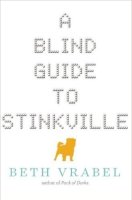
blind guide to stinkville A Blind Guide to Stinkville by Beth Vrabel (Oct. 13)
Before Stinkville, Alice didn’t think albinism—or the blindness that goes with it—was a big deal. Sure, she uses a magnifier to read books. And a cane keeps her from bruising her hips on tables. Putting on sunscreen and always wearing a hat are just part of life. But life has always been like this for Alice. Until Stinkville. Now she finds herself floundering—she can’t even get to the library on her own. But when her parents start looking into schools for the blind, Alice takes a stand. She’s going to show them—and herself—that blindness is just a part of who she is, not all that she can be. To prove it, Alice enters the Stinkville Success Stories essay contest. No one, not even her new friend Kerica, believes she can scout out her new town’s stories and write the essay by herself. The funny thing is, as Alice confronts her own blindness, everyone else seems to see her for the first time.

sliver of stardustA Sliver of Stardust by Marissa Burt (Oct. 20)
Wren Matthews thought she’d outgrown nursery rhymes a long time ago. But that was before she knew that songs of twinkling little stars and four-and-twenty blackbirds were the key to an ancient, hidden magic. Wren’s discovery catapults her into a world of buried secrets, strange dreams, and a mountain fortress under an aurora-filled sky. But just as she starts to master her unique abilities, her new world begins to crumble around her . . . and only she can save it.

The Secrets of the Pied Piper 1: The Peddler’s peddler's roadRoad by Matthew Cody (Oct. 27)
It is said that in the thirteenth century, in a village called Hamelin, a piper lured all of the children away with his magical flute, and none of them were ever seen again. Today, pink-haired Max and her little brother, Carter, are stuck in modern-day Hamelin with their father . . . until they are also led away by the Piper to a place called the Summer Isle. There they meet the original stolen children, who haven’t aged a day and who have formed their own village, vigilantly guarded from the many nightmarish beings that roam the land. No one knows why the Piper stole them, but Max and Carter’s appearance may be the key to returning the lost children of Hamelin and to going home themselves. But to discover the secrets of the Piper, Max and Carter will have to set out on a mysterious quest down the dangerous Peddler’s Road.

league of unexeptional childrenThe League of Unexceptional Children by Gitty Daneshvari (Oct. 20)
Just what is The League of Unexceptional Children? You may not have heard of the actual organization (it’s undercover) but this is a series you’ll remember. This covert network uses the nation’s most average, normal, and utterly unexceptional children as spies. Why the average kids? Why not the brainiacs? Or over achievers? Or the jocks?  It’s simple: People remember them. But not the unexceptionals. They are the forgotten ones. Until now. A humorous start to a new mystery series.

odds of getting evenThe Odds of Getting Even by Sheila Turnage (Oct. 6)
The trial of the century has come to Tupelo Landing, North Carolina.  Mo and Dale, aka Desperado Detectives, head to court as star witnesses against Dale’s daddy–confessed kidnapper Macon Johnson. Dale’s nerves are jangled, but Mo, who doesn’t mind getting even with Mr. Macon for hurting her loved ones, looks forward to a slam dunk conviction–if everything goes as expected. Of course nothing goes as expected. Macon Johnson sees to that. In no time flat, Macon’s on the run, Tupelo Landing’s in lockdown, and Dale’s brother’s life hangs in the balance. With Harm Crenshaw, newly appointed intern, Desperado Detectives are on the case. But it means they have to take on a tough client–one they’d never want in a million years. This is the second follow up to the Newbery honor book Three Times Lucky. 

lightning queenThe Lightning Queen by Laura Resau (Oct 27)
Nothing exciting happens on the Hill of Dust, in the remote mountains of Mexico in the 1950s. There’s no electricity, no plumbing, no cars — just day after day of pasturing goats. And now, without his sister and mother, eleven-year-old Teo’s life feels even more barren. And then one day, the mysterious young Esma, who calls herself the Gypsy Queen of Lightning, rolls into town like a fresh burst of color. Against all odds, her caravan’s Mistress of Destiny predicts that Teo and Esma will be longtime friends. Suddenly, life brims with possibility. With the help of a rescued duck, a three-legged skunk, a blind goat, and other allies, Teo and Esma must overcome obstacles to fulfill their impossible destiny. Inspired by true stories derived from rural Mexico, The Lightning Queen offers a glimpse of the encounter between two fascinating but marginalized cultures–the Rom and the Mixtec Indians.

class dismissedClass Dismissed by Allan Woodrow (Oc.t 27)
What could possibly go wrong in a teacher-free classroom? Class 507 is the worst class Ms. Bryce has ever taught. And she would know — she’s been teaching forever. They are so terrible that when a science experiment goes disastrously wrong (again), Ms. Bryce has had it and quits in the middle of the lesson. But through a mix-up, the school office never finds out. Which means … Class 507 is teacher-free! The students figure that if they don’t tell anyone, it’ll be one big holiday. Will it?

(Note: Book descriptions here are modified from summaries provided by publishers.)

Re-Engaging Disconnected Readers

Amy Vatne Bintliff is a teacher and researcher who has taught language arts and reading in traditional and alternative programs in Minnesota and Wisconsin. She has developed a wide array of programming for students who struggle with school. A passionate advocate for human rights and multicultural education, she believes strongly in listening to the voices of adolescents.

Amy VB

Amy is a recipient of the 2014 Teaching Tolerance Award for Excellence in Teaching and the author of Re-Engaging Disconnected Youth: Transformative Learning Through Restorative and Social Justice Education (Peter Lang Publishing 2011).
bintliff cover

I sat down to chat with Amy, who is working on a new edition of the book, adding a new chapter about her recent work with middle school students.

What turns kids away from reading?

For many students, the hectic schedules that they lead turn them away from reading.  They are so busy with athletics, jobs, etc. that they just don’t build in the time.  And then when they do have time to read in class, they often feel sleepy.  That makes sense, right?  We know that most adolescents need more sleep. Feeling that they just aren’t good at reading also causes disengagement.  I find that many students get one MAP score or STAR score back that is low, and their self-esteem just tanks.  No matter how much I tell students that those scores don’t represent their complete lives as a reader, they internalize those scores and carry a feeling of defeat with them.  That turns students away.

Why do you think books with social justice themes are appealing to students and how do you use them in the classroom?

I began using human rights education and social justice education early on in my career partly because that’s where my own passions are.  But then I began really observing how active my students were when they were discussing or debating themes of injustice.  Nearly every young person I have taught has felt the sting of injustice in some way.  At the start of the year, we begin debating what is meant by the word “justice” and “injustice”.  We look at modern texts, such as opinion editorial pieces, plus brief excerpts by philosophers, such as Aristotle.  Then we read about people like Martin Luther King Jr., Mark Twain, Septima Clark, and others involved in social change.  We also each write a personal essay, journal or poem about times injustices have impacted us.  I also directly teach my students different frameworks depending on the text and student interest.  A few of the frameworks are:

Generally, students are presented with the frameworks and then have time to discuss them, choose an article, standard or stereotype that they want to explore more deeply, and present a group or individual project.

I then find some strong examples from literature, usually our class reads aloud to start with, so that we can explore with new eyes.  We then use the frameworks to analyze literature, current events, and our own responses to them.  Students begin to actively engage with text because they have a new vocabulary to back up their thinking.  When we get to Close Reading activities, students can say, “I found a gender stereotype here” or “What’s happening is going against the message of the Universal Declaration of Human Rights”.  They feel empowered.  They also feel moved by the very human stories involved in the work.  Finally, we create service projects that allow students choice.  For example, last year, my students chose to teach Teaching Tolerance’s Anti-bias Standards to 4th graders.  The service portion of a reading classroom engages them and helps lessen the feelings of sadness, anger and helplessness often associated with reading about social justice themes.

What is the role of diverse books in engaging young people?

Diverse books allow students to create imagined dialogue with people outside of their normal daily interactions.  These imagined dialogues decrease fear and build connections.  It builds capacity, teaches background knowledge, and allows students to reflect on how they are similar or different from narrators or main characters.  Diverse books also teach students that one person’s story does not represent a whole race, gender, etc.  As a teacher, I reiterate that each time we explore a piece of literature.

 What are some of your favorite books to reach disconnected students? 

The graphic novels, March Book One and March Book Two by John Lewis, Andrew Aydin and Nate Powell are fantastic!  Students who never read full books in the past completed both.  What I love about these graphic novels is that they tie to other social justice texts or current events.  Even though the books may take some students only a matter of days to read, there are many weeks worth of connections and discussions to stem from the graphic novels.  I love that the history re-connected not only struggling readers, but also students who generally weren’t enjoying traditional history texts.

march 2 March 1

I have had great success with the novel Ninth Ward by Jewell Parker Rhodes.  There is so much to talk about in this book such as bullying, coming of age, poverty, and equality.

ninth ward

I also love poetry books.  Some of my favorites poets for middle school students are Naomi Shihab Nye, Walter Dean Myers and Gary Soto. Paul Janeczko’s book Reading Poetry in the Middle Grades has some good teacher resources.  Also, many of the poets have lesson plans on their websites.

Reading Poetry

In a classroom with students at a range of reading levels, how do you both challenge advanced readers and engage those that are struggling?

I think one of the key things is to engage students with concepts and philosophies that are challenging no matter what their reading level.  If the theme of a story, such as injustice, is carefully selected, students can work with partners, or solo, on the text.  You then need to create space for dialogue so that all students have equal opportunities to share their thinking.  I also help students select books that match their interests and push students to new levels when they are ready.  My reading students select their books of choice and I build in time for independent reading in a comfy part of the classroom.  I work with three rotating stations:  guided reading where I teach new strategies, a writing station and an independent reading station.

In your video (embedded below), you talk about including physical activities in the reading classroom. Can you elaborate on that?

Movement is essential when working with reading students!  I have a whole array of brief “brain games” that I use between station rotations.  I play the game with them, so we build trust by laughing, setting game goals, and getting blood flowing to the brain.

Where can our readers find out more?

Teaching Tolerance’s Appendix D–A tool for selecting diverse texts

The Advocates for Human Rights—Free resources and lessons

The Howard Zinn Education Project—History resources that are great to use with historical fiction

Booklists from Teaching for Change and the Cooperative Children’s Book Center

Jacqueline Houtman is the author of the middle-grade novel The Reinvention of Edison Thomas (Front Street/Boyds Mills Press 2010) and coauthor, with Walter Naegle and Michael G. Long, of the biography for young (and not-so-young) readers Bayard Rustin: The Invisible Activist (Quaker Press 2014).

Little Library on the Prairie

CaldwellPublicLibrary

Caldwell Public Library, Caldwell, KS

A library in a little town is more than just a library. Many of the small-town libraries I visit for author talks are at the heart of their communities, serving as a hub for all manner of events. But what has impressed me most about these libraries are the amazing people who lead them. Please join me in talking with Tina Welch and Lisa Moreland, who connect kids with good books and so much more in rural Kansas. Just be sure to park your muddy boots outside!

How long have you been youth librarians?

TinaTeaches

Tina (in white) in her element!

Tina: My job title is Library Director. We do not have enough staff to “delegate”
so we are all children/youth librarians.  I have been at Harper Public Library for 10 years. I love reading and thought I could really serve my community through this job.

Lisa: I have been the Director at the Caldwell Public Library from 2006 until present. The “official” size of Caldwell is a little over a thousand so I order books and lead story times and change toilet paper. 🙂

What other services do your libraries offer that benefit the community?

Tina: We have a conference room that people can rent, we offer DVD’s, GED
testing, Kill-a-watts, display room, a notary service, our teen club
(service and fun, not a book club) and we bring in various speakers and
presentations from a retired NASA Astrophysicists to a Bee Keeper.

Lisa: Some of the things we do to reach out to the community are host Parents as Teachers, Legos Clubs, and art exhibits. We also host local performers and news and weather personalities, as well as bring in other interesting professionals.

What are some of the challenges and advantages of libraries in small towns?

Tina: Smaller budget, smaller staff, often have to pay extra to get speakers out
here. The same small set of people do the majority of volunteering or
fundraising for everything in town and are often “tapped out” by time it
comes to the Library.  Everyone knows where I live, what car I drive, my
home phone number and family members – often  have to literally leave town
to get “away” from work.  Returned books show up on my front porch or in my
car.

HarperPublicLibrary

Harper Public Library, Harper, KS

The small things that can be a disadvantage can be an advantage.  Because we have less money to work with, we are appreciative of what we do have. The staff is so small, that cross-training is a must.  Because we can’t afford Big Name – out of town people, we highlight the ones that are here. Even if people watch to see my car go to the library, they are also the first to ask if I am sick or my husband or my youngest son (Type 1 Diabetic) anytime I am not at work.

Lisa: Yes, I think it IS harder to be a children’s or ANY librarian in smaller towns because, in my opinion, the unemployment rate seems to be higher due to the smaller amount of jobs available.  A  librarian is serving not only his/her patrons’ literary needs, but also their spiritual and emotional and DAILY LIVING needs. I have been known to bring in food from my pantry for patrons or buy them lunch . . . as I say, “I don’t work for the money.” Of course, I need to be paid something to cover my own expenses, but I really do believe that working at the library is my ministry, however small it may be . . . fortunately, my husband agrees!

How does being in a small town give you the opportunity to reach at-risk children?

TinaandCrew

Tina and her fellas.

Tina: Big opportunity!!! We work with the school on many projects such as: Battle of the Books, AR books, presentations.  I have even had teachers that would call me at the Library to let me know about a kids’ homework so that I could help them here and would not let them play games on the computer until the homework was done (parents agreed to this arrangement). We are the closest thing to a “Latch Key” program our little city has.  We often have kids after school until Grandma, Mom, etc. pick them up after they get off work.  In the summer we get kids that cannot afford the pool and sometimes do not have air conditioning at home. The school often sets up tutoring for kids to take place at the Library. In the summer many of the kids eat the free lunch provided by local churches downtown and then come to the library until a parent gets off work or until the heat of the day is gone. As I stated earlier we are a safe place and we would not let anything happen to one of our “kids.”  Heck, we even go to 8th grade and high school graduations for some of these kids because we are so glad they stayed in school.

Lisa: I’ll give you a couple examples: Todd (I’m making up that name, per your books:) is a twin and he and his twin brother will be in the 5th Grade next year. Their parents have recently divorced and both parents have re-married. His twin brother mows lawns with his new stepbrother, but Todd doesn’t and is therefore at the library a lot.

To be honest, last summer, Todd was a problem and would often be disruptive. This year, I kind of “took him under my wings” and gave him various volunteer projects. He tells others that he “works for me” and has “worked at the library for about a year.”

LisaandPiggies

Story time with Miss Lisa and Friends.

Like most kids, he would always “push his luck” and try to “get” more and more out of me, whether it be a drink from the fridge in the break room — or even the library’s digital camera! He said that his camera needed batteries…. The next time I worked, I made a point of bringing in a new pack of AA batteries and when he saw them, Todd said, “Are these for me?!” with the biggest grin on his face. You would have thought I was Santa Claus! It’s amazing how the littlest things to us can be the biggest things to kids who feel unloved or unappreciated at home.

Another young patron (same age as Todd) said that his mother “wouldn’t let him” fill out his summer reading chart because she couldn’t find any pens. . . . who knows if that was the truth, or if she just didn’t have the motivation or interest in helping out her son . . . so SAD! Of course, I still gave this patron reading prizes because I know he is a reader, given the books he asks me to order for him. This young man has diagnosed mental illness issues and can become quite agitated. One day, when I knew he was about to break down (he starts yelling and/or crying), I gave him $5 and said to go to the gas station and buy a treat for himself. He told me the next time I saw him that he used the money to buy presents for his younger brother and sister. Now, Lou — THAT’s why I do what I do!! And because I have always loved people and books!!!

Thank you ladies for all you do to build up your communities and your patrons!

Please tell us about YOUR favorite library or how a librarian has touched your life in the comments below.

Louise Galveston is the author of By The Grace of Todd and In Todd We Trust (Penguin/Razorbill.)