Posts Tagged homeschooling

STEM Tuesday– Celebrating Diversity in STEM– Writing Tips & Resources

Author’s Purpose

Why do authors write what they write? I’ve thought about this question a lot lately. Authors explain their purpose in prologues, epilogues, introductions, or author’s notes. For me, these parts of a book are often as interesting as the main text.

This month’s Celebrating Diversity in STEM– Book List reminds me of why it’s important to have perspectives from diverse authors. As nonfiction authors, we always put ourselves — our passions, our personalities— into our books. Our race and cultural background is part of what makes us who we are. It can influence what stories —and whose stories — we choose to tell. And it also affects how we write our books, adding authenticity and heart. 

A Closer Look at Author’s Purpose

Let’s look at what four of this month’s authors say about their purpose for writing.

In HIDDEN FIGURES, Margot Lee Shetterly writes that growing up she “assumed the face of science was brown,” because her father and people in her community worked in science, math, and engineering. Shetterly soon learned the world was very different when her father was a child. And when Shetterly discovered African-American women mathematicians had worked at NASA Langley Research Center for decades without recognition, she was determined to spotlight their contributions to American history. As Shetterly writes in her prologue, “The contributions made by these African-American women have never been heralded, but they deserve to be remembered and not as a sidetone in someone else’s account but as the center of their own story. …This is their story.”

In WHAT COLOR IS MY WORLD, Kareem Abdul Jabbar also aims to inform readers about overlooked historical figures: “Unfortunately, many of the greatest American inventors have been ignored by history textbooks based on the color of their skin or their gender. …By telling of their unsung but vital contributions, I hope to celebrate these overlooked role models so that we can all appreciate one another in meaningful ways.”


William Kamkwamba (THE BOY WHO HARNESSED THE WIND) writes to persuade other youth, especially Africans, to pursue their dreams, “I want you to know your ambitions just as important and worth achieving, however big or small. …Think of your dreams as tiny miracle machines you can tough. The more faith you put into them, the bigger they get, until one day they’ll rise up and take them with you. (Epilogue)” In her introduction to PATH TO THE STARS, Sylvia Acevedo has a similar purpose for telling her story, to inspire young people to “dream big dreams and make those dreams come true.”

Whether the book is a biography or an autobiography, each author’s deep personal connection and passion shine through in their writing. They’ve crafted stories only they can tell.

FINDING YOUR PURPOSE – Story Sparks

That deep, personal connection that ignites our writing is something every good writer aims for. And it starts with the stories or angles we choose — our story sparks. So pull out your writer’s notebook, and let’s get going.

Turn to a clean page in your notebook, and title it “STORY SPARKS.” Now let’s fill it up with ideas.

  • First, what subjects excite you? They could be school subjects like biology, hobbies like knitting or building robots, pets, or your favorite sport. 
  • What kind of books do you like to read? What about TV shows, movies, and music?
  • Are there certain news stories you find most appealing?
  • Maybe there are special places you like to visit, like the beach or a quiet forest.
  • Next think about themes and ideas that interest you. Is it underdogs? Bullies? Being the youngest? Are you interested in social justice or the environment?
  • Finally, like the authors on this month’s book list, think about your personal history, traditions, culture, and community. Do they give you inspiration for stories to tell? If so add them to your list too.

As you make your list, see if you notice any patterns, similarities, or connections that fire up other ideas. If not, try smashing two ideas together like environmental issues plus your favorite spot— the beach? After a little digging, you add ocean pollution to your list.

Here’s the good news. You can use your story sparks to find focus even if your teacher assigns topics for informational writing. Have to write a presidential biography? Is space your jam? Why not pick John F. Kennedy, who launched the U.S. into the Space Race?

Whenever you learn something new and find yourself thinking, “Hmmmmm, that’s interesting,” jot it down. You’ll never run out of ideas. Happy writing!

O.O.L.F.


Kirsten W. Larson used to work with rocket scientists at NASA. Now she writes books for curious kids. She’s the author of WOOD, WIRE, WINGS: EMMA LILIAN TODD INVENTS AN AIRPLANE, illustrated by Tracy Subisak (Calkins Creek, 2020), A TRUE WONDER: The Comic Book Hero Who Changed Everything, illustrated by Katy Wu (Clarion, 2021), THE FIRE OF STARS, illustrated by Katherine Roy (Chronicle, Fall 2022), along with 25 other nonfiction books for kids. Find her at kirsten-w-larson.com or on Twitter/Instagram @KirstenWLarson.

STEM Tuesday– Celebrating Diversity in STEM– Book List

Changing the Equation: 50+ U.S. Black Women in STEM by Tonya Bolden

Bolden examines the lives of trailblazing Black female computer scientists, inventors, mathematicians, and more to inspire young readers.

The Boy Who Harnessed The Wind by William Kamkwamba and Bryan Mealer

An inspiring story about the power of books and STEM-thinking. A fourteen-year old Malawi boy who cannot attend school educates himself and learns how to build a windmill to help his village.

Hidden Figures by Margot Lee Shetterly

A perfect book for aspiring astronomers and astrophysicists that tells the story of the extraordinary Black women behind the U.S. space program.

How to Build a Museum: Smithsonian’s National Museum of African American History and Culture by Tonya Bolden

Delve into the creation of a new museum from the architect’s plants to curating the collection.

Women in Science: 50 Fearless Pioneers Who Changed the World by Rachel Ignotofsky

Take a peek into the lives of women who chose STEM for their life’s work, trailblazing through a field with few women.

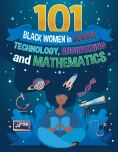
101 Black Women in Science, Technology, Engineering, and Mathematics by L.A. Amber

Young readers will be inspired by the women included in Amber’s book who paved the way for other women of color in STEM fields from the 1800s to today.

Susan La Flesche Picotte: Pioneering Doctor by Diane Bailey

This biography of the first Native American Woman to graduate medical school is a great addition to any middle school STEM shelf.

Astrophysics for Young People In a Hurry by Neil deGrasse Tyson with Gregory Mone

This young readers edition of Tyson’s popular adult version will get kids excited about the universe.

Path to the Stars: My Journey from girl Scouts to Rocket Scientist by Sylvia Acevedo

Sylvia Acevedo’s experience as a Girl Scout transformed her. She was one of the first Latinx to graduate with a master’s in engineering. Also available in Spanish.

What Color Is My World? The Lost History of African-American Inventors by Kareem Abdul-Jabbar with Raymond Obstfeld, illustrated by Ben Boos and A.G. Ford

Discover African-American inventors with basketball legend Kareem Abdul-Jabbar.


This image has an empty alt attribute; its file name is thumbnail-150x113.jpg

Nancy Castaldo has written books about our planet for over 20 years including, THE STORY OF SEEDS, which earned the Green Earth Book Award, Junior Library Guild Selection, and other honors. Nancy’s research has taken her all over the world from the Galapagos to Russia.  She strives to inform, inspire, and empower her readers. Nancy also served as Regional Advisor Emeritus of the Eastern NY SCBWI region. Her 2020 international title about farm and food is THE FARM THAT FEEDS US: A Year In The Life Of An Organic Farm. Visit her at www.nancycastaldo.com. 

This image has an empty alt attribute; its file name is Patricia-Newman-150x150.jpg

Patricia Newman writes middle-grade nonfiction that empowers young readers to act on behalf of the environment and their communities. The Sibert Honor author of Sea Otter Heroes, Newman has also received an NSTA Outstanding Science Trade Book Award for Eavesdropping on Elephants, a Green Earth Book Award for Plastic, Ahoy!, and a Eureka! Gold Medal from the California Reading Association for Zoo Scientists to the Rescue. Her books have received starred reviews, been honored as Junior Library Guild Selections, and included on Bank Street College’s Best Books lists. During author visits, she demonstrates how young readers can use writing to be the voice of change. Visit her at www.patriciamnewman.com. Stay tuned for her upcoming Planet Ocean – March 2, 2021.


STEM Tuesday — Polar Ecology– Book List

You may need to pull on a pair of fuzzy wool socks and heat up a cuppa cocoa before reading these books. Get ready for some armchair adventures into the frozen polar regions.

Polar Environments

Polar Worlds, by Wade, Rosalyn.

The first half introduces the polar environment and highlights things explorers need to stay alive. The second half focuses on animals in the north and south polar regions, from puffins to penguins.


Ice: Chilling Stories From a Disappearing World,  by Laura Buller, Andrea Mills, and John Woodward

A browsable book that ranges from the prehistoric to present. Meet polar plants, frozen frogs, and other wonders of the icy world. Plenty of climate change alerts sprinkled throughout the pages.


Climate Change and the Polar Regions, by Michael Burgan.

An introduction shows how scientists study climate. Following chapters focus on the impacts of climate change to the Arctic and Antarctic, from melting ice to changing ocean currents to wildlife.


Antarctica: Enchantment of the World, by Wil Mara

Did you know there was moss and grass growing in Antarctica or frozen steam towers from active volcanoes? How about that someone was born there? In addition to amazing maps, showing all the research stations and land forms, and unbelievable photographs, this book explores the history, scientists, politics, tourism, exploitation, and folklore of Antarctica.


Polar Wildlife


The Arctic, by Wayne Lynch

It may look cold and barren, but the Arctic is filled with a diversity of wildlife. From seabirds to blubbery beasts, this photo-rich book provides a field trip to the land of the midnight sun.


Arctic Tundra : Life at the North Pole, by Salvatore Tocci

This book presents an overview of the tundra – a desert at the top of the world. Readers will see how ice and cold shape the landscape and the plants and animals that live there.


Poles Apart: Why Penguins and Polar Bears Will Never Be Neighbors by Elaine Scott

After exploring the fossil evidence of Pangea, this book offers a look at the unique physical and climactic differences of each pole, the people and animals that reside in each, and the lessons gained from explorers and scientists. It includes a good resource list of books and websites.


Frozen Realms, by Melissa Gish

Explore the deep sea beneath the North Pole! Numerous short “Ask a Scientist” features accompany photographs of amazing underwater creatures – including dragons.


Polar Scientists and Explorers


The Polar Bear Scientists (Scientists in the Field Series), by Peter Lourie

Beginning on page one, readers are in a helicopter, chasing polar bears. Once captured, the scientists collect measurements and take samples of blood, fat, and even hair. Then they fasten a radio collar around the bear’s neck and move away, so the polar bear can return to its own hunt. There’s a series of conversations with a scientist, and thoughtful comments about the impacts of a warming climate on polar bears.


Frozen Secrets: Antarctica Revealed, by Sally M. Walker

This book focuses on modern explorers and scientists. You’ll learn how to survive extreme cold and meet the scientists studying the secrets of the ice, from how it forms to how it moves. And there’s a robot!


Ice Scientist: Career in the Frozen Antarctic by Sara L. Latta

Interspersed among the realities of bone chilling cold and blinding sunlight, are descriptions of scientists who have and do work in the Antarctic. These scientists found dinosaurs, meteorites, 20,000 species of nematodes, coral, and massive glaciers in Antarctica. The engaging text and sidebars combine with chapter notes, a glossary, further reading & links to create a great look at a chilly science.


Lost in the Antarctic: The Doomed Voyage of the Endurance, by Tod Olson

Olsen writes a compelling, account of Ernest Shackleton’s ill-fated 1914 expedition to Antarctica. When their ship, the Endurance, became trapped in a sea of ice, the crew rescued whatever food and supplies they could. There are maps, photos, packing lists, and enough ice and frigid weather to make you head to the kitchen for a mug of cocoa.


Race to the Bottom of the Earth: Surviving Antarctica, by Rebecca E. F. Barone

This book chronicles the parallel journeys undertaken by Antarctic explorers. In 1910 two explorers, each leading their own expedition, set their sights on reaching the South Pole: Captain Robert Scott and Roald Amundsen. Their goal: to be the first to reach the Pole and make history. In 2018 two more explorers set off for the South Pole. Captain Louis Rudd hoped to complete the first solo crossing of Antarctica. Colin O’Brady set out on the same trek, determined to make it across the finish line first. Adventure mixes with STEM in this nail-biting story of survival.


STEM Tuesday book list prepared by:


Sue Heavenrich writes about science for children and their families, from space to backyard ecology. A long line of ants marching across the kitchen counter inspired her first article for kids. When not writing, she’s committing acts of citizen science in the garden. She blogs about science for kids and families at archimedesnotebook.blogspot.com.


Maria Marshall is a children’s author, blogger, and poet passionate about making nature and reading fun for children. She’s been a judge for the Cybils Awards from 2017 to present. Her poems are published in The Best Of Today’s Little Ditty 2017-2018, 2016, and 2014-2015 anthologies. When not writing, critiquing, or reading, she bird watches, travels the world, bakes, and hikes. Visit her at www.mariacmarshall.com/blog.