

Zombies, monsters, and mummies – oh my! These are the stuff of nightmares… or of awesome Halloween costumes! But are they real? Let’s use science to find out.

Zombie Makers: True Stories of Nature’s Undead by Rebecca L. Johnson
Zombies are real … but so far, the zombie-makers don’t attack humans. Yet. They do take over the brains and bodies of spiders and ants, flies and snails, and even rats. Not only that, some of these zombies are too small to avoid, until it’s too late. Like the teeny tiny wasps and fungal spores, and the totally invisible viruses. And then there are the brain worms! A must-read for anyone planning to hunt for zombies in their backyard!

Monster Science: Could Monsters Survive (and Thrive!) in the Real World? by Helaine Becker
Monsters aren’t real… are they? For the most part, no – although there ARE zombies among us. This book shows the real science relating to the monsters of myth and legend: genetics and electricity, for Frankenstein’s monster, and hybrids and genetic engineering for possible werewolves. And (as in the case of zombies) sometimes we’re surprised when the real monsters do show up!

Frightlopedia: An encyclopedia of Everything Scary, Creepy, and Spine-Chilling, from Arachnids to Zombies by Julie Winterbottom
An encyclopedia of scary stuff with horrifying hands-on activities. From bird-eating tarantulas to vampire bats and zombies this book will definitely make you shiver. Learn how to make fake blood and send coded messages to aliens. Tucked amongst the science are a handful of ghost stories and mythology and some bits about killer bees, stonefish, and Komodo dragons.

Animal Zombies! And Other Bloodsucking Beasts, Creepy Creatures, and Real-Life Monsters by Chana Stiefel
Full of eye-catching, vividly detailed, photographs which delve into the living dead, bloodsuckers, creeps from the deep, animal aliens, and animal monsters. Each chapter also profiles a “Mad Scientist” offering insights into how they got started, their research, and interesting or unique things to know about their field. It also includes a look at pop culture and myths surrounding zombies, vampires, kraken, aliens, and werewolves.
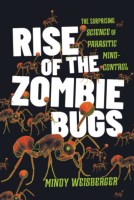
Rise of the Zombie Bugs: The Surprising Science of Parasitic Mind-Control by Mindy Weisberger
This is for older readers or those looking for additional information on insect zombification. Using an engaging conversational voice, pop culture references, vivid descriptions, and a dose of the macabre, the book explores the horror and science of zombie ants, flies, beetles, cicadas, spiders, roaches, and ladybugs from around the world. And shines a light on the responsible fungi, viruses, wasps, flies, and worms.
MUMMIES TELL NO LIES…

Secrets of the Dead : Mummies and Other Human Remains From Around the World by Matt Ralphs
In most environments, when someone dies their flesh decays, leaving only bones. But not mummies. With mummified remains, we can learn about the person and their culture, the foods they ate, diseases they suffered from. This book brings nearly 20 mummies to life – so to speak.

Mysterious Mummies by Ron Knapp
Some mummies are the result of mindful preservation: the drying and wrapping of bodies as a way to honor the dead. Other mummies resulted from accidental freezing, being tossed into a bog, or burial by volcanic ash. Dive into the mysteries behind these mummies.
MONSTERS OF THE DEEP

Catching Cryptids: The Scientific Search for Mysterious Creatures by Kim Long
The Loch Ness monster. Kracken. Giant turtles. What some people call monsters, others call cryptids: an animal whose existence is not yet substantiated by science. The emergence of DNA technology, SONAR, bioacoustics and more has allowed cryptozoologists of every stripe to seek – and sometimes discover – the species behind the monster myth.

What Do We Know About The Kraken? by Ben Hubbard
Before orcas battered yachts, the kraken terrorized sailors. This book fills in the details of how seafarers and scientists hunted for, and studied the giant squid they thought to be the kraken of mythology. But in the vast and still unexplored depths of the ocean, nothing can be certain…

Here There Be Monsters: The Legendary Kraken and the Giant Squid by HP Newquist
This book is divided into three parts. The first section celebrates tales of the sea serpents – the monsters at the edges of the maps. In part two, we follow the scientists who start to find bits of giant squid, and begin wondering: is this a kraken? The final section focuses on the search for the giant squid, and the research on cephalopods.
This month’s STEM Tuesday book list was prepared by:

Sue Heavenrich is an award-winning author, blogger, and bug-watcher. A long line of ants marching across the kitchen counter inspired her first article for kids. When not writing, she’s either in the garden or tromping through the woods. Her books for middle-grade readers include Funky Fungi: 30 Activities for Exploring Molds, Mushrooms, Lichens, and More and Diet for a Changing Climate. Visit her at www.sueheavenrich.com

Maria Marshall is a children’s author, blogger, and poet who is passionate about making nature and reading fun for children. She is a judge for the Cybils Awards and the #50PreciousWords. Four of her poems are published in The Best of Today’s Little Ditty 2017, 2016, and 2014-2015 anthologies. When not writing, critiquing, or reading, she bird watches, travels the world, bakes, and hikes. Visit her at www.mariacmarshall.com.


 Nancy Castaldo: I was fortunate to conduct on-site research on Isle Royale alongside wildlife photographer Morgan Heim. It was an incredible experience to spend time with the scientists I’d admired since college. The predator-prey study there is the longest-running of its kind in the world. We met with researchers and park scientists, often traveling by boat and then hiking into the island’s interior to observe their work firsthand. From water chemistry to tracking wolves and moose, we saw just how much goes into understanding this complex ecosystem. Isle Royale is more than just a beautiful place to visit—it’s a living laboratory, and the work done there has implications for ecosystems everywhere.
 Nancy Castaldo: That’s true. For people like me, wildlife is a big part of why we love national parks. Animals bring the landscape to life—without them, so much of the magic would be missing. On Isle Royale, the wolf and moose populations are a major draw. Visitors are captivated by its wildness and the hauntingly beautiful calls of loons and wolves. The presence of these animals is essential to the health—and appeal—of the park.


