
Posts Tagged homeschooling

STEM Tuesday– Survival Science — Book List

June 2024 – Species Survival

How do animals and plants survive Earth’s most extreme conditions? This month’s book list explores the unique challenges and adaptations that species face amid wildfires, polar ice, climate change, and more.


Extreme Survival: How People, Plants, and Animals Live in the World’s Toughest Places

Written by Ben Lerwill & illustrated by Daniel Long


Reading like an adventure guide, this book takes readers on a tour of the most extreme habitats our world has to offer. Each destination features facts and stories about the people and animals who live there, as well as practical tips for survival. STEM connections range from biology (animal adaptations) to earth science (climate and weather) to engineering (igloo-building), and more!


Fire Escape: How Animals and Plants Survive Wildfires (publishes June 25, 2024)

Written by Jessica Stremer and illustrated by Michael Garland

Did you know that goats can help fight wildfires? Or that charcoal beetles lay their eggs under the bark of burned trees? This fascinating book offers a multidimensional look at the science and history of wildfires. Stremer explains not only the natural adaptations that allow animals and plants to survive wildfires, but also the important role humans can play in managing forest fires and rehabilitating injured animals. The text is accompanied by “Fire Fact” boxes, photographs, and gorgeous illustrations.


Zoo Scientists to the Rescue

Written by Patricia Newman & photographed by Annie Crawley

This book takes a fresh, environmentally conscious look at zoos. It not only presents a behind-the-scenes look at what it takes to care for zoo animals, but it also presents readers with three different zoo scientists at three different zoos and the endangered species they work with. Each chapter is filled with facts and amazing photos.


Clever Creatures: How Animals and Plants Use Science to Survive

Written by Steve Mould

Imagine a corpse flower that smells like smelly socks in order to attract insects to pollinate it! Author Steve Mould takes readers on a fun journey filled with scientific facts but also laced with humor. This book takes a look at species survival based on amazing animal adaptations.


Polar Bears: Survival on the Ice (Science Comics)

Written by Jason Viola and illustrated by Jack Giallongo

From First Second’s Science Comics series comes an entertaining and informative graphic novel about a polar bear mom teaching her two cubs how to survive. Each chapter features a key survival “lesson,” like hunting, building a den, and surviving climate change. As they follow along with the cubs, readers will learn about polar bear life cycles, behaviors, adaptations, and conservation.


The Nocturnals Explore Unique Adaptations of Nighttime Animals

Written by Tracey Hecht

This book takes a look at species survival from the point of view of nocturnal animals. But it presents lesser known animals like the pangolin, woylie, tuatara, aya-aye, and jerboa. It not only features facts but also includes narrative stories about each animal so children can learn about the animals’ nocturnal habits and special adaptations.


Hopping Ahead of Climate Change: Snowshoe Hares, Science, and Survival

Written by Sneed B Collard

Climate change presents unique challenges for animals whose coats change colors with the seasons. Due to rising temperatures and earlier snowmelts, such animals have become particularly vulnerable each spring; though all the snow on the ground has melted, their coats are still white, so they are not protected by camouflage. This book, a Junior Library Guild Selection, follows biologist Scott Mills as he conducts research to understand the effects of climate change on snowshoe hares’ survival.


History Comics: The American Bison: The Buffalo’s Survival Tale

Written and illustrated by Andy Hirsch

Children will love this graphic novel that’s fun to read, with engaging illustrations, but that also educates. In the early 18th century, nearly 30 million bison once roamed the American prairie―until they were nearly driven to extinction. But a century later, they vanished. This book takes a look at what happened to these herds of bison and how to bring them back.


Bringing Back the Wolves

Written by Jude Isabella Illustrated by Kim Smith

This book takes a look at species survival from the point of view of the wolf and how one animal can make a huge difference in an ecosystem. In 1926, gray wolves began to go extinct. The government reintroduced them to Yellowstone National Park. Over time, animal populations stabilized, waterways were restored and a healthy ecosystem was recreated across the land. It shows how much animals and their ecosystems are deeply connected.


Animals Lost and Found: Stories of Extinction, Conservation, and Survival

Written by Jason Bittel & illustrated by Jonathan Woodward

Each beautifully illustrated spread of this book features a different animal species: some lost to extinction, some fighting for survival, and even a few that have been rediscovered after being presumed extinct. Its bite-sized paragraphs are easy to digest, and Bittel’s hopeful tone empowers readers as they learn about conservation efforts around the world.


This month’s STEM Tuesday book list was prepared by:

Author Lydia Lukidis


Lydia Lukidis is the author of 50+ trade and educational books for children. Her titles include DANCING THROUGH SPACE: Dr. Mae Jemison Soars to New Heights (Albert Whitman, 2024), DEEP, DEEP, DOWN: The Secret Underwater Poetry of the Mariana Trench (Capstone, 2023) and THE BROKEN BEES’ NEST (Kane Press, 2019) which was nominated for a Cybils Award. A science enthusiast from a young age, she now incorporates her studies in science and her everlasting curiosity into her books. Another passion of hers is fostering a love for children’s literacy through the writing workshops she regularly offers in elementary schools across Quebec with the Culture in the Schools program. For more information, please visit www.lydialukidis.com.


author Callie Dean


Callie Dean is a researcher, writer, and musician living in Shreveport, LA. She writes stories that spark curiosity and encourage kids to explore their world. Her first picture book will be published in 2026. For more information, please visit https://calliebdean.com.


STEM Tuesday — Renewable Energy — Writing Tips & Resources

Renewable Creative Energy

STEM Tuesday friends, I was creatively tired. Drained. The well was dry. Etc., etc., etc. It’s been a wild couple of months in which I feel I’ve been running full tilt on a treadmill not going anywhere. The battery was drained. 

There’s a definition of energy derived from Aristotle and his concept of enérgeia.

Energy is a condition that allows the capacity to do work.

I needed some renewable energy. I need the capacity to do my work.

Energy cannot be created or destroyed; it can only be transformed from one form to another.

This little nugget is the Law of Conservation of Energy. 

Ah, but since energy cannot be created or destroyed, only transformed from one form to another, I couldn’t just wave a magic wand and create the “Best STEM Tuesday Post of All Time” I dreamt of making. 

I needed some renewable energy. But how? There’s no Creative Energy section in any of my local stores, there were a few TikToks that were of no help at all, and, unbelievably, Amazon doesn’t list anything relevant to my problem. 

I was at a loss.

In utter creative despair, I snapped the laptop lid closed, fell to my knees, and reached, like Tim Robbins after his escape in The Shawshank Redemption, to the creative spirits of the universe in a plea for help. Sadly, the creative spirits of the universe did not answer. So I got off the office floor, went outside to fill the bird feeders, and then took the dog for a walk. Signs of early spring were everywhere. Birds, buds, and lilacs. Daffodils, tulips, and a soft breeze. 

The creative battery notched a level up. 

I felt a thaw in the ice floe jamming my creative brain (For a little brain science, here’s a link to my post, Creative Braining). I had an urge to go to the library. I picked up my two grandsons (5 and 3 years old, respectively) and we descended with great enthusiasm to the children’s floor in the basement of our library. Their energy was contagious. I scoured the shelves and found a half dozen awesome picture books to use for illustrator studies. 

With great excitement, we hauled our stacks of books from the library and to the truck to take home. I was fired up to return to my office, read the books I’d checked out, and then add sticky notes to mark the illustrations I wanted to draw for illustrator studies.

With little effort, the creative battery reached an almost full charge. Turns out, all I needed was to take a step back from the work and redirect to a renewable creative energy source. Nature and libraries. Two great sources of renewable creative energy. Bingo!

Energy cannot be created or destroyed; it can only be transformed from one form to another.

The Law of Conservation of Energy. 

It means energy comes at a price, even the forms of renewable energy listed in this month’s fabulous STEM Tuesday Renewable Energy book list. The trick for humanity at this critical point in environmental history is to transition to creating energy that minimizes the negative impact on the environment while still providing the energy to fuel our lifestyles.

We all know it’s important to develop renewable energy strategies for the environment. It’s also vital to develop strategies to renew creative energy. Find what works and when that doesn’t work, try something different. Expand the lens that feeds your creative brain. Be curious. 

As for that Best STEM Tuesday Post of All Time? You might have to wait on that one for a while longer. 


Bellatheblond, CC BY-SA 4.0 <https://creativecommons.org/licenses/by-sa/4.0>, via Wikimedia Commons


Mike Hays has worked hard from a young age to be a well-rounded individual. A well-rounded, equal-opportunity sports enthusiast, that is. If they keep a score, he’ll either watch it, play it, or coach it. A molecular microbiologist by day, middle-grade author, sports coach, and general good citizen by night, he blogs about sports/training-related topics at  www.coachhays.com and writer stuff at  www.mikehaysbooks.comTwo of his science essays, The Science of Jurassic Park and Zombie Microbiology 101, are included in the Putting the Science in Fiction collection from Writer’s Digest Books. He can be found roaming around the X under the guise of @coachhays64 and on Instagram at @mikehays64.


The O.O.L.F Files

This month’s version of the O.O.L.F.(Out of Left Field) Files explores a spectrum of renewable energy information. From DIY to corporate plans to how the word “energy” came to be, you can check it all out at the links below.

Renewable Energy (Office of Energy Efficiency & Renewable Energy)

Microsoft’s Emissions and Water Use Shoot Up As It Goes All In on AI (via Futurism)

What is renewable energy? (kids.earth.org)

The renewable energy movement must have corporate involvement. This may take time and involve the consumer holding them accountable for their promises and PR on renewable energy.

Natural Resource Distribution Video for Kids (GenerationGenius) 

DIY Renewable Energy

The History of the Word “Energy” (Energy Fundamentals from the University of Leipzig)


Florian Gerlach (Nawaro), CC BY-SA 3.0 <https://creativecommons.org/licenses/by-sa/3.0>, via Wikimedia Commons


Middle Grade Voice: Speaking the Joyous/Painful/Ironic/Perfect Truth

Happy almost-summer to everyone! I love writing May posts for From the Mixed-Up Files of Middle Grade Authors because it calls to mind the excitement and fulfillment of the end of the school year. For teachers, parents, students, public or school librarians, and MG writers alike, the advent of summer is a time heady with the potential adventure, change, and insights of the coming months. New, thrilling stories are practically a guarantee. Whether you read them, write them, offer them to readers, or watch them inspire your own kids on breezy summer days, middle grade works can add a lot to  your summer season.

We often discuss on this site how various elements of a story impact readers in different ways. For example, a historical setting teaches readers about an era or event. Sci-fi and fantasy genre scenarios engage the imagination in a rigorous workout. A coming-of-age theme offers a hook almost all readers can relate to. Another important, impactful fiction factor is voice.

Voice is an element of fiction that can impact readers in several ways. So much more than point of view or perspective, a character’s voice ticks many boxes: It indirectly characterizes. It engages readers and controls the mood and pace. And it delivers thematic messages about life in ways that connect to our experiences and emotions—in other words, the truth.

Strong voice is particularly effective in MG fiction. There’s this interesting paradox that occurs with MG characters in “voicey” works: Though their world view may be limited by young age and lack of independence and experience, MG characters are often highly effective at revealing the truth. They might comment as an afterthought or make a passing observance… and ironically, that offhand remark is both significant and revelatory. Or, they share a just-learned lesson in their coming-of-age, but as it is communicated by their voice, additional ideas and truths are conveyed.

Summer, with its reduced emphasis on structured lessons, is the perfect time to think about this somewhat nebulous story trait. Gathered below are some examples of voice in MG fiction, a few writing projects for students experimenting with voice in their own writing, and (for writers of MG) a brief list of tips for “turning up” your story’s voice.

Middle Grade Voice Examples

Strong voice can seem like a you-know-it-when-you-read-it element. For practice in recognizing voice, study some examples before assigning yourself a search-and-find mission in some favorite and some brand-new titles. Here are a few handy examples of MG voice:
  • Jessica Vitalis’s self-assured protagonist Fud in Coyote Queen:

“That doesn’t mean I sat around crying about how things were, because I didn’t. And I certainly didn’t think twice about magic. I was too practical for that.”

  • Jennifer L. Holm’s witty main character Beans in Full of Beans:

“When someone says they’re gonna help you, they’re just waiting to stick their hand in your pocket and take your last penny. I should know. I got relatives.”

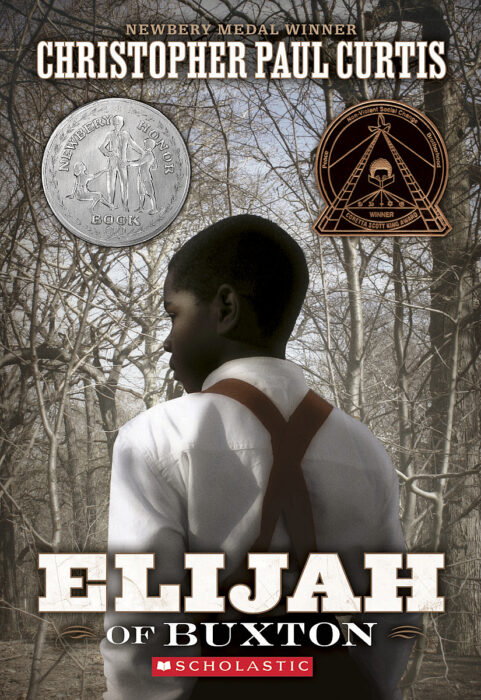
  • Any characters from Christopher Paul Curtis. Here’s Elijah speaking certain truth in Elijah of Buxton

“But classroom learning just don’t work the same as when something happens to you personal.”

Voice Activities in the Classroom

As the school year winds down, consider having your MG students experiment with the concept of voice in their own writing. You might begin by having readers search for examples in novels they read throughout the year. Introduce the idea of voice with some focusing questions: What line or lines have vocabulary, word choice, and phrasing that tell you right away what kind of a person this character is? What line would be spoken only by this protagonist? Where is a question or an exclamatory remark that highlights the voice?

With some examples at their side, students can then try their hand at voice by writing a real-time scene from the viewpoint of a selected, existing protagonist.  Writers already may be savvy with writing from a character’s perspective; try to direct their focus on the voice of the character through word choice, vocabulary, cadence, pace, and sentence length. For a scenario that also boosts excitement for the end of the school year, students might place their protagonist in a “summer vacation” scenario.

How Writers of MG Achieve Voice

These are some common strategies for practicing and assessing voice in your MG writing.

  • While middle grade characters certainly keep secrets and remain private about some things, they typically are more open with emotion than teen characters.
  • Defy stereotypes. Offer your characters traits that conflict with common assumptions.
  • Focus on the foundational blocks of a good story: themes, plot, detail, description, characterization. Voice is the conveyance system that communicates the story to the reader in the most effective, most “hearable” way.
  • Don’t allow the writer’s goals for sharing pithy truths to become the character’s goals. The character’s goal is to pursue their objective and resolve their conflict.
  • Stick with on-level vocabulary choices.
  • Who are your beta readers? Have a few middle graders in the mix to comment on MG characters’ believability.

Thanks for reading, and have a story-filled summer!