
November is traditionally the month of focus on American Indian history, and fortunately there is much to celebrate this year. It was my very great pleasure to hear many Indigenous authors and poets reading and discussing their work at the Portland Book Festival. One among them was Tommy Orange the author of the National Book Award nominee THERE,  THERE. It’s not a book designed for the MG audience but it is within reach of strong readers who are looking for hard-hitting contemporary realism. I think many seventh and eighth grade readers would find much to love. It is the intertwined story of twelve people on their way to a powwow in Oakland and offers plenty of ideas for the thoughtful reader to absorb and discuss.
THERE. It’s not a book designed for the MG audience but it is within reach of strong readers who are looking for hard-hitting contemporary realism. I think many seventh and eighth grade readers would find much to love. It is the intertwined story of twelve people on their way to a powwow in Oakland and offers plenty of ideas for the thoughtful reader to absorb and discuss. It was also my great pleasure to hear a reading and discussion of their poetry from Trevino Brings Plenty, Laura Da’, and Layli Long Soldier. They are all three contributors to the anthology NEW POETS OF NATIVE NATIONS edited by Heid Erdrich. This is also a book published for the adult market. But of all adult writing I think poetry can be the most accessible to younger readers. Here is a snippet of example from a poem called Passive Voice by Laura Da’ a middle school teacher and Eastern Shawnee.
Passive Voice
Laura Da’
I use a trick to teach students
how to avoid passive voice.
Circle the verbs.
Imagine inserting “by zombies”
after each one.
Have the words been claimed
by the flesh-hungry undead?
if so, passive voice
This poem goes on and becomes even more searing and evocative with each line, talking about how the crimes of the past against indigenous people are usually reported in the passive voice. Now there’s a conversation I’d love to have in the classroom. I am beyond excited to read all the poems in this anthology and to follow the literary careers launched there.
 On the more traditional side of MG publishing Joseph Bruchac has a new novel TWO ROADS. Much has been written about the abuses of the Indian Boarding Schools and it’s easy, if you don’t live in the west, to think that Indian boarding schools are a thing of the past. Although most of them closed 80 to 100 years ago, some operated much longer and under slightly reformed conditions. Bruchac’s story takes place in 1932 and is about a Creek Indian boy, Cal Black, and his father a WWI veteran who live a transient life. When the father decides to join a protest with other veterans in Washington to demand their wartime bonuses, he decides to leave his son at the Challagi Indian School in Oklahoma. The most brutal practices of the Indian schools are past at the time of this story, still there is much hardship to endure. Even so Cal learns about his own culture and gains the strength of knowing other young men of his tribe. This resonates with the stories I have heard from elders who attended Indian schools in the 1930s and 40s. They found much hardship there, but they also found their voice as Native people and a community that would go on to become part of many of the movements, AIM and others, that lead to the recent pipeline protests. Two Roads is an important book and one that I hope will be widely read.
 Also on the topic of Indian schools but originating in Canada is SPEAKING OUR TRUTH: A Journey of Reconciliation by Monique Gray Smith. It is a larger format, photo illustrated work of non-fiction about the journey of reconciliation addressing Canada’s past, present and future relationship with its First Nations People. Monique Gray Smith asks her readers to leave behind these attitudes
-
I’ve heard this all before
-
Reconciliation doesn’t involve me or my friends or my family
-
History isn’t important
-
I, as one person, can’t make a difference
She organizes her book according to Seven Sacred Teachings: Honesty, Respect, Love, Courage, Truth, Humility, and Wisdom. The book is packed with information. It’s a book to read slowly. Every few pages there is a spot illustration of a drum and an invitation to reflect. Definitions are placed on the page where the words first occur in addition to a glossary in the back. I thought the book would make me feel sad and ashamed but because so much of it is focused on things everyone can do now to make it better I felt much hope by the end. This book is rooted in Canadian history but the issues are so similar to American ones that I think you could use it in the US. But I’d love to see and American version of this concept too.
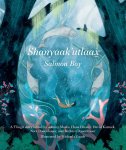 And finally I want to call attention to a group of picture book legends. Many teachers are looking for authentic indigenous legends to use in the curriculum and want to make sure they are using books of the best quality. I think when it comes to traditional tales, the way to get the authentic versions we are looking for is to have the tribes publish themselves. The Sealaska Heritage Institute does just this. Their award winning books are produced from start to finish by professional indigenous storytellers, world-class indigenous artists and indigenous publishers. They have an imprint called Baby Raven Reads which focuses on stories from the Tlingit, Tsimshian, and Haida traditions. There are many beautiful books in this imprint. I’m going to highlight Shanyaak’utlaax—Salmon Boy edited by Johnny Marks, Hans Chester, David Katzeek, Nora Dauenhauer and Richard Dauenhauer and illustrated by Michaela Goade. It is the Tlingit story of a boy who disrespects the salmon his mother gives him and is swept away into the ocean to meet the Salmon People. It is written in Lingít and English with a Lingít audio available on line. Michaela Goade is a Tlingit Raven from the Kiks.ádi clan of Sitka, Alaska. These books are not available through the normal channels but don’t be discouraged you can get them through Taku Graphics in Juneau, AK. Email Katrina Woolford at orders@takugraphics.com for more information. Learn more about Baby Raven Reads at www.sealaskaheritage.org.
If you have a favorite book with Native American characters, please share it in the comments.


