Are you a fan of magic tricks? If so, you’ll love Vanished: Seven Women Magicians Who Simply Disappeared, written by Anna Hays and illustrated by Mary Kate McDevitt. We’re excited to take a peek behind the curtain and interview the author and learn more about how she became drawn to magic.
Hi, Anna, it’s so good to have you here with us. I know our readers will be fascinated by the many experiences you’ve had with magic in your life. I’d love it if you could tell us a bit about your childhood first.
Did you have any childhood dreams for when you became an adult? If so, did they come true?
I always dreamed of righting the wrongs I saw around me. I stood up for people whenever I could. I thought about becoming a lawyer for a while, but never dreamed I would be writing books!
Did you love to read as a child? If so, can you tell us some favorite books?
I loved reading, cozying up with a book and immersing myself in another world. My childhood favorites were: The Lion, The Witch and The Wardrobe, Diary of Anne Frank, and Harriet The Spy.
Did you do magic tricks as a child? Can you tell us your favorites?
I was fascinated by those plastic tricks you would order from the back of a comic book. I would also buy small magic sets at party supply stores. My favorites were the disappearing coin trick, cups and balls, and the all-time best one ever was writing secret messages with “invisible” ink!” That trick was very mysterious to me. I was fascinated by it.
What was an early experience where you learned that written language had power?
I think I connected with written language through lyrics in music first. Childhood songs really stuck with me and impacted me emotionally. And, of course Dr. Suess, the OG! His words, rhymes, and characters made a big impression on me, and still do!
What was your biggest fear when you were young? Did you get over it?
Hard to pinpoint just one!
What advice would you give to your younger self?
Trust myself.
When did you know you wanted to be a writer?
I always enjoyed stories as a child, but never thought I’d become a writer. I studied film, and then worked for directors in both film and theater. Those experiences introduced me to different types of storytelling – narrative, documentary and experimental. After watching and learning from those mentors, I started to discover my own voice in the process.
What is your favorite or most challenging part of being a writer?
My favorite part of being a writer is when an idea just clicks and flows. I love when I’m surprised by a sentence, insight, or an idea that comes to me when I’m in the zone and totally immersed. The most challenging part is not getting distracted by life around me and trying to stay focused and engaged with whatever story or project I’m working on at the moment.
Have you had any careers besides writing?
I’ve been a film producer for low-budget films, and I’ve worked in experience design and concept development for theme parks, animation, toys, and retail destinations.
What drew you to writing nonfiction?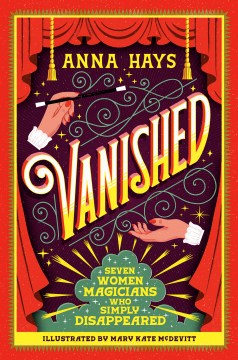
When my children were in elementary school, they were required to read a certain amount of nonfiction. I looked around and didn’t see many options for that age group. That’s changed now, but at the time, I saw an opportunity to try to cross over and write a narrative non-fiction story and see where that would lead me. That’s how Vanished came to be.
Please tell us how you became interested in magic.
I’ve always been interested in magic and so has my family. There’s an iconic private magic club in Los Angeles called The Magic Castle where many greats have started. It’s still very much a big part of the magic community. When I first met my husband, Buzz, I discovered he did magic and was a member of The Magic Castle, I knew it was destiny from the start! Now I get to see magic whenever I want to, and the best part is having my friends dress up (there’s a dress code) and hosting them there! It’s always a great experience.
What inspired you to write about women magicians?
When I first met Buzz, he was working on a documentary film called Conjuring Women about women magicians. Since I came from a film background, I jumped in and helped him film women magicians whenever they would come to town. Soon, I became friends with a few of them. I ended up writing a cover story on one woman magician for a popular magic magazine called Genii. I began to realize how little is known about women magicians, and certainly women magicians from the past. I began to research and uncover the most remarkable women who were headliners and played to sold-out, enthusiastic crowds, who led incredible lives, and yet who had essentially been forgotten from history. I felt inspired to bring them back into the spotlight.
Can you tell us a little about the women in Vanished?
Each of the women lived such different lives and yet they each started as young girls who dreamed of a life of magic and adventure.
Anna Eva Fay came from a poor farm family in rural Ohio and emerged as one of the most famous mediums of her day. Adelaide Herrmann was born to wealth but ran away to join the circus to become a dancer, a trick rider, and eventually a headlining illusionist. Annie Abbott came of age after the Civil War to become a strong woman, an “electric girl,” who claimed to possess electrical powers that could overtake any man who challenged her onstage, including the strongest men in the world. Talma, a delicate and rare beauty, would become known as the “Queen of Coins” for her palm artistry and extraordinary coin manipulation. Bess Houdini, the talented wife of famed magician, Harry Houdini, began her career as a singer and dancer, performed magic alongside Harry, and after his untimely death, carried on his legacy and became his gatekeeper. Minerva, was an escape artist who broke through chains and shackles while submerged in icy rivers in front crowds of thousands. And, Ellen Armstrong, the first African American woman headliner whose artistry, charm, wit, and storytelling set her apart as a true original and groundbreaker.
Do you have a favorite of the magicians?
I wouldn’t dare name one! I don’t want to stir up any spirits.
Can you tell us about connecting with the famous magician David Copperfield?
My husband met David Copperfield at a convention in Las Vegas. After they met, David invited our family to his show and then for a visit to his private museum, which was in a secret location in an unmarked building. During the visit, he introduced me to his archivist and gave me free reign to explore his amazing world-renowned magic collection. I spent the next few days there immersed, surrounded by posters, faded scrapbooks, costumes, props, articles, books, and photos. David has been a big supporter of the book and allowed me to use images in Vanished from his collection!
What was one of the most interesting facts you learned while researching?
It was hard to imagine how difficult it was to travel as a performer during the Age of Magic. Each of the women magicians relied on live performances to survive, so needed to tour for most of the year. They took steamships, trains, sometimes even traveling by horse and buggy and donkeys too! It took perseverance and grit to accomplish what they did and to forge successful careers when there was no precedent.
Did you have to leave anything out of this book that you wished you could include? If so, what?
I stumbled upon other fascinating characters during my research who mixed with the leading ladies in the book. I would have liked to have explored some of the more incidental characters like the skeptics, journalists, and other competitive acts.
What do you hope readers will take away from your book?
I hope readers will be inspired by the women magicians in Vanished who took chances, followed their dreams and ambitions, developed their passions and talents, and went for it, despite the obstacles and odds against them. They believed in themselves and I hope the readers get that message – to value themselves, nurture their talents, and take chances, even if it feels scary.
Can you tell us about some of your other books?
My first two books, Portia’s Ultra Mysterious Double Life and Portia’s Exclusive and Confidential Rules on True Friendship, features girl detective, Portia Avatar. Portia is a 12-year-old girl who goes on a search for her father, and during her journey uncovers hidden truths about her mother, close friends, and other characters in her small town of Palmville.
I also created an original series, Spark Squad, for Scholastic Book Clubs Originals that follows a group of high school girls who form an after-school tech club that helps fellow classmates fight bullies and solve other pressing teenage issues.
And, for Disney Press, I wrote Stealing Starlight as part of a fantasy series called Star Darlings created by Shana and Ahmet Zappa.
What are you working on now?
I’m working on a new book that also features women from the past. It’s under wraps for now. I’ll share more about it soon!
Is there anything else you’d like us to know?
Can’t think of anything at the moment… Thanks for including me in your very cool website and blog!
Thank you for being here! We’ve loved learning more about your “magic” life and book. I’m sure readers will be eager to read your fascinating book.
ABOUT THE AUTHOR
Anna Hays is a writer and producer. She is the author of Vanished, a nonfiction portrait of the forgotten lives of famed women magicians who disappeared from history. She is also the author of Stealing Starlight for Disney Press’s Star Darlings fantasy series; Spark Squad, an original series developed for Scholastic Book Clubs; and Portia’s Ultra Mysterious Double Life and Portia’s Exclusive and Confidential Rules on True Friendship, a middle grade series for Simon and Schuster. Anna lives with her family in the woodlands near Los Angeles.
ABOUT THE BOOK
Vanished: Seven Women Magicians Who Simply Disappeared
By Anna Hays
Illustrated by Mary Kate McDevitt
Discover the amazing illustrated stories of seven women magicians who pulled off spectacular and death-defying illusions and acts, achieved global fame, and then simply…disappeared.
During the Golden Age of Magic from 1860 to 1930, seven women magicians in America defied Victorian conventions and created a unique place in history for themselves and future performers to come. There was Anna, the mindreader; Adelaide, who could float in midair; Talma, who could magically shower the stage with gold coins…and many more!
During a time when women were typically confined to the home, these trailblazers crossed oceans on steamships and traveled the globe bringing their imaginative brand of magic to audiences around the world. They followed their hearts and pursued their dreams of performing magic in the spotlight when women had neither a vote nor a voice in America.
They made history. Yet once their career ended, so did their legacy.
For decades their stories were hidden, or overshadowed by male counterparts, but now they’ve come to life in this vibrant and captivating book.