
Posts Tagged Giveaways

Einstein Anderson enters the 21st Century (with a Giveaway)!

Seymour Simon has published hundreds of books about science, the vast majority of them nonfiction. But there is a special place in my heart for Simon’s fictional Adam “Einstein” Anderson. My kids, being the sciency progeny of a scientist and an engineer, loved to read about Einstein Anderson, a sciency kid who solved problems using his knowledge of scientific principles. I must have checked out every Einstein Anderson book from the library when my kids were young. The short chapters with a figure-it-out-yourself problem at the end were great for bedtime reading and science discussion. (I admit part of the appeal for me, an exhausted mom, was that they were short.)

These days, I cite the Einstein Anderson books in my presentations about sciency fiction. Not only are they full of science content, they’re great examples of the kind of reasoning that is essential to the scientific process. While researching my talk, I found an article published in 1995 that suggests ways to use Einstein Anderson in the classroom. Great minds think alike, or so they say.

The Einstein Anderson stories were originally published by Viking-Penguin in the 1980s as Einstein Anderson, Science Sleuth.

sleuth

In the 1990s, they were released in a slightly revised version by Morrow as Einstein Anderson, Science Detective.

detective


These days, some of the stories seem a bit dated.

Imagine my delight to find out that they are being updated and reissued in paperback and ebook formats by Starwalk Kids Media as Einstein Anderson, Science Geek.

geek


I asked Seymour Simon about the update, and here’s what he had to say:

“I decided to completely redo the Einstein Anderson series to make them more contemporary and outfit Einstein with the digital devices (smartphone, etc.) that many kids his age grow up with. I often say that kids these days are digital natives as contrasted with their parents and teachers who are digital immigrants. Kids simply integrate these digital devices into their lives. And the devices offer great new ways of learning about science — and anything else you want to learn about. “

seymour simon

“Kids don’t act the same, sound the same or even ARE  the same as they were in the past. The stories and even the characters in the Einstein series have been completely re-imagined and rewritten. Motivations and characters have shades of gray rather than simply one way or another. Bullying, for example, is dealt with very differently than in the original stories. Even the antagonist, Stanley, is into science — he wants to use it to make a billion dollars like Bill Gates– he just loses out because he’s not willing to do the homework to get the science right.  Even the approach to science is quite different. Not just ‘the facts’ are part of Einstein’s thinking, but the approach to solving a problem presents a real path that kids can emulate in their own life.”

I had a chance to read the new books and to compare them to the original stories. Here are some of the things I like about the new Einstein:

  • The technology is updated. For example, in the story about rollerblades, Einstein makes a robot for the science fair. In the original story, it’s a model of a robot, but in the new version, it’s a real robot. Here’s another example: In the original story, Einstein knows the scientific name of the ants he sees on his way to a friend’s house. In the reboot, he doesn’t know the scientific name, but he takes a picture of the ants with his phone for his electronic science journal and looks up the scientific name on an app. Yes, there’s updated technology, but there’s more. Instead of relying on rote memorization of facts, Einstein is collecting data, recording it, and finding out more about the ants. Science is depicted as a process, instead of a bunch of facts.
  • In many cases, clues to the solution to the problem at the end of the chapter are planted earlier in the story. For example, in the story about the howling dog (who howls because someone is blowing a dog whistle, inaudible to human ears), Einstein explains to his brother that bees can see ultraviolet light, a wavelength humans can’t see, and goes on to talk about the high frequency sounds that bats can hear, but humans can’t. This engaging strategy allows the reader to apply a scientific principle in a new context and figure out the solution. Why should Einstein have all the fun?
  • Each story in the new Einstein Anderson series is followed by a related hands-on activity. The activity for the howling dog story involves bottles of water and the sounds they produce, which vary depending on the amount of water (and air) in the bottle. There are plenty of questions to prompt further investigation.
  • The activity is followed by a “Science Solution,” which explains the science behind the activity. Some Science Solutions also include links to online activities applying similar principles. For the howling dog story, the link gets you a video of an orchestra playing instruments made of trash, a “Junkestra,” if you will.

Check out the new, 21st Century Einstein, and while you’re at Seymour Simon’s website, take a look around. You’ll find a lot of science books by an author who knows how to put science in his fiction.

Giveaway! 

One lucky winner will receive a signed copy of the first EINSTEIN ANDERSON, SCIENCE GEEK book, THE IMPOSSIBLE SHRINKING MACHINE AND OTHER CASES. Enter before midnight Monday, June 24. The winner will be announced on Tuesday, June 25.

a Rafflecopter giveaway

Jacqueline Houtman has  PhD in Medical Microbiology and Immunology. Her sciency debut novel is called THE REINVENTION OF EDISON THOMAS.

Stuart Stotts Interview and Giveaway

Stuart Stotts


Stuart Stotts is a songwriter, storyteller and author from Wisconsin. He’s worked as a full-time performer since 1986, and he gives over 200 shows a year for kids, families, and adults around the Midwest, and sometimes farther. He’s a frequent presenter at conferences and workshops for teachers, parents and librarians. Stuart’s travels have taken him to such far places as Greece, Egypt, Israel, the United Arab Emirates, Malaysia, and Great Britain, as well as to other exotic locales like Green Bay, LaCrosse, and Fond du Lac.

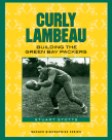
Stuart has worked extensively as an artist-in-residence in elementary, middle, and high schools. He has released several award-winning recordings, and is also the author of The Bookcase Ghost: A Collection of Wisconsin Ghost StoriesBooks in a Box: Lutie Stearns and the Traveling Libraries of Wisconsin and Curly Lambeau: Building the Green Bay Packers, the story of the man behind the early years of the Green Bay Packers. We Shall Overcome: A Song That Changed the World was an ALA honor book. Stuart’s newest book, Father Groppi: Marching for Civil Rights, was published in February 2013. It’s another Badger Biography.


From IndieBound: “Growing up on the south side of Milwaukee as the son of Italian immigrants, young James Groppi learned early on what it felt like to be made fun of just because of who you are, and he learned to respect people from other races and ethnic groups. Later, while studying to become a priest, he saw the discrimination African Americans faced. It made him angry, and he vowed to do whatever he could to fight racism.
Father Groppi marched with Dr. Martin Luther King Jr. and other leaders of the civil rights movement. But he knew there was work to be done in his own city. In Milwaukee, he teamed up with the NAACP and other organizations, protesting discrimination and segregation wherever they saw it. It wasn’t always easy, and Father Groppi and the other civil rights workers faced great challenges.”


What’s your favorite thing about middle grade books (as a reader or a writer)?

I can write for an audience that is able to understand bigger ideas, and that also has some experience in the world and the ways in which it is complex. At the same time, I have to make sure that what I write is well-explained and clear to those who might not have a lot of background knowledge. It’s a balancing act. In addition, adults often use these kinds of books as a quick introduction to a subject. For example, if you like the Packers and want to know more about Curly Lambeau, my book is a good quick read, and will tell you the basics of what you probably want to know. Or you can read the 350 page book about him, if you have the time and more interest. But for those who just want the essentials, middle grade non-fiction does a good job.


What do you enjoy most about writing biographies?

I have to try to get inside the complexity of a person. Groppi is a good example. He was a hero, clearly, and stood for great things, and took action. At the same time, he was, from what I can tell, impatient, sometimes impulsive, and a divisive figure. Many people hated him. I really liked him, and find him inspiring, but for others that was not the case.

Biographies also give a good window into a time or an era or a movement. You get to see what’s happening through someone’s eyes, not just a series of events. Father Groppi’s life shares many parallels with others who cared about civil rights and equality. It’s also a unique course that he charted. The age old question about biographies has to do with how much people are products of their times, and how much time is a product of certain people. I think it’s both, although we tend to gravitate toward the heroic ideal of one person making a difference.

Did you choose to write about Father Groppi, or was the topic chosen by the Historical Society?

I was asked to write the book. I didn’t know anything about him when I began. I think what was surprising was that he had very little overt success that he could point to. Milwaukee schools weren’t desegregated, the Elks Club campaign ended without accomplishing its goals, and the Fair Housing Marches also ended after 200 nights without anything solid to show. In the long run, these actions created a climate that did lead to fair housing laws, but the connection is not as direct as “we did this protest, and something changed.” I also think that is not so uncommon in social change. Gandhi said, “It’s the action, not the fruit of the action, that’s important. You have to do the right thing. It may not be in your power, may not be in your time, that there’ll be any fruit. But that doesn’t mean you stop doing the right thing. You may never know what results come from your action. But if you do nothing, there will be no result.”


Why do you think it is important for young people to learn about people like Father Groppi?

A big idea for me right now is the idea of standing up for others. It’s related to all the talk about bullying, but is bigger than that. Father Groppi stood up for black people, as a person of a privileged class. There was no reward for him in it. His life would have been easier if he hadn’t gotten involved. But he took the chance, and I hope that would inspire others to stand up, too, despite how hard it may be at times.

“In 1963, Father Groppi attended the March on Washington, where Dr. King gave his famous ‘I Have a Dream’ speech. Dr. King, who was the most well-known leader of the civil rights movement, inspired him. But Father Groppi knew that thousands of other activists who were not famous were working just as hard, taking risks and facing violence. He was determined to do his part in working for justice.” (pp. 38-39)

I like this idea, because of the sense of thousands who weren’t famous but who were important anyway. That’s the heart of the lesson.


If there was one single thing that you wanted readers to get from Father Groppi, what would it be?

Stand up for what you believe in. Do something, don’t just talk.


How does your singing and songwriting influence the books you write?


I often find that music manifests in my work. I’ve played at many protest events, and written many songs with a social change intention. This connects better with Father Groppi, and my “We Shall Overcome” book than some of my others. I have a book, fiction, about music changing a situation. We’ll see if it ever sees the published light of day. 


What books do you recommend to readers who enjoyed FATHER GROPPI?

My own We Shall Overcome is good. I like Claudette Colvin by Phil Hoose. Anything by Ann Bausum is good in this area. The Eyes on the Prize video series is also good.

What advice do you have for someone who wants to write middle grade books?

Respect your audience, and get some feedback from them directly on what you have written. Let kids be the guide.

What’s next?

 My novel about the Fall of the Berlin Wall, which I’ve been working on for about five years, seems to be getting closer. But it may in fact be far from being done. I’d like to write a biography of Charlie Christian with a friend of mine in Oklahoma City, who is the world’s expert on the man who brought the electric guitar into the world as a solo instrument. And other fiction projects. And traveling around, leading workshops. And performing. And spending those giant royalty checks. And watching my oldest daughter graduate from college. And enjoying a beautiful Wisconsin spring.

 GIVEAWAY

Stuart has kindly offered to give away a signed copy of Father Groppi. Comment by Midnight April 15. Winner will be announced April 16.

*******EDITED TO ADD********

Because of recent issues with the website, we have extended this giveaway!

 Comment by Midnight April 24. Winner will be announced April 25.


Jacqueline Houtman is the author of  THE REINVENTION OF EDISON THOMAS (Front Street/Boyds Mills Press).  Like Stuart, she lives in Wisconsin, but they have never met. It’s a big state.

MALCOLM AT MIDNIGHT: Interview and Giveaway with W.H. Beck

W.H. Beck

W.H. Beck is an elementary school librarian by day and a middle-grade writer by night (well, actually, very early mornings). She lives and reads in Wisconsin, sharing her home and books with a husband, two sons, and a sneaky dog. MALCOLM AT MIDNIGHT (Houghton Mifflin, 2012) is her first novel.

Previous books include the FOLLOW THAT FOOD CHAIN (Lerner, 2009) series, a choose-your-own-adventure interactive look at different habitats, and DR. KATE: ANGEL ON SNOWSHOES, a regional biography about one of first doctors in the northwoods of Wisconsin.


Watch the Book Trailer!

What’s your favorite thing about middle-grade fiction?

My favorite thing about middle- grade fiction is the same thing I love about middle- grade kids: they’re funny, they’re serious, they’re unexpected, they’re full of truth about what’s really important in the world. I love working with middle-grade kids because they’re sophisticated enough to think deeply about what they believe in, yet at the same time, a clever joke about toilets is always appreciated.

 Why do you write middle-grade?

I write middle-grade because that’s how my writing comes out. I don’t mean that to sound flippant, but I do feel like that’s my voice and an age I connect with. Middle -grade books have always been my favorites, even long after I had “outgrown” them. They’re why I became a teacher—and an elementary school librarian.

You’ve written a lot of nonfiction. What led you to write a novel?

Novel writing—middle -grade novel writing, in particular—has always been my first love and aspiration. It just took a while for me to learn how to write a novel that was worth reading!

That’s not to say I don’t enjoy writing nonfiction. I love learning new things and sharing that information with others. In fact, MALCOLM came about because of the nonfiction research I was doing for my FOLLOW THAT FOOD CHAIN series. It struck me that animals can do so many amazing things—they kind of have super powers, really. What if I wrote a mystery about an animal who used his “superpowers” to prove his innocence?

I did make a conscious decision to set aside my nonfiction writing, though. It was a gamble—I turned down some nonfiction offers to finish MALCOLM. I know that sounds crazy, but one of the things I learned was that I only have time for one writing project at a time. And if I really wanted to be a middle- grade novelist, then I needed to give it a chance.

As you were writing, did you imagine there would be illustrations? How involved were you in the decision and in the process?

Part of my own writing process is drawing doodles of my characters and settings, so I did dream that it might be illustrated someday (although I would definitely have “settled” for just publication!).

Malcolm sketch

My first sketch of Malcolm

When I sold MALCOLM, I was lucky enough to have more than one publisher interested in it. As I spoke to the different editors, Kate O’Sullivan told me not only did Houghton Mifflin want to have it illustrated, but Brian Lies had already read it and wanted to work on it.  Well, I almost fell over—I actually teach Brian’s bat books with the first graders in my library! So I knew his work, and I knew that he’d be perfect for my critters.

As far as input into the process, Brian and I didn’t talk directly until the whole book was pretty much finished. When he had questions, he’d ask our editor and she’d relay them to me. I’d see snippets of his work, but mostly, I tried to stay out of his way and let him do his magic. The only thing I did request (through my agent and editor) was that, even though it’s not stated explicitly in the text, Amelia was Amelia Vang—and she was Hmong. This was important to me because I really wanted to honor some of my students who don’t often get to see themselves in the books they read.

Midnight academy

Malcolm at Midnight artwork by Brian Lies (http://www.brianlies.com), courtesy of Houghton Mifflin Books for Children

Brian and I finally met for the first time last fall at some book events. It’s been great fun swapping stories about how we went about working on the book. It turns out we have a lot in common, and I now count him as a friend.

Why an iguana?

I don’t know where Aggy came from! There is an iguana that my kids visit at our local pet store, so maybe that’s it. Other animals are easier to trace. My dad raised oscar fish while I was growing up; my brother’s fifth grade teacher had a hedgehog; my own sixth grade classroom had a tarantula; and Beert came from a talk on owls at a nearby nature center.

How did you come up with the unique point of view?

I went through many, many, MANY different starts to this book, but I wasn’t happy with any of them. I knew the main events of the mystery, but the telling of it felt flat. One of the things I sometimes do to help me learn about my characters is write letters from each of them, explaining the outcome of the story—why they did what they did. When I wrote Amelia’s, it just felt right, and the whole story finally started to flow.

If there was one single thing that you wanted readers to get from MALCOLM AT MIDNIGHT, what would it be?

That reading is fun. I certainly hope readers take away more—like not letting people label you and that you can choose to be the kind of person you want to be—but I’ve done some recent thinking about why I write funny talking animal stories, and what it comes down to is that I want kids to READ. I believe to be an adult with choices, you need to be a reader, and the only way to become a reader is to read. A lot. And it’s so much easier to practice something if you find enjoyment in it.

What books do you recommend to readers who enjoyed MALCOLM AT MIDNIGHT?

Mysteries: HALF MOON INVESTIGATIONS, THE FOURTH STALL, THREE TIMES LUCKY, ICEFALL

Animal fantasy: BUNNICULA, THE RESCUERS, CHARLOTTE’S WEB, THE FAMILIARS, THE CHESHIRE CHEESE CAT, THE UNDERNEATH

Rats as heroes, NOT villains: NIGHTSHADE CITY, MRS. FRISBY AND THE RATS OF NIMH

School stories: anything by Andrew Clements, BECAUSE OF MR. TERUPT, FLYING SOLO, the ORIGAMI YODA books, THE BOY PROJECT


GIVEAWAY!

Leave a comment to be entered in a giveaway for a signed copy of MALCOLM AT MIDNIGHT and a cute little stuffed rat. Enter by midnight (how appropriate) on Wednesday, January 16. The winner will be announced on Thursday, January 17.


Jacqueline Houtman is the author of THE REINVENTION OF EDISON THOMAS. In her former life as a scientist, she poked at the insides of many rodents. These days, she can be found trembling on a kitchen chair whenever a mouse finds its way into her house.