Posts Tagged FReadom

HR 7661 Advances Censorship by Withdrawing Federal Funding

The US Capitol dome at nightOn March 19, Publisher’s Weekly reported that the U.S. House Committee on Education and the Workforce moved forward with House Resolution (HR) 7661. As recorded on congress.gov, the stated purpose of this bill, sponsored by Rep. Mary Miller (R-IL) is as follows:

“To amend the Elementary and Secondary Education Act of 1965 to prohibit the use of funds provided under such Act to develop, implement, facilitate, host, or promote any program or activity for, or to provide or promote literature or other materials to, children under the age of 18 that includes sexually oriented material, and for other purposes.”


What is the problem with this bill?

Known as “Stop the Sexualization of Children Act” by supporters, the bill’s sponsors say it will safeguard children from inappropriate reading material by withholding funds from school systems in violation. This means that federal aid meant to improve academic outcomes for disadvantaged students, including those at Title 1 schools, could be arbitrarily withdrawn under the bill’s vague language. 


The Author’s Guild points out that language used in the bill specifically targets books containing transgender characters. “Any coming-of-age story, memoir, or picture book that includes a character who is transgender or merely questions their gender would be off-limits.”


Who is speaking out against HR 7661?

Many groups have voiced oppostion to the bill, including the Author’s Guild, Book Riot, School Library Journal, Literary Hub, and the American Library Association (ALA).  AL A President Sam Helmick issued this March 18 statement:


“Parents, not politicians, should guide their children’s reading. In our school, campus, and public libraries, materials are selected by trained literacy professionals who understand child development and community needs. Their work is grounded in one clear purpose: helping young people become lifelong readers. 

“H.R. 7661 isn’t fundamentally about protecting kids. It’s about giving politicians broad authority to restrict whose stories are allowed on our shelves. That should concern anyone who believes in the freedom to read and the right of families to make decisions for themselves.”


What can we do?

Are you concerned about the advancement of HR 7661? The ALA asks you to call your representatives. Tell them you support HR 6440, the Right to Read Act, which is “aimed at increasing access to school libraries, improving literacy through authorized funding, and protecting the roles of certified school librarians.”     


They also suggest that advocates use resources found at Unite Against Book Bans in order to mobilize broader community efforts. You can begin to prepare now for Right to Read Day, April 20. Right to Read Day is an opportunity to celebrate books, make your voice heard, and take action against book bans.

News From the CBC

Middle Grade Authors

The mission of the Children’s Book Council (CBC) is to support the children’s publishing industry by connecting publishing professionals and creators with young readers. And they find a lot of ways to fulfill that mission. Take a look at some of the things the CBC is doing in the world of children’s books.

The CBC Diversity Initiative

White box, rainbow stripe, CBC Diversity

Founded in 2012, the CBC Diversity Initiative advocates for an inclusive and representative children’s publishing industry. The initiative is rooted in the belief that ALL children should see themselves and their worlds reflected in books. 

As part of this initiative, the CBC champions diverse book creators and their books, and they create and maintain diverse reading resource lists that can be used by teachers, librarians, booksellers, and parents.

The #FReadom Movement

Letters to color in spelling #FReadom

The CBC actively supports #FReadom. This movement was launched by Texas librarians in 2021 as a way to combat book bannings. #FReadom resources are intended to highlight the positive impact of intellectual freedom, celebrate school libraries and librarians, and draw attention to the need to make diverse books available to young readers.

The CBC has made available six different coloring pages to support the #FReadom movement. Download the free coloring pages here

Children’s Book Week

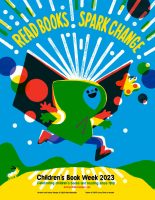
Blue background, green and black book running gleefully, text "Read books. Spark change."

As part of their Every Child a Reader program, the CBC designates two separate weeks during the year to celebrate the joy of reading. Established in 1919, this is the longest-running national literacy initiative in the country. This year, Children’s Book Week will be celebrated May 1-7 and again November 6-12

This year’s theme for Children’s Book Week is Read Books. Spark change. You can download printable resources, including the free poster created by Rilla Alexander that speaks to the power of books and stories to inspire positive change.

Partnering with SLJGraphic illustrated, gray background, colorful characters, rainbow stream

In 2022, the CBC partnered with School Library Journal (SLJ) to create two posters celebrating the freedom to read. First, they worked with Penguin Random House and artist Rafael Lopex to create the “Open Books, Open Doors” poster to promote free expression and access to diverse books. You can download Lopez’s poster for free.

Next, they worked with artist Chan Chau to produce a poster themed “Imagining a world with you.”  The poster celebrates LGBTQIA+ children and teens, and it was showcased and made widely available by multiple organizations, including the CBC. You can download a copy of Chau’s poster for free.

Banned Books Week

Red book cover by yellow tape, text "Banned Books Week"

The CBC also partners with the American Library Association (ALA) to support and promote Banned Books Week. Launched in 1982, this annual observance has become more relevant now than ever. This year, Banned Books Week will be observed October 1-7. Mark your calendars!

Free downloads and information from last year’s Banned Books Week observance are still available on ALA’s website. While there, you can also find “Social Shareables” to show your support on multiple social media platforms.

Learn more about the Children’s Book Council and all their initiatives to promote free access to books and celebrate the power and wonder of books for young readers by visiting cbcbooks.org.

Banned Books Week 2022

Banned Book Week logo featuring an open red book with yellow banner across the middle. Text on banner reads "Banned Books Week."

Banned Book Week logo featuring an open red book with yellow banner across the middle. Text on banner reads "Banned Books Week."


Banned Books Week 2022

Banned Books Week 2022 (September 18-24) hosts its first event today with a conversation on youth activism, led by Banned Books Week Honorary Chair Cameron Samuels. The Kids Are Alright will talk about ways young people can fight censorship.

Promotional slide for banned book week including the title: The Kids Are Alright: Youth Activism on Fighting Censorship, along with photos of each presenter at event

Organizers have planned additional, free speaker events through September 24, including a discussion on Wednesday with YA and MG authors Angie Thomas and Jerry Craft. They will all be available live on Facebook–just join the Banned Books Week Facebook page to view the event.

In addition to these Facebook events, a slew of libraries, bookstores, universities, and other organizations are hosting local events. You can find that calendar here.

To be part of the national conversation, use these hashtags: #BannedBooksWeek, #FReadom, #Freethebooks

((For more on banned books, read this archived MUF post and this one from WNDMG Wednesday))

PEN America has cataloged 2532 book bans across 32 states during the 2021-22 school year, affecting 1,648 unique book titles. (see the index here) The study findings are in line with those released by the ALA. According to PEN America (direct quote, edited for format):

  • “674 banned titles (41 percent) explicitly address LGBTQ+ themes or have protagonists or prominent secondary characters who are LGBTQ+;
  • 659 banned titles (40 percent) feature protagonists or prominent secondary characters of color;
  • 338 banned titles (21 percent) directly address issues of race and racism.”

Source: PEN America study