


I first met Alysa Wishingrad on Clubhouse. If you’re not familiar with the app, just know at one point it had become a haven for writers seeking community with like-minded scribes—however short-lived. Alysa and I would meet up with a few others and have writing sprints and I recall being so excited to one day read Between Monsters and Marvels. This middle-grade fantasy comes out on September 12, but dear friends, NetGalley has finally started to show me some love, and amongst the ARCs (advanced readers copies) that I basked in this summer, was Alysa’s lovely, second middle-grade novel. Between Monsters and Marvels blew me away.
I had the true pleasure of interviewing Alysa about this treasure of a story, her writing process, and all things Dare—the gritty main character that readers will fall in love with. Read on below.
Let’s start with some questions for the writers out there researching MG books!
Ines:
“The coarseness of our weave scratches their more refined sensibilities, but our thicker fibers make us more durable.” When you write delicious lines like these, are they the result of revisions or do they pour out of your head during your drafting process? So much of the writing in Between Monsters and Marvels is lyrical and visual. I guess what I’m really asking is, how do you do it? What does your writing process look like?
Alysa:
Ines, thank you so much for having me, I’m so happy to be chatting with you!
I tend to say that my process is kind of sloppy because I’m not a traditional outliner, I don’t use notecards or have a big whiteboard. But there is a logic and system at work, it’s just very slow. I have to let ideas stew in the back of my head for a good long time until I can begin to see the world in my mind’s eye — I need to be able to see it like a movie. I am an acolyte of paper and pencil so as soon as I begin to get the first whiffs of an idea I start a notebook and get to jotting down ideas and questions. Lots of questions. Who are they? What do they want? Why do they want it? Why are they where they are, and what forces had to coalesce to get them there? I push myself to try to look around corners and really search for the hidden truths hiding out of sight so I can learn as much about my characters, their world, and the problems they’re facing as I can.
Then eventually the writing begins, and I start playing around to try and find the voice. That’s the key for me- once I find the voice then I can begin in earnest. On those days when I’m in the voice, words flow. But by flow, I do not mean they rush out of me. I am a pretty slow, line-level drafter, and will work out a moment until it’s just the right set piece. BUT, and this is the important part, just because a line or beat sets me up to find the rest of the scene or chapter, that doesn’t mean it ultimately stays in. I used to think being able to string together a pretty line was the key to good writing. Silly me, pretty lines are all fine and well, but they have to hit at the heart of the tale you’re weaving.
Finally, my process on both THE VERDIGRIS PAWN and BETWEEN MONSTERS AND MARVELS involved chucking either a completed (and sold) draft, or large swaths and beginning again from the blank page. I’ve done all the hard work at this point, I know the arc, the world, and my MC, so now I have the knowledge and the freedom to roll the story out the right way.
Ines:
It’s so easy to lose oneself in Between Monsters and Marvels and feel like you’re running right alongside Dare in the Must or on the shores of Barrow’s Bay. What is your favorite piece of advice for middle-grade fans who want to write stories like yours, with such deep world-building and character development?
Alysa:
That’s very nice of you, Ines! I’d say take your time! Ask lots of questions. Interrogate your choices, ask yourself why you’ve made the choices you’ve made. Don’t settle for, “that works.” Push yourself beyond your first, second, or even your third idea.
Just as it takes time to get to know a new person in your life, getting to know a character or your world, is about seeing through all the layers. I try to look at my characters from many different angles and put them through a kind of stress test. How would they respond in any given set of circumstances? And is how they respond how they’d want to? Do they understand how others perceive them? Do they like it? Do they even care? How do they want to be seen, and why is that so important to them?
It’s one thing for me to understand a character by their outward persona— how they present themselves to the world. But they truly begin to come to life when I dig to find out what lies behind the mask. What stories are they telling themselves about themselves?
As far as world-building, I say consider everything – how does the society function, what’s its history, how did it come to look the way it does now. While so much of this work might never wind up on the page, having a full and complete understanding of your world’s geography, history, belief system, etc., helps bring a place to life. And do your research, but unless you’re writing straight historical, I’d say don’t do too much so that you feel hemmed in by it.
Ines:
For the writers wishing to write in the third person, how did you manage to make us feel so very much in the head of Dare? The narrator’s voice, though third, allows us to feel Dare’s humor, her curious mind, and her perspective.
Alysa:
Third is tricky, but it’s my favorite POV to both write and read. John Gardner’s writings on psychic distance were incredibly helpful to me. The way he talks about the lens zooming in and out just made it click— there’s that visual, movie brain again.
But it was mentor texts— reading and studying how other authors have drawn us in through close third— that were my best teachers. My copies of Laurie Halse Anderson’s middle grades are marked up in a sea of yellow highlighters! The power of her observations just always makes me feel like I am living in the skin of her characters.
Fundamentally though, I think the key goes back to truly understanding your character, knowing not only what they like or don’t like, what they want or don’t want, but how they see the world. It’s really like positioning yourself behind their eyes and experiencing life as they do. I often think of that alien that controls Vince D’Onofrio’s character in the first Men In Black!
On making connections with young MG readers.
Ines:
Dare is described as wild, tough, and gritty. But she’s also very sweet and thoughtful, and I get the impression that as much as she seems to not want to belong in Barrow’s Bay, deep down she yearns for that belonging or acceptance. For example, when she vows to be more like her father, invisible, rather than be herself.
How were you hoping children would connect with Dare, how she sees herself, and her place in her world?
Alysa:
We all feel like outsiders at some point, whether we admit it or not, and we all have different coping mechanisms. Some of us do everything we can to try to fit in, squeeze ourselves into a mold that winds up stifling us. Others rebel and dare people to try and get close. But deep inside we all just want to be seen for who we are.
Dare refers to all her points and angles (her opinions, intelligence, and her innate ability to see past the illusions people weave) as her awful. And when we meet her, she fairly revels in getting a rise out of people. Then, as she begins to worry about her father, she tries to make a deal with the stars at night to save him –she promises to try to fit in, to hide her awful. But through the course of her story, she begins to understand it’s those very points and angles that made her stick out like a rose among the lilies that are her greatest strengths.
That’s what I hope readers of all ages take away from my Dare— those things we think of as our faults and foibles are our superpowers, it’s up to us to learn how to use them.
Book reccos à la Alysa!
Ines:
Can you give us a list of your favorite middle-grade books? From when you were in middle school and from today, what books have inspired you?
Alysa:
Oh yes, this is my favorite part!
Growing up some of my most favorites were: Charlotte’s Web [still can’t think of that story without wanting to cry], A Wrinkle in Time, The Phantom Tollbooth, The Borrowers, so many of the Roald Dahl stories, and The Chronicles of Prydain. But I also read a whole lot of books that I’d pull off my parent’s shelves. I’m sure 97% that what I read at the time went right over my head, but they pushed me to consider views of the world I would not otherwise have. John Updike’s Rabbit series was a favorite when I was 12. It makes little sense. What does a 12 year-old girl have in common with a man having a midlife crisis? Well, a lot it turns out. We all face a kind of existential angst at different ages.
Some of my recent faves include:
- The Troubled Girls of Dragomire Academy by Anne Ursu
- Freewater by Amina Luqman-Dawson
- Hana Hsu and the Ghost Crab Nation by Sylvia Liu
- The Skull by Jon Klassen
- The Plentiful Darkness by Heather Kassner
- Adia Kelbara and The Circle of Shamans by Isi Hendrix, coming out Sept 19th!
Speaking of Inspiration…
Ines:
The setting is so clearly detailed that it’s easy for any reader to dive into the pages and travel through them to get to Dare’s world. Is there a real place that inspired the fictional island of Barrow’s Bay or the mainland (The Must/City on the Pike)?
Alysa:
Barrow’s Bay was directly inspired by Jekyll and Cumberland Islands— both off the coast of Georgia. At the turn of the 20th century, they were exclusively inhabited by the very wealthiest industrialists in the country. Mackinac Island in Michigan, was also a playground for the very wealthy. But the sense of isolation and mystery was inspired by Put-in-Bay in Ohio. I have a friend who grew up there, and her stories of being iced in over the winter and that sense of wilderness absolutely fed my imagination.
City on the Pike was inspired by the countless cities in both the US and the UK that were absolutely overrun and transformed by the rapid growth of factories during the Industrial Revolution. Sadly, the Must is any one of all too many neighborhoods in the cities that were once thriving communities that were ruined by pollution and the nearly inescapable poverty borne of the inequity of the system.
Thank you so much for having me, Ines, it’s been such a pleasure to chat with you!
You can pre-order BETWEEN MONSTERS AND MARVELS from your favorite indie, or from mine, Oblong Books, for signed copies and some MARVELous swag (https://www.oblongbooks.com/between-monsters-and-marvels-hardcover-signed-alysa-wishingrad)
About Alysa Wishingrad

Alysa Wishingrad writes fantastical stories for young readers, tales that ask; is the truth really true? Her favorite stories are those that meld the historical with the fantastic, and that find ways to shine a light on both the things that divide and unite us all.
She is the author of Between Monsters and Marvels and The Verdigris Pawn, which was a Junior Library Guild Gold Standard Selection.
Alysa lives in the Hudson Valley with her family, two demanding rescue dogs, and a cat-shaped dog, who is either a monster or a marvel, depending on the day.
You can find her at: www.AlysaWishingrad.com
Instagram & Threads @alysawishingradwrites
BlueSky @alysawishingrad.bsky.social
Twitter @agwishingrad
((If you enjoyed this post, check out this one.))


 Last one, The City of Ember was my descent into dystopian fiction.
 I love that horror teaches kids how to be brave! Another client title, is an upcoming YA “toxic friendship” novel called Dead Girls Don’t Say Sorry by Alex Ritany that asks the question, “What does it mean when your best friend dies and your reaction is relief?” It’s told in alternating timelines, unfolding a tale of layered deceptions culminating in her best friend’s death. On first read, it feels a bit like a thriller, but it’s ultimately about finding yourself and loving yourself and others after being subjected to an unhealthy friendship.
 Client books, you say? I mean, I’m super, super biased, but I think The Clackity is brilliant; it’s Bram-Stoker nominated. But I also happen to have read book two of that series, The Nighthouse Keeper, which comes out in October, and Lora’s pulled some sort of magic move, because her sophomore novel might even be better. We’ll see what the readers think, but I’m just amazed at how much hope she packs into middle grade horror! Also, I’ve got a MG novel called Henry Higgs and the Tangle-Hedge on sub, and that’s more speculative fantasy with an autistic hero, and it’s both hilarious and darkly beautiful and so real, and I can’t wait for that one to find a home. Kurt Kirchmeier’s MG debut The Absence of Sparrows is beautiful and is my Charlotte’s Web in that it stays with you because of how real the ending is. And I’d be remiss not to mention Ally Malinenko’s middle grade horror work as well; Ally’s repped by Rena Rossner.
 I love Mainak Dhar’s SFF work. Tau Zero is awesome. Seveneves challenged me but was expansive and fantastic. Erin Craig’s work in YA horror is next-level and ignited something in me. In music, I’m a big fan of Imagine Dragons, REM, Evanescense and the Cranberries.
  And I have to add Big Bang Theory to the list of TV shows. That’s so random but it does say A LOT about me…


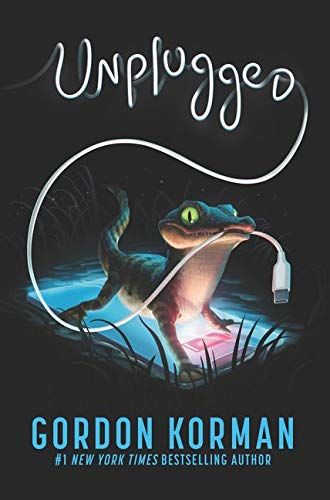 Genre Swapping: Take a familiar setting from a favorite book or class novel study and re-imagine the time and place by changing the book’s genre. For example, what if a modern comedy like Gordon Korman’s Unplugged was actually a high fantasy? Or if Lauren Wolk’s historical Wolf Hollow was contemporary? Build this “reset” world, keeping premise details in mind.
 Narrative Nonfiction Worldbuilding: Apply worldbuilding analysis to a work of narrative nonfiction as a way to glean factual detail and comprehend the setting’s full impact on the tale, especially one in which the setting seems distant or almost otherworldly, like Race to the Bottom of the Earth: Surviving Antarctica by Rebecca E.F. Barone.