Posts Tagged children’s books

My Desert Island Top Five

June is finally here. School is out (or almost out), and everyone is ready for a long, relaxing summer.

This past year has got me thinking about summers when I was kid. Back then, summer vacation consisted of baseball games in the pasture, slip and slides, camping out in the back yard, and traveling only as far as your bike could take you in the hours between breakfast and dinner. A slow and easy summer like that meant two things – you hung out with the same small group of people day in and day out and you spent a lot of time making up games to keep you entertained. One of the games we played when the days got too long and we got too bored was Desert Island. Desert Island  consisted of naming your Top Five – the five songs, albums, movies, tv shows, and books (of course) that you’d want to have if you were stranded on a desert island.

Our Top Five lists shifted and changed week to week and year to year. Sometimes we’d steal from each other. Occasionally, an out of town relative would come for a visit and completely upend our idea of what was worthy. But mostly, every time we played, we got to think about what we loved and why we loved it – which isn’t a bad thing to do.

This past year, I’ve spent some time thinking about what I love and why. I reread old books (like Beverly Cleary’s Henry and the Clubhouse which still holds up and has a Ramona and her mom scene that completely cracked me up). I rewatched old movies (like Legally Blonde and Sense and Sensibility – both of which always make me smile), and revisited old tv shows (Parks and Recreation of course). And, I read a lot of books and thought about which ones stuck with me past the last page and why. It was thinking about what stuck that got me to write this post.

Enough talk. Let’s get to it. Here are my Desert Island Top Five Middle Grade reads this past year (in no particular order):


The Miscalculations of Lightning Girl by Stacy McAnulty

A lightning strike gave her a super power…but even a super genius can’t solve the problem of middle school. This smart and funny novel is perfect for fans of The Fourteenth Goldfish, Rain Reign, and Counting by Sevens.

Lucy Callahan’s life was changed forever when she was struck by lightning. She doesn’t remember it, but the zap gave her genius-level math skills, and she’s been homeschooled ever since. Now, at 12 years old, she’s technically ready for college. She just has to pass 1 more test–middle school

Lucy’s grandma insists: Go to middle school for 1 year. Make 1 friend. Join 1 activity. And read 1 book (that’s not a math textbook ). Lucy’s not sure what a girl who does calculus homework for fun can possibly learn in 7th grade. She has everything she needs at home, where nobody can make fun of her rigid routines or her superpowered brain. The equation of Lucy’s life has already been solved. Unless there’s been a miscalculation?

A celebration of friendship, Stacy McAnulty’s smart and thoughtful middle-grade debut reminds us all to get out of our comfort zones and embrace what makes us different.


Clayton Byrd Goes Underground by Rita Williams-Garcia (Author) Frank Morrison (Illustrator)

From beloved Newbery Honor winner and three-time Coretta Scott King Award winner Rita Williams-Garcia comes a powerful and heartfelt novel about loss, family, and love that will appeal to fans of Jason Reynolds and Kwame Alexander.

Clayton feels most alive when he’s with his grandfather, Cool Papa Byrd, and the band of Bluesmen–he can’t wait to join them, just as soon as he has a blues song of his own. But then the unthinkable happens. Cool Papa Byrd dies, and Clayton’s mother forbids Clayton from playing the blues. And Clayton knows that’s no way to live.

Armed with his grandfather’s brown porkpie hat and his harmonica, he runs away from home in search of the Bluesmen, hoping he can join them on the road. But on the journey that takes him through the New York City subways and to Washington Square Park, Clayton learns some things that surprise him.


The Next Great Paulie Fink by Ali Benjamin

In this acclaimed novel by the author of the award-winning, bestselling The Thing About Jellyfish, being the new kid at school isn’t easy, especially when you have to follow in the footsteps of a legendary classroom prankster.

When Caitlyn Breen begins her disorienting new life at Mitchell School–where the students take care of real live goats and study long-dead philosophers, and where there are only ten other students in the entire seventh grade–it seems like nobody can stop talking about some kid named Paulie Fink.

Depending on whom you ask, Paulie was either a hilarious class clown, a relentless troublemaker, a hapless klutz, or an evil genius. One thing’s for sure, though: The kid was totally legendary. Now he’s disappeared, and Caitlyn finds herself leading a reality-show-style competition to find the school’s next great Paulie Fink. With each challenge, Caitlyn struggles to understand a person she never met…but it’s what she discovers about herself that most surprises her.

Told in multiple voices, interviews, and documents, this funny, thought-provoking novel from the bestselling author of The Thing About Jellyfish is a memorable exploration of what makes a hero–and if anyone, or anything, is truly what it seems.


American as Paneer Pie by Supriya Kelkar

An Indian American girl navigates prejudice in her small town and learns the power of her own voice in this brilliant gem of a middle grade novel full of humor and heart, perfect for fans of Front Desk and Amina’s Voice.

As the only Indian American kid in her small town, Lekha Divekar feels like she has two versions of herself: Home Lekha, who loves watching Bollywood movies and eating Indian food, and School Lekha, who pins her hair over her bindi birthmark and avoids confrontation at all costs, especially when someone teases her for being Indian.

When a girl Lekha’s age moves in across the street, Lekha is excited to hear that her name is Avantika and she’s Desi, too! Finally, there will be someone else around who gets it. But as soon as Avantika speaks, Lekha realizes she has an accent. She’s new to this country, and not at all like Lekha.

To Lekha’s surprise, Avantika does not feel the same way as Lekha about having two separate lives or about the bullying at school. Avantika doesn’t take the bullying quietly. And she proudly displays her culture no matter where she is: at home or at school.

When a racist incident rocks Lekha’s community, Lekha realizes she must make a choice: continue to remain silent or find her voice before it’s too late.


A Field Guide to Getting Lost by Joy McCullough

A girl with a passion for science and a boy who dreams of writing fantasy novels must figure out how to get along now that their parents are dating in this lively, endearing novel.

Sutton is having robot problems. Her mini-bot is supposed to be able to get through a maze in under a minute, but she must have gotten something wrong in the coding. Which is frustrating for a science-minded girl like Sutton–almost as frustrating as the fact that her mother probably won’t be home in time for Sutton’s tenth birthday.

Luis spends his days writing thrilling stories about brave kids, but there’s only so much inspiration you can find when you’re stuck inside all day. He’s allergic to bees, afraid of dogs, and has an overprotective mom to boot. So Luis can only dream of daring adventures in the wild.

Sutton and Luis couldn’t be more different from each other. Except now that their parents are dating, these two have to find some common ground. Will they be able to navigate their way down a path they never planned on exploring?


So, that’s my Desert Island Top Five (for now). What are your Desert Island Top Five Middle Grade – of all time, of the past year, or even of the last month? I’d love to steal, so please share in the comments below.


STEM Tuesday — Serendipity Science — In the Classroom


This month’s book list highlights of my most favorite aspect of science –Serendipity! Why is it my favorite? Because while everyone may say science is exact, it is anything but that. Scientists conduct do research, make hypotheses, and then conduct experiments. Many times, the results they get are not what they anticipated in the first place. But that doesn’t mean they are wrong. Perhaps they have just discovered a new element, product, or created a brand new drug that will change the world (Alexander Fleming and penicillin)… accidentally!


While you most likely aren’t crazy about the idea of letting your students just do experiments without guidelines in your classroom on the off chance they will discover something amazing,  one of the best ways to introduce them to this topic is to introduce them to Mistakes That Worked: 40 Familiar Inventions & How They Came to Be by Charlotte Foltz Jones, illustrated by John O’Brien or Accidental Inventions: The Chance Discoveries That Changed Our Lives by Birgit Krols


Mistakes that Worked book cover

Accidental Inventions Book cover


Classroom Activities: Split the class up into four to six small groups. Have each group pick one or two inventions and discuss them amongst themselves. Write out what they think is the turning point in the discovery? Ie. When did the scientist realize what they did was not a failure but a success? And then how did they turn their product into something that was marketable? Each group can make a poster or give a talk about their invention and inventors to the rest of the class. Class discussion can focus on HOW it was turned into an invention that became a product to be sold or used. (Hint: this also teaches a bit of economics.)

Here are a few resources for students to use:

https://www.upcounsel.com/blog/how-to-turn-your-invention-ideas-into-products

https://www.entrepreneur.com/slideshow/299456

https://www.businessnewsdaily.com/8773-turn-your-idea-into-a-product.html


How To Become An Accidental Genius

Have Students that want to invent something to change the world? Have them read through How To Become An Accidental Genius by Frieda Wishinsky, Elizabeth MacLeod, illustrated by Jenn Playford. This is a fabulous book for teaching kids HOW to become an inventor.

Classroom Activity:

This can be done in groups, pairs, or individually. Have students come up with their own invention. Use the steps in this book to develop a plan which contains the following

  • Have them outline what their invention is
  • How it will be used
  • List the materials they’ll need to create it
  • Design and draw it
  • Develop a method for the experiment and creation
  • Discuss what they’ll do if they have to make changes
  • How will they market it

Then have them present it to the class. My guess is, you’ll have some pretty amazing inventions! Kids are very creative and ingenious. This could be a fun thing to share with other classes or for a STEM night at school.

Resources:

Show them this  video to be inspired by REAL  kids who came up with their own inventions!

https://www.youtube.com/watch?v=XiuU1mlFeEc

iKids — The Inventive Kids site is a place where children and adults can learn about inventors and inventions, and their own creative potential! https://inventivekids.com/


The OTHER part of Serendipity Science is when someone stumbles on a great scientific or technological find. Science is a made up of curiosity, perseverance, and yes, luck. Sometimes the best discovery happens when you are in the right place at the right time.

One of my favorite books that showcases how anyone can make discoveries is Sarah Albee’s Accidental Archeologist. This book is chock full of discoveries made, well, accidentally.


Accidental Archaeology by Sarah Albee

Classroom activity: Have the kids read through the table of contents, just to get an idea of what was discovered. They can then pick a chapter and read through as a group or individuals. Make a list of the following

  • How the discovery was made
  • Where the person was when it happened
  • What was the person doing?
  • Where they looking for something else and made this discovery instead?

Then have the students think about something they might  have discovered accidentally? Have they ever found a penny on the sidewalk? Discovered a fossil? Picked up a rock that didn’t belong with the other ones? Seen an animal that is normally nocturnal (out at night) during the day? All of these are accidental discoveries. By paying attention to the world around them, maybe one day they could make a BIG discovery like the people in Albee’s book.


Resources:  https://www.history.com/news/7-historical-treasures-discovered-by-accident

https://www.washingtonpost.com/news/morning-mix/wp/2014/07/10/found-by-accident-some-of-the-worlds-inadvertent-archaeological-discoveries/

https://www.youtube.com/watch?v=aohkBc9GuLw


Hope you  have fun with this month’s topic!


******************************************************************************


Jennifer Swanson is the award-winning author of over 45 books for kids, mostly about STEM and STEAM. She is the founder of the STEM Tuesday blog and STEAM Team Books. She has a cool podcast for kids and families called        Solve IT! for Kids— check it out!  You can discover more about Jennifer and book her for events at her website:  www.JenniferSwansonbooks.com

STEM Tuesday — Serendipity Science — Book List

Do all discoveries, inventions, and innovations require plans and procedures? Nope. Serendipity, a blend of chance and wisdom, play a huge part in many instances. Tales of accidental brilliance are fun to read and show us the part in plays in all of our lives. Here’s a list of books that tell tales of serendipity.

Accidental Archeologists: True Stories of Unexpected Discoveries by Sarah Albee

Sarah Albee tells tales of the secret treasures that are found all around us in Accidental Archeologists. Readers will discover many incredible tales in this book of accessible archeology.

Building Blunders: Learning from Bad Ideas by Amie Jane Leavitt 

As a part of the series Fantastic Fails, this book shares building failures that led to learning.

Gadget Disasters: Learning from Bad Ideas by Elizabeth Pagel-Hogan

Another in the Fantastic Fails series, Gadget Disasters introduces readers to gadgets gone wrong and what designers learn from those missteps.

How to Become an Accidental Genius by Freida Wishinsky and Elizabeth MacLeod, Illustrated by Jenn Playford

Yes, you can become an accidental genius too, according to these two authors, who share a series of inspiring tales of global inventors.

Mistakes That Worked: 40 Familiar Inventions and How They Came to Be by Charlotte Foltz Jones, Illustrated by John O’Brien

Readers will find the stories of common things, like potato chips, and their chance invention. Mistakes can lead to success.

Rhinos in Nebraska: The Amazing Discovery of the Ashfall Fossil Beds by Allison Pearce Stevens, illustrated by Matt Huynh

It’s difficult to believe that rhinos, elephants, and camels once roamed North America. Readers will learn about a startling archeological discovery right in the heart of Nebraska in this book that proved their existence.

All In a Drop: How Antony van Leeuwenhoek Discovered an Invisible World by Lori Alexander, illustrated by Vivien Mildenberger

Lori Alexander tells the fascinating story of self-taught scientist, Antony van Leeuwenhoek’s great discovery.

Accidental Inventions: The Chance Discoveries That Changed Our Lives by Birgit Krols

Here is another book that features the backstories of some of our most important, fun, and useful inventions.

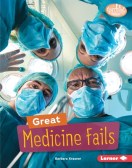
Great Medicine Fails by Barbara Krasner

Can bloodletting with leeches actually lead to a medical success? Read about some of the biggest failures in medicine that led to important success.

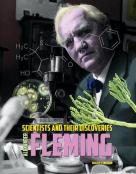
Alexander Fleming: Scientists and their Discoveries by Bradley Sneddon

Penicillin is one of the world’s greatest discoveries and has one of the most fascinating stories. Discover how a chance mold contamination led to saving countless lives across the planet.


This image has an empty alt attribute; its file name is thumbnail-150x113.jpg

Nancy Castaldo has written books about our planet for over 20 years including, THE STORY OF SEEDS, which earned the Green Earth Book Award, Junior Library Guild Selection, and other honors. Nancy’s research has taken her all over the world from the Galapagos to Russia.  She strives to inform, inspire, and empower her readers. Nancy also served as Regional Advisor Emeritus of the Eastern NY SCBWI region. Her 2020 international title about farm and food is THE FARM THAT FEEDS US: A Year In The Life Of An Organic Farm. Visit her at www.nancycastaldo.com. 

This image has an empty alt attribute; its file name is Patricia-Newman-150x150.jpg

Patricia Newman writes middle-grade nonfiction that empowers young readers to act on behalf of the environment and their communities. Academy Award winner and environmentalist Jeff Bridges calls Planet Ocean a “must read.” Newman, a Sibert Honor author of Sea Otter Heroes, has also received an NSTA Outstanding Science Trade Book Award for Eavesdropping on Elephants, a Green Earth Book Award for Plastic, Ahoy!, and a Eureka! Gold Medal from the California Reading Association for Zoo Scientists to the Rescue. Her books have received starred reviews, been honored as Junior Library Guild Selections, and included on Bank Street College’s Best Books lists. During author visits, she demonstrates how young readers can use writing to be the voice of change. Visit her at www.patriciamnewman.com.