
Posts Tagged children’s books

STEM Tuesday — Women Who Changed Science — Author Interview with Kirsten W. Larson

Welcome to STEM Tuesday: Author Interview, a repeating feature for the fourth Tuesday of every month. Go Science-Tech-Engineering-Math!

Today we’re interviewing Kirsten W. Larson, author of Wood, Wire, Wings: Emma Lilian Todd Invents an Airplane. “This inspiring work shines a light on a lesser-known inventor who was the first woman to design an airplane,” says School Library Journal.

Mary Kay Carson: Tell us a bit about your book Wood, Wire, Wings. How did you come to write it?

Kirsten Larson: WOOD, WIRE, WINGS: Emma Lilian Todd Invents an Airplane, illustrated by Tracy Subisak, is the true story of early airplane designer Emma Lilian Todd. Todd was the first woman to design a working airplane on her own, which flew in 1910. That’s only seven years after the Wright Brothers, and she worked during the same period as the Wrights as well as Glenn Curtiss and other notable early aviation pioneers!

The idea for that book came straight out of the pages of the best-selling picture book, ROSIE REVERE, ENGINEER by Andrea Beaty, illustrated by David Roberts. The book contains a timeline of female firsts in aviation towards the end, and there was Lilian’s name. I had never heard of her even though I’ve lived and worked around airplanes my whole life. I knew I had to tell her story, especially when I found out how few people had heard of her.

MKC: To whom did you imagine yourself writing to while drafting the book? 

Kirsten: Writing picture books is always a balance. I always keep my reader in mind, primarily students ages seven and up. That means I have to think carefully about what students know and what they need to know to understand the story. And then there’s always the question of what can be shown in the illustrations, because often pictures say things far better than my words ever could. Yet because picture books are designed to be read by an adult to a child, especially for younger students, I can often use richer language than you might find in very early middle grade like chapter books.

MKC: Did you chose a particular angle or slant or the book? Why?

Kirsten: When I’m writing a book, I try to think of all the ways it might appeal to different readers and fit into school curriculum. In the case of WOOD, WIRE, WINGS, the narrative of the book closely follows the engineering design process, from Lilian’s to initial design to testing, tweaking, and testing still more. That was deliberate. I wanted to book to be able to be used to teach the engineering design process. I also wanted readers to realize that few inventors or engineers get things right on the very first try. Instead, it’s 1 percent inspiration and 99 percent perspiration, as Edison supposedly said. In other words, it’s about persistence. I felt that was a message readers needed to hear.

MKC: What other books for kids about women who changed science would you recommend?

Kirsten W. Larson is also the author of A TRUE WONDER: The Comic Book Hero Who Changed Everything, illustrated by Katy Wu (Clarion, 2021), THE FIRE OF STARS: The Life and Brilliance of the Woman Who Discovered What Stars Are Made Of, illustrated by Katherine Roy (Chronicle, 2023), and THIS IS HOW YOU KNOW, illustrated by Cornelia Li (Little, Brown 2024). THE LIGHT OF RESISTANCE, illustrated by Barbara McClintock, (Roaring Brook, 2023) is her first graphic nonfiction. Kirsten lives with her family near Los Angeles. Find her on social media @kirstenwlarson or at Kirsten-w-larson.com.

Kirsten: I could rattle off at least a hundred. I appreciate that STEM Tuesday has included my picture book here, as many picture books, especially biographies, are for the upper elementary age group. A few of my favorite Women Who Changed Science picture books include Teresa Robeson’s QUEEN OF PHYSICS, illus. Rebecca Huang, Laurie Wallmark’s HEDY LAMARR’S DOUBLE LIFE, illustrated by Katy Wu, and HIDDEN FIGURES by Margot Lee Shetterly, illustrated by Laura Freeman.

In terms of non-picture books suitable for middle grade readers, I am a huge fan of Joyce Sidman’s THE GIRL WHO DREW BUTTERFLIES, Martha Freeman’s BORN CURIOUS: 20 Girls Who Grew Up to Be Awesome Scientists and Tonya Bolden’s CHANGING THE EQUATION: 50+ U.S. Black Women in STEM.

MKC: Why do you choose to write STEM books?

Kirsten: I think I gravitate to STEM books for a few reasons. First, I do have a background in STEM. For many years, I worked in public affairs at NASA, which gave me a crash course in STEM communication. I’m also intrigued by how scientists and engineers go about their work; I find so many parallels between STEM processes and the process of writing and publishing books. STEM and writing are deeply creative fields that require deep observation, a willingness to revise ideas, and dogged persistence. Finally, I gravitate to underdogs and people who turn traditional notions on their heads. That means I often write women’s stories, whether they are in STEM or other fields, or even fictional characters like Wonder Woman.


Wood, Wire, Wings: Emma Lilian Todd Invents an Airplane (Calkins Creek, 2020) by Kirsten W. Larson and illustrated by Tracy Subisak.

Download a complete educator’s guide and access other teaching resources on the author’s website. You’ll find all the resources here.

… – . —  – ..- . … -.. .- -.– … – . —  – ..- . … -.. .- -.– … – . —  – ..- . … -.. .- -.–
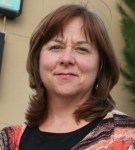
 

Your host is Mary Kay Carson, author of Wildlife Ranger Action Guide, The Tornado Scientist, Alexander Graham Bell for Kids, Mission to Pluto, and other nonfiction books for kids. @marykaycarson

STEM Tuesday — Women Who Changed Science — Writing Tips & Resources


I’ve always been fascinated by the way the minds of scientists and engineers work. Maybe that’s why I write about them so often, especially women in these fields. One thing that always amazes me is that artists’ minds often work in the same ways, which is our topic for this month.

Arts and Sciences: Not Mutually Exclusive

Of course, many scientists and engineers are artists in their own right. For example, Einstein was an accomplished musician As his second wife said, “Music helps him when he is thinking about his theories. …He goes to his study, comes back, strikes a few chords on the piano, jots something down, returns to his study.” Einstein also was know to carry his violin, Lina, with him practically everywhere.

Book cover for Temple Grandin

Inventor Temple Grandin also felt an early connection to the arts. As she writes in the preface to Sy Montgomery’s TEMPLE GRANDIN: How the Girl Who Loved Cows Embraced Autism and Changed the World (from this month’s book list), “Before I started my career with animals, I was one of those kids who did not fit in with the rest of the crowd. … What saved me and enabled me to succeed were my love of making things and creating art.”

Common Characteristics

NO BOUNDARIES coverSo what are some common traits that make scientists and artists, including writers, successful? Another book on this month’s list, NO BOUNDARIES: 25 Women Explorers and Scientists Share Adventures, Inspiration, and Advice by Clare Fieseler and Gabby Salazar, is rich with examples. Here are a few.

  • Curiosity – For most scientists and writers, it all starts with curiosity. As Dr. Danielle N. Lee, an American mammologist and outreach scientist writes, “The questions I asked as a child were kind of the same questions I’m asking now. … I was always very curious.”


  • Training – Wasfia Nazreen, a mountaineer and activist from Bangladesh, would never attempt to summit a mountain without training physically. Likewise, writers must train too. They study the craft of writing in workshops, ready and study books by authors they admire, and most of all, practice writing as much as possible.
  • Courage to take risks– Ecologist Dominique Goncalves of Mozambique emailed a brand-new science lab out of the blue to ask if they offered internships. She was told no. But eventually the director emailed her back to find out why she was so interested. That email changed her life and led to her career. Goncalves’ advice? “If you see an opportunity, take it. But even if there is no opportunity – make one.” Authors take risks every day, trying new formats and approaches, for example. A fiction writer may try out nonfiction writing. Or an author who normally writes with a lyrical (poetic) voice, may try out a humorous voice. Such risks can lead to new writing opportunities. Don’t be afraid to try something new.
  • Perseverance – Egyptian archaeologist Nora Shawki notes the importance of perseverance when working toward a career in science. She says, “Even if you get rejected, be persistent, become resilient, and stay focused. Rejection will mold you and push you and make you grow.” Guess what? Authors experience different types of rejection all the time. Perhaps they get unfavorable feedback on a manuscript. Or an editor decided not to publish their next book. Yet that rejection could lead to a better book or opportunities with a new publishers.

Challenge

What other traits to you think successful writers and artists need and why? Do scientists share that trait? Why or why not?

—

headshot of Kirsten W. LarsonKirsten W. Larson used to work with rocket scientists at NASA and now writes about women in science and much more. Her books include the WOOD, WIRE, WINGS: Emma Lilian Todd Invents an Airplane, illus. Tracy Subisak and A TRUE WONDER: The Comic Book Hero Who Changed Everything, illus. Katy Wu. Learn more at kirsten-w-larson.com.

Grab a Book and Head Outside!

Design by Nature book

It’s that time of year. The sun is out longer, the end of school is in sight, and flowers are blooming everywhere. It’s time to GET OUTSIDE and get your Outdoor science on! Where do you start?

Head to your bookshelf!

That’s right, inspiration for how to imagine, invent and discover great outdoor science is right there among the books.

What are you interested in?  Bugs? Moths? Birds? Cool!

Check out a few of these books.


What about doing some FUN activities while you’re outside? Then check out the entire Outdoor School series!

Hiking and Camping Book

Animal Watching Book

Rocks Fossils and Shells book


Or perhaps you have more of a technology bent and want to understand how animals and technology go together.

Design by Nature book

Book Beastly Bionics


Don’t forget to notice all of the cool engineering around you! In fact, do some of the activities in these awesome books to experience it!

Engineering Activities for Kids


Finally, what if you are just inspired to invent something? Try out these fun books

Magnificent Makers book


For MORE great ideas of how to use STEM/STEAM books to enhance fun outdoors,

check out our STEM Tuesday Blog, which has almost FIVE years worth of activities for kids/parents/teachers —   

and also STEAMTEAMbooks website which highlights new STEM/STEAM books from 2020 to 2022!


Listen to an Expert and Go On a Water Walk

Dr.  Kelsey Leonard, of the Shinnecock Nation gives a talk on the award-winning podcast, Solve It for Kids!

WAter walk Solve It podcast


CHALLENGE:
Go on a Water Walk! Pick a body of water near your house and go with your parents on a walk safely along the water. Take time to notice things about the water. Does it flow? Is it still? What color is the water? Does it look healthy? Are there a lot of plants around it, etc? Also, spend time just breathing and thinking about the water. Listen to it, too.


Now that your interest has been piqued, it’s time to DO something with your new knowledge.

Your challenge is to observe, draw, and get outside to explore! Here are a few suggestions:

  • Come up with a new type of animal– one that doesn’t exist but you think it should
  • Design a new type of bionic robot that mimics the way an animal moves or reacts that would be helpful to humans
  • Draw a picture of a car or building that would be awesome to drive or live in
  • Write a story about your creation and share it with your friends and family
  • Make a game or puzzle for others to try to guess what you drew
  • Turn your backyard or living room into a new type of ecosystem  and take everyone on a safari


Science really IS all around you. It starts with your imagination. Time to let that imagination and inspiration SOAR!

I’d love to see what you come up with.

Enjoy the outdoors  and Happy Science-ing!