

Some of the most beloved, beautifully written, and highly awarded middle grade novels have ended up as banned children’s book classics, often for surprising reasons.

A FEW OF THE BANNED CLASSICS
Newbery honor book Charlotte’s Web by E. B. White is about an unusual friendship between Charlotte, a spider, and Wilbur, a runt farm pig who is scheduled for slaughter. Charlotte spells out Wilbur’s redeeming qualities by weaving words into her web, then enlists the help of the farmer’s daughter, Fern, to save him. This beloved story of friendship and the power of language has been a classic for seven decades. Its opening line is one of the most powerful in literature. ‘Where’s Papa going with that axe? ‘ said Fern to her mother as they were setting the table for breakfast.”
But a parent group in Kansas wanted the book banned from school libraries. Why? Because it has death as a theme, and because talking animals are “unnatural “and blasphemous. Only humans can talk and write, they said. Imagine the world of children’s literature without talking animals.
When Harriet The Spy by Louis Fitzhugh was published, there had never before been a character quite like Harriet.  She really stirred things up! Harriet wants to be a writer and keeps a notebook on everyone around her, what she knows and exactly what she thinks about them. Then she loses the notebook. Her nemesis finds it, and soon everyone knows everything she said. Her task then is to take responsibility for her words and to find ways to mend friendships. The book’s challengers overlooked that part. Harriet the Spy was banned through most of the South for encouraging children to “talk back, spy on others, lie, and disrespect their parents.” It also modeled “improper behavior for a girl.” School Library Journal said, ”Harriet the Spy bursts with life.” It has sold over five million copies.
In Newbery Award winner Bridge to Terabithia, Jesse becomes best friends with Leslie, the new girl in school.  Leslie drowns trying to reach Terabithia, the hideaway they have created, and Jesse struggles to deal with her loss. School Library Journal ranks this novel number ten of the all-time best books for children. But the book also ranks high on the American Library Association’s list of the most commonly challenged books in the United States.
Challengers have objected to death being part of the plot and to offensive language, including Jesse’s frequent use of the world “lord.” They’ve claimed that it promotes “secular humanism, New Age religion, occultism, and Satanism.” A Pennsylvania township removed it from 5th grade classrooms because of profanity, disrespect for adults, and an elaborate fantasy world that “might lead to confusion.”
The all-time favorite target for challenges, bans—even book-burnings—has to be Harry Potter, a series immensely popular and successful among adults and children worldwide.  The New York Times had to create a separate list for children’s books, because the Harry Potter volumes coming out were taking up a third of the spaces on the Times best-seller list.
The series has also landed on the American Library Association’s list of top 10 banned books as recently as 2019. It has been attacked for promoting Satanism and witchcraft, for including actual spells and curses, for violence, and for disrespecting family. (Should Harry have been more respectful and obedient to the abusive Dursleys?).
POETRY, TOO
 Shel Silverstein’s clever A Light in the Attic, was the first children’s book to make the NYT bestseller list. It stayed there for 182 weeks. But it was banned in a Florida school and later some other schools in Wisconsin and Texas because some adults thought it encouraged “disobedience, violence, suicide, Satanism and cannibalism.”
One poem that parents objected to was “How Not To Have To Dry The Dishes.” They thought it would give kids the idea of breaking the dishes to get out of assigned chores. Silverstein’s Where the Sidewalk Ends and his more serious story The Giving Tree faced similar challenges.
EVEN PICTURE BOOKS
In picture books for younger readers, the objections can be even more mystifying. Hop On Pop by Dr. Seuss has been challenged for encouraging violence against fathers!  The Texas State
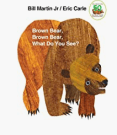
Board of Education banned Brown Bear, Brown Bear, What Do You See? for promotion of Marxism. When someone pointed out to them that they had confused the Brown Bear author, Bill Martin Jr.,with another Bill Martin, author of Ethical Marxism: The Categorical Imperative of Liberalism, they withdrew the ban and said Brown Bear, Brown Bear was okay for kids.
REASON TO WORRY?
Should a father fear that a child to whom he reads Hop on Pop will attack him? No known cases. Will readers of the Harry Potter series lose their faith? Probably no more likely than that they will drop out of soccer to train for broomstick sports. Or abandon their cell phones in favor of a personal messenger owl. Teachers, librarians, and most parents believe that reading stories encourages and expands the most positive natural qualities of children—imagination, curiosity and empathy.
ASK LIBRARIANS: THEY HAVE READ THE BOOKS
Librarians know their collections well. They are happy to help parents select books for their children that will not conflict with their particular family values and beliefs.

But book-banning groups want to decide which titles other people’s children in their communities will not be allowed to read. The number of banned children’s books has increased dramatically just in this last year. The main targets currently are books that focus on—or mention— such topics as slavery, racial discrimination, gender identity, or climate change. Challengers claim that reading, knowing, and talking about these things will harm, even “traumatize” children. In some places the bans have become law, requiring libraries and librarians to comply by removing the books.
For librarians, a core principle is that free access to books and information is inseparable from freedom of speech. That means for all of us and all our kids, not just a few. Arrest librarians? Better to cherish and defend them.
Banned Books Week isn’t until the first week of October. The list will be especially long this year, though. Let’s get an early start exercising ours and our kids’. . .




 Kids Get Coding
  Gamer Girls: 25 Women Who Built the Video Game Industry
  My Life as a Coder
  Girls Who Code: Learn to Code and Change the World
  Coding Games in Scratch: A Step-by-Step Visual Guide to Building Your Own Computer Games
 Get Coding! Learn HTML, CSS & JavaScript and Build a Website, App, and Game
 Python for Kids, 2nd Edition: A Playful Introduction to Programming
 Callie Dean is a researcher, writer, and musician living in Shreveport, LA. She writes stories that spark curiosity and encourage kids to explore their world. For more information, please visit https://www.calliebdean.com.


