It’s July! Time for a summer slow down. Lucky for you, we have a nice list of new middle grades coming your way – including one from our very own
Jennifer Swanson. Happy book birthday, Jennifer!!
Have you ever wondered how astronauts stay healthy in space? What if an astronaut gets sick on the space station? Does snot run in space? This fascinating photo-illustrated look at space and medicine explores how scientists and physicians study astronauts in space, how they help keep them safe, and what we’ve learned about the human body through space exploration. Questions from real kids and answers form from astronauts, along with photos from NASA, combine for an out-of-this-world exploration of health.
Cora Mae Tipton is determined to light up her Appalachian community in this historical fiction novel from an award-winning author and former librarian.
It’s 1937 and the government is pushing to bring electricity to the mountains of southeastern Kentucky. It’s all Cora can think of; radios with news from around the world, machines that keep food cold, lightbulbs by which to read at night! Cora figures she can help spread the word by starting a school newspaper and convincing her neighbors to support the Rural Electrification Act.
But resistance to change isn’t easy to overcome, especially when it starts at home. Cora’s mother is a fierce opponent of electrification. She argues that protecting the landscape of the holler–the trees, the streams, the land that provides for their way of life–is their responsibility. But Cora just can’t let go of wanting more.
Lyrical, literary, and deeply heartfelt, this debut novel from an award-winning author-librarian speaks to family, friendship, and loss through the spirited perspective of a girl eager for an electrified existence, but most of all, the light of her mother’s love and acceptance.
Neurodivergent Maudie is ready to spend an amazing summer with her dad, but will she find the courage to tell him a terrible secret about life with her mom and new stepdad? This contemporary novel by the award-winning author of The Someday Birds is a must-read for fans of Leslie Connor and Ali Standish.
Maudie always looks forward to the summers she spends in California with her dad. But this year, she must keep a troubling secret about her home life–one that her mom warned her never to tell. Maudie wants to confide in her dad about her stepdad’s anger, but she’s scared.
When a wildfire strikes, Maudie and her dad are forced to evacuate to the beach town where he grew up. It’s another turbulent wave of change. But now, every morning, from their camper, Maudie can see surfers bobbing in the water. She desperately wants to learn, but could she ever be brave enough?
As Maudie navigates unfamiliar waters, she makes friends–and her autism no longer feels like the big deal her mom makes it out to be. But her secret is still threatening to sink her. Will Maudie find the strength to reveal the awful truth–and maybe even find some way to stay with Dad–before summer is over?
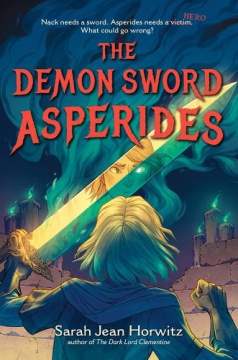
A scheming demon sword and a wannabe knight band together on a (possibly wicked) quest in this fantasy, perfect for fans of Diana Wynne Jones and Terry Pratchett.
For the past two hundred years, the demon sword Asperides has led a quiet life. While his physical form has been tasked with guarding the body of an evil sorcerer, the rest of his consciousness has taken a well-earned vacation. That constant need to trick humans into wielding him (at the price of their very souls, of course) was rather draining.
Nack Furnival, on the other hand, is far from satisfied with his existence. Nack has trained since birth to be a brave and noble knight–but, unfortunately, he isn’t especially good at it. Determined to prove his worth, Nack needs a quest. And to complete that quest, he’ll need the one thing no knight can do without: a sword.
When an attempt to resurrect the evil sorcerer throws Asperides into Nack’s path, the demon sword can’t help but trick the boy into making a contract to become his new owner. And with the newly undead (and very, very angry) sorcerer on their trail, Asperides and Nack find themselves swept up in a bigger adventure than either of them bargained for: saving the world.
From the Edgar-nominated author of Coop Knows the Scoop comes an exciting mystery perfect for fans of From the Desk of Zoe Washington and Holes.
When Grady and his dad learn that the town oddball, Eudora “Kooky” Klinch left something for them in her will, they can only imagine what it might be. When it turns out it’s an old scrap of 300-year-old tapestry, they are bitterly disappointed. But the cloth comes with a note saying, “This is no ordinary piece of needlework. It’s a treasure map. Riddles and Clues. To the victor go the riches.” Grady’s dad dismisses it, but Grady thinks this could be the chance of a lifetime. With the help of his friends Thad, Clemmie, and the town dog Ophelia, Grady is determined to crack the clues and find the treasure.
But when someone tries to break into Grady’s house one night, and then the local antiques expert who examined the tapestry is found unconscious, Grady realizes that he’s not the only one who knows about the treasure map. There’s more at risk than he bargained for, and solving this mystery just got a lot more dangerous.
In this magical and chilling Coraline-esque retelling of the Japanese folktale “The Melon Princess and the Amanjaku,” one girl must save herself–and her loved ones–from a deceitful demon she befriended.
Melony Yoshimura’s parents have always been overprotective. They say it’s because a demonic spirit called the Amanjaku once preyed upon kids back in Japan, but Melony suspects it’s just a cautionary tale to keep her in line. So on her twelfth birthday, Melony takes a chance and wishes for the freedom and adventure her parents seem determined to keep her from.
As if conjured by her wish, the Amanjaku appears. At first, Melony is wary. If this creature is real, are the stories about its destructive ways also real? In no time, however, the Amanjaku woos Melony with its ability to shape-shift, grant wishes, and understand her desire for independence. But what Melony doesn’t realize is that the Amanjaku’s friendship has sinister consequences, and she quickly finds every aspect of her life controlled by the demon’s trickery–including herself.
Melony is determined to set things right, but will she be able to before the Amanjaku turns her life, her family, and her community upside down?
Perfect for fans of Small Spaces and Doll Bones, this spooky, highly illustrated middle grade novel follows a girl who hopes to fix her outcast status through a game in the haunted woods, only to discover that some legends shouldn’t be played with.
Everyone knows Fall Hollow is haunted. It has been ever since Abigail Snook went into the woods many years ago, never to be seen again. Since then, it’s tradition for the sixth graders at Beckett Elementary to play the Bellwoods Game on Halloween night. Three kids are chosen to go into the woods. Whoever rings the bell there wins the game and saves the town for another year, but if Abigail’s ghost captures the players first, the spirit is let loose to wreak havoc on Fall Hollow–or so the story goes.
Now that it’s Bailee’s year to play, she can finally find out what really happens. And legend has it the game’s winner gets a wish. Maybe, just maybe, if Bailee wins, she can go back to the way things used to be before her grandma got sick and everyone at school started hating her. But when the night begins, everything the kids thought they knew about the game–and each other–is challenged. One thing’s for sure: something sinister is at play…waiting for them all in the woods
From soda to water to milk and juice, this refreshing follow-up to There’s No Ham in Hamburgers is full of fun facts and origin stories of some of America’s most popular drinks.
People have been inventing drinks for thousands of years. Kinda weird when you consider that humans only need two liquids to survive–water and milk–and we don’t need milk once we can eat solid foods. So, why did humans, unlike other mammals, begin concocting new beverages? It likely started with safety–boiling water to make it safer to drink, and then adding in berries or leaves or roots to make it taste better. Sometimes, it was thought that enhancing drinks made them healthier (i.e. bubbly water restored vitality). Did you know that some of the most popular sodas were created by pharmacists? Americans spend approximately $150 billion on soft drinks, coffee, and tea each year. Why? This book offers some possible answers!
THE MAGIC CAROUSEL PROMISES ONE THING: ADVENTURE!
When Russell’s eccentric, storytelling grandpa moves in with the family, Russell loses his bedroom and has to take Grandpa to the carousel in the park every day. As if he doesn’t have enough to deal with already. He’s flunking fifth grade, bullied at school, and his dad’s drinking has made him feel like a failure. Russell dreams of being a firefighter but fears he isn’t courageous enough.
Then Russell rides a carousel horse with Grandpa. Thanks to a magic brass ring, he finds himself magically transported into the past, where he faces life-and-death challenges. Each ride is a new, risky adventure. If he’s not careful, he could be trapped in one of his wild adventures forever!
From the creator of My Life As a Teenage Robot comes a middle-grade horror story about a horrible bag, the spine-chilling world hidden within it, and a terrifying adventure into the world of GrahBhag.
Perfect for fans of Coraline, the Spiderwick Chronicles, and Small Spaces.
When Zenith finds a strange, unsettling bag at his front door, he’s not sure where it came from or who sent it to him. He knows better than to expect his overprotective older sister Apogee to help him figure it out, because ever since she became a teenager, she’s been acting more like a parent to him than a sibling. But he certainly did not expect for a horrifying spiderlike creature to emerge from the bag, kidnap Apogee, and drag her inside to the equally horrifying and unsettling world of GrahBhag.
Zenith sets off into the bag to bring her back but soon finds a bizarre realm where malicious forests, a trio of blood-drinking mouths, and a sentient sawdust-stuffed giant are lurking within the seams. And from every corner of the world come whispers of the Great Wurm, an eldritch horror with a godlike hold over the creatures of GrahBhag, who seems to have a dark, insidious purpose for Apogee. With the help of a greedy, earwax-nibbling gargoyle, Zenith will have to save Apogee from the Great Wurm and help them both escape the horrible bag before it’s too late.
With a combination of dry, absurdist humor and no-holds-barred horror, Rob Renzetti has crafted a delightfully imaginative fantasy world that will hook readers as surely as it will send chills down their spines.
WHAT IF YOU SWITCHED PLACES WITH YOUR CAT? Mean Girls meets Freaky Friday in this laugh-out-loud story about self-acceptance, learning who your friends are, and coming of age . . . as a cat.
Fifth-grader Poppy McBean likes rules and order. She’s a follower, and she’s totally okay with that. And if you judge her for that, she’s okay with that too! But after falling prey to her friends’ bullying one too many times, Poppy makes a wish to be happy–and it comes true in a very unexpected way: She wakes up in the body of her cat, Mitten Man.
Mayhem ensues as Poppy-the-girl attempts to navigate the wilds of the wilderness as a cat . . . and her free-thinking, groundbreaking kitty has had it with his owner’s timidity. He’s out to put the purr in perfectionist and take over middle school–as Poppy.
Hilarious and unexpected, Don’t Trust the Cat is a coming-of-age adventure that will keep readers cringing, cracking up, and reconsidering what it means to be a good person.
Kelcie Murphy is back in another action-packed middle grade adventure, Kelcie Murphy and the Hunt for the Heart of Danu!, the second book in Erika Lewis’s magical series infused with Celtic mythology, The Academy for the Unbreakable Arts.
It’s hard having a father who’s an infamous traitor. It’s even harder having a mother who’s an omen of doom.
After a summer away, Kelcie Murphy is excited to be back at the Academy for the Unbreakable Arts. But she and her friends have barely settled in when they receive a visit from her mother–the war goddess, Nemain–with a warning of coming calamity.
The Heart of Danu, the legendary source of all light and warmth in the Lands of Summer, is going to be stolen. And only Kelcie and her mates can stop it. As they travel with the rest of the students to Summer City to take part in the glorious Ascension Ceremony, Kelcie has no time for the military parade, the lavish ball, or even to visit her father: she’s determined to protect the Heart and her new home.
But the Lands of Summer are still not a welcoming place for Kelcie. When disaster strikes, the Queen, the High Guard, and even some of her schoolmates suspect Kelcie is to blame.
As the world is plunged into darkness, Kelcie will have to decide: does she keep fighting for a place that may always see her as a traitor’s daughter, or for a future greater than the war to come.
I hope you found something on the list that you can’t wait to read. Please, let us know your thoughts in the comments.
Like this:
Like Loading...



 Still, we all know what the category is supposed to mean. It’s for books in which a young character, over time, undergoes experiences or grapples with personal or social conflicts and grows in the process. But take out the word “young” and you have the main character of most novels. The one with the most potential for change or growth.
 Katherine Erskine’s
  Mockingbird.
 Their main characters have Asperger’s and persevere in complicated quests.
 Seeing the world from the point-of-view of Jack Gantos’s off-the-wall Joey Pigza was a revelation to readers. Then came the poignantly humorous series about dyslexic Hank Zipzer by Henry Winkler and Lin Oliver
  (“The Fonz” is himself dyslexic, not diagnosed until adulthood). It’s his dyslexia and ADHD that get Percy, the main character of the wildly popular Percy Jackson and the Olympians
  series, in so much trouble at school. But these turn out to be abilities in disguise. They’re actually assets in his true role as a demi-god. Imagine the recognition and relief with which a dyslexic or ADHD student reads these books. But his classmates are reading them too. Suddenly their fellow-students’ actions may make perfect sense to them, so that they can laugh with and for them, rather than at them.
 Think of ten-year-old runaway orphan Bud Caldwell in Christopher Paul Curtis’s Depression era novel Bud, Not Buddy who survives neglect and abuse and hunger by clinging to three things: 1) his s dead mother’s love and assurance that he is Bud, not Buddy 2) a beat-up cardboard suitcase containing certain old playbills and rocks he believes are clues to the identity and whereabouts of his father and 3) a wry compendium he has created from his young experiences called, “Bud Caldwell’s Rules and Things for Having a Funner Life and Making A Better Liar Out of Yourself.”
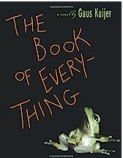 Or magical nine-year-old Thomas, in Guus Kuijer’s The Book of Everything, who “sees things others don’t see.” Tropical fish in the canals. His father regards much of what Thomas says and does as the workings of the devil. He tries to beat it out of his son with a spoon. When asked what he wants to be when he grows up, Thomas says. “ I want to be Happy.” His father scoffs, but a neighbor, widely regarded as a witch, thinks it’s a very good idea. She gives him books, music, companionship, and a powerful thought. That to be happy it is first necessary not to be afraid.