Posts Tagged book lists

STEM Tuesday– Symbiotic Relationships– Author Interview

STEM Tuesday–Symbiosis– Interview with co-authors Jenn Dlugos and Charlie Hatton


Welcome to STEM Tuesday: Author Interview & Book Giveaway, a repeating feature for the last Tuesday of every month. Go, Science-Tech-Engineering-Math!

Today we’re interviewing authors Jenn Dlugos and Charlie Hatton, co-authors of Odd Couples, part of their “Things That Make You Go Yuck” series. Although busy with lots of projects–Jenn writes and illustrates science text books, and Charlie is a computational biologist–they say they collaborate on their books to meet a “fundamental ‘need’ to be creative.” Self-proclaimed science nerds who met through stand-up comedy, they bring humor to their books. In a time when basic biology has revealed its scary side, it’s a relief to be able to laugh a little while enjoying the fascinating tales of interrelationships in this book.

(*I had a lot of questions and Jenn and Charlie had a lot to share. This interview has been edited for brevity.–CCD)


Pictuer of the cover of Odd couples.

Carolyn Cinami DeCristofano: What’s Odd Couples about—and what was most important to you in deciding to write it?

CH: Odd Couples is part of a series of “Things That Make You Go Yuck!” books, all about interesting and unusual critters and plants. This book explores some of the cooperative – and competitive and completely bonkers – relationships between organisms. With Odd Couples and all the Yuck! Books, we wanted to show young readers that even the “yucky” bits of nature can be fascinating, inspiring and sometimes oddly beautiful.

JD: Every second is life or death in the wild, and sometimes organisms have to work together to survive. Odd Couples covers everything from weird mating habits to strange friendships (and  frenemy-ships). From a crab that waves sea anemones around like pom poms to ward off predators to sloths that have strange friendships moths that lays eggs in sloth poop, Odd Couples covers the oddest of the odd.

CCD: You are two co-authors of a book named Odd Couples, so of course I have to ask: What kind of an odd couple are you? How would you describe your creative partnership?

CH: Oh, we’re odd. We met around fifteen years ago doing amateur standup comedy around the Boston area among a crowd of fellow misfits. We began collaborating on creative projects a few years ago, which has turned out to be much more productive than telling jokes at a coffee shop at midnight on a Tuesday. We’ve taken a “sure, let’s try it” approach to projects, leading to working together on writing books as well as short plays, producing a web series and short films, and various other oddities-in-progress.

JD:  In biological terms, we’re in a parasitic relationship. The parasite is whomever is not paying the tab that week.

CCD: What’s one of your favorite organism relationships from the book? Why is it a favorite?

CH: We researched a number of parasites for Odd Couples, which is a really… interesting way to spend your Saturday afternoons. My favorite is a flatworm called Ribeiroia that infects frogs during one phase of its life cycle. The worms’ next stage of development occurs in birds. To improve their odds of getting there, the worms affect infected frogs’ development, causing them to grow extra, gangly useless legs that hinder their hopping. These frogs are less likely to escape birds trying to eat them, which is good for the worms – though not as much for the Franken-frogs. It’s basically a Bond movie villain strategy for getting ahead.

JD: My favorite animals are spiders. (Yes, really. I had pet tarantulas when I was younger.) So, I have to go with the peacock spider. It’s an adorable little arachnid who basically does the Y.M.C.A. dance to attract a mate. Scientists recently discovered a new species of peacock spider that has markings that resemble a skeleton. You know, because spiders need to double-down on their creepy reputation.

CCD: Can you say a little about how your writing partnership works? For example, who does what when?

CH: On most projects, we discuss an outline and detailed plans for writing. I promptly forget most of it, and Jenn reminds me of the parts she says that we both liked the best. It’s not the most efficient process, but it works. While writing, we generally pass material back and forth – in the case of Odd Couples, we agreed on a format and researched the organisms we wanted to include, then split them up to each write about our favorites. Sort of like a fantasy sports draft, only with more spiders and parasites.

JD: Nothing happens until food and drinks arrive. It’s very possible that our waiter/waitress is our muse. Several hours later, we have something that resembles an outline typed out in Jenn-ese on my phone. I translate it to something that resembles English, and from there it’s a 50/50 split. We’ve been writing together for so long that we’ve developed a joint voice, and we sometimes forget which part each of us wrote. There have been more than a few times we have seen/heard a joke in something we’ve written and wondered which one of us was responsible for that nonsense.

CCD: What’s next for you as authors?

JD: Another infographics book (is) waiting in the wings after Awesome Space Tech.

(Awesome Space Tech, also an infographics project, is Jenn and Charlie’s latest book. –CCD)

CCD: Well, I’d bet that your humor and serious science creds have led to yet another book that will inspire, entertain, and fascinate kids. Your symbiosis certainly benefits others! Thanks so much for your time!

Win a FREE copy of Odd Couples

Enter the giveaway by leaving a comment below.  (Scroll past the link to the previous post.) The randomly-chosen winner will be contacted via email and asked to provide a mailing address (within the U.S. only) to receive the book.

Good luck!


Snapshot of co-authors Jenn Dlugos and Charlie Hatton in a comic pose.

Boston-based collaborators, Jenn Dlugos and Charlie Hatton are co-authors of Prufrock Press’s series, “Things That Make You Go Yuck!” and, in Charlie’s words, “several other, far more ridiculous projects.”

By day, Jenn writes science textbooks, assessments, and lab manuals for grades K–12. By night, she writes comedy screenplays, stage plays, and other ridiculous things with Charlie Hatton. Her favorite creepy crawlies are spiders.

Charlie is a bioinformatician who slings data for a cancer research hospital–as well as a science fan and humorist. He enjoys working with genetic and other data to support cancer research, learning about new and interesting scientific areas, and referring to himself in the third person in biographical blurbs.


***

photo of author and STEM Tuesday contribuor Carolyn DeCristofanoCarolyn DeCristofano, a founding team member of STEM Tuesday, is a children’s STEM author and STEM education consultant. She recently co-founded STEM Education Insights, an educational research, program evaluation, and curriculum development firm which complements her independent work as Blue Heron STEM Education. She has authored several acclaimed science books, including Running on Sunshine (HarperCollins Children) and A Black Hole is NOT a Hole (Charlesbridge).

STEM Tuesday– Symbiotic Relationships– Book List

Symbiosis is a close and long-term biological relationship between two different species. Sometimes both benefit. Sometimes only one benefits. So you might want to study up before you develop that new “friendship” …

Natural Attraction: A Field Guide to Friends, Frenemies, and Other Symbiotic Animal,  by Iris Gottlieb

Watercolor illustrations combine with a humorous, scientific text to examine thirty-five odd and unusual symbiotic animal, plant, and bacteria relationships. It includes statistics, graphs, takeaways, and fun additional facts about mutualism, commensalism, and parasitism.


Symbiosis, by Alvin Silverstein

Photographs and a sprinkling of fun fact sidebars enhance the examination of plants, animals and fungi partnerships (both beneficial and necessary), symbiosis of numerous parasites and microorganisms (including Ebola and SARS), and the possibility of symbionts from space. The engaging text is supplemented with scientific terms, a glossary, and further research suggestions.


Partners in the Sea, by Mary Jo Rhodes and David Hall

You’ve probably heard about cleaner fish, but there are so many more undersea partnerships. There are fish that hang out in anemones, tiny crabs and shrimps that live inside sponges, and a bunch of animals that partner up with algae.


There’s A Zoo on You! by Kathy Darling

You share your body with more than a thousand microscopic species of bacteria, fungi, and other too-small to see organisms. Some are beneficial, such as tooth amoebas that eat bacteria. Others, like some fungi, take advantage of the relationship by benefiting at our expense.


It’s a Fungus Among Us: The Good, the Bad & the Downright Scary, by Carla Billups and Dawn Cusick

Most land plants live in a symbiotic relationship with fungi, and use the fungal web to share information with their plant buddies in the garden, field, and woods. Some animals develop beneficial partnerships with fungi, too – but others are attacked by fungal parasites.


Things That Make You Go Yuck! Odd Couples, by Jenn Dlugos & Charlie Hatton

Everything on earth is involved in a symbiotic relationship, some good and some bad. Amazing close-up photographs coupled with trivia questions, humor, sidebars, and a dash of gross-out facts makes this book on animal, plant, and microorganism adaptation and survival an entertaining and educational read about some unusual and creepy relationships.


Forest Talk: How Trees Communicate, by Melissa Koch

Trees are talking all around us, using an underground network of fungi and roots to communicate with one another. They also share chemical messages from their leaves, sending defense signals to other plants when pests attack.


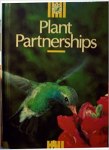
Plant Partnerships, by Joyce Pope

An examination of the dependence of numerous plants and lichen on other plants and animals for their habitat or survival. Covers instances of symbiosis, parasitism, gardening, and pollination by insects and mammals.


STEM Tuesday book list prepared by:


Sue Heavenrich writes about science for children and their families, from space to backyard ecology. A long line of ants marching across the kitchen counter inspired her first article for kids. When not writing, she’s committing acts of citizen science in the garden. She blogs about science for kids and families at archimedesnotebook.blogspot.com.


Maria is a children’s author, blogger, and poet passionate about making nature and reading fun for children. She’s been a judge for the Cybils Awards from 2017 to present. And a judge for the #50PreciousWords competition since its inception. Her poems are published in The Best Of Today’s Little Ditty 2017-2018, 2016, and 2014-2015 anthologies. When not writing, critiquing, or reading, she bird watches, travels the world, bakes, and hikes. Visit her at www.mariacmarshall.com.

May New Releases

So . . . sudden homeschooling while working from home is exhausting, right? I know a lot of parents are in the same boat. Luckily, there are some fantastic middle grade new releases out this month to keep kids reading, thinking, and even cooking (and everyone staying sane)! Happy reading!


The One and Only Bob

by Katherine Applegate

HarperCollins (May 5, 2020)

Bob sets out on a dangerous journey in search of his long-lost sister with the help of his two best friends, Ivan and Ruby. As a hurricane approaches and time is running out, Bob finds courage he never knew he had and learns the true meaning of friendship and family.

Bob, Ivan, and Ruby have touched the hearts of millions of readers, and their story isn’t over yet. Catch up with these beloved friends before the star-studded film adaptation of The One and Only Ivan hits theaters in August 2020!


Becoming Brianna

By Terri Libenson

Balzer + Bray (May 5, 2020)

Middle school is full of challenges.

Everyone knows how much brainy Bri likes the spotlight (not). So why did she ever agree to something that forces her to learn a new language, give a speech, help organize a party, and juggle drama at school and home?! As the big event inches closer, Bri wonders if it’s all worth it. . . .

Told in alternating past and present chapters, Bri’s heartwarming story unfolds over the eight months leading up to her bat mitzvah—as well as over the course of the big day itself.


The Hive Queen (Wings of Fire, Book 12)

by Tui T. Sutherland 

Scholastic Press (May 5, 2020)

Growing up in the hives, Cricket has always had a million questions. Why are trees forbidden, even in art? Why do her parents seem to hate her? And the biggest, most dangerous and secret question of all: Why is Cricket immune to Queen Wasp’s powers? Whenever the queen takes control of all the HiveWings, speaking through their mouths and seeing through their eyes, Cricket has to hide, terrified of being discovered.

Now she’s hiding again, wanted for stealing the Book of Clearsight along with her new SilkWing friends, Blue and Swordtail, and the fierce LeafWing, Sundew. The fugitives need answers, and fast, in order to prevent a LeafWing attack. But Cricket has more questions than ever. How can she stay hidden and discover the queen’s deadliest secret? And if she does succeed — can a powerless dragonet really do anything to topple a regime and stop a war?

Iggy Peck and the Mysterious Mansion (The Questioneers)

by Andrea Beaty  

Amulet Books (May 12, 2020)

Iggy Peck is an architect at his very core: When he’s not making houses out of food, his head is up in the clouds, dreaming of design. So he’s totally blown away when Ada Twist’s Aunt Bernice inherits an old house from ice-cream mogul Herbert Sherbert that is filled with countless rooms from all his favorite architectural periods. But something’s not quite right . . . Everyone says the house is haunted, and it seems that a number of priceless antiques—which were supposed to help Aunt Bernice pay for the house’s upkeep—have gone missing. If they can’t find those antiques, Aunt Bernice might lose the house forever. It will take all of Iggy’s knowledge of architecture and the help of the other Questioneers—Rosie Revere, Ada Twist, and Sofia Valdez—to solve the mystery and find the treasure!


Chef Junior: 100 Super Delicious Recipes by Kids for Kids! 

by Anthony Spears, Abigail Langford, Paul Kimball, Katie Dessinger, and Will Bartlett

Sterling Epicure (May 19, 2020)

Cookbooks for kids often focus on bland “child-friendly” fare, but the authors of Chef Junior, five young cooks between the ages of 12 and 15, challenge that assumption. Instead, they present a repertoire of healthy, delicious, and inventive recipes that range from easy to advanced. Kids will love these dishes and drinks, including Tiramisu French Toast, Coconut Chicken Nuggets, Garden Fresh Pesto Pasta, Peach Cobbler, chocolate-y No-Bake Cookies, and Mango Lemonade, along with perennial favorites like mac ‘n’ cheese, hamburgers, pizza, and tacos. In addition, children will learn how to set up a working pantry and shop for healthy, high-quality ingredients; use kitchen tools (including knives) safely and skillfully; and create meal plans the whole family will enjoy.


Drawing on Walls: A Story of Keith Haring

By Matthew Burgess, Illustrated by Josh Cochran

Enchanted Lion Books (May 19, 2020)

From Matthew Burgess, the much-acclaimed author of Enormous Smallness, comes Drawing on Walls: A Story of Keith Haring. Often seen drawing in white chalk on the matte black paper of unused advertising space in the subway, Haring’s iconic pop art and graffiti-like style transformed the New York City underground in the 1980s. A member of the LGBTQ community, Haring died tragically at the age of thirty-one from AIDS-related complications. Illustrated in paint by Josh Cochran, himself a specialist in bright, dense, conceptual drawings, this honest, celebratory book honors Haring’s life and art, along with his very special connection with kids.


Machines That Think!: Big Ideas That Changed the World #2 

by Don Brown

Amulet Books (April 28, 2020)

Machines That Think! explores machines from ancient history to today that perform a multitude of tasks, from making mind-numbing calculations to working on assembly lines. Included are fascinating looks at the world’s earliest calculators, the birth of computer programming, and the arrival of smartphones. Contributors discussed include Muhammad ibn Musa al-Khwarizmi, Ada Lovelace, and Bill Gates. From the abacus to artificial intelligence, machines through the ages have pushed the boundaries of human capability and creativity. Back matter includes a timeline, endnotes, a bibliography, an author’s note, and an index.