Hi Mixed-Up Filers!
Wow, it’s great to be back! Can you believe it’s only been 67 days since my last post? I can’t either. Seems like months since I was last on here. I guess absence does indeed make the heart grow fonder. Anyway, when I realized my semi-annual column was coming up, I thought it might be fun to speak to a couple of authors and ask them some questions about themselves and their journey. So, I reached out to two of my favorites, Danette Haworth and J.M. Barrie. Well, I have to admit that that’s when things got just a little awkward, when the staff here at Mixed-Up Files notified me that Mr. Barrie has been dead for 76 years. I would’ve thought that there would’ve been something in the news about it. In any event, Danette still graciously agreed to be interviewed.
So, without further ado, I’d like to present: Everything you ever wanted to know about Danette Haworth, but were afraid to ask.

First off, I’d like to thank you for speaking with us today, and in a way, this is a welcome back to Mixed-Up Files for you. You were one of the original members. I know that many is the time when I’ve gone down to the “Mixed-Up Files Hall of Fame” room and visited your shrine for inspiration. So, what was the impetus for this site at the time it was created?
At the time, there wasn’t a site that offered a concentrated, multifaceted look at the middle-grade world. Elissa Cruz recognized that black hole, shot the blog idea into the cybersphere, and then From the Mixed-Up Files was born.
I remember lots of excitement! Once the idea burst, everyone wanted to be a part of it; the enthusiasm was infectious. Quite a bit of talent was present right from the start, and people gave freely of their time and artistry. Though I had to bow out, my hat is off to those who can attend to so many things: their families, their writing, this blog—because to do anything right, you have to devote a certain amount of energy to it and a great deal of thinking, too, that goes on unconsciously.
Speaking of Mixed-Up Files, in a previous interview here, it was sort of implied that you got into middle-grade accidentally, after you wrote a story and realized that it mostly lent itself to being a children’s book. Looking back at that now, do you feel that maybe it wasn’t entirely an “accident”, and in the back of your mind, maybe had the desire somewhere to write for that audience?
In college and the years following, I was a devout reader of Short American Fiction, Story, Glimmer Train, and Rosebud. I loved literary short stories; this would be the kind of writing I would do, I was sure of it.
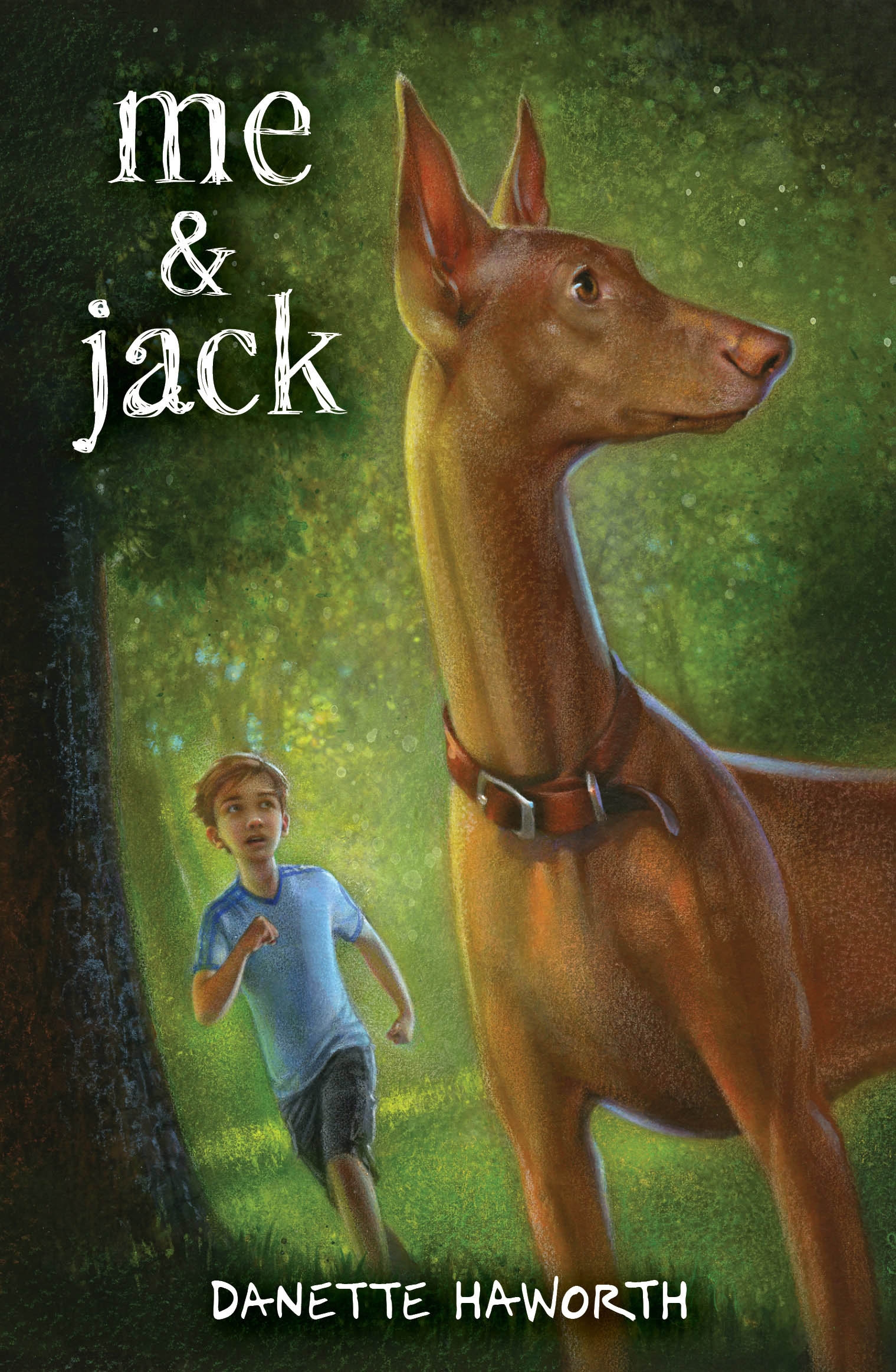
When I decided to write my first novel-length manuscript, I’d read a short piece in the newspaper about a dog escaping his crate while on the tarmac at the airport. As I folded the newspaper, the idea for ME & JACK exploded like a popcorn bag in the microwave. It was epic and covered several generations. But when I sat down to outline the story, I found it too unwieldy to be executed. So I spent a couple of weeks laboring over the outline and the book now in print is what the outline revealed to me: a middle-grade story, not an adult story. At its heart are the dual yearnings of wanting to fit in but remaining true to who you are. (Side note: After my agent read my polished manuscript, he called me, saying, “This story is so literary!” It was a great compliment.)
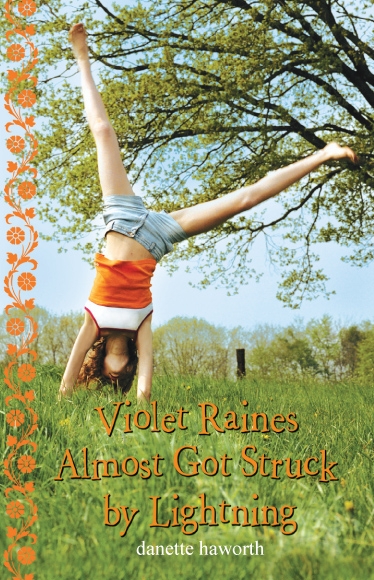
Still, I thought the children’s bit was a fluke for me, a one off. So while I queried ME & JACK, I came up with another book idea for adults. This new idea would showcase the struggle between a mother and her daughter. Somehow, this book became VIOLET RAINES ALMOST GOT STRUCK BY LIGHTNING. (And Violet has a great relationship with her mother!)


Now I know who I am and for whom I write, and I enjoy it immensely.
I love doing school visits because the students are so open and so curious about How did you write that book? or Did that happen to you? and Are you writing a sequel? They have a light in their eyes when they talk, and it’s extremely rewarding to be a part of all that.
During the writing process, after that time when you discovered that you wanted to write for kids and before you were initially published, did you start reading a lot of middle grade, or had you always done that straight through?
After I began the query process for Me & Jack, I began to pick up children’s books, especially books about a young person and their dog: Because of Winn Dixie, Shiloh, The Green Dog. I really liked Kate DiCamillo’s storybook style, and picked up several of her other books, my favorite now being The Miraculous Journey of Edward Tulane.
How about now? Who do you read?
I read everything from picture books straight through to fiction for adults (mainstream, mystery, literary). Barbara O’Connor and Kate Messner are my middle-grade idols because they write well, they write often, and they are both generous toward other authors.
The road to publication is filled with heartbreak and rejection, at what point did you feel like, “Hey, I just might be able to do this?”
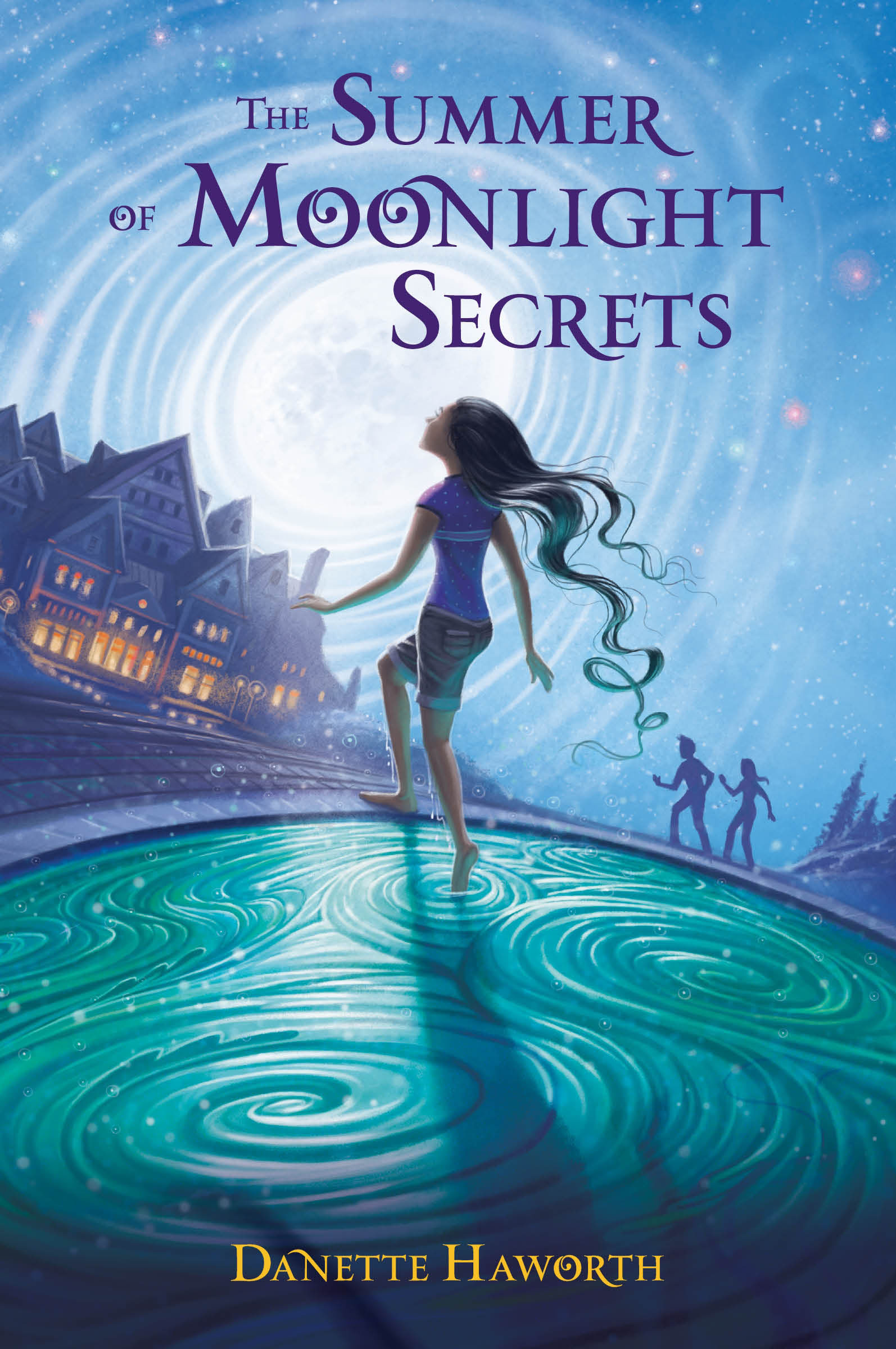
I felt that way after my agent sold an idea I had! Then it was like, “Uh-oh! I have to do this!” And when I did complete it, on time, and matching the paragraph that sold it, I was like, “Wow! I did that!” (This was The Summer of Moonlight Secrets.)

But each time I start a new book, I am on the ground once again, looking up at what seems to be an insurmountable sheer rock face. In fact, I would liken the creation of a novel to climbing Stone Mountain in Georgia. If you’ve never done it, it looks easy; once you’ve done it, however, you know just how much that deceptively easy-looking incline will demand from you. Yet you also know—academically, at least—that if you take one step at a time, you will reach the mountaintop, and it will be glorious!
Can you tell us also about what the events were when you finally did make it?
In my heart, huge fireworks exploded and I couldn’t believe this was happening to me! But at the same time, I didn’t know what to expect—what comes after you sign the contract? I ceased all activities that were extracurricular to sustaining life in order to be available to anything my editor might ask of me. There were a few revisions, then VIOLET RAINES ALMOST GOT STRUCK BY LIGHTNING was deemed delivered and accepted!
I fell into a land of limbo, not knowing what, if anything would still be needed of me. I started a blog, Summer Friend, and found a whole new world—writers scattered across the globe, and we found each other. Those early friends were exactly what I needed, because I didn’t know any writers in my area, didn’t belong to a group, had no idea that SCBWI or Verla Kay’s Blueboards existed, so the blogosphere became my lifeline while I waited at the computer for what to do next.
Then Scholastic picked up VIOLET RAINES and sent Larry Decker, a cameraman, and a sound man to my house to record a teaser for the Scholastic video. We filmed outside in my backyard, and I took them to the Econlockhatchee River, which is a beautiful blackwater river surrounded by a protected forest not fifteen minutes from my house. I based Violet’s neighborhood on this river, giving it a fictional name so I could put a few houses near the woods and the small grocery store where Violet’s mom works and dirt roads and such.

Larry Decker is an absolutely wonderful man. I’ll never forget how kind he was and easy to talk with. My mother was in town, and they got along really well. Driving back from the river, Larry talked about Violet Raines and how much he enjoyed it. “It’s the kind of book,” he said, “that wins awards.”
Those words stilled my heart. Later, Larry sent me a small stone on which he’d painted a tree with exquisite branching. Even the card was his own illustration. That whole time period with Scholastic is a memory I cherish.
Reading your website, I see that you come from an Air-Force family, what contribution do you think moving around all the time as a child, has made to your writing?
My dad was an Air Force recruiter; we lived on base only once and most of my life was spent as a nomad, moving from one small town to another. How envious I felt of kids who talked of riding their bikes to their cousin’s house or their grandma’s! I hated first days at school when the other kids called out to each other and clustered at lunch tables.
Moving around all the time developed in me a sensitivity about fitting in, getting in, losing it all and starting over again. I know what it’s like to be an outsider. And I don’t think you have to be moving around all the time to feel left out. It’s a feeling we experience as kids when our best friend sits with someone else on the bus or people are laughing and it seems like they’re looking straight at us.
Even as adults, we experience loneliness and yearnings, despite our achievements.
In my writing, I try to be honest about those feelings. Most kids don’t talk to other kids about these problems, so I let my characters experience them. I hope when people read my books, they think, “Oh! Someone else feels like that!” I hope they see the truth and the foibles of my characters, and that when they turn the last page, they leave my books feeling good (and wanting more!).
That said, my books have been described as humorous, which I consider the highest of compliments. Making someone laugh through the written word is challenging, especially these days when children have so many forms of entertainment at their fingertips. I try to build characters who will inherently make the story funny, whether through interior dialogue, snappy repartee, or plot twists.
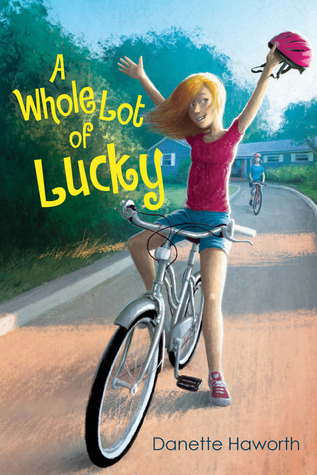
Hailee Richardson is the most unreliable narrator I’ve written to date. The main character in A WHOLE LOT OF LUCKY, Hailee Richardson rides to school on a three dollar bike her mom bought last year at a garage sale (a boy’s bike, no less), wears clothes from thrift shops, and has no cell phone. One night she wakes up to hear her father screaming—then her mother! Robbers! she thinks! Murderers! Suddenly, Dad starts laughing; Mom cries; and the screaming begins again. Even though she’s scared out of her wits, Hailee takes a moment to think, If they’d bought me a phone, I could call 911. When she finally forces herself downstairs to see what’s happening, she discovers they’ve just won the lottery. She will now ride to school in a limo. Her life does change, of course, but not in the ways she’d hoped.
Adding to the previous question, how much inspiration, have events in your own life played a part in your books? Anyone who you knew in real life, now characters in your books? And if so, who? It’s okay, you can tell us. Nobody reads this.
I have a picture book idea for a character named Rosen the Rat. But that’s all I am willing to say at this point.
(Note to the Mixed-Up staff, please edit out the previous answer)
Who plays Violet Raines in the movie? By the way, feel free to substitute a different character instead of Violet, but no answers of “Oh, I really haven’t thought about that.”
Actually, I’m casting for A WHOLE LOT OF LUCKY (in my own personal Hollywood).
I had to look around for someone who could play Hailee Richardson with nuance. Hailee’s role could easily be overplayed because she’s got such a hyperbolic point of view, so I had to find someone who not only looked the part, but could convey Hailee’s perspective in a genuine sense.
Willow Shields would be a great choice! She’s got the kind of face that could be outdoorsy or pretty, which is exactly what Hailee is, except she doesn’t realize that second part yet. Photos of Willow Shields (who played Primrose in The Hunger Games) show the wide range of open expression she is capable of.

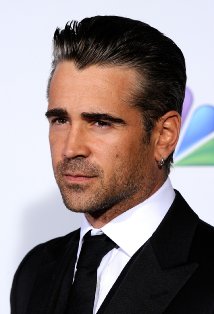
Colin Farrell is the obvious choice for Hailee’s dad. As seen on Saturday Night Live, Colin has good comedic timing—perfect for Hailee’s dad, with his lame jokes and his ongoing battle with the bougainvillea that’s overtaking the garage. Additionally, I believe I would find this Irishman very easy to work with.

Are you working on something now and without giving away too much, what is it and when can we expect it?
Ah! I am working on something middle-grade, but I cannot talk about it! I just can’t! I once told someone the title of a work-in-progress and immediately, I felt energy drain from me, like a juice pouch punched open and left lying on its side.
Okay, this is the part of the interview, where you tell me how much you enjoyed speaking to me.
Thank you so much for hosting me here at From the Mixed-Up Files, Jonathan! I enjoyed it and had fun!
Well, I want to thank Danette Haworth for taking the time to speak with us today. And as an added bonus, Danette has graciously offered to send an autographed-copy of A WHOLE LOT OF LUCKY to one lucky reader. Just comment away or share this on Facebook or Twitter for entries. Within the next week, a winner will be selected.

Thanks for reading!
Jonathan Rosen is a high school English teacher, living in South Florida. He writes middle-grade geared toward boys, because he finds they share the same sensibilities and sense of humor. Jonathan has lived all over the world and is hoping to eventually find a place that will let him stay.



 Wanted: One amazing forever home for one amazing sixth grader.
 The adventure of a lifetime begins between two sofa cushions….