Fiction

NOOKS AND CRANNIES Interview with Jessica Lawson & Giveaway!

Today I’m thrilled to be talking with Jessica Lawson, author of THE ACTUAL & TRUTHFUL ADVENTURES OF BECKY THATCHER, and NOOKS & CRANNIES, which releases June 2nd.

Cover- Nooks & Crannies

Tabitha Crum, a girl with a big imagination and love for mystery novels, receives a mysterious invitation to the country estate of the wealthy but reclusive Countess of Windermere, whose mansion is rumored to be haunted.

There, she finds herself among five other children, none of them sure why they’ve been summoned. But soon, a very big secret will be revealed-a secret that will change their lives forever and put Tabitha’s investigative skills to the test.

What was the genesis for Nooks & Crannies? How did the story idea come to you?

First of all, thanks so much for having me on the blog! I tend to come up with main characters—their situation, their hopes/fears, their voice—before I come up with clear plots. Originally, I had Tabitha Crum’s character being sort of like Anne Shirley, and the story was going to be sort of like Anne of Green Gables in the Lake District of England. But somehow, after months/years of having this girl in the back of my mind, the cottage I had her being sent to turned into a manor house, and the adopting man/woman/couple became a mysterious Countess who was keeping secrets. Before I knew it, five other children were begging to go to the house as well, and then, well, the mystery-in-a-manor house idea was set.

As a big Austen fan, I love that so much of the book is set in the Lake District of England. How did you choose and research the area?

As I mentioned above, my original intentions with Tabitha Crum were for her to be sent to the Lake District as an orphan. I love Beatrix Potter (author/illustrator of Peter Rabbit and other delights), who lived in the Lake District for a time, and thought I might even work her into the narrative. And Jane Austen is one of my favorite authors, so I was familiar with the area from many of her novels. For research, I checked books out of the library, looked up historic village information, and learned about various backgrounds and lifestyles of Lake District residents in the late 1800s and early 1900s. In the early idea stage, I imagined all sorts of outdoor splendor/activities/adventure, but then a nasty snowstorm became part of the plot, ruining any chance of outdoor fun. The setting became the house, which meant that I spent long periods of time looking up historic manor homes in the Lake District, which, as it sounds, was heavenly.

Nooks & Crannies is about a group of kids who receive invitations to a mysterious Countess’s mansion. It reminded me a bit of Charlie and the Chocolate Factory at times. Is that an intentional choice you made?

The book was actually pitched to my publisher as Charlie and the Chocolate Factory meets Clue. When I was drafting, I wasn’t writing an intentional tribute to one of my favorite books by Roald Dahl, but once Tabitha was joined by several other children, the comparison was a bit unavoidable (mysterious invitation, famously reclusive host, etc.). And there is definitely a Veruca Salt-ish character among the children ☺

Yes, there is, and she’s wonderfully drawn. One of my favorite characters in the book is Pemberley, Tabitha’s pet mouse and confidant. (I used to raise mice as a girl. ☺) What was the inspiration behind this character?

Pet sidekicks have always been a favorite with me and, for a girl who sleeps in a musty attic, a mouse seemed like the perfect companion. A clever mouse seemed even better. Tabitha is a big fan of Inspector Pensive novels (my fictional version of books like Sherlock Holmes) and needed an equivalent of the Inspector’s partner, Timothy Tibbs (aka, the Watson of the I.P. books). With Pemberley, Tabitha has a loyal friend and a go-to partner to bounce her ideas/theories off of.

You did a great job with the language of the novel, making not only the characters but the writing itself feel British. How challenging was that for you?

I hope I did an okay job! It was a lot of fun to write ☺ I adore the novels of Charles Dickens (and—some of—the movie adaptations!), and have always been drawn to MG novels with a British voice and setting (from Mary Poppins to The Secret Garden to The Incorrigible Children of Ashton Place books by Maryrose Woods). I’ve always loved British accents and British films/tv. I grew up loving shows like “Are You Being Served?” and Monty Python skits and the like, so my wording may be a bit of a caricature of all of those influences. It may sound odd, but during the writing process I just sort of tried to adopt a British voice in my head and hoped it would sink into the writing.

I really enjoyed the friendship between Oliver (one of the children invited to the mansion) and Tabitha, and think Nooks & Crannies will appeal to boys as well as girls. Could you talk about the importance of boy-girl friendships for middle-graders? How do you feel about books being labeled “boy books” or “girl books” based on the gender of the main character or book cover?

Thank you! I love the friendship between Tabitha and Oliver, too. I think that friendships are very important for middle-graders, regardless of gender, but boy-girl friendships have a special place in the middle grade years. I think they go a long way in showing younger people that physical gender differences do not equal emotional/cognitive and ability/interest-based differences—that no matter if you’re a boy or a girl, you can have similar interests, dreams, problems, and feelings. Stereotypes learned during childhood regarding what each gender is suited to can too often develop into adult gender-based assumptions and prejudices that I’m not so fond of.

As for books being labeled “boy books” or “girl books,” I think booksellers and librarians and teachers and parents are always going to have their own opinion on which books seem more attractive to certain readers, but labeling books according to gender simply because a cover has a boy or girl doesn’t really seem inclusive. Author Shannon Hale has written a series of posts on why it’s important to remember that books like The Princess in Black can be (and are) appealing to both genders, and targeting them toward a single sex can do a disservice to readers.

There are so many fabulous details in this book, making every scene so easy for the reader to visualize. Can you talk to writers about the importance of setting in a novel, and how you create such thorough and satisfying descriptions?

Setting is what grounds the reader in time and place, and without establishing a firm setting (or settings, depending on your novel), plot and character development simply don’t feel as rich or authentic. The setting in this novel is (with the exception of the first few chapters) the manor house. Because the Countess is an eccentric character who travels a lot, I was able to combine style elements and get away with it. I spent lots of time trying to figure out what the furnishings might be, what rooms might be like, what clothing would be worn, what food would be served, and then I threw out a whole bunch of stuff because as much as I’d like to, cramming in every fact you learn never makes for the best world-building. The voice and tone of this book allowed me to take liberties with the setting that I might not have taken if I were doing straight historic fiction, but creating a setting that was authentic and rich for this story was important to me. My favorite details to research were the food dishes, both common and ones that would have been fancier in 1906.

Could you tell us a bit about your current work-in-progress?

Sure! Waiting for Augusta is about an eleven-year-old runaway who travels from Alabama to Georgia in order to make peace with his dead father. It’s a story about miracles, watercolors, knowing yourself, keeping secrets, golf, barbecue, magic, friendship, wanting to make your parents proud, living up to expectations, setting your own expectations, and second chances at connection. The book will be out next summer from Simon & Schuster Books for Young Readers.

It sounds like another fabulous book, Jessica! Congratulations!

Jessica is giving away a signed copy of Nooks & Crannies to one lucky commenter. We’d like to know about a favorite pet you had as a child (real or imaginary) who was a best friend to you. OR, if you’d rather, tell us about your favorite book set in England.
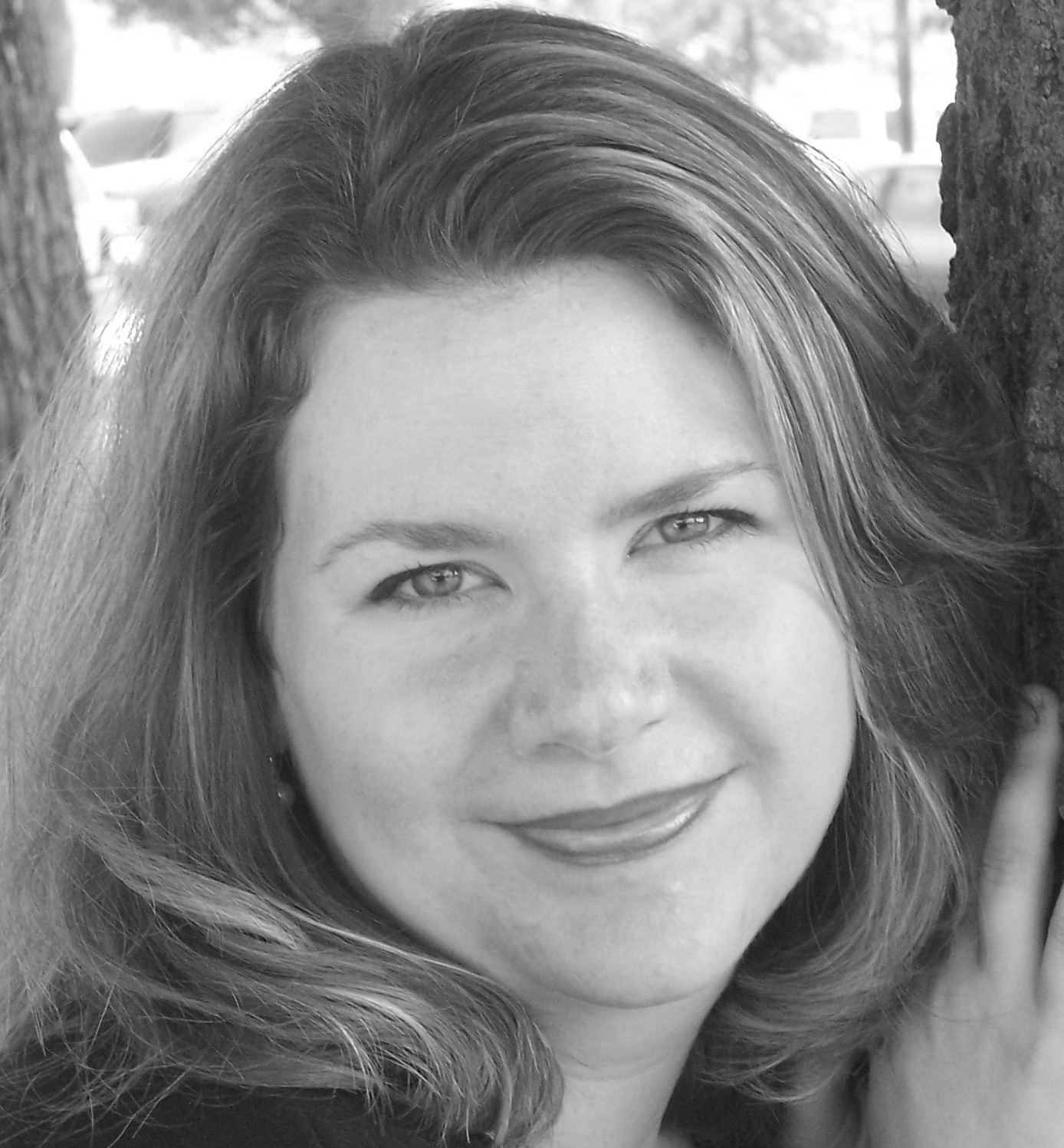
BIO:Jessica Lawson- Author Photo- Black and White (web)
Jessica Lawson does not live in a fancy manor house, but she does deal with mysteries on a daily basis. Most of those mysteries involve missing socks and shadowy dessert disappearances. She lives in Colorado with her husband and children.
LINKS:
Website: http://jessicalawsonbooks.com/
Twitter: https://twitter.com/JS_Lawson
Blog: http://fallingleaflets.blogspot.com/
Facebook: https://www.facebook.com/pages/Jessica-Lawson-Childrens-Author/149125145284531

When YA Authors Make the Switch to Middle Grade

I’ve been working on a YA for…way too long! I know, this is a blog about middle grade books. You don’t want to hear about my YA woes. But lately I’ve been thinking a lot about authors who are well published in one area and then start publishing in a whole new area. Authors such as:

Elana Arnold

Elana Arnold

Megan Frazer Blakemore

Megan Frazer Blakemore

Lisa Schroeder

Lisa Schroeder

Suzanne Selfors

Suzanne Selfors

Elana Arnold, Megan Frazer Blakemore, Lisa Schroeder and Suzanne Selfors are all authors who began their careers publishing YA, but now each of them has a new middle grade out. I was curious about that so I asked them a few questions:

1. Was there anything in particular that prompted you to write a middle grade when you’ve been publishing YA?

Elana: My literary agent is named Rubin Pfeffer. I always call him Rubin Pfeffer, not Rubin, because it is such a fabulous name. One day, Rubin Pfeffer said, “I’d like to see you try your hand at writing a middle grade.” And I thought, I am going to do it, and I am going to blow Rubin Pfeffer’s socks off. Now, this is not necessarily the best reason to write any book,  but it is a reason, and it was mine. Of course, as I delved into the manuscript that became THE QUESTION OF MIRACLES, I found many better reasons for moving forward and finishing–my love of the characters, my curiosity about the story, and, deep down and unrecognized to me at the time, my own struggles of coming to terms with the death of a friend, my own fear and anger about death.

Megan: My first book (Secrets of Truth & Beauty) was YA, and when I started working on The Water Castle, I thought it was going to be YA, too. But as the story developed I realized it made more sense for the characters to be younger. I think this is because of the magic and wonder of the story.

Lisa: I’ve always loved middle-grade books. When I think back to my childhood, those are the years I recall vividly, as far as books and reading goes. So I feel like in a way, it’s my first love. After publishing a few YA novels, I really just wanted to write something fun. That’s how IT’S RAINING CUPCAKES came about. It was late 2010, everyone was in a bad mood, it seemed, because the economy was failing, people were losing their jobs, and everywhere you looked it just seemed so gloomy. Since my first three YA novels were pretty sad, I felt like I needed a break from that. And I suppose I could have tried to write a fun YA, but I wanted to write something ten-year-old Lisa would have loved. And ten-year-old Lisa loved to bake!

Suzanne: The first book I published was a MG called To Catch a Mermaid. The deal was a two book contract, so I was supposed to begin writing the second MG, but I had this idea for a YA book and I couldn’t let it go. So before I began my second MG, I wrote Saving Juliet. For the next five years, I alternated – wrote an MG, then a YA, then an MG, etc.

2. Did you face unexpected challenges writing for a middle grade audience?

Elana:  Writing for a middle grade audience was not more challenging than writing for a young adult audience in that I try my best to not think about my audience at all when I am writing. I tell myself that it’s none of my business who will read my book. I don’t picture a reader; I write the story I can write. But for some reason, I did feel the need to write THE QUESTION OF MIRACLES in a close third person voice, while all my YA novels so far have been written in the first person.

Megan: At the time I had written only YA and was working in a high school library, so I hadn’t revisted middle grade in a long time and felt a little distant from it. I went back and read old favorites (like From the Mixed-Up Files of Mrs. Basil E. Frankweiler by E.L. Konigsberg) to remind myself of the feeling of reading back then. I also read newer titles like When You Reach Me by Rebecca Stead so I knew more of the current landscape and what was possible.

Lisa: Writing IT’S RAINING CUPCAKES was like taking a deep breath of fresh air. It was just so fun and happy-making. It really wasn’t hard for me at all. I almost feel now, as I look back at the seven YA novels I’ve published and the eight MG novels I’ve published, that I’m probably better suited for MG. The voice, the conflict, the family and friend troubles that occur at that age group, it all comes pretty easily to me. Having said that, I have a strong desire to write a deeper kind of MG, now that I’ve done so many fun ones. I mean, they all have a bit of emotional heft, but I’d love to go deeper and do something more substantial as far as that goes. When I think of some of my favorite MG novels, there is a subtlety about them that is so beautiful in the theme(s) they explore, and when the tender moments happen, you really *feel* them. If that makes sense? I’m thinking of books like BECAUSE OF WINN DIXIE, RULES, and THE ONE AND ONLY IVAN. It is not easy to write a MG novel that kids can enjoy and relate to but is also one that makes you think and feel deeply. Moving forward, I want to try to do more of that. Maybe. Hopefully.

Suzanne: I have to say that middle grade is my sweet spot. I love writing for this age. I think I’m still 12 at heart. These are the most natural books for me and I’d be happy to write for this age for the rest of my life. I’m so proud to call myself a middle grade author.

YA, however, is not such a natural fit for me. I’m not drawn to edgy, or dark. I tend to write about magic and adventure.

3. What do you see as the primary difference(s) between writing for middle grade vs. writing for YA audiences?

Elana:  I don’t think there is any topic too big or too small for either a middle grade or a YA audience. The same questions that tugged at me when I was eleven haunted me through my teens and into adulthood. Those questions tug at me now, as a writer, whatever I am writing.  And I never try to teach a lesson or impart a moral code. My job–whatever the book, whomever the audience– is to tell the only stories I can tell, as clearly and truthfully as I know how.

Megan: For me, when I write MG I feel more free to follow ideas however magical or whimsical. Writing YA I tend to be more grounded. I must say that this is a personal distinction, and not anything I would consider a rule of YA vs. MG. It’s just what I’ve done so far. I would love to write gorgeous YA magical realism like Laura Ruby’s Bone Gap, but that type of idea hasn’t come to me yet.

Lisa: I think it’s a matter of keeping in mind the issues that those audiences are dealing with, as far as realistic fiction goes, and considering what the younger audience is equipped to handle. Middle-grade readers are just learning that they can have different thoughts, ideas, opinions, and wishes from their family members and friends, and that sometimes that can create conflict between people. It’s not easy trying to figure out how to get along with everyone, especially at school, where you have lots of different kinds of personalities. So it’s learning how to navigate their small world as they are becoming their own person. With YA, they are learning how to navigate the bigger world, the world at large, as they continue to grow and change. Family and friends still play a part in that, of course, but mistakes and/or disagreements usually have bigger consequences. I think there’s also this extreme need for teens to be independent, so when problems occur, they aren’t asking their parents about things, they’re trying to figure it out on their own, and that is not always easy to do.

Suzanne: For me, the biggest difference was….ROMANCE.

When I wrote Saving Juliet, my first YA, my editor called me after reading the first draft and said, “Suzanne, it’s good but where’s the romantic interest?” I was befuddled. The what? “You know, the cute guy. The one she’s in love with. You can’t write YA without some element of romance.” You can’t? Well, that sucks. I didn’t now the first thing about romantic tension. I figured it out, eventually, but it took time.

You don’t need romance in MG. Not one drop. Fourth graders are perfectly happy to read about traveling to an imaginary world and no one has to be crushing on anyone!

4. Do you plan to write more MG?

Elana:  Yes, I find that I love working on stories about younger people. My second middle grade novel, FAR FROM FAIR, will be published by Houghton Mifflin Harcourt in the spring of 2016, and I continue to develop ideas about middle grade people as well as teens.

Megan: Yes, definitely. I’m working on revisions for a MG project due out next year from Bloomsbury called The Firefly Five.

Lisa: Yes! I love it too much to stop anytime soon.

Suzanne: Yes. I just finished book #6, The Fairy Swarm, which will release in Oct, and I am under contract for three more Ever After High books. I’m working on a single title that I hope to sell, maybe this fall. I’m not sure if I’ll write another YA. I haven’t ruled it out entirely. If there’s a story that I can’t ignore, then I’ll write it. But at the moment, my heart and soul are in the middle grade world.

Check out these new middle grade books by Elana, Megan, Lisa and Suzanne!

Elana bookMegan book

lisa booksuzanne book1suzanne book2


Magic (Realism) for Muggles

My best friend since sophomore year of high school is still like the twin sister I never had twenty years later. Over the years, we’ve shared a love of music, cooking, gardening, and books. But where I go for anything with elves, wizards, mythology, or really anything magical, she remains grounded in the world of contemporary when it comes to books and movies. I mean seriously, I can tell you that she goes all Aunt Petunia when it comes to magic and she won’t even know what I’m talking about because she refuses to read Harry Potter (possibly just to spite me).

I still love her, even now that she’s passing her muggle ways on to her 10-year-old daughter.  And she forgives me my crazy love of reading and writing fantasy, even if she doesn’t understand it.

This does make recommending books harder, though, and seriously, what good is having an author for a best friend if she’s not constantly recommending books for you AND your kids?

So here is my book list of middle-grade magical realism for muggles like my best pal and her daughter who aren’t ready to embrace high fantasy, but need a snicker of magic on their bookshelf.

A Snicker of Magic by Natalie Lloyd

A Snicker of Magic by Natalie Lloyd

From IndieBound: Midnight Gulch used to be a magical place, a town where people could sing up thunderstorms and dance up sunflowers. But that was long ago, before a curse drove the magic away. Twelve-year-old Felicity knows all about things like that; her nomadic mother is cursed with a wandering heart.

But when she arrives in Midnight Gulch, Felicity thinks her luck’s about to change. A “word collector,” Felicity sees words everywhere—shining above strangers, tucked into church eves, and tangled up her dog’s floppy ears—but Midnight Gulch is the first place she’s ever seen the word “home.” And then there’s Jonah, a mysterious, spiky-haired do-gooder who shimmers with words Felicity’s never seen before, words that make Felicity’s heart beat a little faster.

Felicity wants to stay in Midnight Gulch more than anything, but first, she’ll need to figure out how to bring back the magic, breaking the spell that’s been cast over the town . . . and her mother’s broken heart.

El Deafo by Cece Bell

El Deaf by Cece Belle

From IndieBound: A 2015 Newbery Honor Book Going to school and making new friends can be tough. But going to school and making new friends while wearing a bulky hearing aid strapped to your chest? That requires superpowers In this funny, poignant graphic novel memoir, author/illustrator Cece Bell chronicles her hearing loss at a young age and her subsequent experiences with the Phonic Ear, a very powerful–and very awkward–hearing aid.

The Phonic Ear gives Cece the ability to hear–sometimes things she shouldn’t–but also isolates her from her classmates. She really just wants to fit in and find a true friend, someone who appreciates her as she is. After some trouble, she is finally able to harness the power of the Phonic Ear and become “El Deafo, Listener for All.” And more importantly, declare a place for herself in the world and find the friend she’s longed for.

Unusual Chickens for the Exceptional Poultry Farmer by Kelly Jones

Unusual Chickens for the Exceptional Poultry Farmer by Kelly Jones

From IndieBound: Fans of Polly Horvath or Roald Dahl will love this quirky story of a determined girl, and some extraordinary chickens.

Twelve-year-old Sophie Brown feels like a fish out of water when she and her parents move from Los Angeles to the farm they ve inherited from a great-uncle. But farm life gets more interesting when a cranky chicken appears and Sophie discovers the hen can move objects with the power of her little chicken brain: jam jars, the latch to her henhouse, the “entire” henhouse….

And then more of her great-uncle’s unusual chickens come home to roost. Determined, resourceful Sophie learns to care for her flock, earning money for chicken feed, collecting eggs. But when a respected local farmer tries to steal them, Sophie must find a way to keep them (and their superpowers) safe.
Told in letters to Sophie’s “abuela, ” quizzes, a chicken-care correspondence course, to-do lists, and more, “Unusual Chickens” is a quirky, clucky classic in the making.

The Great Unexpected by Sharon Creech

The Great Unexpected by Sharon Creech

From IndieBound: Humorous and heartfelt, this is a story of pairs–of young Naomi and Lizzie, both orphans in present-day Blackbird Tree, USA, and of Sybil and Nula, grown-up sisters from faraway Rook’s Orchard, Ireland, who have become estranged.

Young Naomi Deane is brimming with curiosity and her best friend, Lizzie Scatterding, could talk the ears off a cornfield. Naomi has a knack for being around when trouble happens. She knows all the peculiar people in town–like Crazy Cora and Witch Wiggins. But then, one day, a boy drops out of a tree. Just like that. A strangely charming Finn boy. And then the Dingle Dangle man appears, asking all kinds of questions. Curious surprises are revealed–three locked trunks, a pair of rooks, a crooked bridge, and that boy–and soon Naomi and Lizzie find their lives changed forever.

As two worlds are woven together, Creech reveals that hearts can be mended and that there is indeed a gossamer thread that connects us all.

The Fourteenth Goldfish by Jennifer L. Holm

The Fourteenth Goldfish by Jennifer L. Holm

From IndieBound: Galileo. Newton. Salk. Oppenheimer.
Science can change the world . . . but can it go too far?

Eleven-year-old Ellie has never liked change. She misses fifth grade. She misses her old best friend. She even misses her dearly departed goldfish. Then one day a strange boy shows up. He’s bossy. He’s cranky. And weirdly enough . . . he looks a lot like Ellie’s grandfather, a scientist who’s always been slightly obsessed with immortality. Could this pimply boy really be Grandpa Melvin? Has he finally found the secret to eternal youth?

With a lighthearted touch and plenty of humor, Jennifer Holm celebrates the wonder of science and explores fascinating questions about life and death, family and friendship, immortality . . . and possibility.

The Time of the Fireflies by MUF Contributor Kimberley Griffiths Little

The Time of the Fireflies by Kimberley Griffiths Little

From Kimberley‘s web site: When Larissa Renaud starts receiving eerie phone calls on a disconnected old phone in her family’s antique shop, she knows she’s in for a strange summer. A series of clues leads her to the muddy river banks, where clouds of fireflies dance among the cypress knees and cattails each evening at twilight. The fireflies are beautiful and mysterious, and they take her on a magical journey through time, where Larissa learns secrets about her family’s tragic past — deadly, curse-ridden secrets that could harm the future of her family as she knows it. It soon becomes clear that it is up to Larissa to prevent history from repeating itself and a fatal tragedy from striking the people she loves.

With her signature lyricism, Kimberley Griffiths Little weaves a thrilling tale filled with family secrets, haunting mystery, and dangerous adventure.

You Will Call Me Drog by MUF Contributor Sue Cowing

You Will Call Me Drog by Sue Cowing

From IndieBound: Parker is a normal sixth grader or he was normal before the puppet. It’s just an old hand puppet, sticking out of a garbage can, and even though Parker’s best friend says leave it, Parker brings the puppet home and tries it on. Or maybe it tries him on. “You will call me Drog ” the puppet commands once they’re alone. And now, no matter how hard Parker tries, he can’t get Drog off his hand.

Maybe the only way to get rid of Drog is to truly listen to him.

The Buddy Files series by MUF Contributor Dori Hillestad Butler

The Buddy Files by Dori Hillestad Butler

The Buddy Files series is a great choice for younger readers.

From IndieBound: There have always been rumors of a ghost at Four Lakes Elementary. On the night of the fourth grade sleepover, Mr. Poe, the custodian, tells the story of Agatha, the girl who haunts the school. Then secret notes, unusual banging, and a ghostly voice invade the sleepover. Buddy is determined to find out if there really is a ghost.


Seven Stories Up by Laurel Snyder

Seven Stories Up by Laurel Snyder

From IndieBound: In this companion to Laurel Snyder’s “Bigger than a Bread Box,” a leap back in time and an unlikely friendship change the future of one family forever.
Annie wants to meet her grandmother.

Molly wishes she had a friend.

A little magic brings them together in an almost-impossible friendship.

When Annie wakes up on her first morning at the Hotel Calvert, she’s in for a big surprise. There’s a girl named Molly in her bed who insists the year is 1937 and that this is “her” room Annie’s not sure what happened, but when she learns that Molly’s never been outside the hotel, she knows it’s time for an adventure. Magic, fortune-telling, some roller skates, a rescued kitten, and the best kind of friendship make up the unforgettable story of two girls destined to change each other’s lives.
Like Judy Blume before her, Laurel Snyder writes characters that feel like your best friend. Anne Ursu, author of “The Real Boy.”

What are your favorite middle-grade books with just a snicker of magic in them? Leave a comment with your own recommendations below!