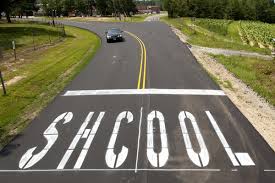
A while back we got this excellent question in comments and I thought I’d tackle it today. To preface my remarks, I have a degree in education and have worked at both ends of the spectrum with gifted and with learning disabled students. I’ve tackled every grade from kindergarten through college at least once but most of my experience is in public schools with 4th to 6th grade students. And here’s the comment.
I enjoyed reading your post, and was glad to hear of advantages of going through the revision process and learning from feedback. I think your question of identifying the strengths and weaknesses of students is a valid one. In fact, it is one I am struggling with this year. I teach English language learners who are motivated to learn, but get discouraged when issues with spelling and grammar get in the way. How do you suggest I handle this while encouraging them to keep writing?
When I was a child I hated to write. In part, I was just a highly active and curious kid who hated to sit still, and write about an adventure when I could be out there on my bike actually having one. But I also hated writing because I am a poor speller–not learning disabled, just poor at spelling. And because EVERY paper I ever got back in school was covered in spelling corrections sometimes with surprisingly bullying remarks from teachers about the stupidity of my errors.

I simply assumed because I was a poor speller that I was a bad writer. It wasn’t until I was a junior in high school and had an English teacher, Mr. Skibinski, who was actually committed to the content of his student’s writing and not just the form, that I had any inkling that writing could be satisfying way to communicate ideas. Mr. Skibinski was the first teacher to ever give me a grade for content separate from conventions. Even more importantly, he spent more ink showing where my writing was working than where it wasn’t. I gained years worth of growth as a writer in the few months I spent in his class. And based both on that experience and the many things I’ve learned from being professionally edited over the years I’ve come up with a bunch of suggestions that I think may help your students hang in there long enough to become good writers.
1. Let’s just admit up front, English is hard. It’s a large and rapidly growing language and because it tends to retain foreign spellings of words, it is not phonetically regular.
2. Nobody gets all the conventional spellings and punctuation right in a first draft. Nobody. Some write more cleanly than others, but even the best writer makes mistakes. In my opinion an error free first draft is an unrealistic expectation for any student at any level. Yes, eventually a final draft should be correct but that takes time and more than one set of eyes on the project.
3. It’s worth remembering too that conventions of spelling, punctuation, grammar and usage are not objectively correct. They are how they are because we’ve agreed on a common interpretation. But conventions of language are changing all the time, so at best we are looking to hit a moving and somewhat subjective target.
4. In the world of publishing, copy editing is different from developmental editing. My editor never dogs me about spelling or punctuation. I try to catch as much as I can on my own but he is only concerned with the shape of the story and not the correctness of it. When we are all done getting the content as perfect as we can make it, we send it to somebody else. In the case of Random House they send it to 3 copy editors. I have a little ode to my copy editors for Second Fiddle over here
http://rosanneparry.com/the-death-of-copyediting/#comments
Obviously this isn’t practical in the classroom but I think it’s worth helping your students think of development and copyediting as separate tasks. Perhaps you could make the distinction with color. Green to show where writing needs to grow. (developmental editing) Purple to show where it can be made more correct. (copy editing)
5. Proficiency comes from volume of writing. Spelling Punctuation and Grammar are the enemy of productivity because your student gets so wrapped up in finding the right answer that they lose the flow of the idea. Better your students write 3 messy paragraphs that communicate what they intended to say than 3 perfect sentences that don’t mean anything. Keeping that in mind it might be worthwhile to encourage students to differentiate between private writing and public writing Private writing need only be readable by the writer. Public writing should be polished. The more private writing your students do the more polished their public writing will become.
Again this might not be practical, but what if your students had a daily journal in which the feedback was only positive? It could be a very powerful experience for them. Or what if you just committed to highlighting 3 strengths in every assignment you grade. Please don’t underestimate the power of this. My editor is at his most effective when he shows me my strongest plot elements and my clearest iteration of the character’s voice. This gives me something to build on and grow toward, which tends to lead to stronger and more confident writing on my part.
6. Spelling is arbitrary and it changes. Show your student’s how to use a dictionary efficiently. And

discourage them from relying on spell checking software. Consider the following sentence. If the t is missing in a key word I have not spelled anything wrong and yet the sentence is very, very very incorrect!
I chased the rabbit out of my garden with a big stick and a lot of yelling.
7. Many writers have a hard time seeing mistakes, but what is not visible may be audible. Give your students time and space to read their work out loud. I read every word of every draft aloud before I send it to my editor. It makes a huge difference in the quality of the prose. (This will be less true for students who are writing in their second language but it’s still a worth while practice for English language learners because it trains the ear in the new language.)
8. Be honest about your own mistakes. Encourage students to look for errors when you write on the board. Make a few on purpose so that they learn by your example how to handle that failure graciously. this will also help them gain an eye for proofreading.
It took me a very long time to think of myself as a writer because I mistook correct writing for good writing. I think with some sensitivity and some practical changes to how we manage writing assignments, we can have even struggling students thinking of themselves as proficient writers. Even better we can move them in the direction of being stronger writers more quickly.
So thanks for your excellent question, and please chime in readers. What have you done to help your students manage their discouragement with spelling, punctuation and grammar?
Like this:
Like Loading...

 Oh, middle problems! You know what I mean: When you are stuck in the middle between two feuding friends. Or half way up the hill you’re pedaling. Or struggling to swallow the mouthful of meatloaf you’re in the middle of choking down.